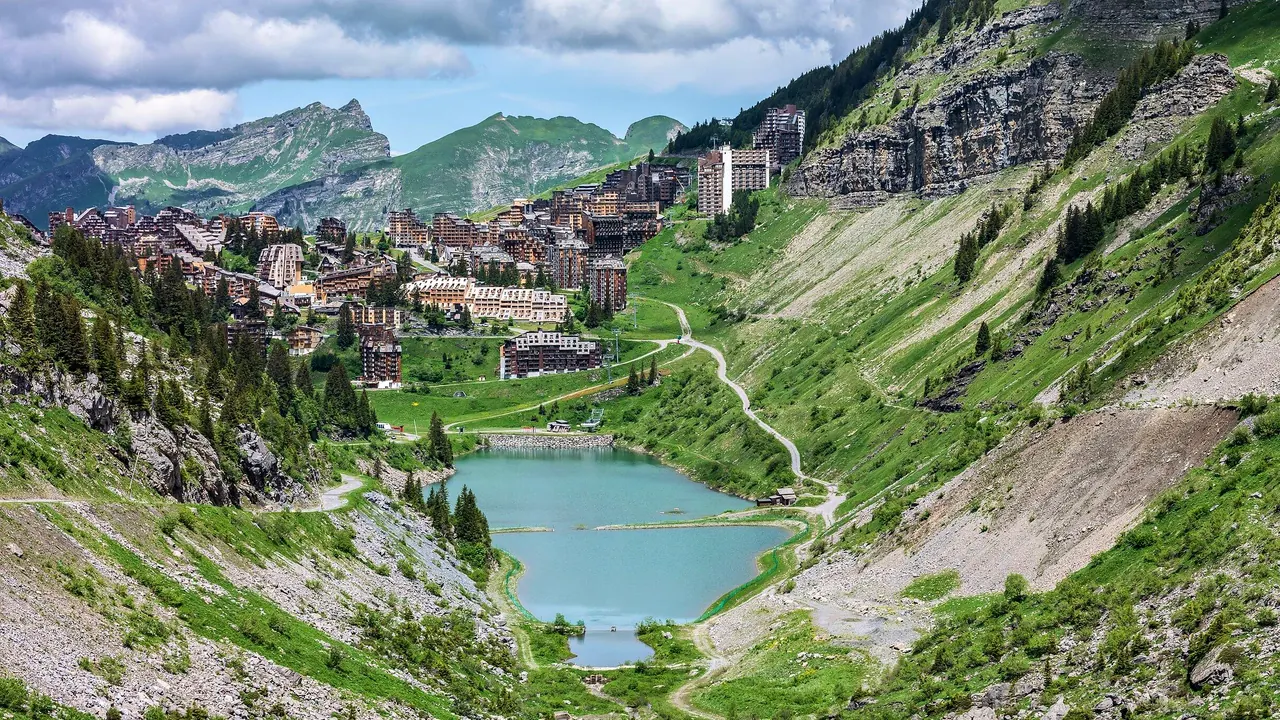
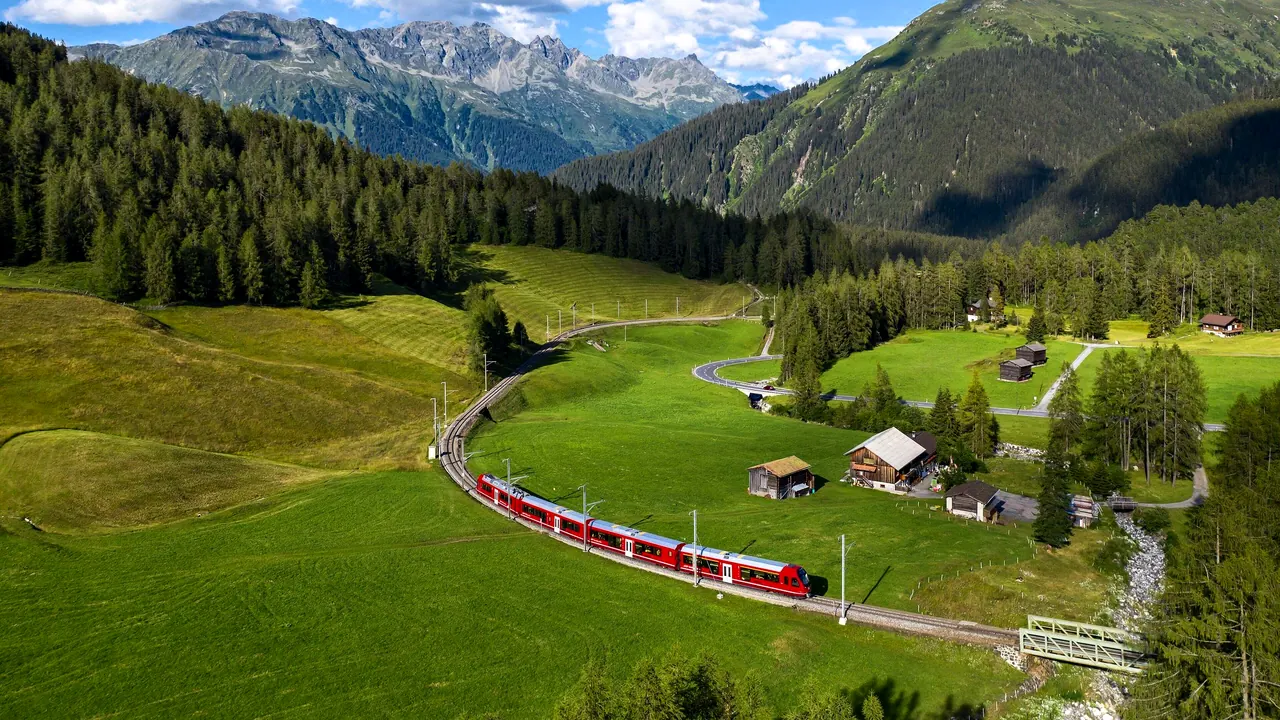
Photos: Avoriaz by Krzysztof Golik, CC BY-SA 4.0, cropped; Davos by Kabelleger / David Gubler, CC BY-SA 4.0, cropped.
Avoriaz or Davos?
Our verdict in twelve categories, each scored against the same fixed benchmark cities, and the climate month by month, so you can choose for your trip.
Choose Avoriaz for
- prices
- families
- nightlife
Avoriaz suits families and skiers who want to step out of the door onto the snow and not think about cars, buses or carrying gear. The resort was planned around children: the streets are car-free, there is a well-known ski village for little ones, and the indoor water park gives everyone a warm afternoon off. Self-catering apartments keep the bill down by Alpine standards. In summer the Portes du Soleil lifts turn the place into a base for downhill and enduro biking.
Choose Davos for
- getting around
- wellness
- culture and sights
Davos is the better pick for adults who want a mountain town rather than a purpose-built resort. It spreads its days across five ski areas, long cross-country trails and quiet side valleys. Its history as a health resort brings the Kirchner Museum, the old sanatoria and a calmer, more restorative pace. The Rhaetian Railway makes it easy to get around without a car and turns day trips into scenic rides. Be ready to pay for it, though, because Davos is the costlier of the two.
Scoreboard
Twelve categories on one fixed scale from 0 to 100. The shaded stretch is the gap between the two.
Your match
Pick a travel style or drag the sliders, and both match scores follow your weighting.
Too close to call, 2 points apart
Wins on prices and families with your weighting.
Wins on getting around and wellness with your weighting.
What matters to you?
Category by category
What the scores mean for a trip.
Beaches & swimming
Neither is a place to swim, and they make up for it in similar ways. Avoriaz's real swimming is in the tropical indoor water park, with a chilly dip in Lake Montriond in the valley or lido bathing on Lake Geneva about an hour's drive away.
Davos keeps its outdoor swimming in town. The Davosersee lido has lawns and a jetty, though the water stays cool even in midsummer, and on most days the indoor leisure pool does the work instead.
Food & drink
Davos has a little more to offer people who like to eat. Graubünden dishes such as capuns, pizokel, barley soup and Bündnerfleisch are a regional cuisine with its own character, and there are a few ambitious kitchens in town as well as long lunches in the mountain huts.
Avoriaz stays with Savoyard cheese cooking: fondue, raclette, tartiflette, eaten on chalet terraces on the slopes. Many guests cook in their apartments, and Morzine below is the place to go for more choice.
Culture & sights
Davos has the more substantial cultural side. Its past as a tuberculosis resort survives in sanatoria such as the Schatzalp, the town carries the literary echo of Thomas Mann's The Magic Mountain, and the Kirchner Museum holds a major collection of Expressionist art. One or two days covers it.
In Avoriaz the architecture is the sight. A slow walk among its shingled towers is worth taking, but there are no museums or old buildings, so anyone after heritage has to go down the mountain.
Nightlife
Both offer winter après-ski and little else, and they differ mainly in setting. In Avoriaz the drinking starts on terraces at the foot of the pistes, with DJs and crowds still in ski boots, and peaks during the school vacation weeks and the spring snow festivals. For a bigger night you take a taxi down to Morzine.
In Davos the evening moves from the bottom of the Jakobshorn and Parsenn runs into hotel bars and a few pubs and small clubs along the Promenade. That keeps everything in town, though it costs more.
Nature & outdoors
Both are first-rate mountain bases, and they differ in kind. Avoriaz's strength is its reach: the Portes du Soleil links a dozen resorts across the French-Swiss border, the freestyle parks are well known, and in summer the lifts serve one of Europe's best-known downhill and enduro areas.
Davos offers more variety within one valley. Five separate ski areas, more than 100km of cross-country trails, and side valleys such as Sertig and Dischma that end below glaciers, with marmots, chamois and ibex. Its summits rise above 3,000m, and the Swiss National Park is within a day's reach.
Day trips
There are about as many outings from each, but you travel to them differently. From Avoriaz the drive down opens up Lake Geneva, with Yvoire, Evian, Geneva itself and Montreux's Château de Chillon, plus Annecy and Chamonix further out. Without a car, little of this is practical.
From Davos you go by train. The Rhaetian Railway crosses the Landwasser Viaduct and the Albula line to St Moritz, and also runs to medieval Chur and the painted houses of Guarda, so the journey becomes part of the day.
Good for families
Avoriaz is clearly the more family-minded of the two. With no cars, children can roam the snowy lanes safely. Ski-in ski-out apartments save the daily trek with gear, and the children's ski village founded by Annie Famose is among the best known in the Alps. Sleigh rides and dog-sledding round it off.
Davos works for active families, with the Schatzalp toboggan run, skating on the natural rink and a leisure pool with slides. But it is a spread-out working town with buses and traffic, and teenagers who don't care for sport will find little to do.
Getting around
Davos is easier to get to and to move around. Two Rhaetian Railway stations, free buses with the guest card, and a funicular and cable car that leave from town mean you can manage the whole trip without a car, arriving by train from Zurich.
Avoriaz is a delight once you are there, moving on foot, on skis or by sleigh between the quarters. Getting there is harder: there is no railway, so you either park at the entrance or ride the cable car up from Les Prodains, and any outing beyond the ski area really calls for a car.
Shopping & style
Neither is a shopping destination, but the Promenade in Davos makes a pleasanter evening browse. Besides the gear shops it has Swiss watch and jewellery stores, a few fashion boutiques, and delicatessens selling Bündnerfleisch and Nusstorte. Avoriaz covers ski rental, sportswear and a few cheese-and-sausage gift shops, and keen shoppers drive to Annecy or Geneva.
Affordability
Both are expensive, but Avoriaz is noticeably easier on the wallet. It is mostly self-catering apartments, rooms cost less than in France's most exclusive resorts, and January outside the school vacation weeks or a summer stay brings costs down a good deal.
Davos charges full Swiss resort prices for hotels, meals and lift passes. During the World Economic Forum in January it is especially expensive. The free buses and the cheaper shoulder seasons help only a little.
Live music & performing arts
Davos at least has something to plan around. Its summer classical festival brings young musicians to churches and hotels across the valley, and the congress centre holds the occasional concert. Avoriaz has only terrace bands and DJs in the ski season and a spring music festival on the slopes, and its fantasy film festival belongs to the past.
Wellness & relaxation
Davos was built for recovery, and it still feels that way. Most large hotels have pools and spas, the leisure pool has a sauna area for day visitors, and Scuol's mineral baths are about an hour away by train. Quiet summer days set an unhurried pace.
Avoriaz is restful in a different way, because without traffic the evenings are quiet except for sleigh bells. Its saunas and the water park's spa are a way to unwind after skiing rather than a reason to come.
When should you go?
Pick your month. The climate figures are measured averages, not a forecast.
Avoriaz in July
Davos in July
Daytime high, °C
Rainfall in the month, mm
Where the figures come from
Avoriaz's temperatures are measured 64 km from the centre, at Bourg-St-Maurice.
Avoriaz has no rain gauge within 25 km of the centre, so its rainfall comes from a gridded climate dataset read at the destination rather than from a gauge further away.
Davos's temperatures are measured 53 km from the centre, at S. Valentino Alla Muta.
Davos has no rain gauge within 25 km of the centre, so its rainfall comes from a gridded climate dataset read at the destination rather than from a gauge further away.
Temperature and rainfall are climate normals, averaged over the years shown. Avoriaz: 1999-2020 (rainfall 1991-2020) normals, Bourg-St-Maurice (63.9 km from centre). Davos: 1991-2020 normals, S. Valentino Alla Muta (53.4 km from centre).
Both are winter destinations first, but their weather runs differently. Avoriaz's figures show its wettest months in winter, peaking around 180mm in December, which at altitude mostly means fresh snow. Davos is drier in winter and colder, with highs around 2°C in January, so its snow tends to be crisp and its skies clearer. From December to March both are cold enough that you walk the streets in proper boots.
Summer suits Avoriaz better for warmth. Its July highs reach about 27°C, comfortable for lake swimming down in the valley and long biking days. Davos stays fresher, at around 20°C in July and August, but this is also its wettest season, so expect afternoon showers on the trails. Late spring and autumn are quiet in both, and that is when Davos turns muddy.
Which traveller are you?
On a family trip with young children, Avoriaz is the easier choice. The car-free streets, ski-in ski-out apartments, the dedicated children's ski village and the warm indoor water park make life with small skiers far simpler than in spread-out Davos.
For a relaxing and wellness trip, Davos wins. It was founded on the idea of recovering in the mountain air, its larger hotels have pools and treatment rooms, and the thermal baths at Scuol are an easy train ride away. Avoriaz's spa offer is small.
On a culture and arts trip, neither is a sightseeing town, but Davos gives you more to see: the Kirchner Museum, the Magic Mountain sanatoria and a summer classical festival. Apart from its striking 1960s architecture, Avoriaz has almost nothing of this kind.
Before you go
| Measure | Avoriaz | Davos |
|---|---|---|
| Official language | French | French, German, Italian, Romansh |
| Currency | Euro (EUR) | Swiss Franc (CHF) |
| Sockets | CE230 V, 50 Hz | CJ230 V, 50 Hz |
| Driving side | Right | Right |
| Time zone | UTC+1, UTC+2 in summer | UTC+1, UTC+2 in summer |
| Emergency number | 112 | 112 |
| Elevation | 985 m | 1,559 m |
| Main airport | Geneva International Airport (GVA)51 km from centre150 non-stop destinations | Zürich Airport (ZRH)122 km from centre226 non-stop destinations |
| Public holidays this year | 11 days | 9 days |
By the numbers
| Measure | Avoriaz | Davos |
|---|---|---|
| Population | - | 10,738 |
| People per km² | - | 38 |
| Museums within 10 km | 1 | 3 |
| UNESCO World Heritage sites within 50 km | 3 | 2 |
Where else could you go?
Every comparison below shares a destination with this one, so you can follow Avoriaz or Davos somewhere new.