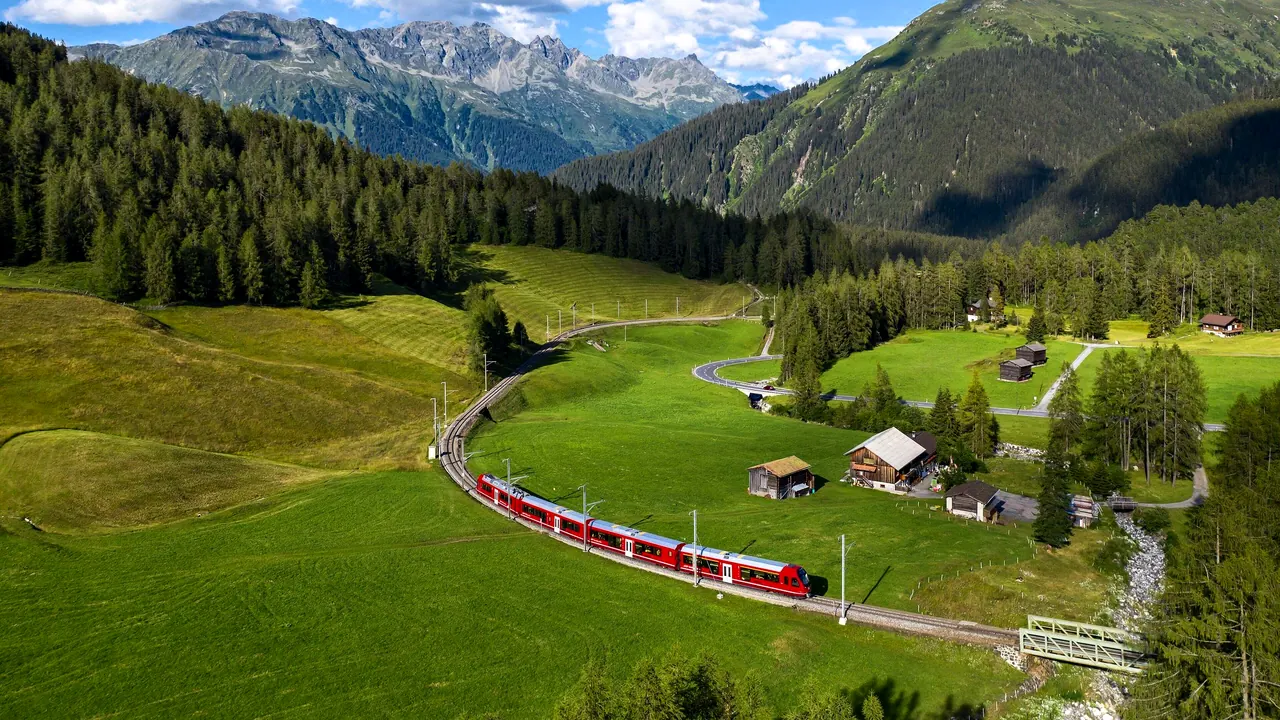
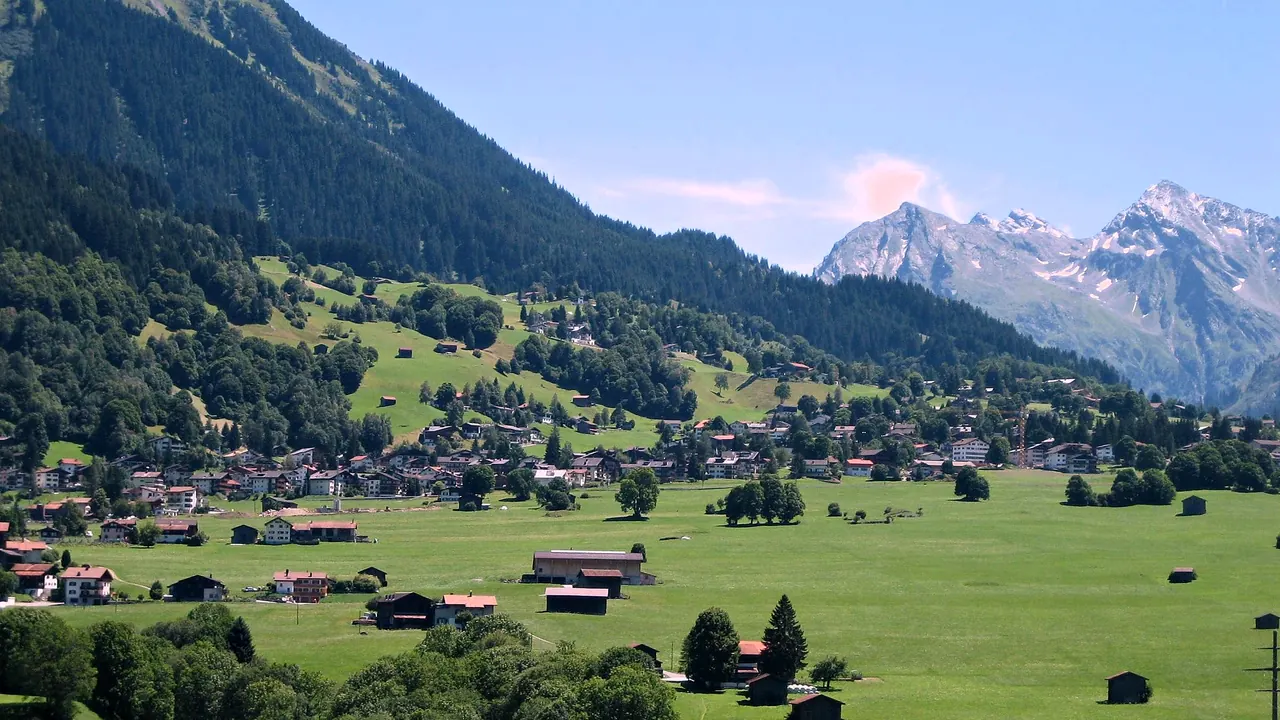
Photos: Davos by Kabelleger / David Gubler, CC BY-SA 4.0, cropped; Klosters by Adrian Michael, CC BY-SA 3.0, cropped.
Davos or Klosters?
Our verdict in twelve categories, each scored against the same fixed benchmark cities, and the climate month by month, so you can choose for your trip.
Choose Davos for
- culture and sights
- nightlife
- live music and the arts
Davos suits travellers who want the mountains with a proper town attached. After a day on the Parsenn or the Jakobshorn there is the Kirchner Museum, the sanatorium history behind The Magic Mountain, a wider spread of restaurants and après-ski that runs past midnight at weekends. It is the better base for a mixed group in which not everyone lives for the slopes.
Choose Klosters for
- day trips
- families
If the mountain is the whole point and you would rather end the day by a fire than in a bar, Klosters is the better pick. The Gotschna cable car takes you into the same Parsenn ski area, the child-friendly Madrisa rises on the other side, and the timber-chalet village stays quiet and discreet. That suits families and couples who like early nights and want little beyond the outdoors.
Scoreboard
Twelve categories on one fixed scale from 0 to 100. The shaded stretch is the gap between the two.
Your match
Pick a travel style or drag the sliders, and both match scores follow your weighting.
Wins on culture and sights and nightlife with your weighting.
Wins on day trips and families with your weighting.
What matters to you?
Category by category
What the scores mean for a trip.
Beaches & swimming
Neither is a place to come for swimming, but Davos has a little more. Its lake, the Davosersee, has a lido with lawns and a jetty, and the town also has a large indoor leisure pool for any weather. Klosters has an outdoor village pool in summer, and its nearest lake bathing is the Davosersee, half an hour away. In both places the water is cold, rarely much above 17°C.
Food & drink
Both serve the same Graubünden cooking: capuns, pizokel, barley soup and Bündnerfleisch, with the best meals often eaten on a mountain hut terrace. Davos gives you more choice in town, with a few ambitious kitchens and plenty of fondue, raclette and pizza when you want something easy.
Klosters has fewer places to eat. They are mostly wood-panelled stuben and a few refined kitchens serving the village's regular guests. It does sit closer to the Bündner Herrschaft, so the local Pinot Noir appears on most tables.
Culture & sights
Davos has real things to see, which Klosters largely does not. The Kirchner Museum holds the largest collection of the painter's work, the old sanatoria such as the Schatzalp still show the town's tuberculosis-cure past, and the winter sports museum and the church of St Johann fill a day or two.
In Klosters you can see St. Jakob's stained glass by Augusto Giacometti and the Nutli-Hüschi farmhouse museum of Prättigau rural life in a morning. Beyond that, the village's appeal lies in its timber chalets rather than in sights.
Nightlife
Davos has the bigger night out. In winter, après-ski at the foot of the Jakobshorn and Parsenn carries on into hotel bars, pubs and a couple of small clubs on the Promenade, and the noise lasts past midnight at weekends. It is still small and expensive by city standards.
Klosters prefers a drink by the fire to a dance floor. Only a late spot or two fill up in the peak weeks, and outside the ski season the village goes to bed early. The train up to Davos is the easy way to find more.
Nature & outdoors
This is where both places shine, and they share some of the same mountains, since the Parsenn ski area links them. Davos has the wider choice from its doorstep: five ski areas, more than 100km of cross-country trails, and the Sertig and Dischma side valleys that end below glaciers, where you can see marmots, chamois and ibex.
Klosters reaches the Parsenn by the Gotschna cable car, with its long runs down to the village, and has the gentler Madrisa on the other side. In summer it opens onto the Silvretta massif and the green pastures of the Prättigau, and it adds paragliding to the hiking and biking.
Day trips
Both rely on the Rhaetian Railway, and the trains are often the best part of the day. Davos has the easier ride along the Albula line, past the Landwasser Viaduct and over the pass to St Moritz.
Klosters sits further down the valley, so Chur, the wine villages of the Bündner Herrschaft, Heidi country around Maienfeld and Vaduz are all closer. It also lies at the mouth of the Vereina tunnel, so Guarda and Scuol in the Lower Engadine are under an hour away.
Good for families
Both suit families who like the outdoors, and neither has a zoo or science museum. Klosters is a little more geared to young children, with the Madrisa play area and beginner slopes and a quiet, traffic-calm village. Its weak point is wet weather.
Davos copes better on bad-weather days. It has an indoor pool with slides, a big natural ice rink and the long toboggan run from the Schatzalp. Teenagers will also find a little more going on there.
Getting around
You need no car in either place, and each has two Rhaetian Railway stations, Dorf and Platz. Davos is the longer place at about 4km, but free buses run its full length, and both the Parsenn funicular and the Jakobshorn cable car start in town.
In Klosters the centre around Platz is easy to walk, and the Gotschna cable car leaves right beside the station. Ski buses run out to the further lifts, and car trains through the Vereina tunnel lead to the Engadine.
Shopping & style
Davos has a little more to browse along its Promenade: ski and outdoor shops, Swiss watch and jewellery stores, and delicatessens selling Nusstorte to take home. In Klosters, the main street around Platz has outdoor gear and a few upmarket fashion and interior boutiques. Neither is worth a trip for its shops, and for a serious shopping day you would go to Zurich from either.
Affordability
Both are among the most expensive places in the Alps, and there is little to choose between them. In Davos, prices peak in the main winter weeks and above all during the World Economic Forum in January. Early summer and autumn are cheaper there, though some places close. Klosters stays upmarket all year because of its regular clientele. In both places, the guest card for local transport and a self-catering apartment are the main ways to save.
Live music & performing arts
Neither has a theatre or a concert season, but Davos has more live music. Its summer classical festival puts young musicians in churches, hotels and unusual places around the valley, and the congress centre puts on the occasional concert.
Klosters has a summer concert series and the odd church recital. For the rest of the year, live music means a hotel pianist or an après-ski band, and for anything more ambitious you have to go to Chur.
Wellness & relaxation
Both rely on hotel spas, and neither has a bathing tradition of its own. Davos has a public sauna and wellness area at its leisure pool, open to day visitors, plus the dry air that first made it a place to recover. The town gets crowded in peak ski weeks, though.
Klosters is calmer all year, and a stay built around walks, a sauna and early nights suits it. It is also slightly closer to the thermal baths at Scuol, through the Vereina tunnel.
When should you go?
Pick your month. The climate figures are measured averages, not a forecast.
Davos in July
Klosters in July
Daytime high, °C
Rainfall in the month, mm
Where the figures come from
Davos's temperatures are measured 53 km from the centre, at S. Valentino Alla Muta.
Davos has no rain gauge within 25 km of the centre, so its rainfall comes from a gridded climate dataset read at the destination rather than from a gauge further away.
Klosters's temperatures are measured 51 km from the centre, at S. Valentino Alla Muta.
Klosters's station stands 280 m above the city centre, so the centre is likely a little warmer than the figures say.
Klosters has no rain gauge within 25 km of the centre, so its rainfall comes from a gridded climate dataset read at the destination rather than from a gauge further away.
Temperature and rainfall are climate normals, averaged over the years shown. Davos: 1991-2020 normals, S. Valentino Alla Muta (53.4 km from centre). Klosters: 1991-2020 normals, S. Valentino Alla Muta (51.4 km from centre).
Davos sits high in the Landwasser valley and Klosters lies lower down in the Prättigau, but their monthly figures are practically the same, so the season decides your trip, not the choice of resort. Winter is for snow. From December to February daytime highs stay around 2°C, and March is only a little milder. April and November fall between seasons, when the snow is going or has not yet come, trails are muddy and much of both places is quiet.
From June to September the weather suits walking, with highs near 20°C in July and August. Summer is also the wettest part of the year, with around 140mm of rain in August, so plan hikes for the clearer days and pack a waterproof. Only July and August are warm enough for a cold swim in a mountain lake. September is still mild and noticeably drier, and it is often the most comfortable month for long walks in either place.
Which traveller are you?
On a culture and arts trip, Davos is clearly the better choice. It has the Kirchner Museum's Expressionist collection, the former sanatoria from Thomas Mann's era and a summer classical festival. Klosters offers a church with Giacometti glass and a small farmhouse museum, and not much else.
For a food and nightlife trip, Davos again comes out ahead. It has more restaurants, from hotel kitchens to fondue and raclette, and après-ski that moves on to pubs and small clubs along the Promenade. Evenings in Klosters mean a quiet hotel bar, and few places stay open late.
On a family trip with young children, Klosters has a slight edge. The Madrisa side is built around children, with an adventure area in summer and gentle nursery slopes in winter, and the village has little traffic. Davos has more for rainy days, including its large indoor pool with slides.
Before you go
| Measure | Davos | Klosters |
|---|---|---|
| Official language | French, German, Italian, Romansh | French, German, Italian, Romansh |
| Currency | Swiss Franc (CHF) | Swiss Franc (CHF) |
| Sockets | CJ230 V, 50 Hz | CJ230 V, 50 Hz |
| Driving side | Right | Right |
| Time zone | UTC+1, UTC+2 in summer | UTC+1, UTC+2 in summer |
| Emergency number | 112 | 112 |
| Elevation | 1,559 m | 1,179 m |
| Main airport | Zürich Airport (ZRH)122 km from centre226 non-stop destinations | Zürich Airport (ZRH)120 km from centre226 non-stop destinations |
| Public holidays this year | 9 days | 9 days |
By the numbers
| Measure | Davos | Klosters |
|---|---|---|
| Population | 10,738 | 4,499 |
| People per km² | 38 | 20 |
| Museums within 10 km | 3 | 3 |
| UNESCO World Heritage sites within 50 km | 2 | 1 |
Where else could you go?
Every comparison below shares a destination with this one, so you can follow Davos or Klosters somewhere new.
- Arosavs Davos
- Arosavs Klosters
- Lenzerheidevs Davos
- Lenzerheidevs Klosters
- St. Moritzvs Davos
- Samnaunvs Klosters