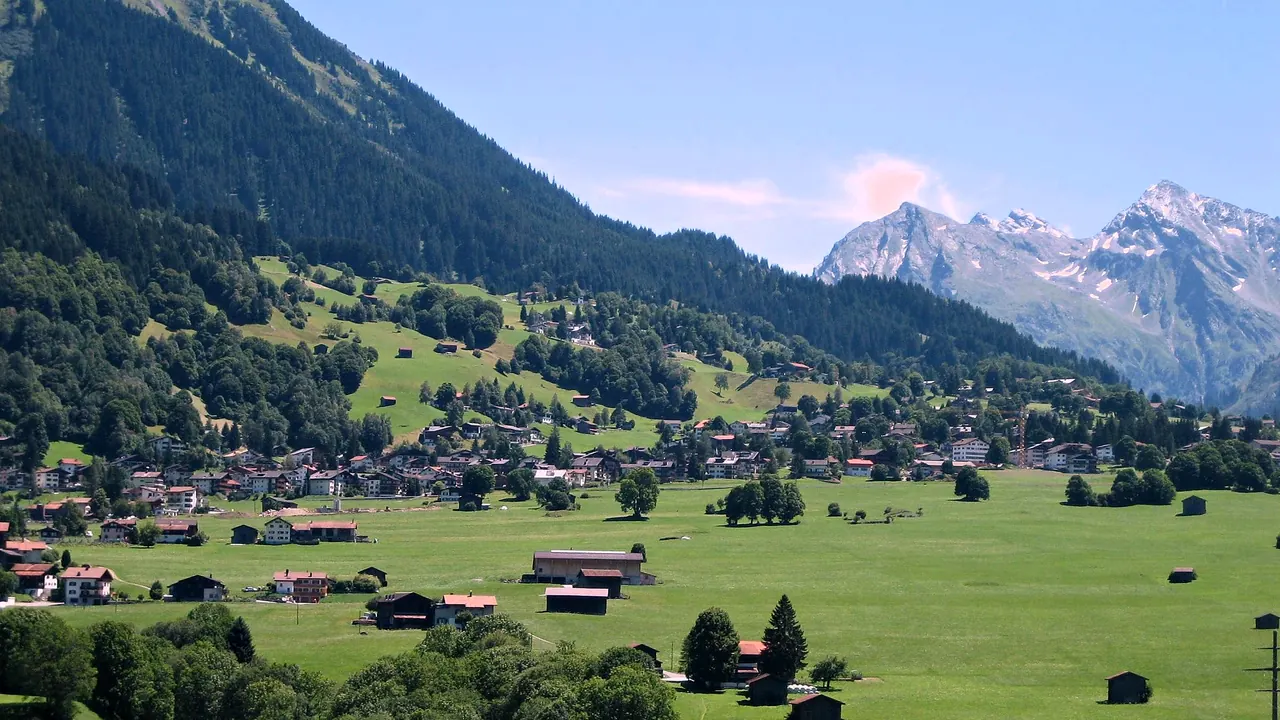
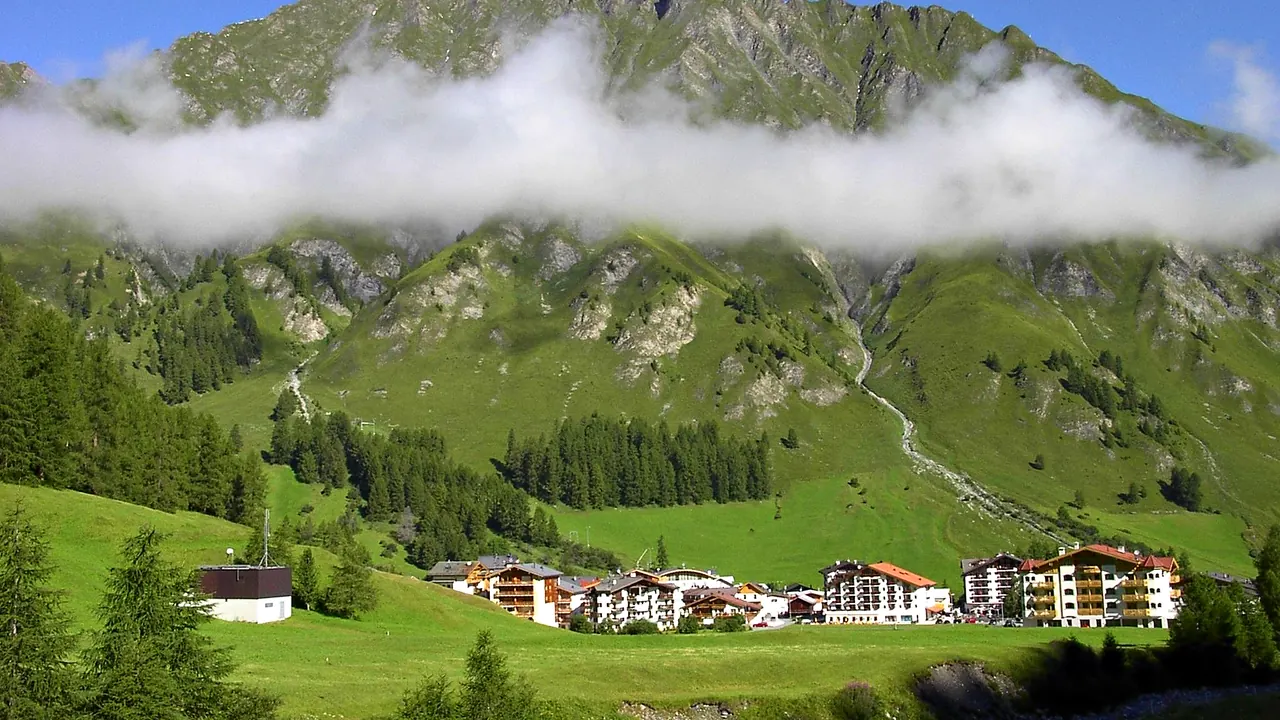
Photos: Klosters by Adrian Michael, CC BY-SA 3.0, cropped; Samnaun by Rene Nueesch, CC BY 3.0, cropped.
Klosters or Samnaun?
Our verdict in twelve categories, each scored against the same fixed benchmark cities, and the climate month by month, so you can choose for your trip.
Choose Klosters for
- getting around
- families
- day trips
Klosters is the better choice for a mountain stay that doesn't depend on a car. It sits on the Rhaetian Railway, its cable car leaves from beside the station and the long Parsenn runs bring you back down to the village. It is also easier with children, thanks to the Madrisa side, and it puts Davos, Chur and the Engadine within a train ride for days off the slopes. In return you get the quieter, more exclusive and more expensive of the two villages.
Choose Samnaun for
- shopping
- prices
- nightlife
Samnaun suits skiers who want a huge, high, snow-sure area and don't mind a long drive to reach it. The valley is a dead end where the road comes in from Austria, but the lifts connect over the border into the Paznaun. Its duty-free shops make it the only one of the two where shopping is part of the trip. Prices are a little gentler and the bars stay open a bit later on peak weekends, though it is harder to get to and less suited to young families.
Scoreboard
Twelve categories on one fixed scale from 0 to 100. The shaded stretch is the gap between the two.
Your match
Pick a travel style or drag the sliders, and both match scores follow your weighting.
Too close to call, 2 points apart
Wins on getting around and families with your weighting.
Wins on shopping and prices with your weighting.
What matters to you?
Category by category
What the scores mean for a trip.
Beaches & swimming
Swimming is not a reason to visit either village. Klosters has a summer outdoor pool, and the bathing area on the lake at Davos is half an hour away, though the water stays cool even in July.
Samnaun's swimming happens mostly indoors, in the village leisure pool or a hotel pool. Its streams and small lakes are cold enough that most people go in only on a hot August day.
Food & drink
Both villages serve hearty Graubünden cooking such as capuns and pizokel, eaten in hotel dining rooms and on hut terraces. Neither has much in the way of a food scene. Klosters has a few more ambitious kitchens for its well-off regulars, and its wine comes from the Pinot Noir villages of the Bündner Herrschaft down the valley.
In Samnaun many meals come on half board, and Tyrolean dishes and autumn game appear on the menus. The highlight there is what you can buy in the bottle, since duty-free shops sell a very wide range of wines and spirits.
Culture & sights
Neither village is a place for sightseeing. Klosters has the Augusto Giacometti windows in St. Jakob and a small rural-life museum in the old Nutli-Hüschi farmhouse. Samnaun has little more than modest chapels across its hamlets, along with an unusual piece of history: in 1892 it was left outside the Swiss customs area, which is how it became duty-free.
Nightlife
Samnaun has a little more going on after dark. A small club or two and a few hotel bars stay open late on peak-season weekends after the early après-ski at the foot of the slopes. The famous party resort over in Austria is easy to reach on skis but not at night.
Evenings in Klosters are more restrained still. The regulars prefer a drink by the fire, and outside the ski season the village goes to bed early. Its saving grace is the train, which takes you to Davos for a bigger night out.
Nature & outdoors
Both villages are first and foremost mountain bases, and they are close in quality. Klosters has a slight edge for variety. From the village the Gotschna cable car climbs into the Parsenn, known for its long runs back down to the valley, and the gentler Madrisa area rises opposite. In summer there are routes into the Silvretta, and the Swiss National Park is reached through the Vereina tunnel.
Samnaun's strength is height and size. At around 1,800m it opens onto one of the largest ski areas in the Alps, linked across the border to the Paznaun, with runs above the treeline and reliable snow late into spring. In summer the trails follow the border ridges with few people about.
Day trips
Klosters has more within easy reach, and you can reach almost all of it by rail. Davos and Chur's old town are an easy train ride away, as are the Maienfeld vineyards and Vaduz. The Vereina tunnel brings Guarda's sgraffito houses within an hour, and St. Moritz and the Albula line make a longer day out.
From Samnaun the destinations are small rather than many: Tarasp Castle and the villages around Scuol, then Glurns, Marienberg and the Carolingian convent at Müstair beyond the Reschen Pass. Most of these need a car, and many take a long drive.
Good for families
Klosters is the stronger choice with children. The Madrisa side is built for them, with a summer adventure area, beginner slopes and ski schools, and easy walks to farm huts from a traffic-calmed village. Its weak points are rainy days and costs, which add up quickly.
Samnaun works for a ski week, with nursery slopes close by and family-minded hotels on half board. It also has an advantage on wet afternoons: a leisure pool with slides. Beyond the slopes there is little for children to do, and the long winding drive in can upset young travellers.
Getting around
The real difference is the railway. Klosters is a stop on a through line, so a car-free stay costs you nothing: you arrive by train and can head up to Davos or down to Chur on a whim. Inside the village, the local bus covers the only gap, which is its length along the valley.
Samnaun is a dead-end valley with no track at all, and its road climbs in from the Austrian side. Without a car, a week on the slopes still works, because skis and the valley bus link the hamlets. Every arrival and outing, though, depends on the slow postbus connection to the rail line at Scuol, so anyone who wants to range further will want to drive.
Shopping & style
For shopping, Samnaun comes out well ahead. As a duty-free enclave, its main street is lined with shops selling watches, jewellery, perfume, spirits, chocolate and ski wear, and coaches of shoppers come over from the Tyrol. What you buy there is international brands rather than anything local.
Klosters offers a short stretch around Platz with ski shops, a few upmarket boutiques and delicatessens selling Bündnerfleisch and cheese. That covers the necessities and little more.
Affordability
Both are expensive by any European standard. Klosters is the costlier of the two, because its upmarket clientele sets the level for hotels, lift passes and lessons, and the guest card and self-catering only soften the bill a little.
Samnaun follows Swiss resort pricing too, but rooms are gentler than in the fashionable resorts and half board helps. Duty-free fuel, drink and perfume add small savings.
Live music & performing arts
Neither village has a theatre or a regular venue. Klosters has a summer series of classical concerts and occasional recitals in the church, and for anything more you go to Chur.
Samnaun's music is louder and tied to the ski calendar. Big open-air concerts are held on the slopes at the opening and close of the winter season, and the rest of the time it is brass bands and après-ski performers.
Wellness & relaxation
Both villages offer rest rather than a spa tradition, with quiet evenings and hotel saunas. Their routes to proper bathing differ. From Klosters you can take the train to Davos's large public pool and sauna complex, or through the Vereina tunnel to the thermal baths at Scuol.
Samnaun has a sauna area in its public pool in the village itself. The baths at Scuol are also under an hour away by road, which suits a day of bathing after a few days on the slopes.
When should you go?
Pick your month. The climate figures are measured averages, not a forecast.
Klosters in July
Samnaun in July
Daytime high, °C
Rainfall in the month, mm
Where the figures come from
Klosters's temperatures are measured 51 km from the centre, at S. Valentino Alla Muta.
Klosters's station stands 280 m above the city centre, so the centre is likely a little warmer than the figures say.
Klosters has no rain gauge within 25 km of the centre, so its rainfall comes from a gridded climate dataset read at the destination rather than from a gauge further away.
Samnaun has no rain gauge within 25 km of the centre, so its rainfall comes from a gridded climate dataset read at the destination rather than from a gauge further away.
Temperature and rainfall are climate normals, averaged over the years shown. Klosters: 1991-2020 normals, S. Valentino Alla Muta (51.4 km from centre). Samnaun: 1991-2020 normals, Passo Resia / Resia Pass (16.3 km from centre).
Both villages have almost the same mountain climate, so the choice comes down to the season rather than the place. From December to February daytime highs stay around freezing, which is skiing weather. Walking the village streets means boots and layers. Spring arrives slowly, and only from June to August do afternoons reach about 20°C, which is mild enough for hiking in shirtsleeves but never warm enough to make the lakes inviting.
Summer is also the wettest time in both, with afternoon showers to plan around. Klosters is the damper of the two, with August rainfall reaching about 140mm. In Samnaun the summer peak is closer to 118mm, and its July is slightly warmer at 21°C. September brings drier days and highs around 16°C. That makes it a good month for walking in either village before the cold of late autumn sets in.
Which traveller are you?
On a family trip with young children, Klosters is the easier choice. In summer the Madrisa side has a play and adventure area, and in winter it has gentle beginner slopes. The village is traffic-calmed, and you arrive by train rather than on a long winding road.
For a shopping trip, Samnaun is the clear pick. Its duty-free main street sells watches, perfume, spirits, chocolate and ski clothing, often below normal Swiss prices. In Klosters a serious shopping day means going down to Zurich.
On a trip on a tight budget, neither village is cheap, but Samnaun hurts a little less. Half-board deals and room rates gentler than the fashionable Swiss resorts help, and fuel and drink cost less there. Almost everything in Klosters costs well above European norms.
Before you go
| Measure | Klosters | Samnaun |
|---|---|---|
| Official language | French, German, Italian, Romansh | French, German, Italian, Romansh |
| Currency | Swiss Franc (CHF) | Swiss Franc (CHF) |
| Sockets | CJ230 V, 50 Hz | CJ230 V, 50 Hz |
| Driving side | Right | Right |
| Time zone | UTC+1, UTC+2 in summer | UTC+1, UTC+2 in summer |
| Emergency number | 112 | 112 |
| Elevation | 1,179 m | 1,846 m |
| Main airport | Zürich Airport (ZRH)120 km from centre226 non-stop destinations | Innsbruck Airport (INN)82 km from centre40 non-stop destinations |
| Public holidays this year | 9 days | 9 days |
By the numbers
| Measure | Klosters | Samnaun |
|---|---|---|
| Population | 4,499 | 773 |
| People per km² | 20 | 14 |
| Museums within 10 km | 3 | 1 |
| UNESCO World Heritage sites within 50 km | 1 | 1 |
Where else could you go?
Every comparison below shares a destination with this one, so you can follow Klosters or Samnaun somewhere new.
- Davosvs Klosters
- Arosavs Klosters
- Lenzerheidevs Klosters
- St. Moritzvs Klosters
- Davosvs Samnaun
- Laaxvs Klosters