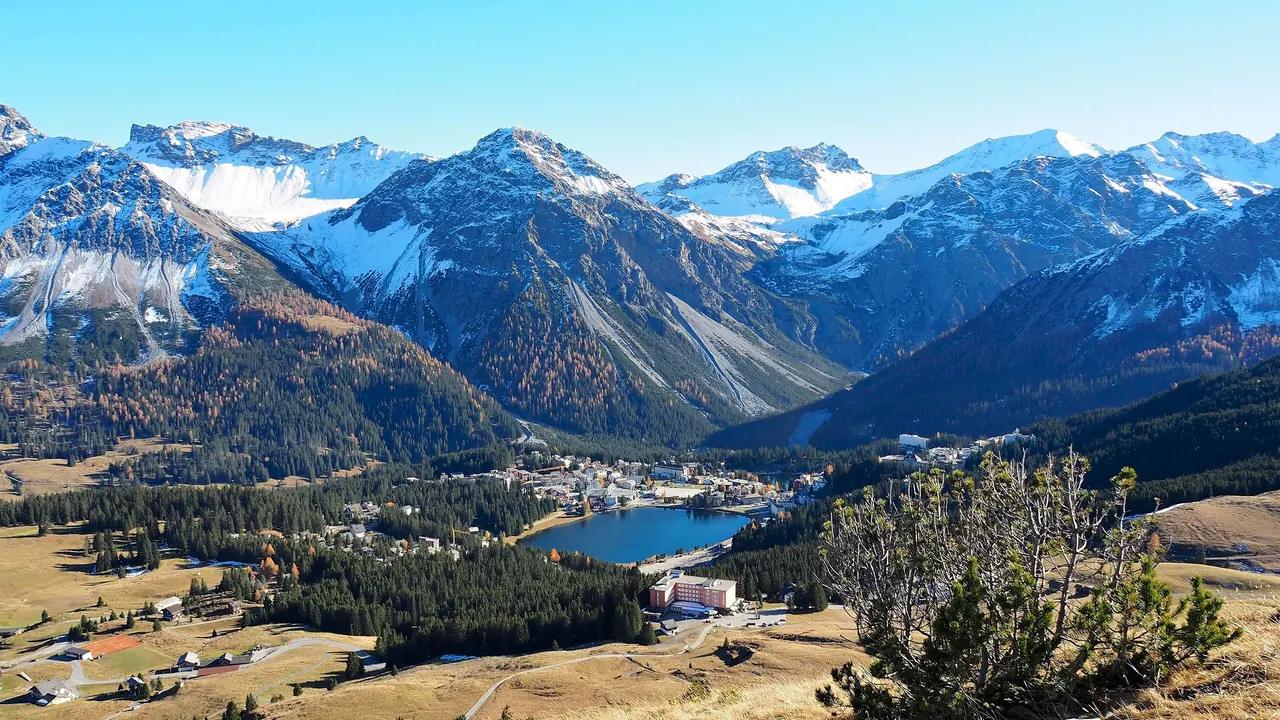
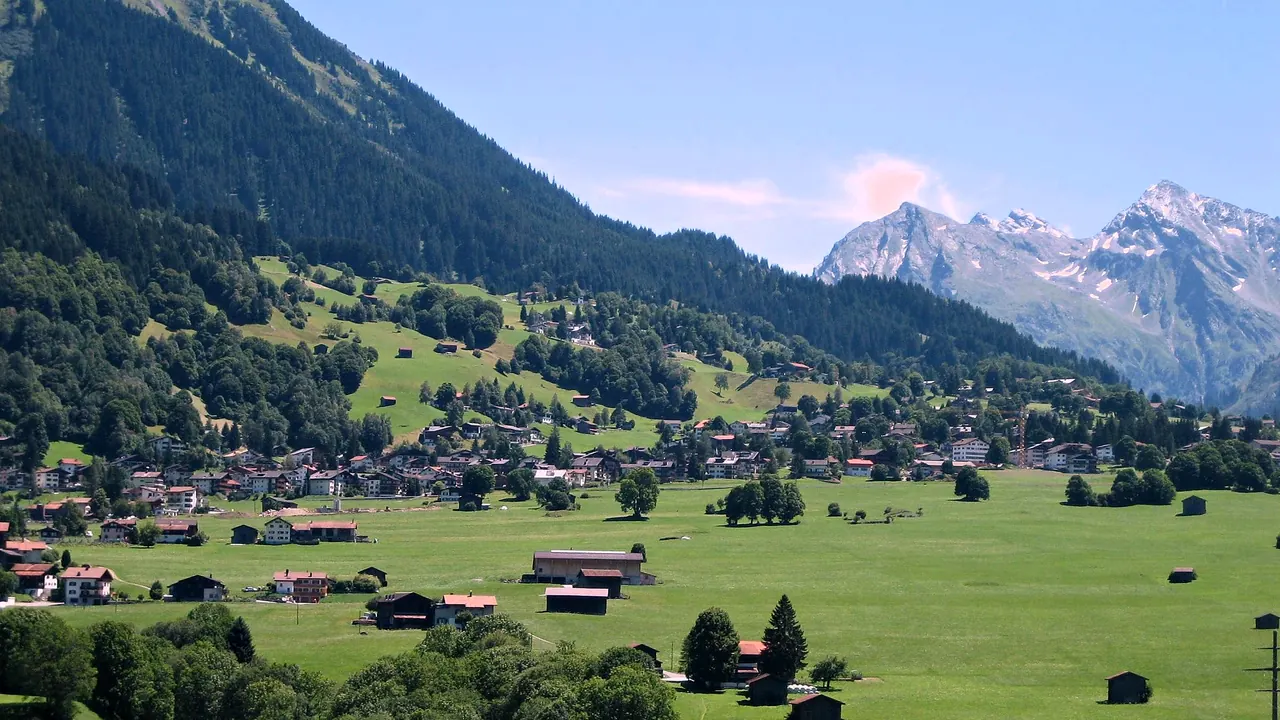
Photos: Arosa by Andres Passwirth, CC BY-SA 4.0, cropped; Klosters by Adrian Michael, CC BY-SA 3.0, cropped.
Arosa or Klosters?
Our verdict in twelve categories, each scored against the same fixed benchmark cities, and the climate month by month, so you can choose for your trip.
Choose Arosa for
- beaches
- live music and the arts
- nightlife
Arosa suits travellers who want a self-contained mountain basin with a bit more going on after dark. Its lakes give summer afternoons a swim, the winter season has après-ski, a couple of small clubs and a lively gay ski week, and the calendar adds a December comedy festival and summer chamber concerts in the old Bergkirchli. The trade-off is the dead-end position: almost every outing starts with the hour down to Chur.
Choose Klosters for
- day trips
- nature and the outdoors
- getting around
Klosters is the better base for anyone who wants to range further. Davos is just up the valley, and the Vereina tunnel puts the Lower Engadine, its painted villages and the thermal baths of Scuol within an hour. The Parsenn's long runs and the Silvretta trails give it a slight edge on the mountain too. Evenings are quieter and more discreet, which suits regulars who prefer a fireside drink to a dance floor.
Scoreboard
Twelve categories on one fixed scale from 0 to 100. The shaded stretch is the gap between the two.
Your match
Pick a travel style or drag the sliders, and both match scores follow your weighting.
Too close to call, 2 points apart
Wins on beaches and live music and the arts with your weighting.
Wins on day trips and nature and the outdoors with your weighting.
What matters to you?
Category by category
What the scores mean for a trip.
Beaches & swimming
Neither village is a swimming destination, but Arosa at least has water on the doorstep. The Untersee lido, with its lawn and jetty, is a short walk from the village, and the Obersee and Schwellisee higher up tempt hardy swimmers on warm July and August afternoons.
Klosters has only an outdoor pool in the village. The nearest lake swimming is at Davos, about half an hour away, where the water stays a few degrees colder, so most visitors who want a real swim head for hotel pools or thermal baths instead.
Food & drink
The two eat in much the same way: hotel dining rooms, mountain huts and Graubünden staples such as capuns, barley soup and air-dried meat, with a small fine-dining tier for the wealthier guests. In Arosa the memorable meals are on the hut terraces looking across the basin, though many places close between seasons.
Klosters leans a little more on wood-panelled stuben and dishes like pizokel, and it pours Pinot Noir from the Bündner Herrschaft just down the valley. Neither has markets or street food.
Culture & sights
Sightseeing is thin in both, and an afternoon covers either. Arosa's draw is the shingled late-15th-century Bergkirchli alone on its meadow, plus the grand hotels and local museum that tell of its past as a tuberculosis cure resort.
Klosters offers Augusto Giacometti's stained glass in the church of St. Jakob and the Nutli-Hüschi farmhouse museum of Prättigau rural life, with its old timber chalets doing the rest.
Nightlife
Arosa offers more of a night out, though it is still smart rather than wild. Winter après-ski leads on to hotel bars and a couple of small clubs open late at weekends, and the January gay ski week brings the liveliest nights of the year.
Klosters is deliberately discreet. A late spot or two fills around Christmas, New Year and February, but the regulars favour a drink by the fire, and anyone wanting more takes the train up to Davos.
Nature & outdoors
Both are first-rate mountain bases, and the difference is in character. Arosa is a high, enclosed basin of larches and lakes under the Weisshorn, linked over the ridge to Lenzerheide, with marmots on the meadows and the bear sanctuary on the hillside. Everything starts from the village, on foot or by lift.
Klosters edges ahead on reach and variety. The Gotschna cable car opens the Parsenn with its famous long runs down to the valley, the Madrisa side is gentler, and summer brings Silvretta hiking, paragliding and the Swiss National Park through the Vereina tunnel.
Day trips
Arosa sits at the end of the line, so outings begin with the scenic hour down to Chur over the Schanfigg viaducts. Chur's old centre and cathedral make a fine day, but most places beyond it take two hours or more.
Klosters is much better placed. Davos is a short ride away, Chur and the Herrschaft wine villages lie down the valley, and the Vereina tunnel brings Guarda's sgraffito houses and Scuol within an hour, with St. Moritz and the Albula line a longer option.
Good for families
Families are equally well served, and both share the same gap: no zoos, aquariums or children's museums, and costs that climb fast. Arosa fills summer days with its lakes, playgrounds and bear sanctuary, and its indoor pool and ice rink offer some shelter on a wet afternoon.
Klosters puts its children's focus on the Madrisa side, with a mountain play and adventure area in summer and gentle beginner slopes in winter.
Getting around
Neither needs a car, but the village layouts differ. Arosa climbs a hillside between Ausserarosa and Innerarosa, so walking means slopes and stairs, and the free buses do the real work, while the single railway back to Chur makes onward travel slow.
Klosters is laid out along the valley floor, with an easily walked centre at Platz, the Gotschna cable car beside the station and direct trains to Davos. Car trains through the Vereina tunnel add a link to the Engadine.
Shopping & style
Both cover rental, outdoor gear and a few smart boutiques and little more. Arosa's main street adds chocolate and souvenir stores, with Chur's old town the nearest place with real range.
Klosters has interior boutiques and delicatessens selling Graubünden cured meats and cheese around Platz, which make better gifts, but a serious shopping day still means Zurich.
Affordability
Both are among the most expensive places to stay in the Alps, with lift passes, lessons, hotels and meals all priced high. In Arosa, summer is noticeably cheaper than the ski season and the summer guest card adds some perks, while Klosters' upmarket clientele keeps costs high all year. In both, a self-catering apartment is the main way to save.
Live music & performing arts
Arosa has the stronger calendar for a resort its size. A long-established December comedy festival puts stand-up and cabaret on stages around the village, some of them out in the snow, and summer chamber concerts and music courses fill its churches, the Bergkirchli included.
Klosters has a summer classical series and occasional church recitals, and otherwise little beyond a hotel pianist. Theatre means going down to Chur.
Wellness & relaxation
Both are calm, unshowy places where spa life happens in hotels rather than public bathhouses. Arosa's restfulness has deep roots in its sanatorium past and its dry, sunny air, and it adds a public indoor pool, lakeside walks and sun terraces.
Klosters makes up for having no bathing tradition of its own with what lies nearby: the thermal baths of Scuol under an hour away and a large pool and sauna complex in Davos.
When should you go?
Pick your month. The climate figures are measured averages, not a forecast.
Arosa in July
Klosters in July
Daytime high, °C
Rainfall in the month, mm
Where the figures come from
Arosa's temperatures are measured 31 km from the centre, at Samedan.
Arosa has no rain gauge within 25 km of the centre, so its rainfall comes from a gridded climate dataset read at the destination rather than from a gauge further away.
Klosters's temperatures are measured 51 km from the centre, at S. Valentino Alla Muta.
Klosters's station stands 280 m above the city centre, so the centre is likely a little warmer than the figures say.
Klosters has no rain gauge within 25 km of the centre, so its rainfall comes from a gridded climate dataset read at the destination rather than from a gauge further away.
Temperature and rainfall are climate normals, averaged over the years shown. Arosa: 2015-2025 (rainfall 1991-2020) normals, Samedan (31.2 km from centre). Klosters: 1991-2020 normals, S. Valentino Alla Muta (51.4 km from centre).
Both villages have two seasons, winter for snow and July to August for hiking and the odd lake swim. Arosa sits higher and runs colder, with January highs around -1°C against a few degrees above freezing in Klosters, and Klosters warms up noticeably earlier in spring and holds on a little longer into autumn. By midsummer the two are level at about 20°C, pleasant for walking and only just warm enough for a quick dip in the mountain lakes.
Summer is also the wet season in both places, with frequent rain in the warmest months. Arosa is the wetter of the two, peaking at about 159mm in August against 141mm in Klosters. The winter months are the driest in both villages, and May to June and October to November are quiet in-between times when the weather is unsettled and the snow either melting or not yet reliable.
Which traveller are you?
On a food and nightlife trip, Arosa wins on the evenings rather than the plates. The Alpine cooking is a near tie, but friends coming off the slopes will find Arosa keeps going later at weekends, while Klosters settles down by the fire.
For a beach and sun trip, neither village fits, but Arosa is the better compromise for a summer walking stay with the odd swim. Its lakes lie within the village and run a little warmer, while Klosters offers a pool or a trip to Davos.
On an outdoors trip, Klosters edges ahead for walkers and skiers who like to roam, with long descents, hut-to-hut routes and a second valley within easy reach. Arosa suits anyone content to explore a single basin straight from the door.
Before you go
| Measure | Arosa | Klosters |
|---|---|---|
| Official language | French, German, Italian, Romansh | French, German, Italian, Romansh |
| Currency | Swiss Franc (CHF) | Swiss Franc (CHF) |
| Sockets | CJ230 V, 50 Hz | CJ230 V, 50 Hz |
| Driving side | Right | Right |
| Time zone | UTC+1, UTC+2 in summer | UTC+1, UTC+2 in summer |
| Emergency number | 112 | 112 |
| Elevation | 1,775 m | 1,179 m |
| Main airport | Zürich Airport (ZRH)114 km from centre226 non-stop destinations | Zürich Airport (ZRH)120 km from centre226 non-stop destinations |
| Public holidays this year | 9 days | 9 days |
By the numbers
| Measure | Arosa | Klosters |
|---|---|---|
| Population | 3,185 | 4,499 |
| People per km² | 21 | 20 |
| Museums within 10 km | 1 | 3 |
| UNESCO World Heritage sites within 50 km | 2 | 1 |
Where else could you go?
Every comparison below shares a destination with this one, so you can follow Arosa or Klosters somewhere new.
- Davosvs Klosters
- Lenzerheidevs Arosa
- Davosvs Arosa
- Lenzerheidevs Klosters
- Laaxvs Arosa
- St. Moritzvs Arosa