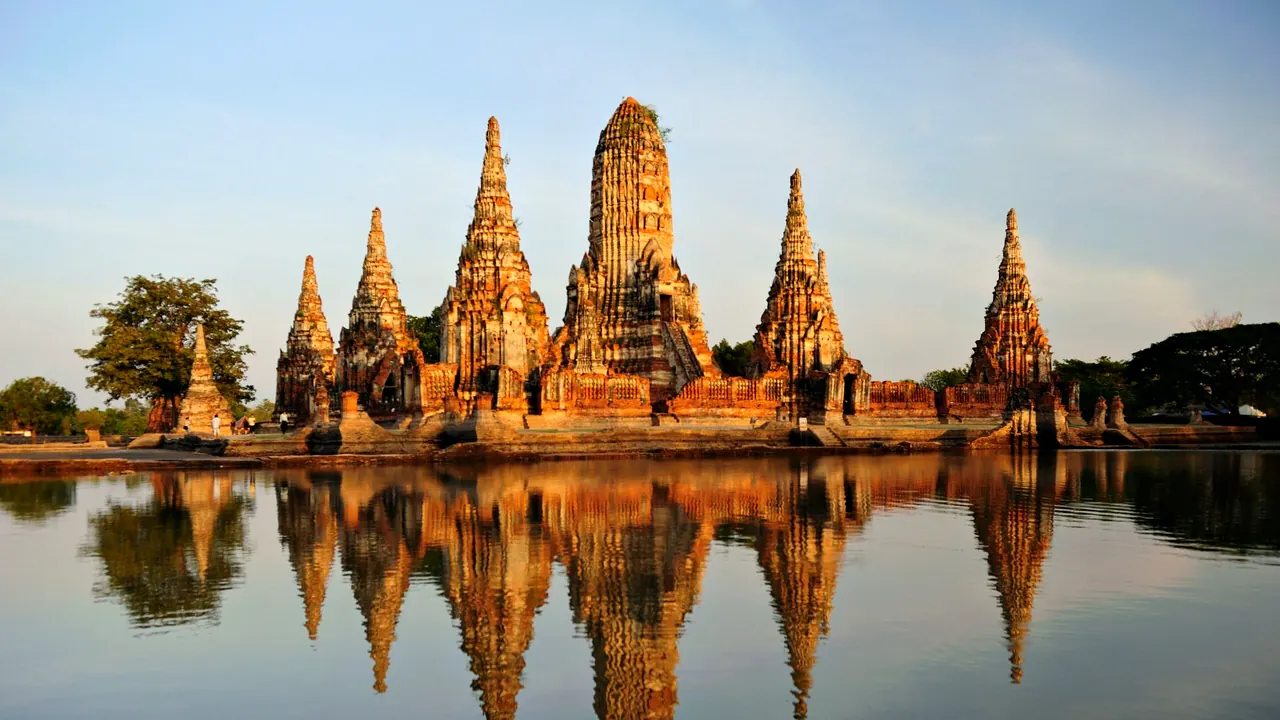
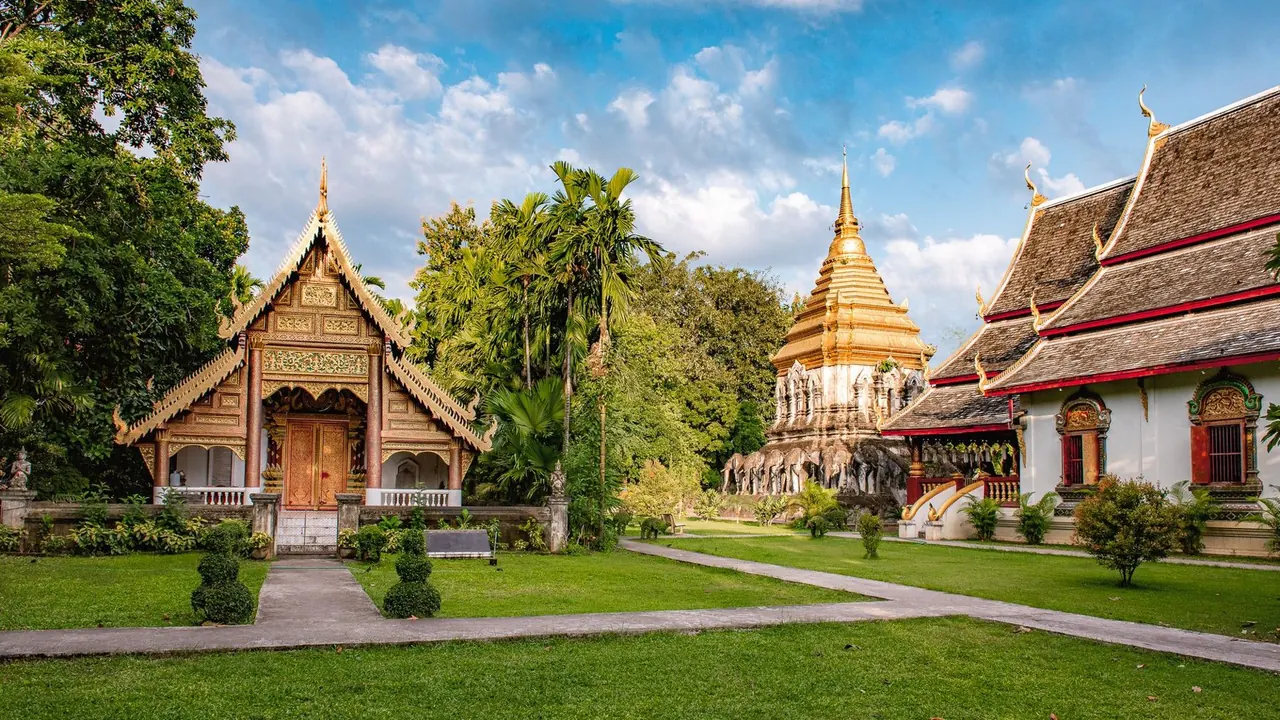
Photos: Ayutthaya by เกริกชัย อินทร์ปอ, CC BY-SA 3.0, cropped; Chiang Mai by Gije Cho, Pexels License.
Ayutthaya or Chiang Mai?
Our verdict in twelve categories, each scored against the same fixed benchmark cities, and the climate month by month, so you can choose for your trip.
Choose Ayutthaya for
- day trips
- culture and sights
- getting around
Ayutthaya is for the traveller who comes for history and little else. The ruined capital of Siam covers an island with brick prangs, chedis and headless Buddhas, and a day or two by bicycle shows you its full scale. It sits close enough to Bangkok and the Bang Pa-In palace to fit easily into a wider trip. Expect quiet evenings, simple provincial food and not much to do once the ruins are seen.
Choose Chiang Mai for
- nature and the outdoors
- shopping
- wellness
Chiang Mai rewards a longer and more varied stay. Northern cooking, a deep café culture, craft markets, massage schools and meditation temples fill the days in town. Green mountains start at the edge of the city, with trails, waterfalls and Doi Inthanon within reach. Its temples are living Lanna monasteries rather than a great ruined field, but it is the better choice for anyone who wants food, nature and slow time alongside the sightseeing.
Scoreboard
Twelve categories on one fixed scale from 0 to 100. The shaded stretch is the gap between the two.
Your match
Pick a travel style or drag the sliders, and both match scores follow your weighting.
Wins on day trips and culture and sights with your weighting.
Wins on nature and the outdoors and shopping with your weighting.
What matters to you?
Category by category
What the scores mean for a trip.
Beaches & swimming
Neither city is a beach destination, so plan any sea days elsewhere. In Ayutthaya the rivers are busy working waterways and the hotel pool is the only place to swim. Chiang Mai at least lets you swim outdoors, at the Huay Tung Tao reservoir, the quarry lakes and the pools under its waterfalls.
Food & drink
Chiang Mai is the place to eat well. Northern Thai cooking is the main event: khao soi, herby sai ua sausage and sticky rice, served cheaply at Warorot market and the stalls at Chang Phueak Gate. Coffee grown in the surrounding hills supports a café culture you won't find in Ayutthaya.
Ayutthaya has a few good things of its own. Bowls of boat noodles, grilled river prawns by the water and roti sai mai from the stalls near the old Muslim quarter are all worth eating. Beyond those, the night markets cover most meals, and you will run out of new dishes long before you would in Chiang Mai.
Culture & sights
Ayutthaya has the greater historic site. For four centuries this was the capital of Siam, and its ruins cover a whole island: the three chedis of Wat Phra Si Sanphet, the Buddha head caught in tree roots at Wat Mahathat, and the Portuguese and Japanese quarters south of the island. It is almost all ruin and temple, but nowhere else in the country shows history on this scale.
Chiang Mai's heritage is still in use. Monks live and pray in the Lanna monasteries inside the moat, and Wat Phra Singh's wooden halls, the silver Wat Sri Suphan and Doi Suthep above the valley reward slow walks over a few days rather than a single overwhelming sight.
Nightlife
Ayutthaya goes quiet after dark. There is a short strip of backpacker bars, and you can have a drink at a riverside table looking at the floodlit temples. Most visitors are in bed long before midnight.
Chiang Mai gives you a real choice of evening, though it is sociable rather than wild. Nimmanhaemin has cocktail and craft beer bars full of students, the lanes around Tha Phae Gate have rooftop terraces, and Loi Kroh Road is the rowdier strip. Few places stay open much past midnight.
Nature & outdoors
Here the two cities are very different. Chiang Mai sits in a mountain valley, with Doi Suthep-Pui National Park starting at the edge of town and Thailand's highest peak, Doi Inthanon, about an hour and a half away. Rafting, jungle treks to hill villages and watching elephants at the sanctuaries are all easy to arrange.
Ayutthaya's countryside is flat river plain, with rice fields, canals and storks over the paddies. You can enjoy it from a bicycle or a long-tail boat at dusk, but the nearest wild landscape is Khao Yai, two hours away by road.
Day trips
Ayutthaya is the better base for day trips, mainly because of where it sits. Bangkok's Grand Palace and markets are about an hour and a half away by train, Bang Pa-In's mix of Thai, Chinese and European palace buildings is twenty minutes off, and Lopburi's Khmer temples and macaques are an easy rail trip north.
Chiang Mai has good short outings to the old towns of Lamphun and Lampang and to the craft villages of Bo Sang and San Kamphaeng. Its best-known excursions, Chiang Rai and Pai, are too far for comfort and are better done with an overnight stay.
Good for families
Chiang Mai keeps children busy for longer. Feeding elephants at a sanctuary, the zoo and Night Safari, the quarry swimming parks and the weekend walking streets give you several days of plans, though broken pavements and heavy traffic around the moat make getting about tiring.
In Ayutthaya, children usually enjoy a morning at the ruins, especially the stone head at Wat Mahathat, and a boat trip round the island. After that there is little aimed at them, and the shadeless sites in the midday heat are hard going for small ones.
Getting around
Getting around is equally easy, and equally imperfect, in both. In Ayutthaya the classic way to see the ruins is by bicycle on the quiet, flat back lanes of the island, with a tuk-tuk circuit or a short ferry crossing to reach the far banks. Chiang Mai's old city is walkable within the moat. Beyond it you flag down the red songthaews or use ride-hailing apps, and you need a scooter or a hired driver to get into the hills.
Shopping & style
Chiang Mai is by far the better place to shop, as long as you want handmade things rather than brands. The Sunday Walking Street, the Saturday market on Wualai Road and the nightly Night Bazaar are full of textiles, silver, celadon and hill-tribe embroidery, and there are craft villages for umbrellas and silk weaving just outside town.
Shopping in Ayutthaya means amulets and clothes at the night markets, souvenir stands at the temple gates and floating markets staged for visitors. The royal crafts centre at Bang Sai, downriver, is its one real source of traditional goods.
Affordability
Both are very cheap places to travel, with inexpensive rooms, street meals that cost very little and cheap massages. What you end up spending on differs. In Ayutthaya the main costs are the separate entrance fees at each ruin and a tuk-tuk for the day. In Chiang Mai the temples are free or nearly so, and the bill grows with organised activities such as sanctuary visits, treks and cooking classes.
Live music & performing arts
Neither city has a formal stage, but Chiang Mai has live music most nights. There are jazz and blues jam sessions near the north gate of the old city, bands in Nimmanhaemin, and khantoke dinners with Lanna dance, plus Muay Thai fight nights and the processions of Yi Peng.
Ayutthaya's one real performance comes at its annual World Heritage fair, when light-and-sound shows retell the old capital's history among the ruins. For the rest of the year there is little more than the occasional temple fair.
Wellness & relaxation
Chiang Mai is one of Thailand's best places to slow down. It is the country's best-known place to learn Thai massage, and it has yoga studios, herbal steam rooms, meditation at Wat Umong and Wat Suan Dok, and the San Kamphaeng hot springs within an hour.
Ayutthaya's wellness is simpler. A foot massage in a shophouse parlour after a day of cycling, and an evening by the river once the tour buses have gone, are restful, but there is little more to it.
When should you go?
Pick your month. The climate figures are measured averages, not a forecast.
Ayutthaya in July
Chiang Mai in July
Daytime high, °C
Rainfall in the month, mm
Where the figures come from
Ayutthaya's temperatures are measured 49 km from the centre, at Suphan Buri.
Ayutthaya has no rain gauge within 25 km of the centre, so its rainfall comes from a gridded climate dataset read at the city rather than from a gauge further away.
Ayutthaya's sunshine is measured 70 km from the centre, at Bangkok.
Temperature and rainfall are climate normals, averaged over the years shown. Ayutthaya: 1961-1990 (sunshine 1991-2020, rainfall 1991-2020) normals, Suphan Buri (49.2 km from centre). Chiang Mai: 1991-2020 normals, Chiang Mai (0.6 km from centre).
Both cities are at their best from November to February, when rain almost stops and the sun shines most days. Ayutthaya never really cools down. Even in December the afternoons reach about 30°C, and by April the heat on the open, shadeless ruins makes midday sightseeing hard work. Its rains build through the summer and peak in September at around 234mm, so plan for showers from May to October.
Chiang Mai is slightly cooler in the dry season, with December highs of about 29°C and pleasant mornings in the valley. That makes it the more comfortable of the two for walking and hiking in winter. Its wet season comes a little earlier, with the heaviest rain in August and the greyest skies in July and August. From February to April, field burning can fill the valley with haze, so the cooler months are better for outdoor plans.
Which traveller are you?
For a culture and arts trip, Ayutthaya has the stronger draw. A whole former capital lies in ruins across its island, from Wat Phra Si Sanphet to sunset at Wat Chaiwatthanaram, and the national museum keeps the crypt gold. Chiang Mai's temples are lovely but smaller in scale.
On an outdoors trip, Chiang Mai wins easily. Doi Suthep's forest trails begin at the edge of town, Doi Inthanon is within a day, and the nearby valleys offer rafting, treks and ziplines. Ayutthaya's flat paddies are good for gentle cycling and not much more.
For a relaxing and wellness trip, choose Chiang Mai. Massage is part of daily life there and taught at well-known schools, temples run meditation retreats, and the San Kamphaeng hot springs are close by. Ayutthaya offers cheap massages and quiet evenings, but little beyond that.
Before you go
| Measure | Ayutthaya | Chiang Mai |
|---|---|---|
| Official language | Thai | Thai |
| Currency | Baht (THB) | Baht (THB) |
| Sockets | ABCF220 V, 50 Hz | ABCF220 V, 50 Hz |
| Driving side | Left | Left |
| Time zone | UTC+7 | UTC+7 |
| Emergency number | Police 191, ambulance 1669, fire 199 | Police 191, ambulance 1669, fire 199 |
| Elevation | 7 m | 310 m |
| Main airport | Suvarnabhumi Airport (BKK)78 km from centre150 non-stop destinations | Chiang Mai International Airport (CNX)3 km from centre28 non-stop destinations |
By the numbers
| Measure | Ayutthaya | Chiang Mai |
|---|---|---|
| City population | 52,940 | 1,198,000 |
| People per km² | 3,577 | 2,958 |
| Museums within 10 km | 3 | 6 |
| UNESCO World Heritage sites within 50 km | 1 | 0 |
Where else could you go?
Every comparison below shares a destination with this one, so you can follow Ayutthaya or Chiang Mai somewhere new.
- Bangkokvs Ayutthaya
- Chiang Raivs Chiang Mai
- Pattayavs Ayutthaya
- Hua Hinvs Ayutthaya
- Luang Prabangvs Chiang Mai
- Siem Reapvs Ayutthaya