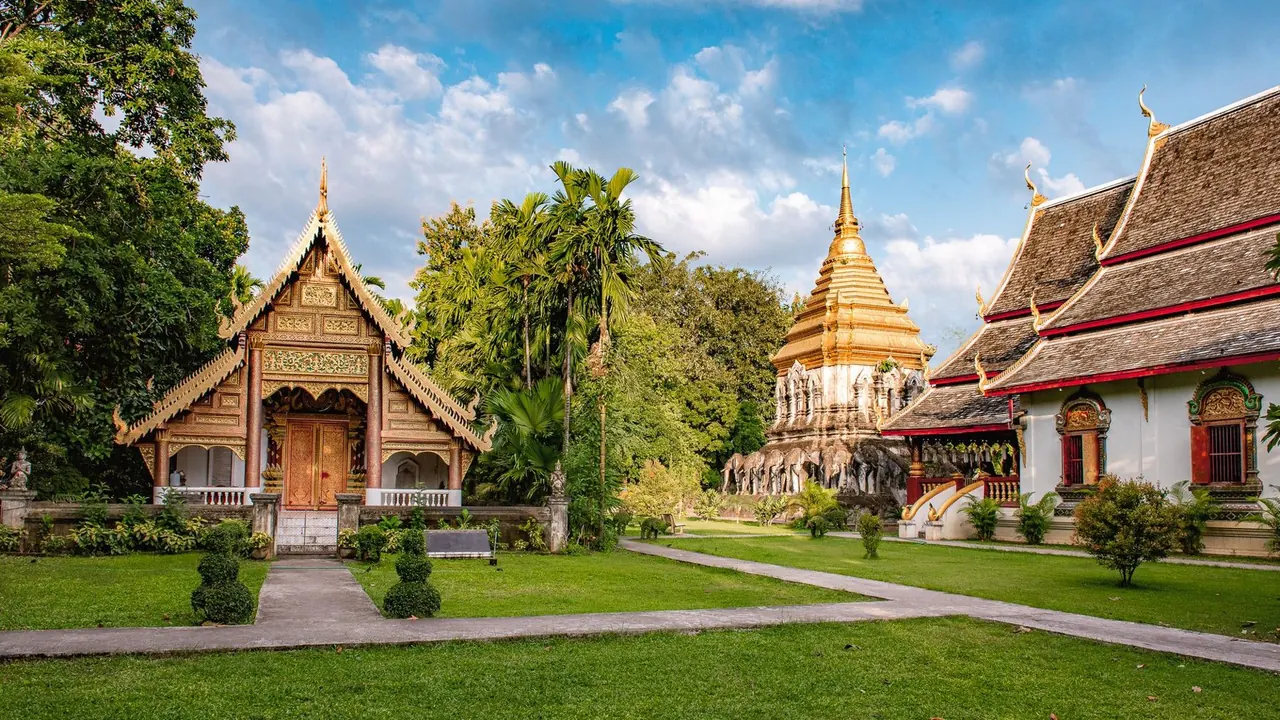
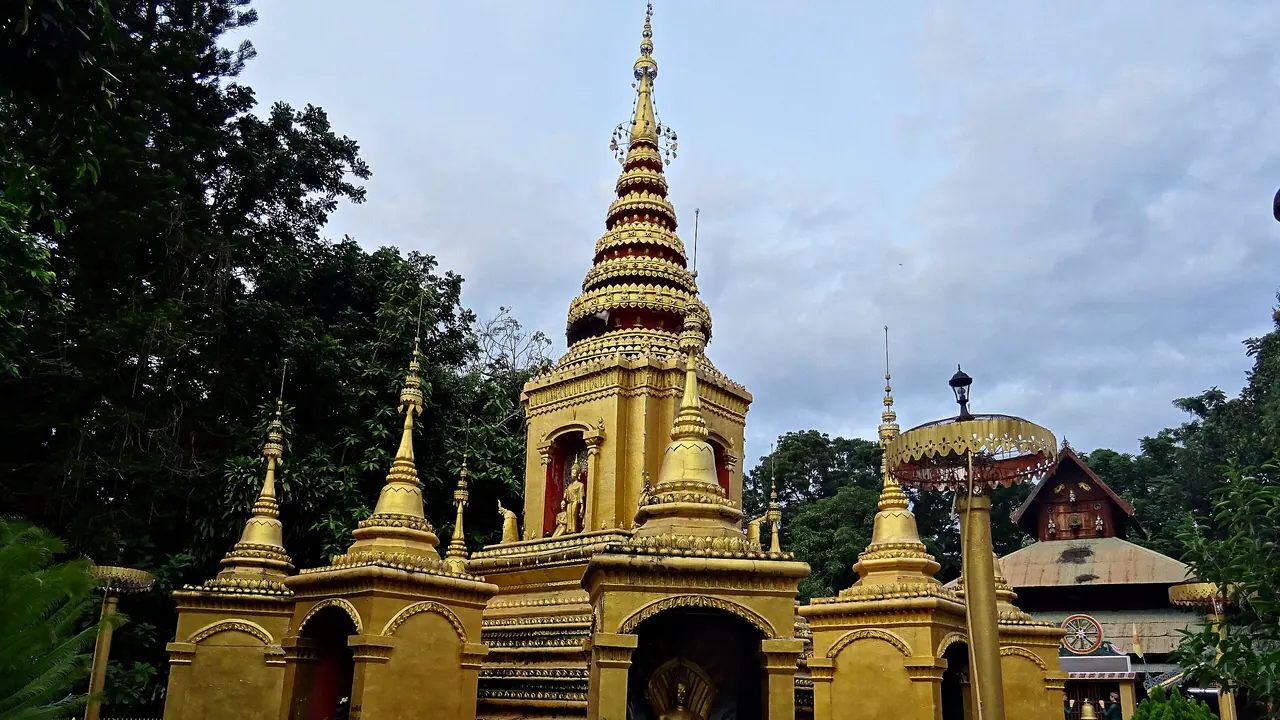
Photos: Chiang Mai by Gije Cho, Pexels License; Pai by Christophe95, CC BY-SA 4.0, cropped.
Chiang Mai or Pai?
Our verdict in twelve categories, each scored against the same fixed benchmark cities, and the climate month by month, so you can choose for your trip.
Choose Chiang Mai for
- culture and sights
- food and drink
- shopping
Chiang Mai is the stronger choice for most first visits to northern Thailand. It has the old walled city full of Lanna temples, some of the best regional cooking in the country, craft markets that run all weekend, and real day trips to Lamphun and Lampang. It also has songthaews and ride-hailing, so you can get around without riding a scooter. Families, food lovers and anyone with only a few days will get more out of it.
Choose Pai for
- beaches
Pai is for travellers who mainly want the valley itself. That means rice fields, sunset at Pai Canyon, morning soaks in hot springs and long afternoons with nothing planned. It has few sights, the food is simple and you will need a scooter or a hired driver. Its appeal is the slow pace, and it works best for confident riders and backpackers who can spare a week, ideally as a stop after Chiang Mai rather than instead of it.
Scoreboard
Twelve categories on one fixed scale from 0 to 100. The shaded stretch is the gap between the two.
Your match
Pick a travel style or drag the sliders, and both match scores follow your weighting.
Wins on culture and sights and food and drink with your weighting.
Wins on beaches with your weighting.
What matters to you?
Category by category
What the scores mean for a trip.
Beaches & swimming
Neither town has a beach. Both are in mountain valleys a long day's travel from the sea, so plan sand and sea for another part of the trip. Swimming is different in each. Chiang Mai has Huay Tung Tao reservoir and the old quarry lakes on the edge of town, while in Pai you swim in the river, float down it on an inner tube or bathe in the pools below Mo Paeng waterfall.
Food & drink
Chiang Mai is one of the best places in Thailand to eat northern food. Khao soi, herby sai ua sausage, nam prik noom and sticky rice are sold cheaply at Warorot market and the Chang Phueak Gate stalls. Coffee from the surrounding hills supports a café culture that few Asian cities can match.
Pai mainly feeds long-stay travellers. Its walking street has skewers and Shan dishes, and the cafés serve smoothie bowls, vegan plates and pizza. The noodles and tea in Santichon are the most distinctive meal in town. You will eat well, but northern cooking is thin and much of the food is adapted to foreign tastes.
Culture & sights
The gap here is wide. Chiang Mai's moated old city holds the great ruined chedi of Wat Chedi Luang, the wooden halls and murals of Wat Phra Singh and the silver Wat Sri Suphan, with carved teak monasteries on nearly every lane. Wat Phra That Doi Suthep looks down from the mountain above. Two or three days of slow temple walks are easy to fill.
Pai is a market town, and people go for the landscape. Its sights are the climb to the white Buddha at Wat Phra That Mae Yen, a few modest Shan temples, the old iron bridge and the mud-brick houses of Santichon. Together they take about half a day.
Nightlife
Neither is a clubbing town, and in both most bars close around midnight, but Chiang Mai has more choice. It offers cocktail and craft-beer bars in Nimmanhaemin with a student crowd, rooftop terraces and backpacker bars around Tha Phae Gate, and the rougher beer bars of Loi Kroh Road. Pai has reggae bars, gardens strung with fairy lights after the night market and the odd party out of town. The crowd is almost all young travellers, so it feels like a gap-year night out, not a night of cocktails.
Nature & outdoors
Both are excellent for the outdoors, but you use them differently. In Chiang Mai the forest starts at the edge of town, in Doi Suthep-Pui National Park with the monk's trail. Doi Inthanon's cloud forest is about an hour and a half away, and the Mae Taeng valley adds rafting, ziplines and treks, usually on organised trips.
In Pai the scenery surrounds the town, so you can ride out on a scooter yourself to the canyon ridges at sunset, the misty viewpoint at Yun Lai and the waterfalls nearby. The great river cave of Tham Lod is about an hour west. Both share the clear season from November to February and the smoky hills in spring.
Day trips
From Chiang Mai you can make real day trips. Lamphun's gilded chedi is about half an hour away, and Lampang, about an hour and a half away, has horse-drawn carriages and teak mansions. Closer in are the craft villages of Bo Sang and San Kamphaeng and the hill village of Mae Kampong.
Pai is too remote for that. Apart from Soppong and the Lahu and Lisu villages about an hour west, the nearest towns are three hours of bends away, so excursions from Pai mostly mean heading into the landscape.
Good for families
Chiang Mai has far more to keep children busy. Elephant sanctuaries where families feed the animals, the zoo on Doi Suthep, the Night Safari and the quarry swimming parks will fill several days, even though the broken pavements and traffic around the moat take patience.
Pai suits families with older children who like the outdoors, with farm visits, river tubing and hot springs. Younger children are harder work. The road up from Chiang Mai is known for making passengers sick, most sights need a scooter or driver, and the evenings are geared to backpackers.
Getting around
Neither town has a metro or tram, but Chiang Mai is much easier to manage without your own wheels. The red songthaews can be flagged down anywhere, and tuk-tuks and ride-hailing apps reach Nimmanhaemin or the airport in a short hop, so a scooter is only needed for the hills.
In Pai the centre is a few streets you can walk in minutes, but there is no public transport out to the canyon, waterfalls or hot springs. Most people rent a scooter on hill roads where beginners often crash, or else hire a songthaew or join a tour.
Shopping & style
For handmade goods, Chiang Mai is much stronger. The Sunday Walking Street on Ratchadamnoen, the Saturday market on Wualai Road with its silversmiths and the nightly Night Bazaar sell textiles, carved wood and hill-tribe embroidery. You can buy umbrellas at Bo Sang and silk at San Kamphaeng, and Nimmanhaemin has design studios.
Pai's evening walking street is fun to browse for cotton trousers, woven bags and small art prints, but the same goods repeat from stall to stall. Anything more ambitious is better bought in Chiang Mai.
Affordability
Both are very cheap, and what differs is where the extra costs appear. In Chiang Mai, guesthouses in old teak buildings and market meals cost very little, and the bill rises with paid outings such as sanctuary visits, treks and cooking classes.
In Pai, bungalows and scooter hire cost little, which is why so many travellers stay for weeks, and most sights are free. Prices in the tourist centre are above those of ordinary northern towns, and the resorts with pools cost noticeably more.
Live music & performing arts
Neither town is a place for the formal arts, but Chiang Mai has a little more to watch. There is no opera or classical season and theatre is rare, so an evening out means a khantoke dinner of northern food with Lanna dance, a Muay Thai fight night or the jazz and blues jams held every night near the old city's north gate. At Yi Peng, processions and performance fill the streets.
Pai has only its bar music, but it is a real part of the town's character, with acoustic, reggae and blues sets on informal open stages most nights. There is no theatre, concert hall or traditional performance there, and the quality varies a lot from one night to the next.
Wellness & relaxation
Chiang Mai is the place to learn Thai massage, not just to have one, at its long-established schools. You can also sit with monks at the meditation retreats of Wat Umong and Wat Suan Dok. Spas in converted teak houses and quiet resorts in the Mae Rim valley add comfort.
Pai's draw is its hot springs. The Tha Pai pools lie in a forest park south of town and are best on a cool morning. Massages are cheap, and yoga and detox retreats run on the outskirts. The spas are simple, and hammocks and rice-field views do most of the rest.
When should you go?
Pick your month. The climate figures are measured averages, not a forecast.
Chiang Mai in July
Pai in July
Daytime high, °C
Rainfall in the month, mm
Where the figures come from
Pai's temperatures are measured 64 km from the centre, at Mae Hong Son.
Pai's station stands 242 m below the city centre, so the centre is likely a little cooler than the figures say.
Pai has no rain gauge within 25 km of the centre, so its rainfall comes from a gridded climate dataset read at the city rather than from a gauge further away.
Pai's sunshine is measured 86 km from the centre, at Chiang Mai.
Temperature and rainfall are climate normals, averaged over the years shown. Chiang Mai: 1991-2020 normals, Chiang Mai (0.6 km from centre). Pai: 1971-2000 (sunshine 1991-2020, rainfall 1991-2020) normals, Mae Hong Son (63.7 km from centre).
The two towns share almost the same climate, so you can plan both for the same time of year. November to February is the best season. The air is clear, it barely rains, and daytime highs drop to about 29°C in December, which is comfortable for temple walks and hill trails. From March to April the heat builds to 38°C in Pai and only slightly less in Chiang Mai. This is also the burning season, when smoke hides the hills in both places.
The rains arrive in May and last until October, with August the wettest month at about 230mm in each. July and August also get the least sunshine. The hills turn green, but trails and back roads get muddy, and this is the time for rafting rather than walking. January to March are the sunniest months. The sea is a long way from both, so neither town has a beach season.
Which traveller are you?
For a short city break, go to Chiang Mai. You can fly straight in, spend one day walking the old city's temples and the next working through the markets and cafés. A few days in Pai lose a good part of their time to the minibus up the mountain.
On an outdoors trip the two are close, so choose by style. Chiang Mai suits guided days of rafting, ziplines and treks with a driver. Pai suits confident scooter riders who want the canyon, waterfalls and viewpoints a few minutes from their bungalow.
On a trip on a tight budget, both make money go a long way. Pai is better for staying put for weeks, because the valley itself is the entertainment. Chiang Mai keeps tempting you with paid sanctuary visits, treks and cooking classes.
Before you go
| Measure | Chiang Mai | Pai |
|---|---|---|
| Official language | Thai | Thai |
| Currency | Baht (THB) | Baht (THB) |
| Sockets | ABCF220 V, 50 Hz | ABCF220 V, 50 Hz |
| Driving side | Left | Left |
| Time zone | UTC+7 | UTC+7 |
| Emergency number | Police 191, ambulance 1669, fire 199 | Police 191, ambulance 1669, fire 199 |
| Elevation | 310 m | 509 m |
| Main airport | Chiang Mai International Airport (CNX)3 km from centre28 non-stop destinations | Chiang Mai International Airport (CNX)86 km from centre28 non-stop destinations |
By the numbers
| Measure | Chiang Mai | Pai |
|---|---|---|
| City population | 1,198,000 | 3,598 |
| People per km² | 2,958 | - |
| Museums within 10 km | 6 | 0 |
| UNESCO World Heritage sites within 50 km | 0 | 0 |
Where else could you go?
Every comparison below shares a destination with this one, so you can follow Chiang Mai or Pai somewhere new.
- Chiang Raivs Chiang Mai
- Chiang Raivs Pai
- Luang Prabangvs Chiang Mai
- Luang Prabangvs Pai
- Vientianevs Chiang Mai
- Vientianevs Pai