Photos: Chiang Mai by Gije Cho, Pexels License; Inle Lake by Micha Höfer, Pexels License.
Chiang Mai or Inle Lake?
Our verdict in twelve categories, each scored against the same fixed benchmark cities, and the climate month by month, so you can choose for your trip.
Choose Chiang Mai for
- food and drink
- nightlife
- shopping
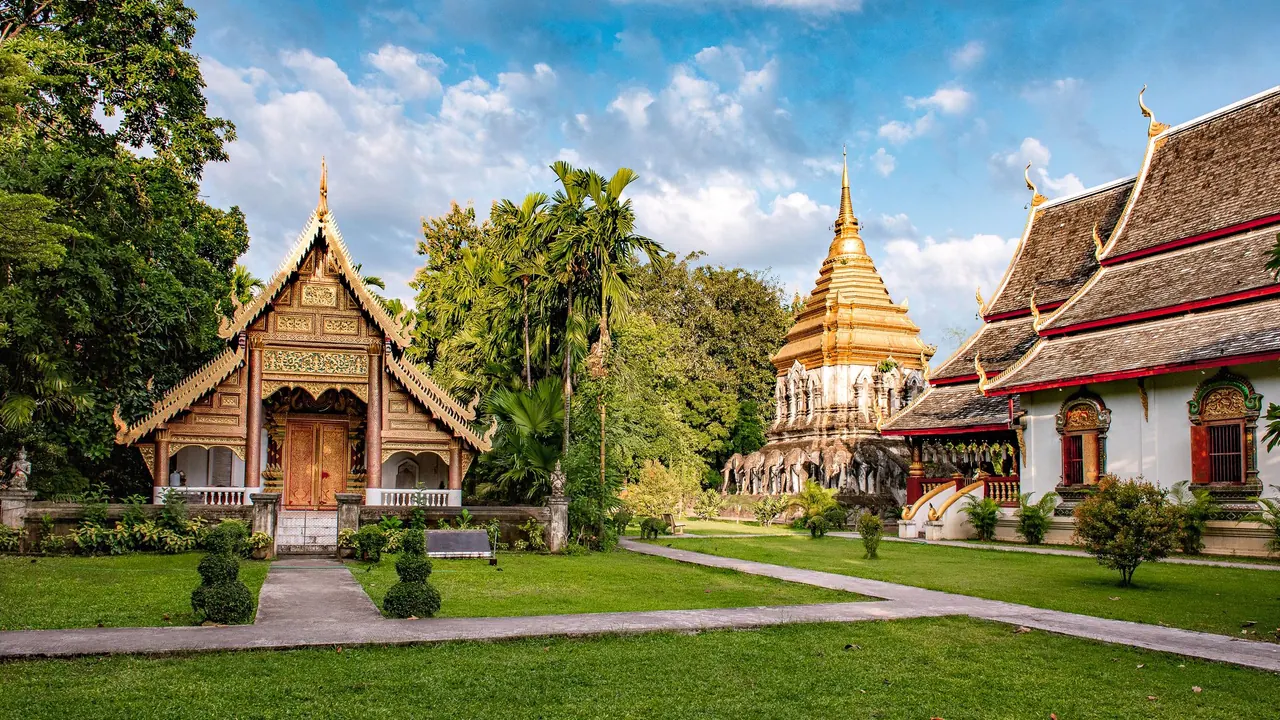
Chiang Mai is the better choice for a longer or more varied stay. It is a real city with a temple-filled old town, some of the best regional cooking in Thailand, a deep café culture, easy evenings out and a long tradition of massage and meditation. The mountains start at the edge of town, so a few days of hiking, rafting or sanctuary visits fit in without changing base. Families and anyone who gets restless after a few quiet days will be happier here.
Choose Inle Lake for
- day trips
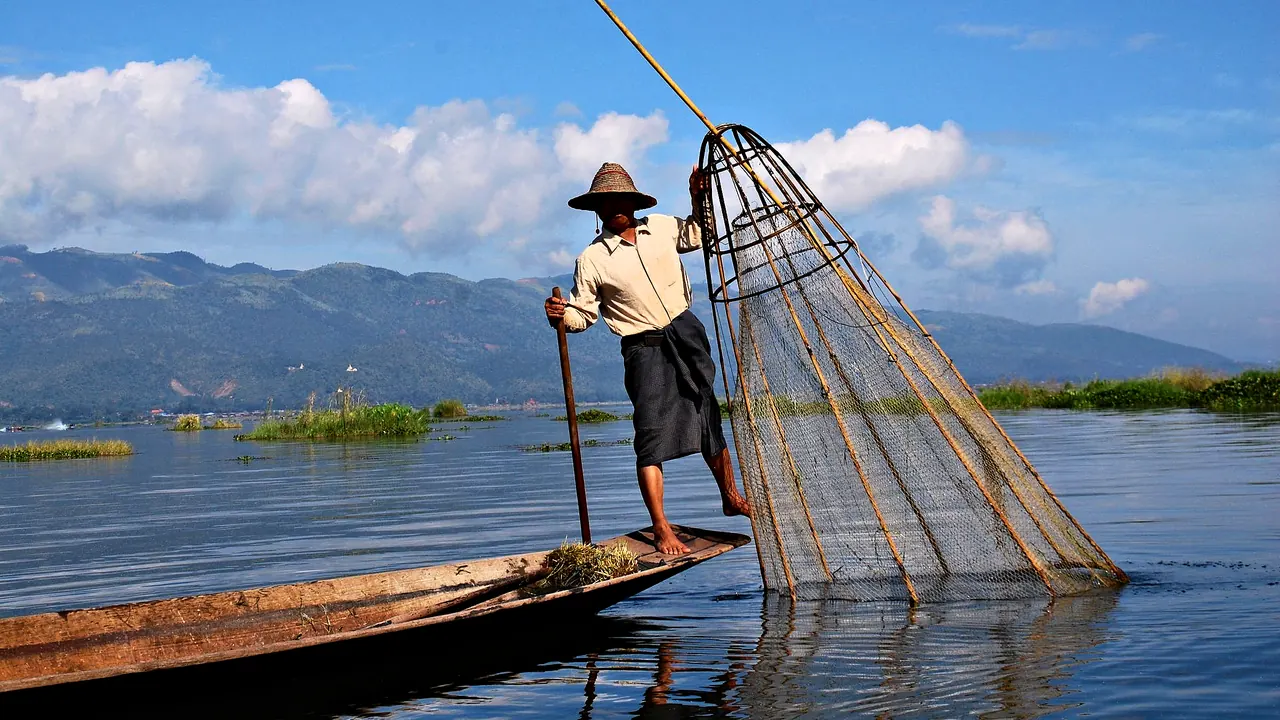
Inle Lake suits a traveller who wants a few slow days somewhere that feels nothing like a city. This is a highland lake you explore by boat and bicycle: stilt villages, monasteries standing in the water, leg-rowing fishermen and floating gardens in the morning mist. Food, nightlife and shopping are all thin, and getting there is slow, so the trip is about landscape and village life. It works best as one restful stop on a longer journey rather than as a whole vacation.
Scoreboard
Twelve categories on one fixed scale from 0 to 100. The shaded stretch is the gap between the two.
Your match
Pick a travel style or drag the sliders, and both match scores follow your weighting.
Wins on food and drink and nightlife with your weighting.
Wins on day trips with your weighting.
What matters to you?
Category by category
What the scores mean for a trip.
Beaches & swimming
Neither place has a beach, and both are far inland, so sea and sand belong to another part of the trip. The difference is where you can swim at all. Around Chiang Mai, locals swim at Huay Tung Tao reservoir, in old quarry lakes and in waterfall pools. Inle's water is used for fishing, farming and boat traffic, so swimming there means a resort pool and nothing more.
Food & drink
Chiang Mai is one of the strongest places in the country to eat, and northern Thai cooking is reason enough to come. Khao soi, herby sai ua sausage and nam prik noom with sticky rice are cheap at Warorot market and the stalls at Chang Phueak Gate. The coffee is grown in the hills and served in a large number of cafés.
Inle has its own fresh, lightly spiced Shan and Intha cooking: noodles, chickpea tofu, tomato salads and lake fish. It is a pleasure for a few days, but Nyaungshwe has only a small cluster of places to eat, and after a while the meals start to feel repetitive.
Culture & sights
Chiang Mai has more to see. Its moated old city has temples on almost every lane, from the ruined chedi of Wat Chedi Luang to the Lanna wooden halls of Wat Phra Singh, and Doi Suthep looks down over the valley. Museums are few, so the sightseeing is mostly temple walking.
At Inle, the main sight is daily life on the lake: stilt villages, Phaung Daw Oo Pagoda and the craft workshops. The overgrown stupa hillside at Indein is the highlight. It is memorable but small, and two or three days cover it.
Nightlife
Chiang Mai has a real night out, though not a wild one. You can choose between cocktail and craft beer bars in Nimmanhaemin, backpacker bars and rooftops around Tha Phae Gate, and the brasher beer bars of Loi Kroh Road. Most places close around midnight.
Inle has almost nothing after dark: a few terraces in Nyaungshwe serving beer and local wine, then bed before an early boat.
Nature & outdoors
Chiang Mai has more choice outdoors. Doi Suthep-Pui National Park starts at the edge of town, Doi Inthanon's cloud forest is within a day's reach, and the Mae Taeng and Mae Rim valleys offer rafting, ziplines and treks to hill villages. The downside is the spring burning season, when haze settles over the valley.
Inle is quieter and more about the scenery itself. A misty dawn by boat among herons, reed beds and floating tomato gardens is unlike anything near Chiang Mai. On land, you can cycle the flat roads to villages or arrive on foot over the hills from Kalaw.
Day trips
The day trips are about as good in both places but different in kind. From Chiang Mai the outings are mostly to towns: Lamphun's gilded chedi, Lampang's teak mansions and horse-drawn carriages, and the craft villages of Bo Sang and San Kamphaeng. Chiang Rai and Pai are better as overnight stays.
Inle's excursions are more striking. Kakku has more than two thousand stupas crowded together in Pa-O country, the Pindaya caves are lined with gilded Buddha images, and Kalaw is an old hill station. Each one needs a car and driver for the day.
Good for families
Chiang Mai works much better with children. Elephant sanctuaries, the zoo on Doi Suthep, the Night Safari, ziplines and quarry swimming parks fill several days, although broken pavements and heavy traffic make walking hard work.
Inle suits older children who like boats and the sight of the leg-rowers, and the flat cycling is easy. There is little else for children, the boat days are long and medical care is basic, so families with small children need to plan carefully.
Getting around
Getting around is about as easy, or as awkward, in both places, but in different ways. In Chiang Mai you walk the old city, then use the red songthaew trucks, tuk-tuks and ride-hailing apps beyond the moat, and many visitors hire a scooter for the hills.
At Inle you walk Nyaungshwe, cycle to nearby villages and hire a long-tail boat with a boatman to reach the lake sites. The harder part is getting in and out: the airport at Heho is an hour away by winding road, and every outing beyond the lake needs a car.
Shopping & style
Chiang Mai is the better place to shop for handmade things. The Sunday and Saturday walking streets and the nightly Night Bazaar sell textiles, carved wood, celadon and hill-tribe embroidery. Bo Sang makes paper umbrellas, San Kamphaeng weaves silk, and Nimmanhaemin adds small design studios.
Inle's crafts are rarer, especially lotus-fibre weaving, but you mostly buy them at boat-tour stops with a sales pitch attached. Its rotating five-day markets, where Pa-O hill people trade, are more interesting to visit than to shop at.
Affordability
Both are very cheap for simple travel, so cost should not decide between them. In Chiang Mai the extra spending comes from organised activities such as sanctuary visits, trekking and cooking classes. At Inle it comes from the overwater resorts and the private cars needed for the airport and day trips.
Live music & performing arts
Neither place has much formal performance, but Chiang Mai has more on any given night. There are jazz and blues jam sessions near the north gate, khantoke dinners with Lanna dance, Muay Thai fights, and the Yi Peng lantern festival, which fills the streets.
Inle's regular show is a small marionette theatre in Nyaungshwe. Its great spectacle comes once a year, when the Phaung Daw Oo images travel around the lake on a royal barge escorted by teams of racing leg-rowers.
Wellness & relaxation
Chiang Mai is one of the best-known places in the country to learn Thai massage, and massage is part of daily life there. It also has yoga studios, herbal steam rooms, meditation retreats at forest temples like Wat Umong and hot springs at San Kamphaeng.
Inle relaxes you through its pace rather than its treatments. You wake to mist over the water, spend the day drifting by boat and have quiet, dark evenings. The Khaung Daing hot springs and Burmese massage add a little, but there is less to fill a long stay.
When should you go?
Pick your month. The climate figures are measured averages, not a forecast.
Chiang Mai in July
Inle Lake in July
Daytime high, °C
Rainfall in the month, mm
Where the figures come from
Inle Lake has no weather station within reach, so its figures come from a gridded climate model rather than a measured record, and read a broad area rather than one spot.
Temperature and rainfall are climate normals, averaged over the years shown. Chiang Mai: 1991-2020 normals, Chiang Mai (0.6 km from centre). Inle Lake: 2001-2020 normals, NASA POWER reanalysis grid, no weather station within 90 km.
Both places are at their best from November to February, when the air is dry and the days are warm without being heavy. Inle Lake lies about 900m up and stays cooler all year. January afternoons reach about 24°C there against roughly 30°C in Chiang Mai, and early mornings on the water can be chilly. Chiang Mai has its longest spells of sunshine in these dry months. Spring is the hard season in the city: the heat builds to around 37°C in April, and long walks round the old city become tiring. The lake stays milder then.
The rains arrive in both places in May and last into October. They are heavier in Chiang Mai, where August brings about 234mm and the least sunshine of the year, while the lake gets a little over half that. Neither place has a sea, so none of this is about beach weather. The real choice is between a cool, dry winter trip, when both are at their best, and the green but muddy rainy months, which are a little gentler at the lake.
Which traveller are you?
For a food and nightlife trip, Chiang Mai wins easily: northern Thai cooking from morning market to evening stall, then a choice of neighbourhoods to drink in. Inle offers a few days of Shan noodles and early nights.
On a family trip with children, Chiang Mai is the better choice for a few days of animals, ziplines and swimming. The walking is hard, though, and the hazy spring is best avoided. Inle suits only older children who love boats.
For a relaxing and wellness trip, Chiang Mai suits a longer stay with something to learn or practise: a massage course, yoga or a retreat with monks. Inle suits rest without a plan, a few quiet days by the water before moving on.
Before you go
| Measure | Chiang Mai | Inle Lake |
|---|---|---|
| Official language | Thai | Burmese |
| Currency | Baht (THB) | Kyat (MMK) |
| Sockets | ABCF220 V, 50 Hz | CFG230 V, 50 Hz |
| Driving side | Left | Right |
| Time zone | UTC+7 | UTC+6:30 |
| Emergency number | Police 191, ambulance 1669, fire 199 | Police 199, ambulance 192, fire 191 |
| Elevation | 310 m | - |
| Main airport | Chiang Mai International Airport (CNX)3 km from centre29 non-stop destinations | Heho Airport (HEH)11 non-stop destinations |
By the numbers
| Measure | Chiang Mai | Inle Lake |
|---|---|---|
| Population | 1,198,000 | - |
| People per km² | 2,958 | - |
| Museums within 10 km | 6 | - |
| UNESCO World Heritage sites within 50 km | 0 | - |
Where else could you go?
Every comparison below shares a destination with this one, so you can follow Chiang Mai or Inle Lake somewhere new.
- Paivs Chiang Mai
- Chiang Raivs Chiang Mai
- Baganvs Inle Lake
- Luang Prabangvs Chiang Mai
- Yangonvs Chiang Mai
- Vientianevs Chiang Mai