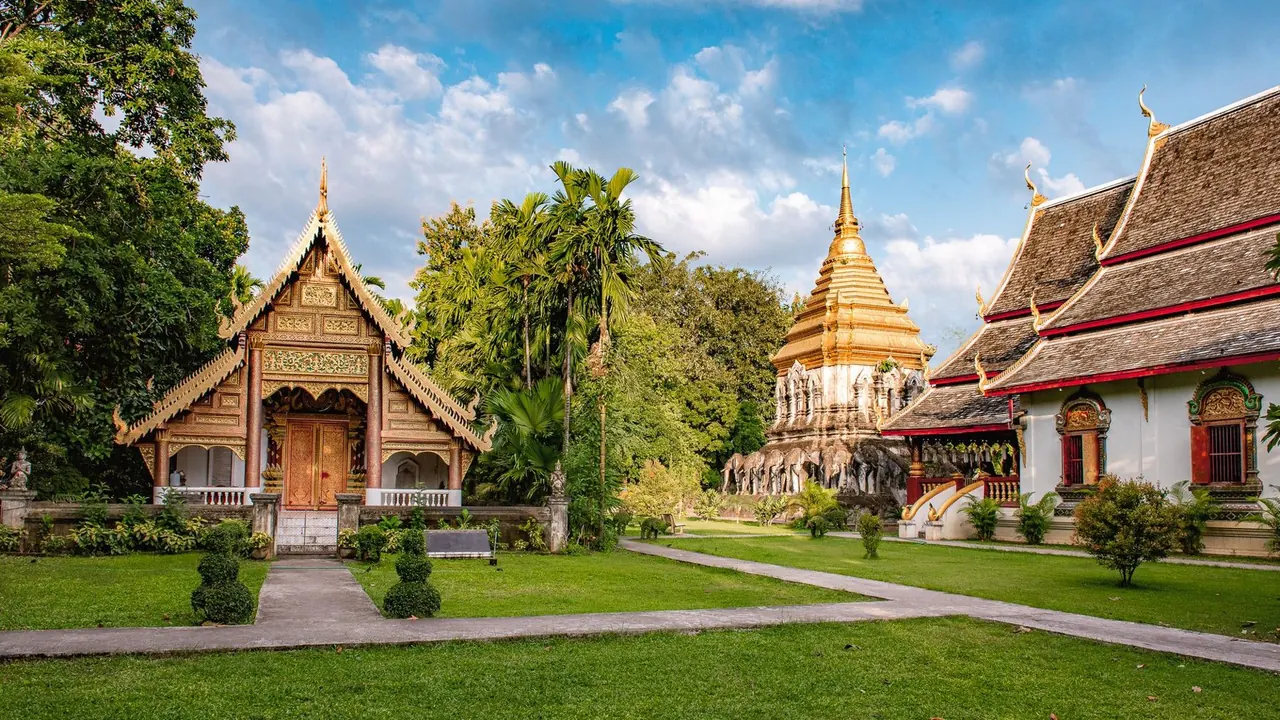
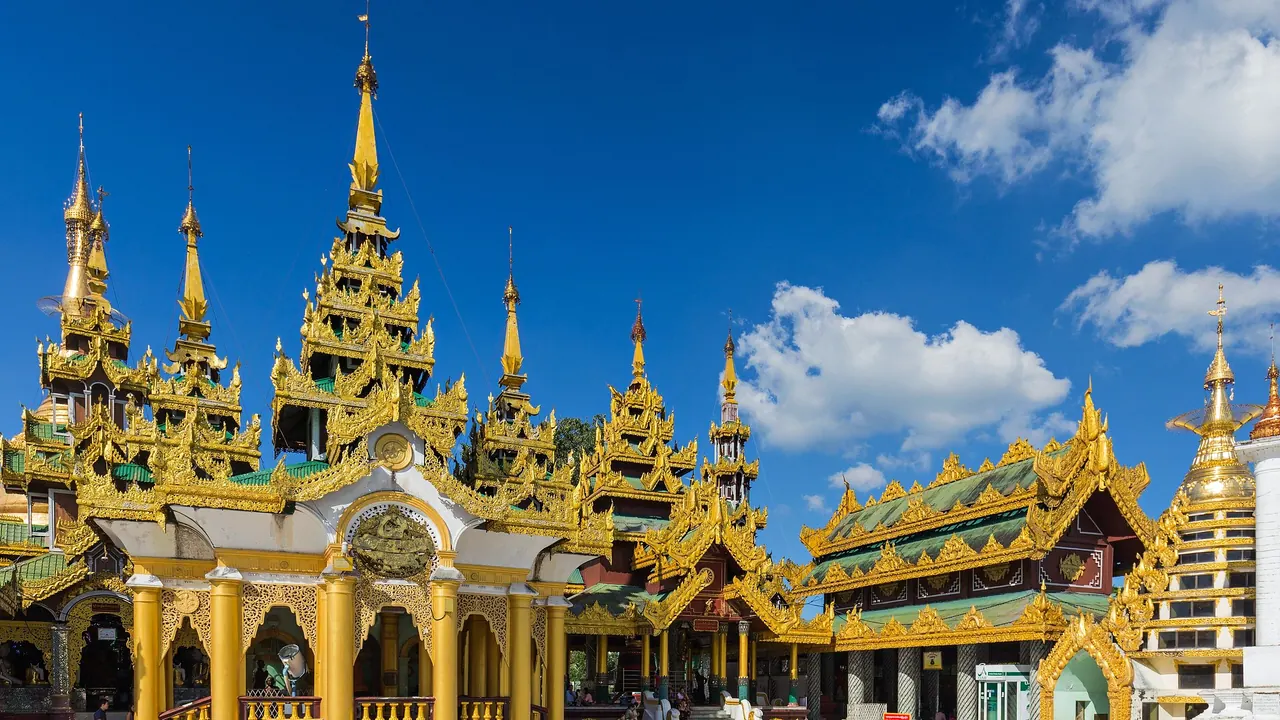
Photos: Chiang Mai by Gije Cho, Pexels License; Yangon by Marcin Konsek, CC BY-SA 4.0, cropped.
Chiang Mai or Yangon?
Our verdict in twelve categories, each scored against the same fixed benchmark cities, and the climate month by month, so you can choose for your trip.
Choose Chiang Mai for
- nature and the outdoors
- wellness
- families
Chiang Mai is the easier and broader choice. It is a mountain-ringed city where temple walks in the old city sit beside forest trails on Doi Suthep, northern Thai cooking, craft markets and a massage at the end of each day. It suits a longer, slower stay, and it works well for families, for outdoor travellers and for anyone who wants comfort on a small budget.
Choose Yangon for
- culture and sights
Yangon asks more of a visitor and gives back something narrower but singular: the Shwedagon at dusk, a weathered colonial downtown, tea shops serving mohinga and vipassana centres open to foreigners. Go for two or three days of pagodas, architecture and street life in a city far less set up for tourism. Be ready for heat, traffic and early, quiet evenings.
Scoreboard
Twelve categories on one fixed scale from 0 to 100. The shaded stretch is the gap between the two.
Your match
Pick a travel style or drag the sliders, and both match scores follow your weighting.
Wins on nature and the outdoors and wellness with your weighting.
Wins on culture and sights with your weighting.
What matters to you?
Category by category
What the scores mean for a trip.
Beaches & swimming
Neither city has a beach, and in both a swim during the stay usually means a pool. What differs is the water nearby. In Chiang Mai, locals swim in Huay Tung Tao reservoir, quarry lakes and waterfall pools. Yangon's silty river is not for swimming at all.
For sand, travellers in Chiang Mai usually fly south to the Thai islands. From Yangon, the Bay of Bengal beaches at Chaung Tha and Ngwe Saung are a long drive away and need a separate trip of several nights.
Food & drink
Chiang Mai is the stronger place to eat. Its regional cooking has dishes of its own, such as khao soi, herby sai ua sausage and nam prik noom, served cheaply at Warorot market and the Chang Phueak Gate stalls. Coffee grown in the surrounding hills supports a café culture with real depth.
Yangon's food is just as distinctive but rougher round the edges: tea shops with mohinga and palata, laphet thoke, and the Indian and Chinese quarters adding biryani, dim sum and the evening skewers of 19th Street. Polished restaurants are scarce, and there is nothing like Chiang Mai's café scene.
Culture & sights
The two are close on culture, but their sights are built differently. Chiang Mai spreads its interest across dozens of temples inside the moated old city, Wat Chedi Luang and Wat Phra Singh among them, best seen on slow walks, with Doi Suthep's temple looking down over the valley.
Yangon gathers its pull around one overwhelming monument, the gilded Shwedagon at dusk. It also has something Chiang Mai lacks: a whole colonial downtown of weathered government buildings, banks and churches around the Sule Pagoda. Museums are modest in both cities.
Nightlife
Neither is a clubbing city, but Chiang Mai gives you more to do in the evening. It has cocktail and craft beer bars in Nimmanhaemin, backpacker bars and rooftops around Tha Phae Gate, and the louder strip on Loi Kroh Road, with most places open until about midnight. Yangon goes quiet much earlier, and a night out mostly means draught beer and football at a beer station or skewers on 19th Street.
Nature & outdoors
This is the widest gap between the two. Chiang Mai has mountains on its doorstep: Doi Suthep-Pui National Park starts at the western edge of town, Doi Inthanon rises to about 2,565m within easy reach, and the Mae Taeng and Mae Rim valleys offer rafting, treks to hill villages and mountain biking.
Yangon sits on flat delta land with no hills or trails nearby. Being outdoors there means walks by Kandawgyi and Inya lakes, the old park at Hlawga and a ferry ride for a view of river life.
Day trips
Chiang Mai has a little more within easy reach. Lamphun's gilded chedi is half an hour away, Lampang has horse-drawn carriages and teak mansions, and the craft villages and hills make easy half days. Yangon's best day out is Bago, two hours north, with its great pagoda and reclining Buddha, and the pottery town of Twante lies across the river.
Each city keeps its most famous excursions for an overnight trip. From Chiang Mai that means Chiang Rai and Pai, and from Yangon it means the Golden Rock.
Good for families
Chiang Mai is far easier with children. Elephant sanctuaries, the zoo on Doi Suthep, the Night Safari, ziplines and quarry swimming parks can fill several days. Broken pavements and the hazy burning season need planning around.
Yangon has the same broken pavements and heavy traffic, plus relentless heat. Beyond an old zoo, a small amusement park and the lawns of People's Park, little is made for children, so it suits older ones who enjoy temples and markets.
Getting around
Neither city has a metro, and in both a walkable centre gives way to taxis and ride-hailing. Chiang Mai is somewhat easier: red songthaew pickups can be flagged down anywhere, Nimmanhaemin is a short ride away, and scooters or hired drivers handle the hills. Yangon's downtown grid can be walked and is calmer because motorbikes are kept out, but traffic beyond it is heavy, and the Circular Railway is a sightseeing loop rather than a way across town.
Shopping & style
Chiang Mai is the better place to shop, above all for handmade things. There is the Sunday Walking Street, the Saturday market on Wualai Road and the Night Bazaar every evening, along with paper umbrellas from Bo Sang, weaving from San Kamphaeng and small design studios in Nimmanhaemin.
Yangon's shopping centres on one place, Bogyoke Aung San Market, for lacquerware, longyi, puppets and gems that need careful buying. Neither city is the place for fashion labels.
Affordability
Both are cheap, and Chiang Mai is cheaper still. Guesthouses in old teak buildings are inexpensive, food and transport cost very little, and massages are cheap enough to have every day. Yangon's tea shops and taxis cost little too, but good international-standard hotels cost more than the rest of a stay would suggest, and the Shwedagon charges foreigners for entry.
Live music & performing arts
Formal stage life is thin in both cities, but Chiang Mai has more on in the evenings. There are nightly jazz and blues jam sessions near the old city's north gate, bands in Nimmanhaemin, khantoke dinners with Lanna dance, and Muay Thai fight nights. Yangon offers less: mainly marionette shows and classical dance dinners at the barge-shaped Karaweik Palace. Its zat pwe theatre comes with pagoda festivals and is hard for a visitor to find.
Wellness & relaxation
Chiang Mai makes slowing down easy. There is massage on almost every lane, long-established schools where you can learn it, spas in teak houses, meditation at the forest temple of Wat Umong and hot spring pools at San Kamphaeng.
Yangon has less on offer, though what it has is serious: firm Burmese massage and vipassana centres such as Mahasi, where visitors can practise for days or weeks. Outside them the city is hot and congested, so calm comes in moments, at the Shwedagon early in the morning or beside Inya Lake in the evening.
When should you go?
Pick your month. The climate figures are measured averages, not a forecast.
Chiang Mai in July
Yangon in July
Daytime high, °C
Rainfall in the month, mm
Temperature and rainfall are climate normals, averaged over the years shown. Chiang Mai: 1991-2020 normals, Chiang Mai (0.6 km from centre). Yangon: 1991-2020 normals, Yangon (3.2 km from centre).
Chiang Mai is at its most pleasant from November to January. Days are warm at around 30°C, there is almost no rain and the sun shines for long hours. From February the heat builds to a peak of about 37°C in April, which is also the hazy burning season. The rains arrive in May and are heaviest in August and September, when the hills turn green and the sunshine drops sharply.
Yangon runs hotter through its dry season. Rain is almost absent from November to April, but highs climb to 38°C by April, so November to February is the comfortable window for walking. Its monsoon is much heavier than Chiang Mai's: from June to August each month brings close to 590mm, more than double the north's wettest month, and the city becomes a place of downpours rather than street walks. The sea off the Burmese coast stays warm all year, but it is a separate trip from the city.
Which traveller are you?
On an outdoors trip, Chiang Mai wins clearly. You can walk into national park forest from the edge of town and reach Thailand's highest mountain in a day out, with rafting and hill treks in the valleys. Yangon offers only lakeside strolls on flat delta land.
For a relaxing and wellness trip, Chiang Mai is the natural pick. Massage is part of everyday life, the green lanes of the old city set a slow pace, and hot springs are close by. Yangon mainly suits those coming specifically for vipassana practice.
On a family trip with children, Chiang Mai is much easier. The city is smaller and calmer, outings with animals and waterfall walks are only a short drive away, and the cool months suit small legs. In Yangon the heat and traffic tire children quickly.
Before you go
| Measure | Chiang Mai | Yangon |
|---|---|---|
| Official language | Thai | Burmese |
| Currency | Baht (THB) | Kyat (MMK) |
| Sockets | ABCF220 V, 50 Hz | CFG230 V, 50 Hz |
| Driving side | Left | Right |
| Time zone | UTC+7 | UTC+6:30 |
| Emergency number | Police 191, ambulance 1669, fire 199 | Police 199, ambulance 192, fire 191 |
| Elevation | 310 m | 15 m |
| Main airport | Chiang Mai International Airport (CNX)3 km from centre28 non-stop destinations | Yangon International Airport (RGN)13 km from centre27 non-stop destinations |
By the numbers
| Measure | Chiang Mai | Yangon |
|---|---|---|
| City population | 1,198,000 | 6,874,000 |
| People per km² | 2,958 | 11,934 |
| Museums within 10 km | 6 | 5 |
| UNESCO World Heritage sites within 50 km | 0 | 0 |
| Swim season, months above 21 °C | - | 12 months |
Where else could you go?
Every comparison below shares a destination with this one, so you can follow Chiang Mai or Yangon somewhere new.
- Paivs Chiang Mai
- Chiang Raivs Chiang Mai
- Luang Prabangvs Chiang Mai
- Paivs Yangon
- Vientianevs Chiang Mai
- Kanchanaburivs Yangon