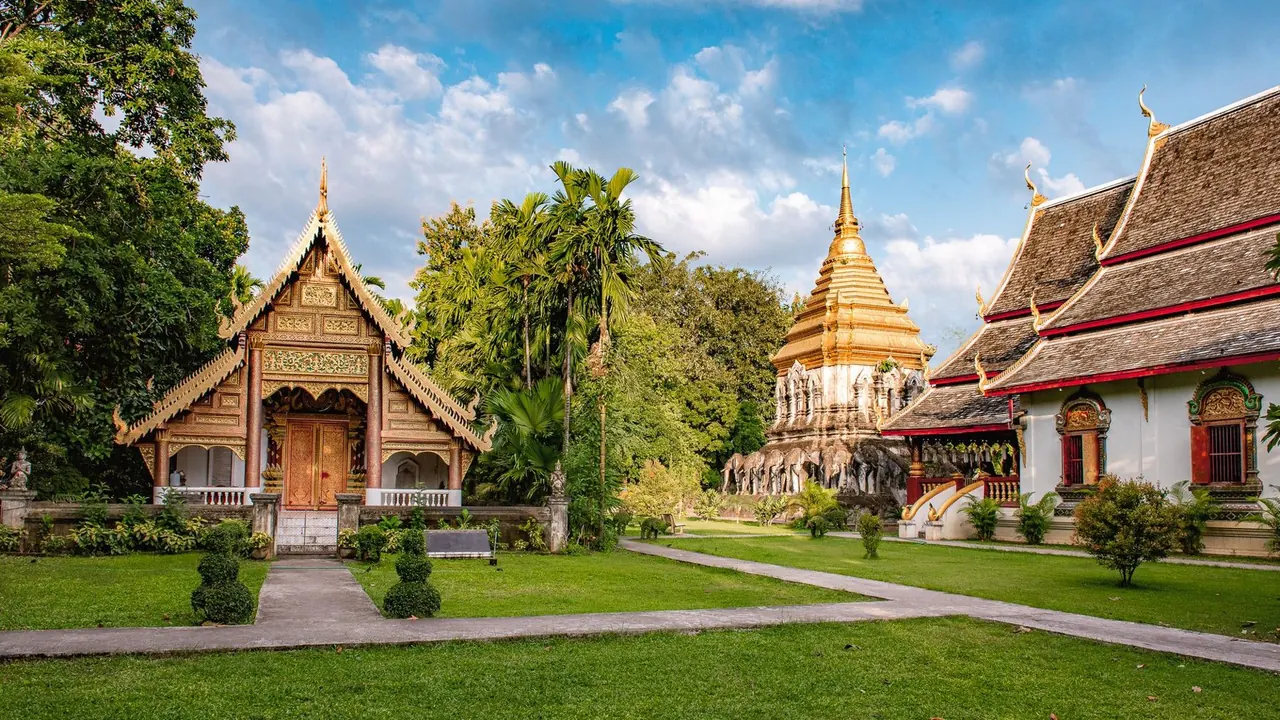
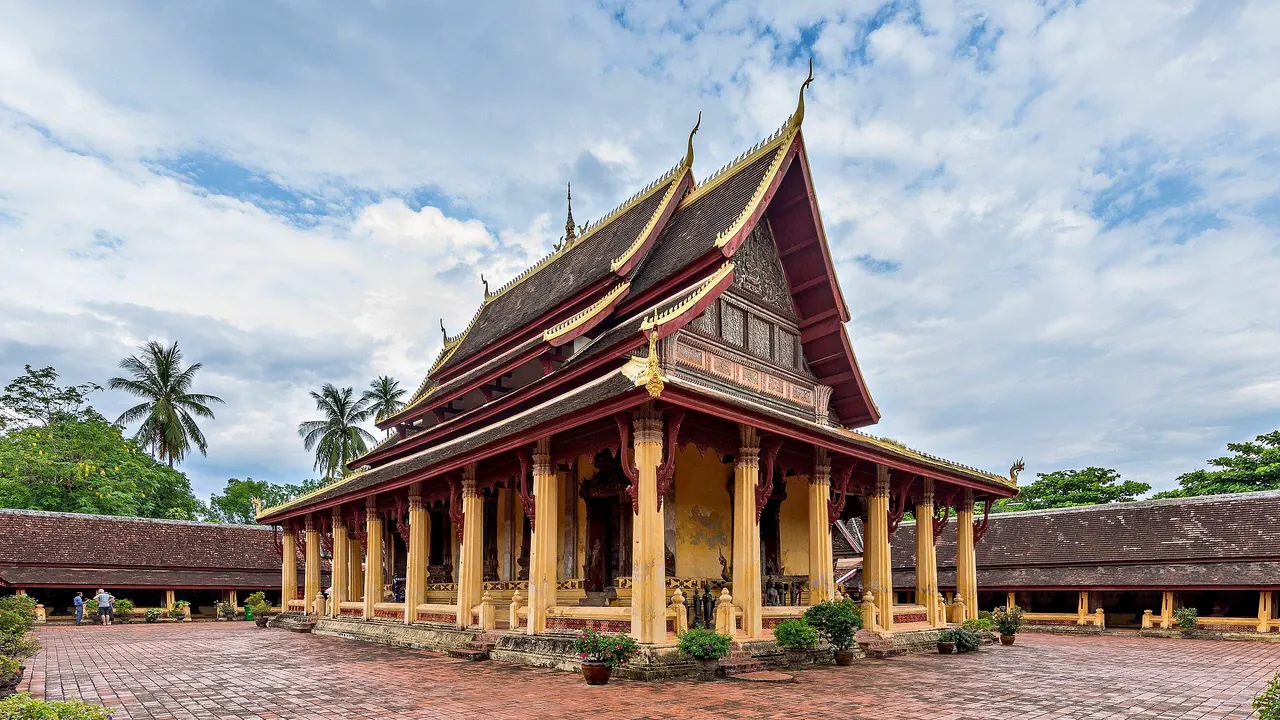
Photos: Chiang Mai by Gije Cho, Pexels License; Vientiane by Basile Morin, CC BY-SA 4.0, cropped.
Chiang Mai or Vientiane?
Our verdict in twelve categories, each scored against the same fixed benchmark cities, and the climate month by month, so you can choose for your trip.
Choose Chiang Mai for
- families
- shopping
- food and drink
Chiang Mai is the stronger all-round choice. It suits a first visit to the region or a stay of a week or more. The old city's temples can fill several slow days, Doi Suthep's forest begins at the edge of town, and northern Thai cooking, craft markets and serious massage schools give each day more to do. Families and anyone who likes a sociable evening will also find more here.
Choose Vientiane for
- day trips
Vientiane is the quieter pick for travellers who would rather drift than tick things off. Expect a day or two of temples, coffee and baguettes in the morning, and Beerlao by the Mekong at sunset. It works best as a calm base or a stop on a longer Laos route, with the train north putting Vang Vieng and Luang Prabang within easy reach.
Scoreboard
Twelve categories on one fixed scale from 0 to 100. The shaded stretch is the gap between the two.
Your match
Pick a travel style or drag the sliders, and both match scores follow your weighting.
Wins on families and shopping with your weighting.
Wins on day trips with your weighting.
What matters to you?
Category by category
What the scores mean for a trip.
Beaches & swimming
Neither city is anywhere near the sea, so neither works for a beach trip. The difference is in how you cool off. Chiang Mai has a reservoir under Doi Suthep, flooded quarry lakes and pools below waterfalls. In Vientiane, the Mekong is too fast and muddy for swimming, so a hotel pool is the realistic option unless you head up to the lagoons around Vang Vieng.
Food & drink
Chiang Mai is the better place to eat. Northern Thai cooking has its own character: khao soi with crisp noodles, herby sai ua sausage and chilli dips with pork crackling, served cheaply at Warorot market and the stalls by Chang Phueak Gate. Coffee grown in the hills feeds a café culture that few cities in the region can match.
Vientiane's table is simpler but distinct. It has larb, papaya salad sharpened with fermented fish, and, a legacy of the French years, baguettes stuffed with pâté for breakfast. Its best evening meal is grilled fish at the plastic tables along the Mekong, but there is less range, and fine dining is limited.
Culture & sights
Chiang Mai has far more to see. The moated old city packs dozens of temples into walking distance, from the ruined chedi of Wat Chedi Luang to the Lanna wooden halls of Wat Phra Singh and the silver Wat Sri Suphan, with Doi Suthep looking down from its mountain. Two or three unhurried days are well spent here.
Vientiane's sights fit into a day or two: the gilded Pha That Luang, the cloister of Buddha images at Wat Si Saket, and Patuxai. Its most affecting visits are the COPE centre, on unexploded ordnance in Laos, and the odd concrete sculptures of Buddha Park out of town.
Nightlife
Evenings in Chiang Mai have more variety. There are cocktail and craft beer bars in Nimmanhaemin with a student crowd, backpacker bars and rooftops around Tha Phae Gate, and the brasher Loi Kroh Road, though most places still close around midnight. Vientiane is gentler still. A night out usually means Beerlao at a riverside table watching the sunset, a few expat bars and a small number of local clubs playing Lao and Thai pop.
Nature & outdoors
In Chiang Mai the outdoors starts at the edge of town. Doi Suthep-Pui's forest trails and waterfalls begin where the city ends, and Doi Inthanon's cloud forest is about an hour and a half away. The nearby valleys add rafting, treks to hill villages and mountain biking. The hazy months before the rains are the time to avoid.
Vientiane itself is flat, and the riverside promenade is its main green space. The best scenery lies around Vang Vieng, among limestone karst with caves, climbing and kayaking, an hour away by train. Closer in, Phou Khao Khouay and the islands of the Nam Ngum reservoir make quieter outings.
Day trips
Both cities have a similar choice of outings, but they reach them in different ways. From Chiang Mai, short road trips lead to older towns: Lamphun's gilded chedi is half an hour away, Lampang's teak mansions and horse carriages a little further, and the craft villages of Bo Sang and San Kamphaeng are nearby. Chiang Rai and Pai are too far for a comfortable return trip in a day.
Vientiane relies on the railway. Luang Prabang is about two hours north, which makes a long but possible day, and Vang Vieng is easier still. Crossing the Friendship Bridge brings Nong Khai's sculpture garden within reach, though the border adds time.
Good for families
Children are warmly welcomed in both cities, but Chiang Mai has much more for them to do. Elephant sanctuaries where families feed and walk with the animals, the zoo on Doi Suthep's slopes, the Night Safari and ziplines can keep a family busy for several days. Avoid the smoky season with young children.
In Vientiane, the giant statues of Buddha Park and a small water park are about all there is. Heat and missing pavements wear out small children, so a hotel with a pool matters.
Getting around
Neither city has a metro, and both centres are walkable as long as the heat and the cluttered pavements allow. Chiang Mai is the bigger and busier of the two, with heavy traffic around the moat. Its red shared songthaews, which you flag down in the street, and ride-hailing apps cover most journeys, and a driver is the usual answer for the mountains. Vientiane's light traffic and flat streets make a rented bicycle a real option, while tuk-tuks reach the outlying sights.
Shopping & style
Handmade things are what both cities sell, but Chiang Mai has far more of them and more ways to browse. The Sunday Walking Street along Ratchadamnoen and the Saturday market on Wualai Road, the old silversmiths' street, stretch for long evening hours of textiles, carved wood, ceramics and hill-tribe embroidery, and the Night Bazaar fills the gap on other days. Celadon, lacquerware, silk from San Kamphaeng and Bo Sang's painted umbrellas give you a wider range of crafts, and Nimmanhaemin's small design studios add something more modern.
In Vientiane the list comes down to one thing done well: handwoven Lao silk and cotton, with patterns that change from one ethnic group to another, sold in small galleries, as sinh skirts and among the gold and everyday goods of Talat Sao. Look beyond textiles and the riverside night market's souvenirs and there is little else to shop for.
Affordability
Both cities are about as cheap as travel in Asia gets, with low-cost guesthouses, very cheap market meals and massages you can afford every day. In Chiang Mai the money goes on organised outings such as sanctuary visits, treks and cooking classes, and on the resorts in the hills. In Vientiane it goes on Western restaurants and imported wine, and tuk-tuk fares need agreeing before you set off.
Live music & performing arts
Neither city has formal performing arts, but Chiang Mai has more live music. Jazz and blues jam sessions run nightly near the old city's north gate, there are bands in Nimmanhaemin, and you can see khantoke dinners with Lanna dance, Muay Thai fight nights and the processions of Yi Peng. In Vientiane, the choice is a staged show of Lao dance with the khaen mouth organ, a few cover bands and temple festivals if your dates happen to match.
Wellness & relaxation
Thai massage is something you can learn in Chiang Mai as well as receive. The city's long-established schools are the best known in the country, and garden spas in old teak houses, yoga studios and herbal steam rooms make it easy to build a whole stay around rest. Wat Umong's forest tunnels and Wat Suan Dok host meditation retreats and talks with monks, and the spring-fed pools at San Kamphaeng are under an hour away.
Vientiane's answer is the Lao herbal sauna, where you sweat in a wooden steam room thick with lemongrass and tamarind, often beside a temple such as Wat Sok Pa Luang, then sit over herbal tea before a massage. It is a lovely ritual, and the slow pace of the city helps, but there are few proper spas and nothing like Chiang Mai's choice of retreats.
When should you go?
Pick your month. The climate figures are measured averages, not a forecast.
Chiang Mai in July
Vientiane in July
Daytime high, °C
Rainfall in the month, mm
Temperature and rainfall are climate normals, averaged over the years shown. Chiang Mai: 1991-2020 normals, Chiang Mai (0.6 km from centre). Vientiane: 1991-2020 normals, Vientiane (7.6 km from centre).
The two cities share a calendar. November to February is the time to go to either: dry, sunny and pleasantly warm, with highs around 29°C in December. From March the heat builds, and April is draining for street walking, reaching 37°C in Chiang Mai and 35°C in Vientiane. In Chiang Mai this is also the hazy burning season, which spoils the views and the hiking.
The rains arrive in May and last into October. Vientiane gets much more of it, with 333mm in August against Chiang Mai's 234mm. Chiang Mai is also noticeably sunnier from January to April, while in the wettest months both see little sun. Neither city has a sea, so the climate matters for temple walks and trips into the hills, not for the beach.
Which traveller are you?
On a family trip with children, Chiang Mai is the clear choice. Elephant sanctuaries, the zoo and Night Safari, ziplines and quarry swimming parks can fill several days. In Vientiane there is little beyond a small water park and Buddha Park.
For a food and nightlife trip, Chiang Mai again comes out ahead. You get khao soi at market stalls, a deep café culture and then cocktail and craft beer bars in Nimmanhaemin. Vientiane offers good Lao grills and Beerlao by the river, but the city is asleep by midnight.
For an outdoors trip, choose Chiang Mai. The trails of Doi Suthep start at the edge of town, and Doi Inthanon, rafting and jungle treks are close by. Vientiane sits on a flat plain, and its best scenery around Vang Vieng is a train ride away.
Before you go
| Measure | Chiang Mai | Vientiane |
|---|---|---|
| Official language | Thai | Lao |
| Currency | Baht (THB) | Lao Kip (LAK) |
| Sockets | ABCF220 V, 50 Hz | ABCEF230 V, 50 Hz |
| Driving side | Left | Right |
| Time zone | UTC+7 | UTC+7 |
| Emergency number | Police 191, ambulance 1669, fire 199 | Police 191, ambulance 195, fire 190 |
| Elevation | 310 m | 174 m |
| Main airport | Chiang Mai International Airport (CNX)3 km from centre28 non-stop destinations | Wattay International Airport (VTE)7 km from centre41 non-stop destinations |
By the numbers
| Measure | Chiang Mai | Vientiane |
|---|---|---|
| City population | 1,198,000 | 948,487 |
| People per km² | 2,958 | 242 |
| Museums within 10 km | 6 | 2 |
| UNESCO World Heritage sites within 50 km | 0 | 1 |
Where else could you go?
Every comparison below shares a destination with this one, so you can follow Chiang Mai or Vientiane somewhere new.
- Chiang Raivs Chiang Mai
- Luang Prabangvs Vientiane
- Luang Prabangvs Chiang Mai
- Chiang Raivs Vientiane
- Ayutthayavs Vientiane
- Hanoivs Vientiane