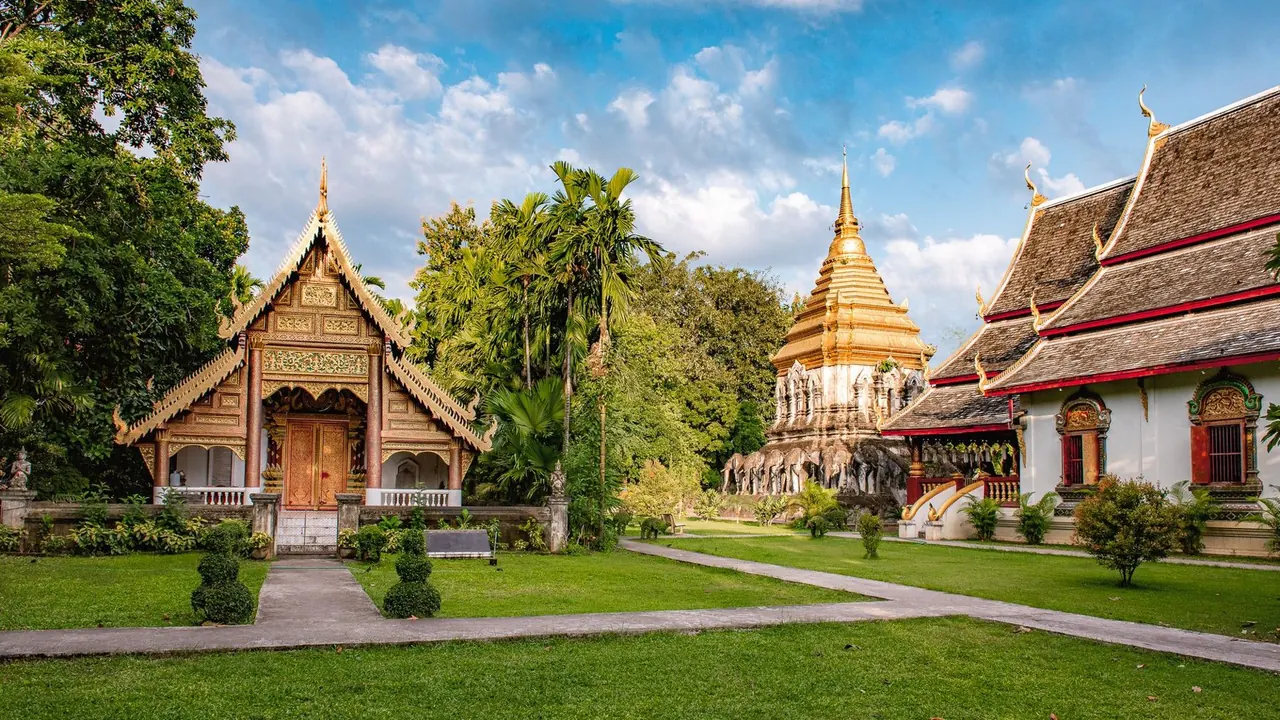
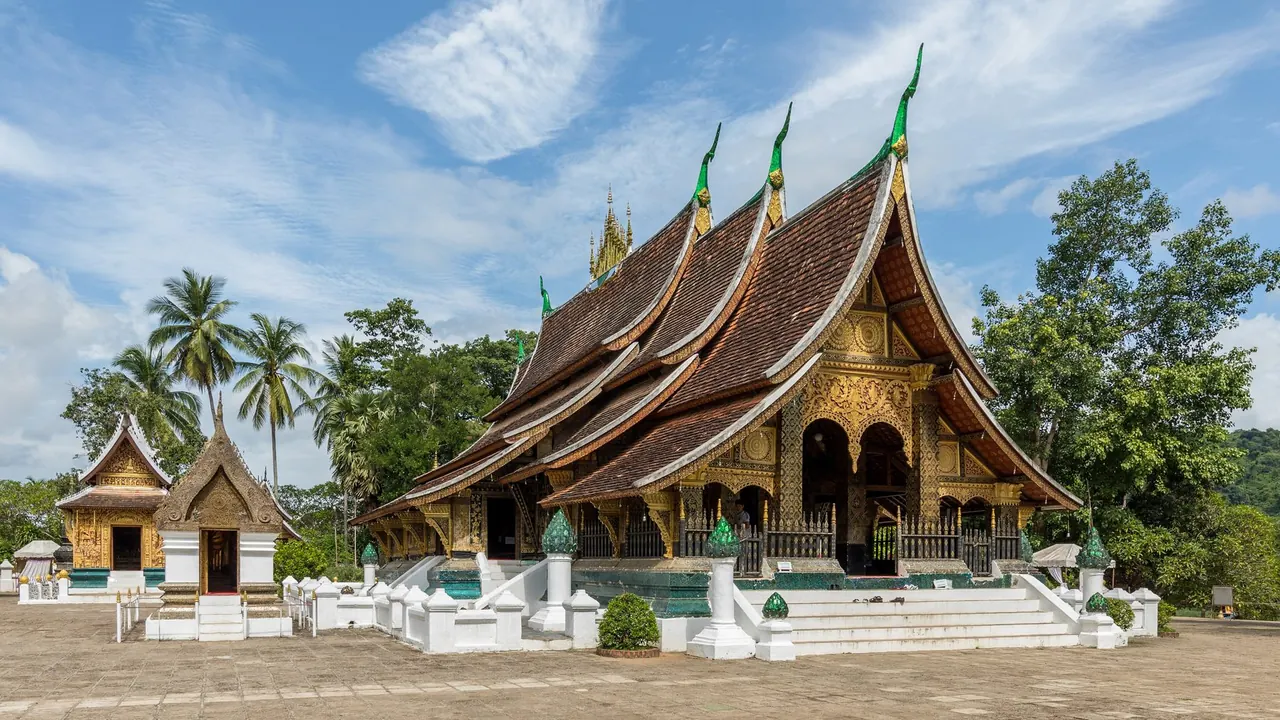
Photos: Chiang Mai by Gije Cho, Pexels License; Luang Prabang by Basile Morin, CC BY-SA 4.0, cropped.
Chiang Mai or Luang Prabang?
Our verdict in twelve categories, each scored against the same fixed benchmark cities, and the climate month by month, so you can choose for your trip.
Choose Chiang Mai for
- nightlife
- food and drink
- shopping
Chiang Mai is the better all-round choice. It has better and more varied cooking, evenings with bars and live music, larger craft markets, and a long tradition of massage schools, meditation retreats and hot springs. It also has far more to keep children busy. With the high mountain country around Doi Inthanon within reach, it suits longer stays and travellers who like to keep moving.
Choose Luang Prabang for
- getting around
- beaches
Luang Prabang rewards a slower, smaller trip. The whole old town is a heritage peninsula between two rivers, easy to cross on foot or by bicycle. Monks walk the alms round at dawn and the streets fall silent by midnight. Go for a few unhurried days of temples, Mekong sunsets and the pools at Kuang Si, not for the food or for nights out.
Scoreboard
Twelve categories on one fixed scale from 0 to 100. The shaded stretch is the gap between the two.
Your match
Pick a travel style or drag the sliders, and both match scores follow your weighting.
Wins on nightlife and food and drink with your weighting.
Wins on getting around and beaches with your weighting.
What matters to you?
Category by category
What the scores mean for a trip.
Beaches & swimming
Neither town has a coast, and both lie a long way from the sea. Luang Prabang still has the more memorable swim: the turquoise limestone pools under Kuang Si waterfall, with Tad Sae as a smaller second choice.
Chiang Mai's options are more ordinary: the reservoir at Huay Tung Tao, old quarry lakes and pools below waterfalls. Most visitors who want sand fly south to the islands.
Food & drink
Chiang Mai is by far the better place to eat. Northern Thai cooking is a cuisine in its own right, and you can eat it all day: khao soi, sai ua sausage and nam prik noom at Warorot market, the stalls at Chang Phueak Gate and along the weekend walking streets. A coffee culture rooted in the nearby hills and a handful of modern Lanna kitchens add depth.
Luang Prabang has its own dishes, such as or lam stew, jeow bong chilli paste and crisp kaipen river weed, plus French bakeries and baguettes left from colonial times. But the choice is narrow, and within a few days the same set menus come round again.
Culture & sights
The two are evenly matched, but they offer different things. Chiang Mai is a city of temples: Wat Chedi Luang's ruined chedi, the Lanna halls of Wat Phra Singh, the silver Wat Sri Suphan and the mountain temple of Doi Suthep, spread through a moated old city with modern districts around it.
In Luang Prabang the attraction is the whole town. Wat Xieng Thong and more than thirty other monasteries stand among French shophouses, the former Royal Palace holds the national museum, and the dawn alms round shows it is still a religious town in daily life. In both, the museums are small.
Nightlife
Chiang Mai has an actual night out, though not a wild one. There are cocktail bars and craft beer in Nimmanhaemin, backpacker bars and rooftops around Tha Phae Gate, a rowdier strip on Loi Kroh Road and a few clubs. Most places close around midnight.
Luang Prabang hardly has a nightlife. A few garden bars and river terraces serve Beerlao, the curfew shuts them at midnight, and after that the streets are dark.
Nature & outdoors
Both are surrounded by green hills, but the landscapes differ. Chiang Mai's are mountains: Doi Suthep-Pui National Park begins at the edge of town, and the cloud forest of Doi Inthanon is a drive away, with rafting, ziplines and mountain biking in the valleys to the north.
Luang Prabang's outdoors centres on its rivers: slow boats past limestone cliffs on the Mekong, kayaking on the Nam Khan, the Kuang Si falls with their bear sanctuary, and treks to Hmong and Khmu villages. In both places, haze from field burning dulls the views late in the dry season.
Day trips
Chiang Mai has more towns within easy reach. Lamphun's gilded chedi is half an hour away, and Lampang, with its horse carriages, teak mansions and the walled Wat Phra That Lampang Luang, is a full day out. Chiang Rai and Pai are better done with a night away.
From Luang Prabang, the main day out is the boat up the Mekong to the Buddha-filled Pak Ou caves, plus the weaving villages near town. The railway makes Vang Vieng and Vientiane possible, but beyond those it is mostly countryside.
Good for families
Chiang Mai is the easier choice with children. Feeding and walking elephants at the sanctuaries, the zoo on Doi Suthep, the Night Safari and the quarry swimming parks give several days of activities, even if broken pavements and traffic around the moat make getting about tiring.
Luang Prabang's quiet streets are safer to walk, and children love Kuang Si and the long-tail boats. After that there is little aimed at them, and limited medical care makes it better for older children than toddlers.
Getting around
Luang Prabang is easier to get around. The old town is a flat peninsula with light traffic, so walking or a rented bicycle covers almost everything. You only need a tuk-tuk or boat for the falls, the caves and the train station.
Chiang Mai is more spread out. You can walk the old city, but beyond the moat you depend on red songthaew pickups, tuk-tuks and ride-hailing, and on a scooter or hired driver for the mountains.
Shopping & style
Both are places to buy crafts, but Chiang Mai has far more of them. The Sunday Walking Street, the Saturday market on Wualai Road and the nightly Night Bazaar are long markets of textiles, silver, celadon and lacquerware. The craft villages of Bo Sang and San Kamphaeng are close by, and Nimmanhaemin adds design shops and malls.
Luang Prabang has one nightly market on its main street, where some of the goods are mass-produced. The better silk and mulberry paper is in the weaving studios and nearby villages.
Affordability
Both are very cheap, but Chiang Mai goes further on a small budget. Teak guesthouses, street food, songthaews and daily massages all cost little, and the costs that add up are mostly organised excursions.
Luang Prabang is cheap by most standards, but it is the most expensive stop in Laos. Its restored colonial hotels, riverside wine lists and private drivers raise the bill faster.
Live music & performing arts
Neither has opera, a classical season or much theatre, but Chiang Mai gives you more for an evening out. There are nightly jazz and blues jams near the north gate, bands in Nimmanhaemin, Muay Thai fight nights and khantoke dinners with Lanna dance.
Luang Prabang's main performance is the masked Phralak Phralam, the Lao Ramayana, danced at the theatre in the Royal Palace grounds. Beyond that, a few folk evenings and the temple drums at dusk are all there is.
Wellness & relaxation
Chiang Mai is the better choice for a wellness trip. It is Thailand's best-known place to learn Thai massage, and it has yoga studios, spas in teak houses, meditation retreats at Wat Umong and Wat Suan Dok, and the San Kamphaeng hot springs.
Luang Prabang offers calm more than treatments. Lao massage, which is gentler than the Thai style, and lemongrass herbal saunas fill an afternoon. Otherwise the restful part is the quiet town itself, with mornings at the alms round and evenings watching the sun set over the Mekong.
When should you go?
Pick your month. The climate figures are measured averages, not a forecast.
Chiang Mai in July
Luang Prabang in July
Daytime high, °C
Rainfall in the month, mm
Temperature and rainfall are climate normals, averaged over the years shown. Chiang Mai: 1991-2020 normals, Chiang Mai (0.6 km from centre). Luang Prabang: 1991-2020 normals, Luang-Prabang (0.8 km from centre).
The two follow much the same calendar. November to January is the best time in both: dry, clear and pleasantly warm, with daytime highs around 29°C, comfortable for long temple walks. February is already hotter, and by April Chiang Mai reaches 37°C, with Luang Prabang only slightly cooler, so walking at midday is hard work in either town. Chiang Mai also gets clearly more sunshine through the dry months.
The rains start a little earlier in Luang Prabang, where April already brings showers, and both towns are wet from May into October. Luang Prabang has the heavier peak, with about 311mm in August against Chiang Mai's 234mm, and its trails and village roads turn muddy. It also dries out sooner, falling to about 90mm by October. Chiang Mai stays wetter through September and October and only dries out properly in November.
Which traveller are you?
For a food and nightlife trip, Chiang Mai is the clear pick. You get khao soi, northern sausage and market stalls by day, then cocktail bars in Nimmanhaemin and jazz jams by the old city's north gate. Luang Prabang's menus repeat and its bars close at midnight.
On a family trip with children, choose Chiang Mai. Elephant sanctuaries, the zoo, the Night Safari, ziplines and quarry swimming parks fill several days. Luang Prabang has Kuang Si and boat rides but little else for children, and medical care is limited.
For a short city break, Luang Prabang works beautifully. Its monasteries, palace museum and colonial streets all lie on one flat, quiet peninsula that you can see over two or three days on foot or by bicycle, without traffic around a moat to deal with.
Before you go
| Measure | Chiang Mai | Luang Prabang |
|---|---|---|
| Official language | Thai | Lao |
| Currency | Baht (THB) | Lao Kip (LAK) |
| Sockets | ABCF220 V, 50 Hz | ABCEF230 V, 50 Hz |
| Driving side | Left | Right |
| Time zone | UTC+7 | UTC+7 |
| Emergency number | Police 191, ambulance 1669, fire 199 | Police 191, ambulance 195, fire 190 |
| Elevation | 310 m | 305 m |
| Main airport | Chiang Mai International Airport (CNX)3 km from centre28 non-stop destinations | Luang Phabang International Airport (LPQ)4 km from centre7 non-stop destinations |
By the numbers
| Measure | Chiang Mai | Luang Prabang |
|---|---|---|
| City population | 1,198,000 | 53,792 |
| People per km² | 2,958 | - |
| Museums within 10 km | 6 | 0 |
| UNESCO World Heritage sites within 50 km | 0 | 1 |
Where else could you go?
Every comparison below shares a destination with this one, so you can follow Chiang Mai or Luang Prabang somewhere new.