Photos: Luang Prabang by Basile Morin, CC BY-SA 4.0, cropped; Sapa by Kirandeep Singh Walia, Pexels License.
Luang Prabang or Sapa?
Our verdict in twelve categories, each scored against the same fixed benchmark cities, and the climate month by month, so you can choose for your trip.
Choose Luang Prabang for
- culture and sights
- getting around
- wellness
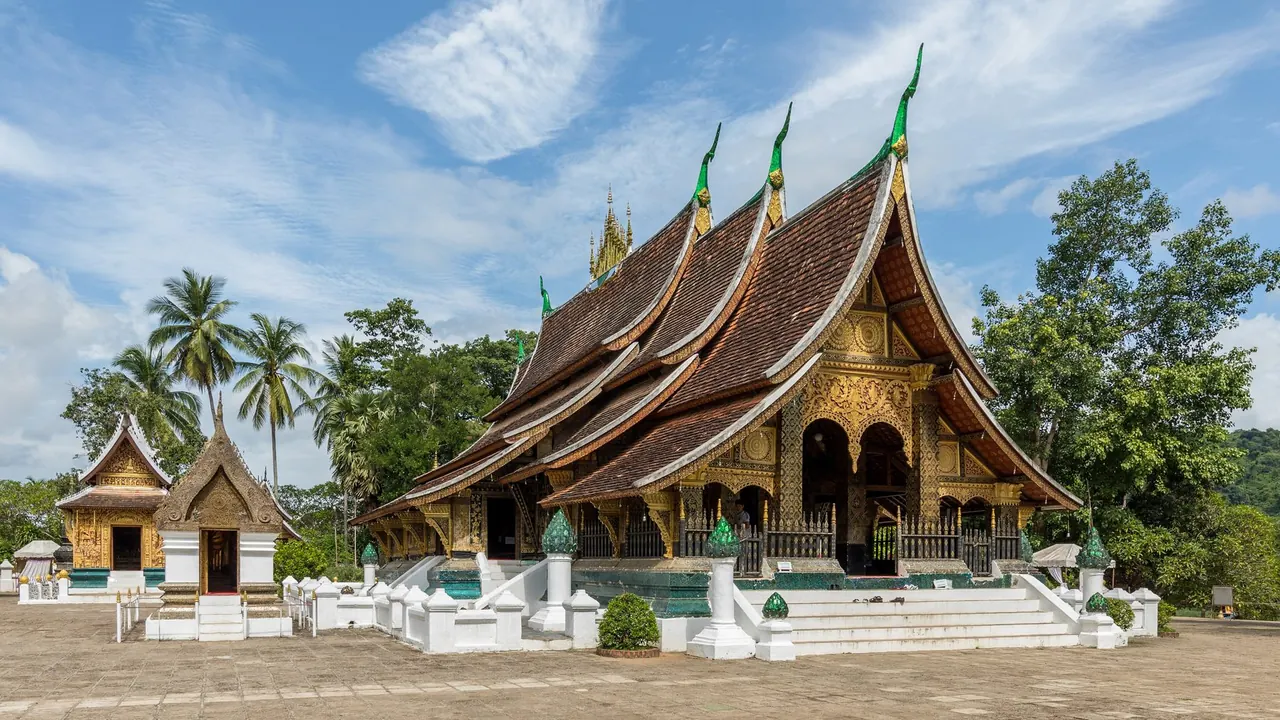
Luang Prabang suits travellers who want a place to wander rather than a place to conquer. The whole old town is a heritage site of monasteries, colonial shophouses and riverside terraces on a flat peninsula, the pace is slow enough to rest properly, and Kuang Si's pools give children and adults somewhere to swim. Choose it for temples at dawn, massages in the afternoon and quiet evenings by the Mekong.
Choose Sapa for
- nature and the outdoors
- prices
- nightlife
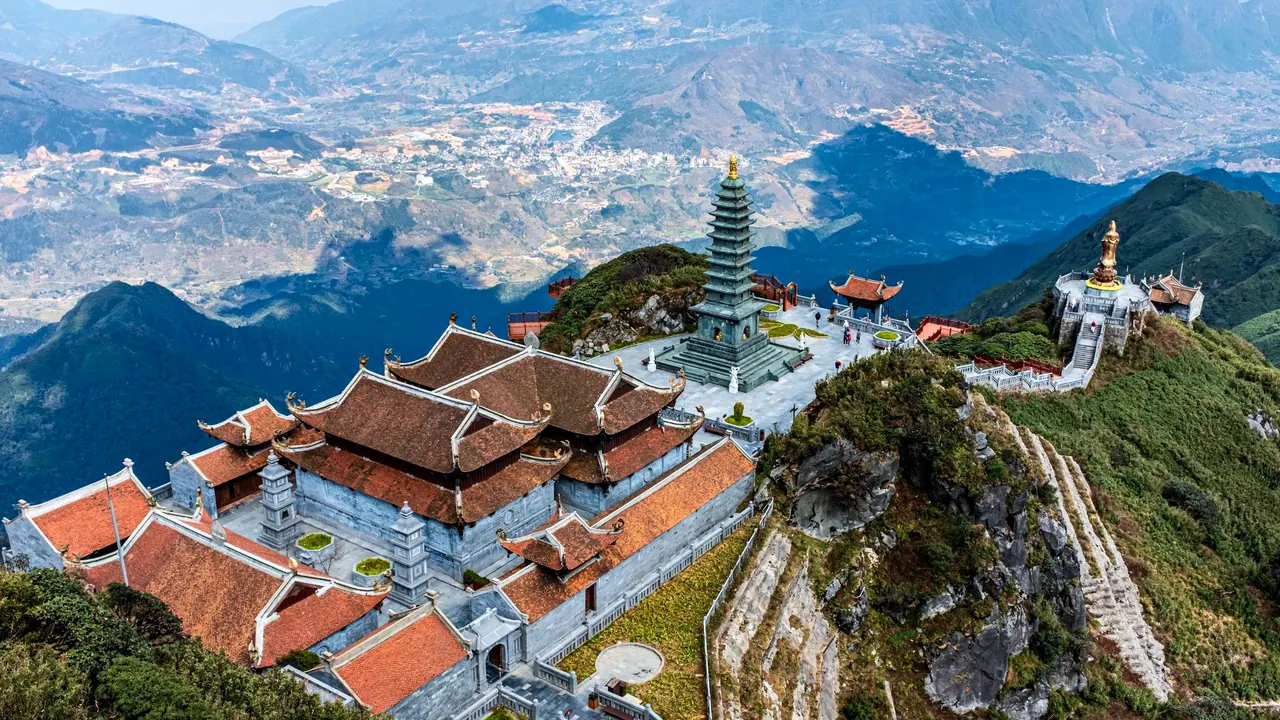
Sapa is the pick for anyone whose trip is built around walking. From the ridge above the Muong Hoa valley, trails lead out through rice terraces to Hmong and Dao villages and homestays, and Fansipan rises behind. The town itself is plain and steep, and you meet the culture in the valleys. It is also the cheaper of the two and offers cool mountain air rather than lowland heat.
Scoreboard
Twelve categories on one fixed scale from 0 to 100. The shaded stretch is the gap between the two.
Your match
Pick a travel style or drag the sliders, and both match scores follow your weighting.
Wins on culture and sights and getting around with your weighting.
Wins on nature and the outdoors and prices with your weighting.
What matters to you?
Category by category
What the scores mean for a trip.
Beaches & swimming
Neither town has a beach, but Luang Prabang does at least offer a proper swim. The turquoise limestone pools below Kuang Si, about 45 minutes away, and the smaller Tad Sae falls make a memorable half-day in warm water.
Sapa offers nothing comparable. Its mountain streams and waterfalls are cold and shallow, so anyone wanting the sea has to plan a separate coastal leg.
Food & drink
Luang Prabang eats better and more distinctively. It has its own dishes, such as peppery or lam stew, smoky jeow bong and crisp kaipen river weed, plus a morning market and a French legacy of baguettes, bakeries and strong highland coffee.
Sapa's best food comes from the cold climate: hotpots of stream-farmed salmon and sturgeon, skewers and bamboo-tube rice off the grills by the lake, and Hmong dishes such as thang co. The centre is mostly traveller cafés of uneven quality, and in both places the menus start to repeat after a few days.
Culture & sights
There is a big difference here. In Luang Prabang the town itself is the attraction: a UNESCO-listed peninsula of monasteries, wooden houses and colonial shophouses, with Wat Xieng Thong's mosaic Tree of Life, the palace museum and the stupa on Mount Phousi all within walking distance, and saffron-robed novices part of daily life.
Sapa has a stone church from its hill-station years and a small ethnographic museum, and little else in town. Its culture is in the Black Hmong, Red Dao, Tay and Giay villages along the trails, which are rewarding if you walk past the staged ones closest to town.
Nightlife
Both towns go to bed early, and neither has a club. Luang Prabang's evenings mean Beerlao in garden bars and on riverside terraces until the midnight curfew empties the streets. Sapa's backpacker bars are noisier, with pool tables and music, and the lakeside grill stalls stay busy after dark, but most people are by a fire and in bed before the next day's trek.
Nature & outdoors
Sapa is the stronger choice for landscape. It sits at around 1,500m with the Muong Hoa terraces stepping down for kilometres below, trails lead straight out of town, and Fansipan, the Tram Ton Pass and the Silver Waterfall are all close by.
Luang Prabang's green hills and the Mekong are lovely, but they are scenery to enjoy on outings rather than terrain to cross. Those outings are Kuang Si and its bear sanctuary, slow boats past limestone cliffs, kayaking on the Nam Khan and short treks to hill villages, plus the sunset view from Mount Phousi.
Day trips
The two are broadly level, with short lists of excursions. Luang Prabang's are by river and rail: a boat up the Mekong to the Buddha-filled Pak Ou caves, the silk and paper villages nearby, and fast trains to Vang Vieng or Vientiane.
Sapa's best outings follow the weekly markets, above all Bac Ha's Sunday gathering of Flower Hmong traders, with quieter markets at Can Cau and Coc Ly. Beyond those, the trips are into the mountains themselves.
Good for families
Luang Prabang is somewhat easier with children. Kuang Si has both bears and swimming pools, long-tail boats are fun, and the flat, quiet streets suit cycling together, although heat and limited medical care point towards older children.
Sapa also suits older children who can walk, with buffalo in the paddies, the Fansipan cable car and a night in a homestay. With toddlers it is harder, because of the steep uneven streets, cold damp winters and persistent vendors. Neither town has attractions built for children.
Getting around
Luang Prabang is easier to get around. Its old town is a flat peninsula with little traffic, so walking or a rented bicycle covers almost everything, and tuk-tuks and boats reach the rest. The railway also makes it simple to arrive and leave.
Sapa's centre is small but steep, with rough pavements, and apart from the short tram down to the cable car you rely on trails, hired drivers or motorbike taxis. Getting there takes most of a day by road from Hanoi, or an overnight train followed by a drive up the mountain.
Shopping & style
Both are places to buy crafts, not fashion, but Luang Prabang offers more choice. Its long evening night market sells silk, Hmong embroidery, paper lanterns and silver, and the weaving studios and villages such as Ban Phanom sell finer textiles where you can watch the natural dyeing.
In Sapa, the indigo cloth, batik and brocade come straight from Hmong and Dao sellers on the streets and in the villages. Some of it is fine handwork, but copies are common and the selling can be pushy, so Bac Ha's market is a better place to buy.
Affordability
Both are cheap, and Sapa is the cheaper. Homestays, street grills, hotpot and trekking with a local guide cost very little, and the Fansipan cable car is the one real splurge.
Luang Prabang is also inexpensive at guesthouse level, with cheap market meals, bicycle hire and massages. It is the dearest town in Laos, though, and its restored boutique hotels and riverside wine lists can push a budget up quickly.
Live music & performing arts
Luang Prabang has the one show worth setting an evening aside for. The Phralak Phralam, the Lao telling of the Ramayana, is a classical dance drama: masked performers and a traditional orchestra on a real stage beside the old royal palace. Add an occasional folk evening and temple drums at sunset, and that is everything on offer. Do not come expecting concerts.
Sapa has no stage at all. On weekend evenings Hmong and Dao performers play pipe music and dance in their festival dress in the town square, and a few villages put on similar shows for visitors. These are casual and short, something to stop and watch on the way to dinner rather than something to plan around.
Wellness & relaxation
Luang Prabang is the more restful place to stay. The whole town moves slowly, with no high-rise buildings and little traffic. Gentle Lao massage is everywhere, the herbal saunas are scented with lemongrass, and boutique hotels offer garden spas and riverside yoga.
Sapa's treat is the Red Dao herbal bath, a hot soak of forest plants in a wooden tub, at its best after a long walk. Real calm here means staying out in a valley homestay, since the town has traffic, building work and constant selling.
When should you go?
Pick your month. The climate figures are measured averages, not a forecast.
Luang Prabang in July
Sapa in July
Daytime high, °C
Rainfall in the month, mm
Where the figures come from
Sapa has no weather station within reach, so its figures come from a gridded climate model rather than a measured record, and read a broad area rather than the city itself.
Temperature and rainfall are climate normals, averaged over the years shown. Luang Prabang: 1991-2020 normals, Luang-Prabang (0.8 km from centre). Sapa: 1991-2020 normals, TerraClimate 4 km grid at the town, no weather station within 90 km.
Luang Prabang is a hot lowland town, and November to February is its best stretch: dry, sunny and warm rather than fierce. From March to May the heat builds to about 36°C, which makes midday walking hard work. The monsoon follows from May to September, peaking at around 311mm in August, with fewer hours of sunshine. By October the rains are easing off.
Sapa is high in the mountains, so it is cool all year, with winter highs near 15°C and summer highs only around 25°C. Its summer rain is even heavier, about 433mm in July, which means muddy trails and cloud over the views. November and December are almost completely dry, which suits trekking, though they are cold and fog can still hide the terraces some days. Spring and early autumn are comfortable in between. If you combine the two in the dry season, expect warm days in Laos and sweater evenings in Sapa.
Which traveller are you?
On a culture and arts trip, Luang Prabang is the clear choice. More than thirty monasteries, Wat Xieng Thong, the former Royal Palace and the monks' alms round make up a living heritage town, and the masked Phralak Phralam is danced in the palace grounds.
For an outdoors trip, Sapa wins. Multi-day treks across the Muong Hoa terraces, nights in village homestays and the climb up Fansipan, Indochina's highest peak, give far more walking than Luang Prabang's waterfall outings, river kayaking and hill-village treks.
On a relaxing and wellness trip, Luang Prabang is the calmer place to stay. The town is quiet, with gentle Lao massage, lemongrass herbal saunas and yoga by the river, while Sapa's peace is found only in the valleys, outside its busy town.
Before you go
| Measure | Luang Prabang | Sapa |
|---|---|---|
| Official language | Lao | Vietnamese |
| Currency | Lao Kip (LAK) | Dong (VND) |
| Sockets | ABCEF230 V, 50 Hz | ACFG220 V, 50 Hz |
| Driving side | Right | Right |
| Time zone | UTC+7 | UTC+7 |
| Emergency number | Police 191, ambulance 195, fire 190 | Police 113, ambulance 115, fire 114 |
| Elevation | 305 m | 1,544 m |
| Main airport | Luang Phabang International Airport (LPQ)4 km from centre7 non-stop destinations | Noi Bai International Airport (HAN)238 km from centre91 non-stop destinations |
By the numbers
| Measure | Luang Prabang | Sapa |
|---|---|---|
| City population | 53,792 | 70,663 |
| People per km² | - | 103 |
| Museums within 10 km | 0 | 0 |
| UNESCO World Heritage sites within 50 km | 1 | 0 |
Where else could you go?
Every comparison below shares a destination with this one, so you can follow Luang Prabang or Sapa somewhere new.
- Vientianevs Luang Prabang
- Chiang Raivs Luang Prabang
- Hanoivs Sapa
- Chiang Maivs Luang Prabang
- Ha Longvs Sapa
- Paivs Luang Prabang