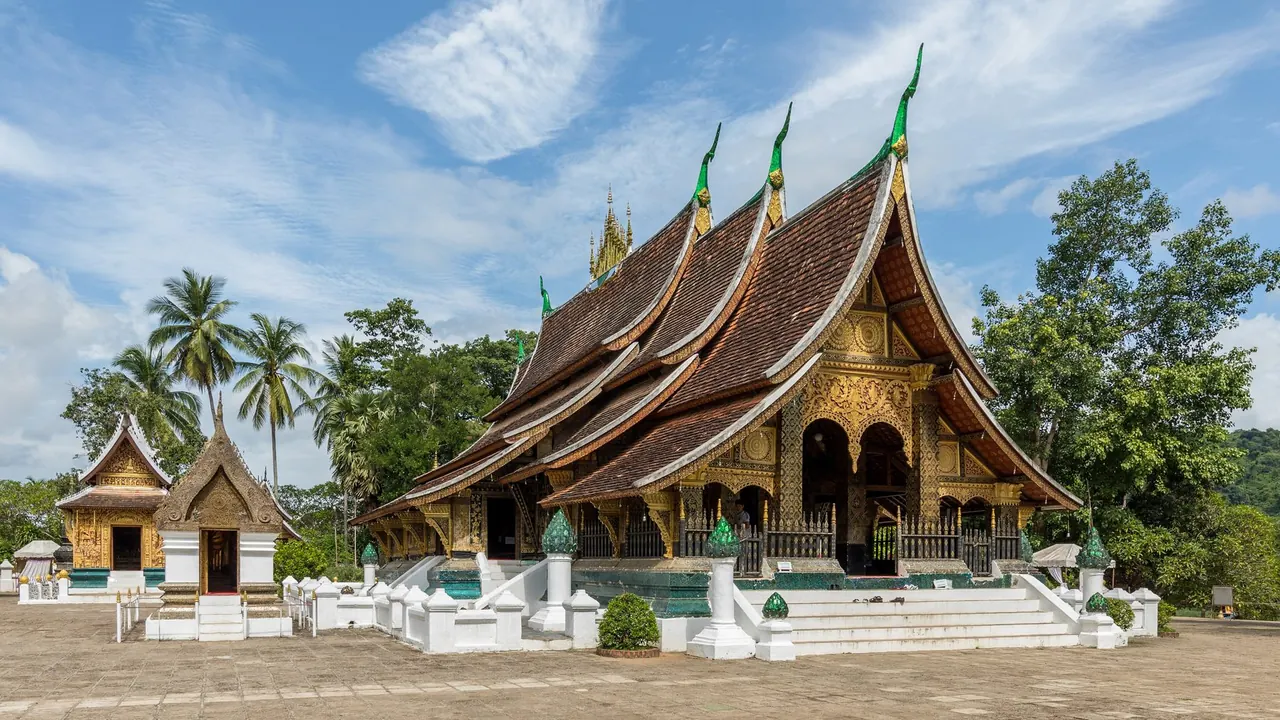
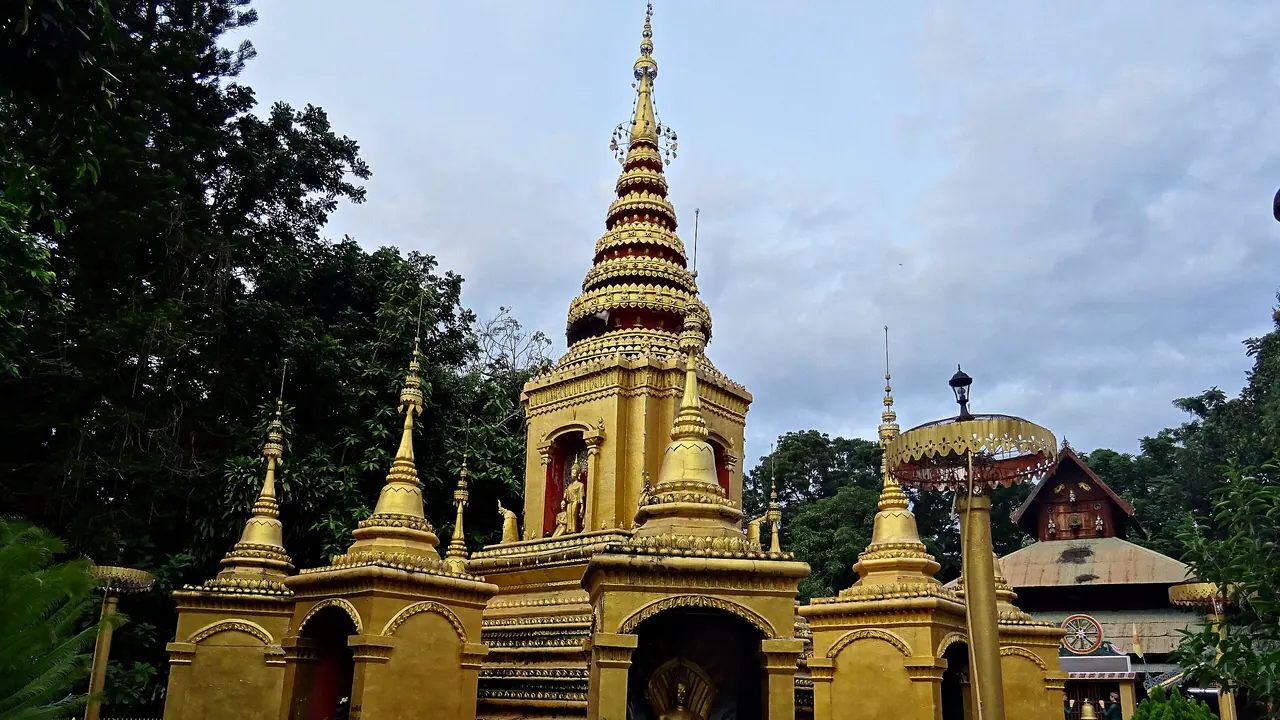
Photos: Luang Prabang by Basile Morin, CC BY-SA 4.0, cropped; Pai by Christophe95, CC BY-SA 4.0, cropped.
Luang Prabang or Pai?
Our verdict in twelve categories, each scored against the same fixed benchmark cities, and the climate month by month, so you can choose for your trip.
Choose Luang Prabang for
- culture and sights
- getting around
- day trips
Luang Prabang suits travellers who want a town to explore on foot. Its old town is a UNESCO-listed peninsula of monasteries, colonial shophouses and the dawn alms round. The Pak Ou caves and Kuang Si are close by, and the train runs to Vang Vieng and Vientiane. It is the better pick for a quieter, more cultural trip, as long as you are happy with early nights.
Choose Pai for
- nightlife
- wellness
- prices
Pai is about the valley itself and its slow pace. Hot springs, yoga retreats, sunsets at the canyon and a sociable backpacker bar scene make it better for travellers who want to stop for a week or more, ride a scooter through the rice fields and spend very little. Expect few sights and a long, winding road in.
Scoreboard
Twelve categories on one fixed scale from 0 to 100. The shaded stretch is the gap between the two.
Your match
Pick a travel style or drag the sliders, and both match scores follow your weighting.
Wins on culture and sights and getting around with your weighting.
Wins on nightlife and wellness with your weighting.
What matters to you?
Category by category
What the scores mean for a trip.
Beaches & swimming
Neither town has a beach. In Luang Prabang the Mekong and Nam Khan run too brown and fast for swimming in town. Even so, it has the better swimming of the two, thanks to Kuang Si, where the turquoise tiered pools below the falls make a proper half-day swim, with Tad Sae as a second choice.
Swimming in Pai is more casual. You can splash in the Pai River or under Mo Paeng falls in the wet and cool months, take a dip in a guesthouse pool, or float down the river on an inner tube in the hot season.
Food & drink
Luang Prabang has the more distinctive food. It has dishes of its own, such as or lam and jeow bong, plus kaipen with a Beerlao, a morning market of river fish and herbs, and French-era baguettes with strong Lao coffee. The range is narrow, but it is local.
In Pai, most meals come from the walking-street stalls and the traveller cafés. Khao soi, Shan dishes and Yunnanese noodles in Santichon sit alongside vegan bowls and pizza. It is cheap and easy, but much of it is cooked for foreign tastes.
Culture & sights
This is where the two differ most. All of Luang Prabang's old town is a World Heritage Site, with more than thirty monasteries, the sweeping roofs of Wat Xieng Thong, the Royal Palace museum and monks collecting alms at dawn. It is a living religious town you can spend days in.
Pai offers the white Buddha on the hill above the valley, a few Shan-style temples, the old iron bridge and the mud-brick houses of Santichon. That fills half a day, and few people come for it.
Nightlife
For anyone who wants an evening out, Pai is easily the better of the two. Reggae bars, fairy-lit garden bars and the odd party outside town keep things sociable after the night market. It still winds down around midnight, there are no proper clubs, and the crowd is mostly young backpackers.
Luang Prabang is quieter still. A curfew closes its few garden bars and riverside terraces around midnight, and after that the streets are dark and silent.
Nature & outdoors
Both sit in green hill country and both are at their best in the cool, dry months, so the difference is in the kind of landscape. Around Luang Prabang, the scenery is shaped by the rivers: slow boats up the Mekong past limestone cliffs, kayaking on the Nam Khan and treks to Hmong and Khmu villages.
Pai is a valley to explore by scooter. It has the eroded ridges of Pai Canyon, morning mist seen from the Yun Lai viewpoint, waterfalls a short ride out, rafting in the wet season and the great cave of Tham Lod further west.
Day trips
Luang Prabang has more within a day's reach. You can take a boat to the Pak Ou caves, full of Buddha images, or visit the weaving villages close to town. By train, Vang Vieng is about an hour away and Vientiane about two.
Pai is hemmed in by mountain roads. Soppong and its Lahu and Lisu villages are about an hour away. Chiang Mai and Mae Hong Son take around three hours of hairpin bends, so they are a change of base rather than an outing.
Good for families
Neither town is made for young children, but Luang Prabang is the easier of the two. Its flat, quiet streets are good for walking and cycling together, and the bears and pools at Kuang Si and the long-tail boat rides go down well with children.
Pai has hot springs, farm visits, gentle tubing and a night market children enjoy. Against that, most of it needs a scooter or a driver, the road in is notorious for car sickness, and evenings in town are geared to backpackers.
Getting around
Luang Prabang is much easier without your own wheels. The old town is a flat peninsula you can cover on foot or by bicycle. Tuk-tuks, minivans and Mekong boats handle the rest, and there is a railway station for onward travel.
Pai's centre is tiny, but the canyon, waterfalls and hot springs are spread across the valley and there is no public transport to reach them. Most visitors rent a scooter on hill roads where beginners often crash, so hiring a songthaew or joining a tour is the safer option.
Shopping & style
In both towns shopping means crafts rather than retail, but Luang Prabang has the better work. Beyond its long night market of red-roofed stalls, weaving studios in town and in villages such as Ban Phanom sell naturally dyed silk of real quality, along with mulberry-paper lanterns and silver.
Pai's walking street is fun for cotton trousers, woven bags and small art prints, but the same things repeat from stall to stall, and anything more serious waits for Chiang Mai.
Affordability
Both are cheap, but money goes further in Pai. Bungalows, night-market dinners and scooter hire cost so little that many travellers stay for weeks, and most sights are free or close to it.
Luang Prabang is still inexpensive if you stay in guesthouses, but it is the costliest stop in Laos. Restored colonial boutique hotels, riverside wine lists and private drivers quickly add up.
Live music & performing arts
Neither town is a place to plan your evenings around performances, and what each offers is quite different. Pai has the more regular music: on most nights several bars host acoustic, blues, reggae or jazz jams, uneven in quality but easy to come across.
Luang Prabang offers fewer nights out but something rarer. The masked Phralak Phralam, the Lao Ramayana, is danced at the theatre in the Royal Palace grounds, with the occasional folk evening and temple drums at dusk.
Wellness & relaxation
Pai is built around unwinding in a way that Luang Prabang only partly is. It has natural hot springs, including the forest pools at Tha Pai, cheap Thai massage on every street, and yoga, meditation and detox retreats lasting from a day to several weeks.
In Luang Prabang the calm comes from the town itself: monks at dawn and sunset over the Mekong. Add gentle Lao massage, lemongrass-scented herbal saunas and garden spas in the boutique hotels, and it suits a quiet stay rather than a retreat.
When should you go?
Pick your month. The climate figures are measured averages, not a forecast.
Luang Prabang in July
Pai in July
Daytime high, °C
Rainfall in the month, mm
Where the figures come from
Pai's temperatures are measured 64 km from the centre, at Mae Hong Son.
Pai's station stands 242 m below the city centre, so the centre is likely a little cooler than the figures say.
Pai has no rain gauge within 25 km of the centre, so its rainfall comes from a gridded climate dataset read at the city rather than from a gauge further away.
Pai's sunshine is measured 86 km from the centre, at Chiang Mai.
Temperature and rainfall are climate normals, averaged over the years shown. Luang Prabang: 1991-2020 normals, Luang-Prabang (0.8 km from centre). Pai: 1971-2000 (sunshine 1991-2020, rainfall 1991-2020) normals, Mae Hong Son (63.7 km from centre).
The two towns follow the same rhythm. From November to February both are dry, clear and comfortable for walking and trekking. Pai gets noticeably more sunshine in those months, while January days in Luang Prabang are a little milder. March and April are the hottest months, and field-burning smoke hazes the hills around both. Pai is the hotter of the two, peaking around 38°C against 36°C in Luang Prabang, which makes midday sightseeing hard work in either town.
The rains arrive in May and last until September, and October is the month of change. Luang Prabang is the wetter of the two: in August it gets around 311mm of rain against about 230mm in Pai. Both turn lush and green in this season, but trails and back roads get muddy, so the cool, dry months remain the safer choice for either town.
Which traveller are you?
For a culture and arts trip, Luang Prabang is the clear choice. Its World Heritage old town of monasteries, colonial shophouses and the dawn alms round rewards several days of slow exploring, and the masked Lao Ramayana fills an evening. Pai's sights take an afternoon.
On a relaxing and wellness trip, Pai has the edge. You can soak in the hot springs in the cool morning air, have an inexpensive Thai massage, join a yoga or meditation retreat and spend whole afternoons in a hammock above the rice fields, ideally between November and February.
For a short city break, Luang Prabang works far better. Everything in the old town is within a flat walk or bicycle ride, the railway links it onward, and a few days are well filled. Pai needs a scooter, a long winding road and time to settle in.
Before you go
| Measure | Luang Prabang | Pai |
|---|---|---|
| Official language | Lao | Thai |
| Currency | Lao Kip (LAK) | Baht (THB) |
| Sockets | ABCEF230 V, 50 Hz | ABCF220 V, 50 Hz |
| Driving side | Right | Left |
| Time zone | UTC+7 | UTC+7 |
| Emergency number | Police 191, ambulance 195, fire 190 | Police 191, ambulance 1669, fire 199 |
| Elevation | 305 m | 509 m |
| Main airport | Luang Phabang International Airport (LPQ)4 km from centre7 non-stop destinations | Chiang Mai International Airport (CNX)86 km from centre28 non-stop destinations |
By the numbers
| Measure | Luang Prabang | Pai |
|---|---|---|
| City population | 53,792 | 3,598 |
| Museums within 10 km | 0 | 0 |
| UNESCO World Heritage sites within 50 km | 1 | 0 |
Where else could you go?
Every comparison below shares a destination with this one, so you can follow Luang Prabang or Pai somewhere new.
- Chiang Maivs Pai
- Chiang Raivs Pai
- Vientianevs Luang Prabang
- Chiang Raivs Luang Prabang
- Sapavs Luang Prabang
- Chiang Maivs Luang Prabang