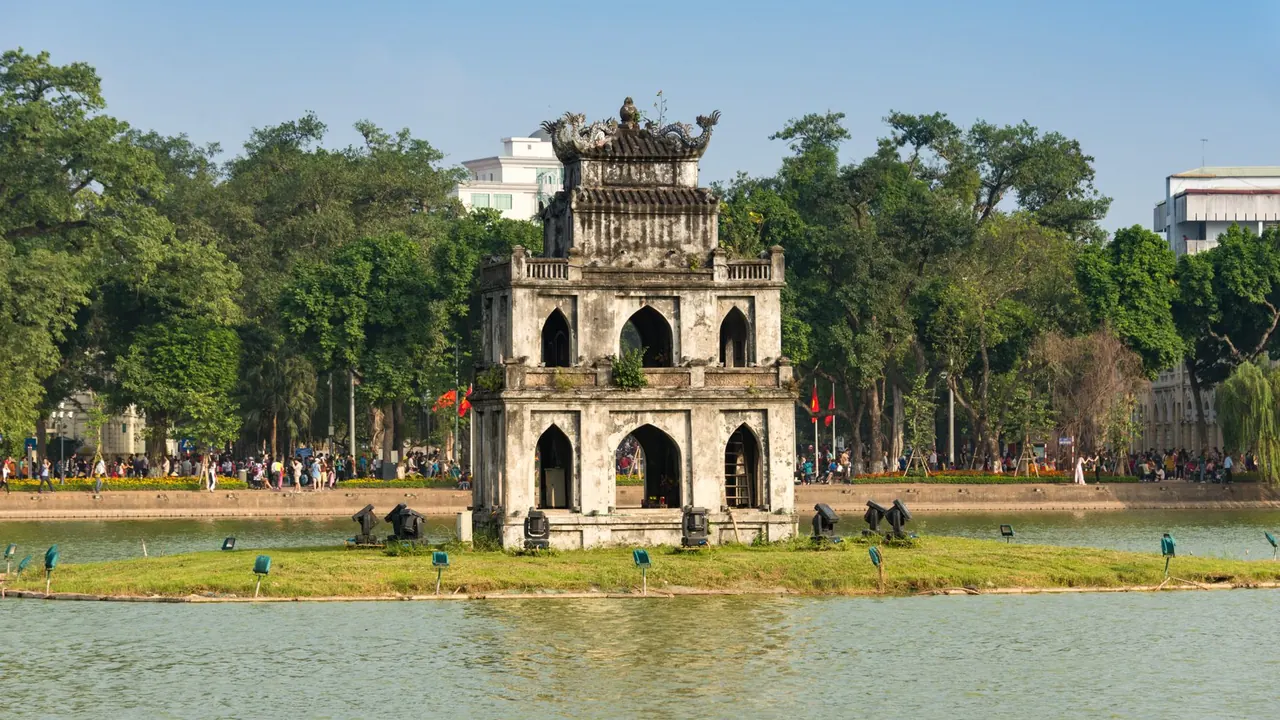
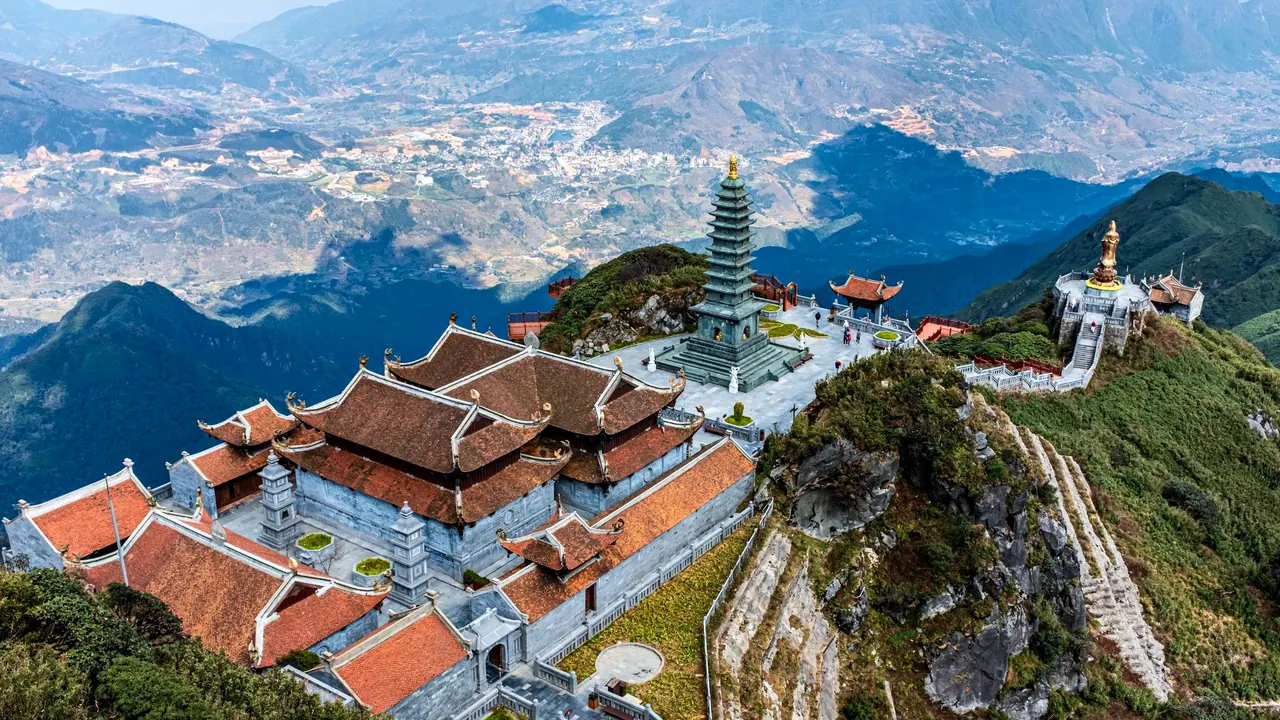
Photos: Hanoi by xiquinhosilva, CC BY 2.0, cropped; Sapa by Kirandeep Singh Walia, Pexels License.
Hanoi or Sapa?
Our verdict in twelve categories, each scored against the same fixed benchmark cities, and the climate month by month, so you can choose for your trip.
Choose Hanoi for
- food and drink
- culture and sights
- nightlife
Hanoi is the choice for a trip built around the city itself. You can eat at street stalls from breakfast pho onwards, walk the Old Quarter's trade streets and spend days at the Temple of Literature, the Imperial Citadel and the museums of the twentieth century. Evenings carry on with bia hoi on the pavements or a puppet show by the lake, and Ninh Binh and the craft villages are within reach for a day out.
Choose Sapa for
- nature and the outdoors
Sapa suits travellers who came to Vietnam to walk. The rice terraces of the Muong Hoa valley begin at the edge of town, homestay treks of a few days are easy to arrange and Fansipan rises above it all. The food is simple, the nights are quiet and the town has little to see in itself. You go for the mountains and for the Hmong and Dao villages along the trails, and since Sapa is reached from Hanoi, many people do both.
Scoreboard
Twelve categories on one fixed scale from 0 to 100. The shaded stretch is the gap between the two.
Your match
Pick a travel style or drag the sliders, and both match scores follow your weighting.
Wins on food and drink and culture and sights with your weighting.
Wins on nature and the outdoors with your weighting.
What matters to you?
Category by category
What the scores mean for a trip.
Beaches & swimming
Neither city is a place to swim. Hanoi at least has hotel pools and the water parks around West Lake, and the coast at Ha Long Bay or Sam Son can be added as a separate stay. Sapa has only cold mountain streams and waterfalls, so time by the sea means a different leg of the trip altogether.
Food & drink
The gap here is wide, and Hanoi is a city people travel to for its food. It is the home of pho and bun cha, the Old Quarter adds banh cuon, cha ca and sweet soups, and the coffee, from iced drip to egg coffee, is reason enough to linger.
Sapa eats well for a mountain town but within a narrow range: stream-farmed salmon and sturgeon in hotpots, skewers and bamboo-tube sticky rice from the lakeside grills, and Hmong dishes such as thang co for the adventurous. Beyond those, the travellers' restaurants are ordinary, so anyone who travels to eat should give more of the trip to Hanoi.
Culture & sights
Hanoi has a thousand years as a capital to show. There is the Temple of Literature, the excavated Thang Long citadel, the Old Quarter's guild streets, the colonial French Quarter and the Ho Chi Minh Mausoleum, with the Museum of Ethnology and Hoa Lo prison adding depth for three or four days.
In Sapa, culture is something you see in daily life rather than in buildings. Apart from the French-era stone church and a small museum, the interest is in the Black Hmong, Red Dao, Tay and Giay villages such as Ta Van and Ta Phin. These are best seen on foot, further from town, where the staged side of tourism thins out.
Nightlife
Hanoi has a real evening life, if an early one. There is bia hoi on pavement stools from late afternoon, crowded backpacker bars around Ta Hien, rooftop cocktails and the weekend walking streets by Hoan Kiem, and most places close around midnight. Sapa has a few travellers' bars with pool tables and the grill stalls by the lake, and after a day on the trails most people are in bed early.
Nature & outdoors
Here Sapa comes out well ahead. It sits at about 1,500m above the Muong Hoa valley, with rice terraces, bamboo forest and village trails starting right outside town. Above them is Fansipan, which you can climb or ride up by cable car, and the waterfalls of the Tram Ton Pass are a short ride away.
Hanoi's own green space is its lakes, with a path round West Lake for walking or cycling and tai chi at Hoan Kiem at dawn. Its finest landscape, the limestone towers and river caves of Ninh Binh, takes a full day out, and the heavy air of the delta is a long way from a cool mountain ridge.
Day trips
Hanoi is the better base for excursions. Ninh Binh combines the old capital at Hoa Lu with boat rides through caves, and pilgrims reach the Perfume Pagoda by river and cave. The craft villages of Bat Trang and Van Phuc, the laterite houses of Duong Lam and the carved pagodas of But Thap are all easy outings.
From Sapa the choice is short. There is the Sunday market at Bac Ha with its Flower Hmong traders, smaller weekly markets at Can Cau and Coc Ly, and little else beyond the mountains themselves, so the day of the week shapes the plan.
Good for families
Neither is easy with small children, but the difficulties differ. Hanoi has more to keep them busy, with the water puppets, the zoo, the village houses at the Museum of Ethnology and the water parks, but you have to deal with motorbike traffic, blocked pavements and humid summers.
Sapa suits older children who can manage a village walk, a homestay night or the cable car up Fansipan. Toddlers find it harder, with steep streets, muddy trails, cold rooms in winter and vendors who single out families.
Getting around
Both are hard work on foot, though Hanoi is a little easier. Its main sights lie close together across the Old Quarter, Hoan Kiem and Ba Dinh, and cheap ride-hailing cars and motorbike taxis cover the rest, once you have learnt to cross slowly through the traffic.
Sapa's centre is small but steep. Apart from the short tram down to the cable car, everything beyond it means trekking, a hired car or the back of a motorbike. Getting there is a journey in itself, five to six hours by road from Hanoi or the night train to Lao Cai.
Shopping & style
Hanoi offers far more to buy. Whole Old Quarter streets still keep to one trade, and Hang Gai is the place for silk and clothes made to measure in a day or two. Dong Xuan market and the weekend night market add more, and Bat Trang ceramics and lacquerware make good presents.
Sapa is for textiles and little else. Hmong and Dao indigo cloth, embroidery, brocade and silver are sold in town and in the villages, and fine handwork sits alongside many machine copies. Bac Ha market is where the genuine pieces are easiest to find.
Affordability
Both are very cheap, and Hanoi stretches money slightly further. Street meals, bia hoi, boutique hotels and ride-hailing cost very little there, and only cruises, imported wine and international hotels add up. Sapa's homestays, grills and guided treks are also inexpensive, but the busiest hotels and cafés in the centre charge a little more than the lowlands, and the Fansipan cable car stands out as the one big expense.
Live music & performing arts
Hanoi has a small but genuine stage life. Water puppetry plays several times a day by Hoan Kiem Lake, the colonial Opera House hosts the national symphony, ballet and opera, ca tru sung poetry is performed in Old Quarter communal houses and there is a long-running jazz scene. Sapa has no theatre or concerts, only short weekend shows of Hmong and Dao pan pipes and dance in the town square and a few villages.
Wellness & relaxation
The two are about equal here, but they help you relax in different ways. In Hanoi, foot and body massage shops are everywhere and cheap enough to visit every day, and West Lake's lakeside cafés are the quiet corner of a loud city.
Sapa has the Red Dao herbal bath, a hot soak in wooden tubs of forest plants that is ideal after a trek. Its homestays among the terraces are far calmer than anywhere in Hanoi, although the town itself is noisy with traffic and street selling.
When should you go?
Pick your month. The climate figures are measured averages, not a forecast.
Hanoi in July
Sapa in July
Daytime high, °C
Rainfall in the month, mm
Where the figures come from
Hanoi's sunshine is measured 86 km from the centre, at Phu Lien.
Sapa has no weather station within reach, so its figures come from a gridded climate model rather than a measured record, and read a broad area rather than the city itself.
Temperature and rainfall are climate normals, averaged over the years shown. Hanoi: 1991-2020 normals, Ha Noi (4.4 km from centre). Sapa: 1991-2020 normals, TerraClimate 4 km grid at the town, no weather station within 90 km.
Hanoi is at its most comfortable from October to December, when days are warm, dry and fairly sunny and walking the streets is easy. Late winter and early spring are mild but grey, with very little sunshine in February and March. From May to September the city is hot and humid, with highs around 35°C in June and heavy rain peaking in July and August, which makes long days on foot hard work.
Sapa is cooler all year and never hot, with summer highs of about 25°C. That summer is also very wet, with more than 400mm in both July and August, so trails turn to mud and cloud hides the views. September is still rainy but brings the terraces to gold, and October is a good balance. November and December are almost dry and clear for walking, but the days are cool, down to around 15°C by January, and the nights are colder still.
Which traveller are you?
For a culture and arts trip, Hanoi should have most of your time, three or four days, with one evening of water puppets or northern sung poetry. Sapa offers culture of another kind, met in Hmong and Dao homes along the trails.
On an outdoors trip, treat Hanoi as the place you arrive and give Sapa three days or more. Go in October or November, when the trails dry out and the views clear, rather than in the muddy height of summer.
For a food and nightlife trip, base yourself in Hanoi and eat by the clock: pho for breakfast, bun cha at lunch, bia hoi at dusk and bars until about midnight. In Sapa, evenings end with a hotpot and an early night.
Before you go
| Measure | Hanoi | Sapa |
|---|---|---|
| Official language | Vietnamese | Vietnamese |
| Currency | Dong (VND) | Dong (VND) |
| Sockets | ACFG220 V, 50 Hz | ACFG220 V, 50 Hz |
| Driving side | Right | Right |
| Time zone | UTC+7 | UTC+7 |
| Emergency number | Police 113, ambulance 115, fire 114 | Police 113, ambulance 115, fire 114 |
| Elevation | 10 m | 1,544 m |
| Main airport | Noi Bai International Airport (HAN)22 km from centre91 non-stop destinations | Noi Bai International Airport (HAN)238 km from centre91 non-stop destinations |
By the numbers
| Measure | Hanoi | Sapa |
|---|---|---|
| City population | 8,717,600 | 70,663 |
| People per km² | 2,595 | 103 |
| Museums within 10 km | 14 | 0 |
| UNESCO World Heritage sites within 50 km | 1 | 0 |
Where else could you go?
Every comparison below shares a destination with this one, so you can follow Hanoi or Sapa somewhere new.
- Ha Longvs Hanoi
- Luang Prabangvs Sapa
- Ha Longvs Sapa
- Luang Prabangvs Hanoi
- Vientianevs Hanoi
- Chiang Raivs Sapa