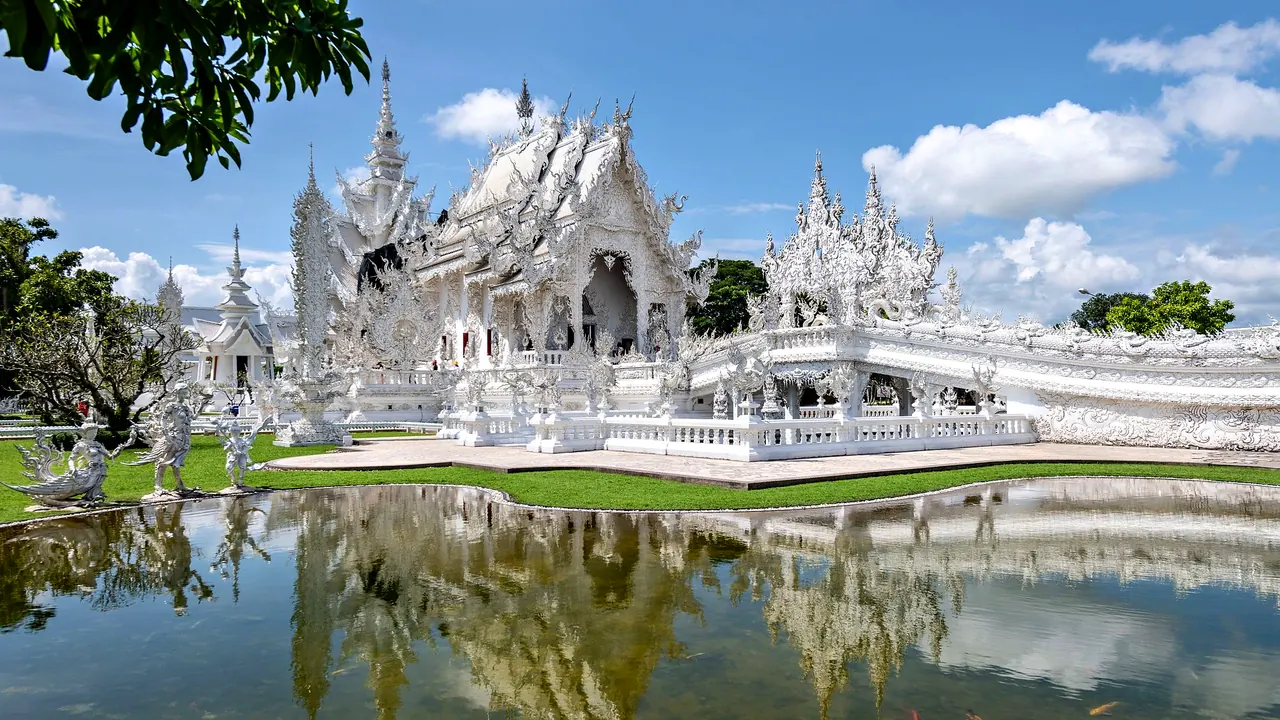
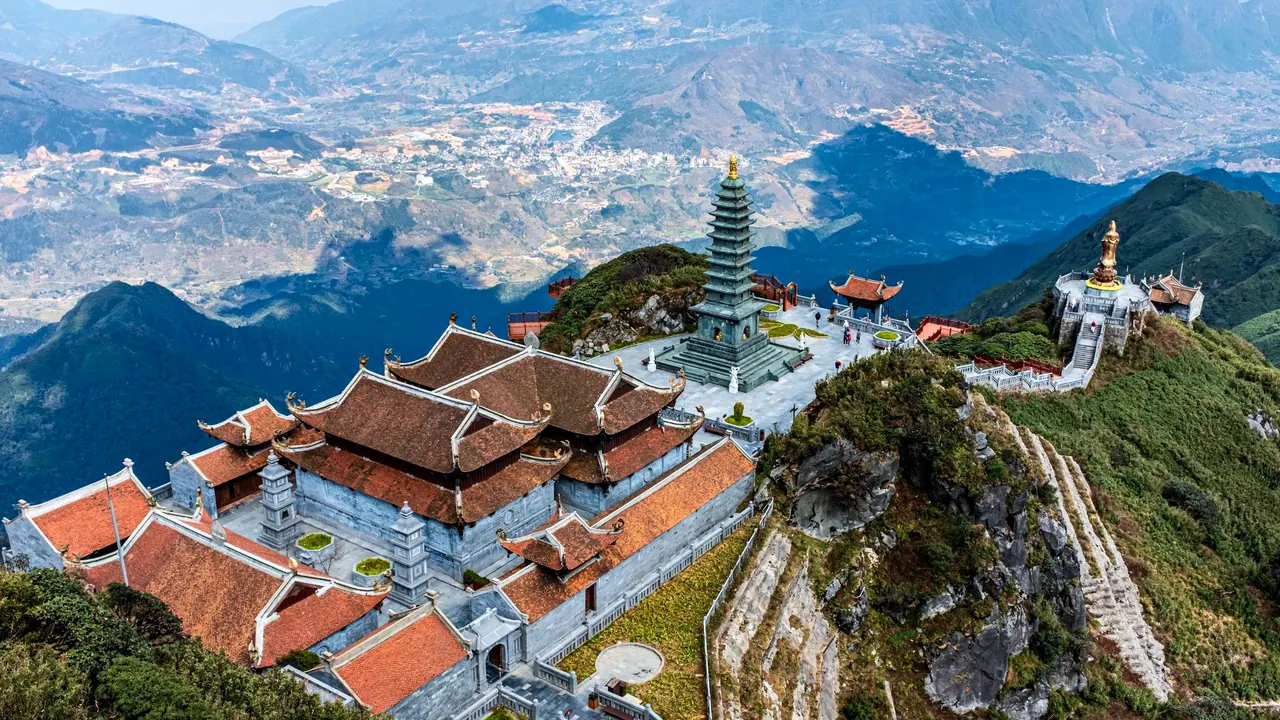
Photos: Chiang Rai by Kirandeep Singh Walia, Pexels License; Sapa by Kirandeep Singh Walia, Pexels License.
Chiang Rai or Sapa?
Our verdict in twelve categories, each scored against the same fixed benchmark cities, and the climate month by month, so you can choose for your trip.
Choose Chiang Rai for
- culture and sights
- food and drink
- day trips
Chiang Rai is the better choice for a rounded, unhurried Thai trip. The White Temple, the Blue Temple and Baan Dam give it sights you will not find elsewhere, and northern food at the markets, garden cafés, massage on every street and outings to the Mekong fill the rest of the days. It suits travellers who want art, food and gentle countryside in the same few days, in warm, dry winter weather.
Choose Sapa for
- nature and the outdoors
Pick Sapa if the walking itself is the point. The Muong Hoa rice terraces, the trails out to Hmong and Dao villages, nights in homestays and the climb up Fansipan give it far more real mountain country than Chiang Rai's hills, and it stays cool while Chiang Rai is hot. The town has little to see, the menu is short and evenings end early, so Sapa rewards fit, outdoor-minded travellers and will disappoint anyone who has come for sights or nightlife.
Scoreboard
Twelve categories on one fixed scale from 0 to 100. The shaded stretch is the gap between the two.
Your match
Pick a travel style or drag the sliders, and both match scores follow your weighting.
Wins on culture and sights and food and drink with your weighting.
Wins on nature and the outdoors with your weighting.
What matters to you?
Category by category
What the scores mean for a trip.
Beaches & swimming
Neither city has a beach, so if you want sea and sand, add a separate stretch on the coast. What differs is the water you do get. In Chiang Rai's heat, a hotel pool, a cool pool under a forest waterfall or a reservoir is a real pleasure. Sapa's mountain streams are cold and shallow, more to look at than to swim in.
Food & drink
Chiang Rai eats better. Northern Thai cooking gives you khao soi, nam ngiao, sai ua sausage and chilli dips with sticky rice, all easy to try cheaply at the night bazaar and the weekend walking streets. The coffee and oolong grown in the hills support a large café culture.
Sapa's cooking is built around the cold: hotpots of salmon and sturgeon farmed in the streams, skewers and sticky rice in bamboo tubes from the lakeside grills, and Hmong thang co if you are adventurous. It is warming after a trek, but the centre relies on travellers' menus of mixed quality, and you will run through the local dishes sooner than in Chiang Rai.
Culture & sights
Chiang Rai has the sights. Its three modern temple works, the White Temple, the Blue Temple and Baan Dam, are unlike anything else in Thailand. Wat Phra Kaew, the Lanna-era temples and the hill-tribe museum add older history, enough for two or three days.
Sapa's town has little beyond the stone church from the French era and a small museum on the ethnic groups. Here the culture is something you see in daily life rather than in a museum: Black Hmong, Red Dao, Tay and Giay villages along the trails, with indigo dyeing and weaving. Walk past Cat Cat and the other nearby villages, which are busy and partly staged, to see everyday life.
Nightlife
Neither is a place for late nights, but Chiang Rai gives you more to do after dinner. There is the short strip of bars near the clock tower, with reggae and acoustic covers, and the beer tables at the night bazaar, before the town goes quiet around midnight. Sapa goes to bed earlier still: a hotpot by the fire, a few travellers' bars with pool tables and the lakeside grills, since most people are walking the next morning.
Nature & outdoors
Nature is the reason to go to Sapa, and here it is well ahead. From a ridge at around 1,500m, trails drop straight into the terraces of the Muong Hoa valley, through bamboo forest and past village homestays. Fansipan, the highest peak in Indochina, can be climbed over one or two days or reached by cable car.
Chiang Rai's countryside is gentler, and you need a vehicle to reach it: Khun Korn waterfall, the tea terraces of Doi Mae Salong, the gardens at Doi Tung, the sunrise over a sea of cloud at Phu Chi Fa and the Mekong valley. It is lovely after the rains, but the smoke haze from field burning can spoil it for weeks from late winter. In Sapa the main drawbacks are winter fog and muddy trails in summer.
Day trips
Chiang Rai has the wider choice of outings within easy reach. Chiang Saen's ruined chedis, the Golden Triangle viewpoint over the Mekong, the border market at Mae Sai, Doi Tung and the Yunnanese tea town of Doi Mae Salong fill two or three days without long drives.
From Sapa, the best outing is the Sunday market at Bac Ha, about two hours away, where Flower Hmong come to trade livestock and textiles. Smaller markets such as Can Cau are similar. Lao Cai is a working border city rather than a sight, and beyond that most outings are into the mountains themselves.
Good for families
Chiang Rai is the easier place with children, though neither has much made for them. Singha Park's open space, lakes and animals, the elephant sanctuaries and the colourful temples make good outings, and the town is flat and relaxed. The drawbacks are long rides out to the sights and the smoky months, which are a poor time for young children.
Sapa suits older children who can walk. They will enjoy the buffalo in the paddies, a night in a homestay and the cable car up Fansipan. Toddlers find it hard going, with steep streets, slippery trails, cold and damp winters and persistent village vendors.
Getting around
Both have small centres you can walk, with uneven pavements, and in both the sights lie outside town, so you will be paying for transport in either. Chiang Rai is flat and has more ways to get around: tuk-tuks, songthaews, ride-hailing apps, a local bus to the White Temple and regional buses to Chiang Saen and Mae Sai. Many visitors also hire a car or scooter.
Sapa's streets climb steeply and there is no public transport worth relying on, but the trails mean you can walk to the villages. A short tram runs down to the cable car. Getting to Sapa in the first place takes a long road trip or an overnight train from Hanoi.
Shopping & style
Chiang Rai has more for shoppers, almost all of it in markets. The nightly bazaar sells hill-tribe textiles, silver and carved wood, the Saturday walking street on Thanalai Road is more local, and oolong from Doi Mae Salong and local coffee make the best things to take home.
Sapa's shopping is almost entirely handicrafts: Hmong and Dao embroidery, indigo cloth, brocade bags and silver, sold in town and in the villages. Some of it is fine handwork, but machine-made copies are common and sellers can be insistent, so the market at Bac Ha is a better place to buy.
Affordability
Both are very cheap, so cost is no reason to choose one over the other. What differs is where the money goes. In Chiang Rai it is drivers, car hire and tours to reach sights outside town. In Sapa, walking with a local guide costs little. The Fansipan cable car is the main extra, along with the popular hotels in the centre, and bargaining is normal for crafts and motorbike rides.
Live music & performing arts
Neither has a theatre or concert season. Chiang Rai has a little more variety: Lanna dance on the night bazaar stage, khantoke dinners with traditional dancing, and street processions at Loy Krathong. Sapa's offer is short, simple shows of Hmong and Dao pan pipes and dance in the town square at weekends and in a few villages.
Wellness & relaxation
Chiang Rai is the more restful base overall. It is a slow-paced small town with massage shops on almost every street, spas on the river and in the hills, simple hot spring pools at Pong Phrabat and Mae Kachan, and retreats in the countryside, though it is best to avoid the smoky season.
Sapa's real treat is the Red Dao herbal bath, a soak in wooden tubs of water steeped with forest plants, best taken in Ta Phin after a day's walk. For calm, though, stay in a homestay in the valley rather than in town, where traffic and persistent selling make it hard to rest.
When should you go?
Pick your month. The climate figures are measured averages, not a forecast.
Chiang Rai in July
Sapa in July
Daytime high, °C
Rainfall in the month, mm
Where the figures come from
Sapa has no weather station within reach, so its figures come from a gridded climate model rather than a measured record, and read a broad area rather than the city itself.
Temperature and rainfall are climate normals, averaged over the years shown. Chiang Rai: 1991-2020 (sunshine 1961-1990) normals, Chiang Rai (1 km from centre). Sapa: 1991-2020 normals, TerraClimate 4 km grid at the town, no weather station within 90 km.
Chiang Rai is warm all year, and it is at its best from November to February, when the rains have gone, the skies are clear and sunny and afternoons reach around 30°C. From March the heat builds to 35°C in April, and the haze from field burning settles over the valleys at the same time. The rains arrive in May and peak in August at around 390mm, though even then there is a fair amount of sun between the storms.
Sapa is far cooler in every month, so walking is comfortable for most of the year, but winter is properly cold. December and January are dry, with highs near 15°C, fog and the odd frost. March and April, then October and November, are the best walking months, mild and fairly dry, and the terraces turn gold in September, though it is still wet then. July is the wettest month at about 433mm, with muddy trails and views that come and go with the cloud. Put simply, Chiang Rai is best in the cool dry season, and Sapa is best in spring and autumn.
Which traveller are you?
On a culture and arts trip, Chiang Rai is the clear pick. The White Temple, the Blue Temple and Baan Dam give it modern temple art found nowhere else, with Lanna temples and Chiang Saen's ruins nearby. In Sapa the culture is mainly village life, which you see on foot.
For an outdoors trip, choose Sapa. Trails leave town straight into the Muong Hoa terraces, treks of several days with village homestays are easy to arrange, and Fansipan gives you a real summit. Chiang Rai's waterfalls and tea hills are pleasant, but you need a vehicle to reach them.
On a food and nightlife trip, Chiang Rai gives you more. There are northern Thai dishes from markets and charcoal grills, a big café culture, then the small bars by the clock tower. Sapa offers hotpot, skewers from the lakeside grills and an early night.
Before you go
| Measure | Chiang Rai | Sapa |
|---|---|---|
| Official language | Thai | Vietnamese |
| Currency | Baht (THB) | Dong (VND) |
| Sockets | ABCF220 V, 50 Hz | ACFG220 V, 50 Hz |
| Driving side | Left | Right |
| Time zone | UTC+7 | UTC+7 |
| Emergency number | Police 191, ambulance 1669, fire 199 | Police 113, ambulance 115, fire 114 |
| Elevation | 390 m | 1,544 m |
| Main airport | Mae Fah Luang - Chiang Rai International Airport (CEI)8 km from centre4 non-stop destinations | Noi Bai International Airport (HAN)238 km from centre91 non-stop destinations |
By the numbers
| Measure | Chiang Rai | Sapa |
|---|---|---|
| City population | 70,610 | 70,663 |
| People per km² | 1,159 | 103 |
| Museums within 10 km | 4 | 0 |
| UNESCO World Heritage sites within 50 km | 0 | 0 |
Where else could you go?
Every comparison below shares a destination with this one, so you can follow Chiang Rai or Sapa somewhere new.
- Chiang Maivs Chiang Rai
- Paivs Chiang Rai
- Luang Prabangvs Chiang Rai
- Hanoivs Sapa
- Luang Prabangvs Sapa
- Vientianevs Chiang Rai