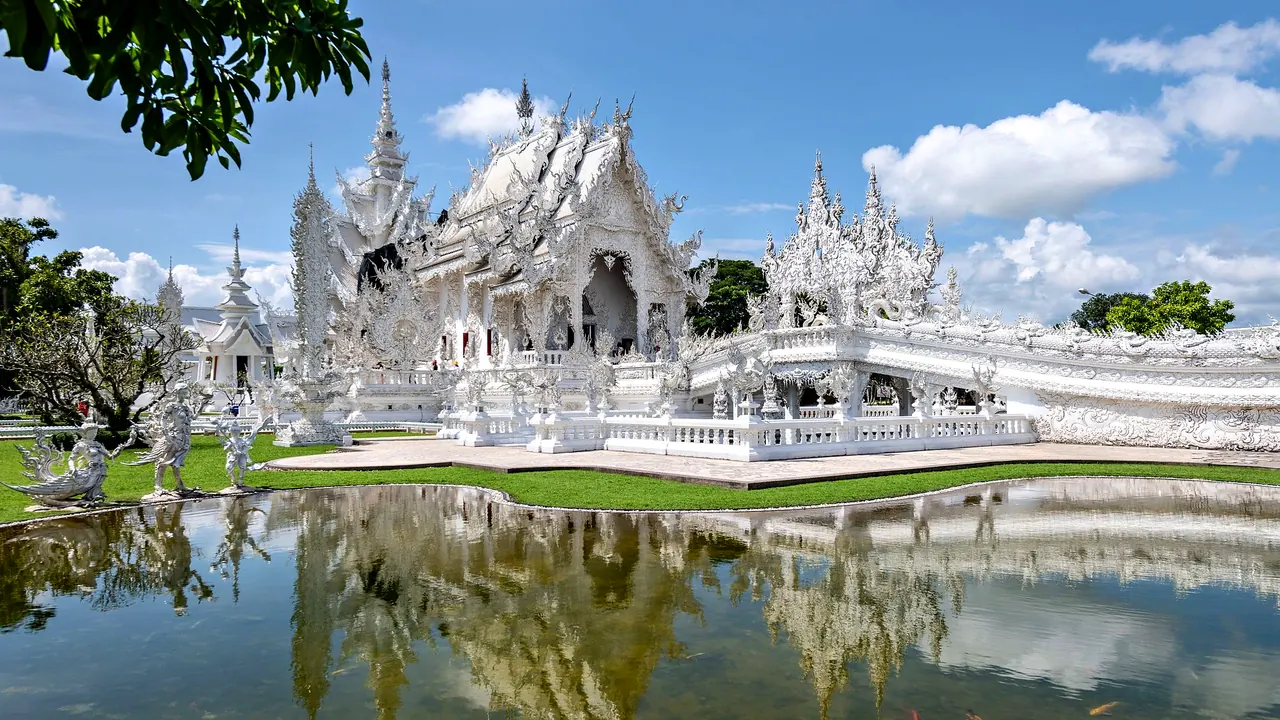
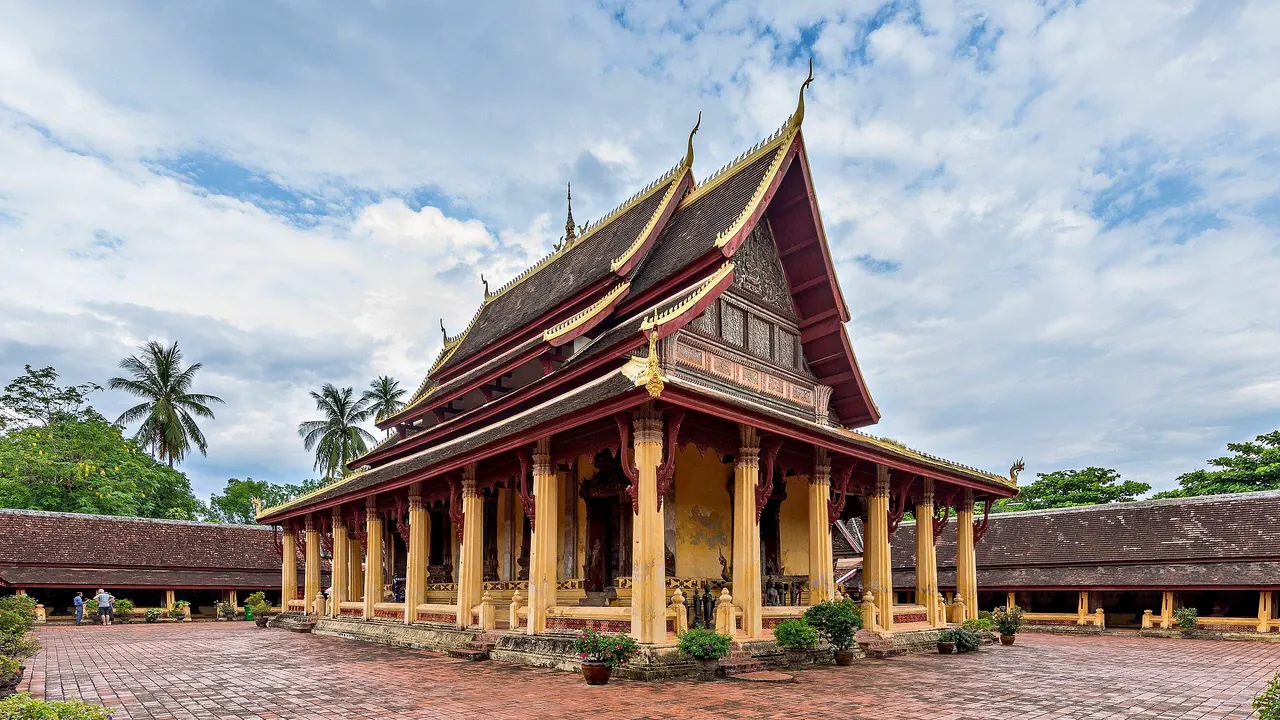
Photos: Chiang Rai by Kirandeep Singh Walia, Pexels License; Vientiane by Basile Morin, CC BY-SA 4.0, cropped.
Chiang Rai or Vientiane?
Our verdict in twelve categories, each scored against the same fixed benchmark cities, and the climate month by month, so you can choose for your trip.
Choose Chiang Rai for
- nature and the outdoors
- culture and sights
- families
Chiang Rai suits travellers who want countryside and striking temple art in the same trip. The White Temple, the Blue Temple and the Black House give it sights unlike anything in Vientiane. Forested ranges, tea terraces and waterfalls lie within an hour, so it is the better base for trekking, cycling and misty mornings in the hills. Families will also find a little more to fill their days here.
Choose Vientiane for
- wellness
- live music and the arts
- food and drink
For a slower, gentler stay, Vientiane is the better pick. It is one of Asia's quietest capitals, and its days pass over Lao coffee, herbal steam baths beside temples and sunset walks along the Mekong. The railway north brings Vang Vieng's karst peaks, and even Luang Prabang, within reach for a day. Come for the pace and the Lao cooking rather than a long list of sights.
Scoreboard
Twelve categories on one fixed scale from 0 to 100. The shaded stretch is the gap between the two.
Your match
Pick a travel style or drag the sliders, and both match scores follow your weighting.
Too close to call, 1 point apart
Wins on nature and the outdoors and culture and sights with your weighting.
Wins on wellness and live music and the arts with your weighting.
What matters to you?
Category by category
What the scores mean for a trip.
Beaches & swimming
You cannot have a beach vacation in either city, because both lie far inland. In Chiang Rai you can swim in cool pools under forest waterfalls or at a reservoir. In Vientiane the Mekong is too fast and muddy to swim in, so you are left with hotel pools or a trip to the river and lagoons around Vang Vieng.
Food & drink
The two are evenly matched, but they cook different things. Chiang Rai serves northern Thai food such as khao soi noodles, sai ua sausage and chilli dips, and its hillside cafés roast coffee from nearby villages. Vientiane eats Lao food: larb, pounded papaya salad and grilled river fish, along with baguette sandwiches left by the French years.
In Vientiane the best evenings are at the grill stalls on the Mekong bank, with a Beerlao. Chiang Rai's equivalent is the night bazaar food court and the weekend walking streets. In both cities the choice beyond local cooking is thin.
Culture & sights
Chiang Rai has the more memorable sights, because its temple art is modern. The mirrored white plaster of Wat Rong Khun, the sapphire and gold of the Blue Temple and the teak halls of Baan Dam give the town a character few Thai cities have. Wat Phra Kaew and the hill-tribe museum add some older history.
Vientiane's sights are national landmarks rather than surprises: the gilded stupa of Pha That Luang, the Buddha-lined cloister of Wat Si Saket and the Patuxai arch. The COPE centre and the concrete figures of Buddha Park stay with visitors, but you can see all of it in a day or two.
Nightlife
Both are early-to-bed towns where the night ends around midnight. Chiang Rai's evenings centre on a short strip of reggae and acoustic bars near the clock tower and the beer tables at the night bazaar. Vientiane is more about a sunset Beerlao by the river, though it also has a few clubs where young locals dance to Lao and Thai pop.
Nature & outdoors
Chiang Rai is the better choice for the outdoors, because the green hills start at the edge of town. Within an hour or so are Khun Korn waterfall, trekking routes, the tea terraces of Doi Mae Salong and the gardens of Doi Tung. Further out are the Mekong at the Golden Triangle and the cloud views from Phu Chi Fa. Plan around the smoke haze of late winter and spring.
Vientiane lies on a flat plain, and its main green space is the riverside promenade. The landscapes worth the trip are further away: the limestone karst of Vang Vieng, with caves, kayaking and balloon flights, and the forest trails of Phou Khao Khouay.
Day trips
The day trips are equally good but work differently. From Chiang Rai you go by road to the walled town of Chiang Saen, the Golden Triangle viewpoint, the border market at Mae Sai and the Yunnanese tea hills of Doi Mae Salong. These are pleasant loops, but none of them is famous.
Vientiane relies on the railway. Vang Vieng is about an hour away, and Luang Prabang is two hours, close enough for a long day though it deserves a night. Across the Friendship Bridge are Nong Khai's riverfront and its sculpture garden at Sala Keoku, but the border crossing adds time.
Good for families
Chiang Rai has a little more for children. Singha Park offers tea fields, lakes, grazing animals and space to cycle, and elephant sanctuaries and the colourful temples hold attention for a morning. Avoid the smoky months with young children.
In Vientiane the choice comes down to a small water park, the riverside play areas and the giant statues of Buddha Park. Heat and broken pavements make days tiring, so a hotel pool matters more here.
Getting around
Getting around is much the same in both: compact centres you can walk, uneven pavements, and no proper public transport for visitors. Chiang Rai's main sights are spread across the hills, so most visitors hire a car, a scooter or a driver, or join tours. In flat, lightly trafficked Vientiane a rented bicycle covers a lot, and tuk-tuks or ride-hailing cars reach That Luang and Buddha Park.
Shopping & style
Both are market towns rather than places for fashion, and neither has malls worth the trip. Chiang Rai's night bazaar and the Saturday walking street on Thanalai Road sell hill-tribe silver and textiles, and its best buys are Doi Mae Salong oolong and hill-grown coffee. In Vientiane the thing to buy is handwoven Lao silk and cotton from small weaving galleries, with Talat Sao and the riverside night market for everything else.
Affordability
Both are among the cheapest places to visit in the region, and guesthouses, market meals and massages cost little in either. The difference is in where the money goes. In Chiang Rai the largest cost is getting to the sights outside town by driver, hire car or tour. In Vientiane imported wine and Western restaurants push up the bill, and tuk-tuk fares need agreeing before you set off.
Live music & performing arts
Neither city has a theatre or concert season, so performance is a small extra at best. Chiang Rai offers Lanna dance on the night bazaar stage and khantoke dinners with traditional dancing. Vientiane puts on Lao music shows built around the khaen bamboo mouth organ, and in both cities temple festivals bring music into the streets.
Wellness & relaxation
Vientiane is the more restorative stay. Its Lao herbal saunas, steam rooms filled with lemongrass and tamarind vapour next to temples such as Wat Sok Pa Luang, are a custom you will not find in Chiang Rai. With cheap massages and the quiet pace of the riverside, the days run very slowly.
Chiang Rai is relaxing too, with soaking pools at the Pong Phrabat and Mae Kachan hot springs, spas by the river and in the hills, and countryside retreats. The smoke season, though, takes away much of its calm for weeks at a time.
When should you go?
Pick your month. The climate figures are measured averages, not a forecast.
Chiang Rai in July
Vientiane in July
Daytime high, °C
Rainfall in the month, mm
Temperature and rainfall are climate normals, averaged over the years shown. Chiang Rai: 1991-2020 (sunshine 1961-1990) normals, Chiang Rai (1 km from centre). Vientiane: 1991-2020 normals, Vientiane (7.6 km from centre).
Chiang Rai is at its best from November to January. The rains have gone, most days are sunny and highs sit near 30°C, which is comfortable for walking around temples and markets, and the hill mornings are cool and misty. From February, farmers start burning their fields and smoke haze settles over the valleys for weeks, so the good season is shorter than the dry months suggest. In Vientiane the dry, sunny spell lasts a little longer, from November through February, and December is almost rainless. February is warmer there, reaching 32°C, but still dry enough for full days out. Neither city has a beach season, since both lie far inland.
March and April are the hardest months in both cities. By April highs reach 35°C, too hot for long days on foot, and in Chiang Rai the smoke is still hanging in the valleys. The rains arrive in May and peak in August, a little heavier in Chiang Rai at about 390mm. In both cities the wet weather and the shorter sunny hours last until October.
Which traveller are you?
On a culture and arts trip, Chiang Rai has more to show. Its White Temple, Blue Temple and Black House are contemporary religious art you will not find elsewhere in Thailand. Vientiane's That Luang, Wat Si Saket and Buddha Park take only a day or two.
For an outdoors trip, Chiang Rai has the wild country on its doorstep: waterfalls, hill-tribe trekking, the tea slopes of Doi Mae Salong and the sunrises above the clouds at Phu Chi Fa. From Vientiane, the best of the outdoors starts with a train ride to Vang Vieng.
On a relaxing and wellness trip, Vientiane is the calmer choice. It has Lao herbal saunas run beside temples such as Wat Sok Pa Luang, massage shops on every central street and slow evenings by the river. Together these beat Chiang Rai's simple hot-spring pools for an unhurried stay.
Before you go
| Measure | Chiang Rai | Vientiane |
|---|---|---|
| Official language | Thai | Lao |
| Currency | Baht (THB) | Lao Kip (LAK) |
| Sockets | ABCF220 V, 50 Hz | ABCEF230 V, 50 Hz |
| Driving side | Left | Right |
| Time zone | UTC+7 | UTC+7 |
| Emergency number | Police 191, ambulance 1669, fire 199 | Police 191, ambulance 195, fire 190 |
| Elevation | 390 m | 174 m |
| Main airport | Mae Fah Luang - Chiang Rai International Airport (CEI)8 km from centre4 non-stop destinations | Wattay International Airport (VTE)7 km from centre41 non-stop destinations |
By the numbers
| Measure | Chiang Rai | Vientiane |
|---|---|---|
| City population | 70,610 | 948,487 |
| People per km² | 1,159 | 242 |
| Museums within 10 km | 4 | 2 |
| UNESCO World Heritage sites within 50 km | 0 | 1 |
Where else could you go?
Every comparison below shares a destination with this one, so you can follow Chiang Rai or Vientiane somewhere new.
- Chiang Maivs Chiang Rai
- Luang Prabangvs Vientiane
- Luang Prabangvs Chiang Rai
- Chiang Maivs Vientiane
- Ayutthayavs Vientiane
- Hanoivs Vientiane