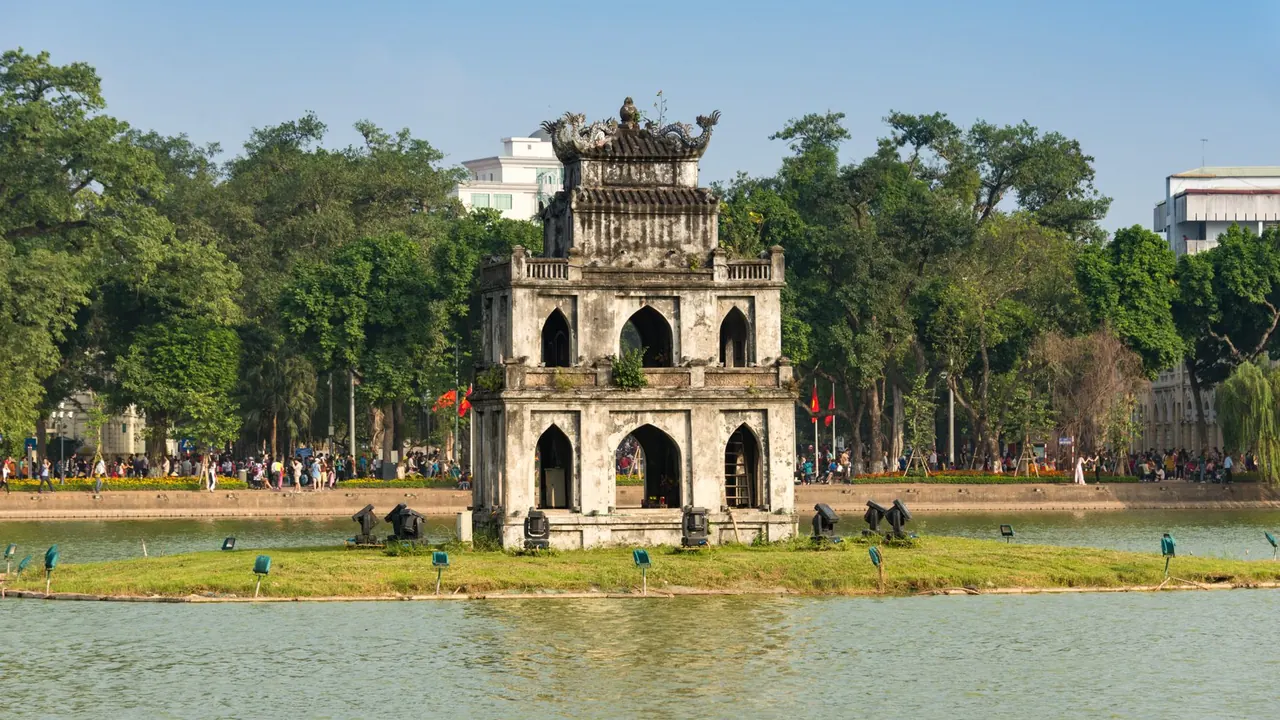
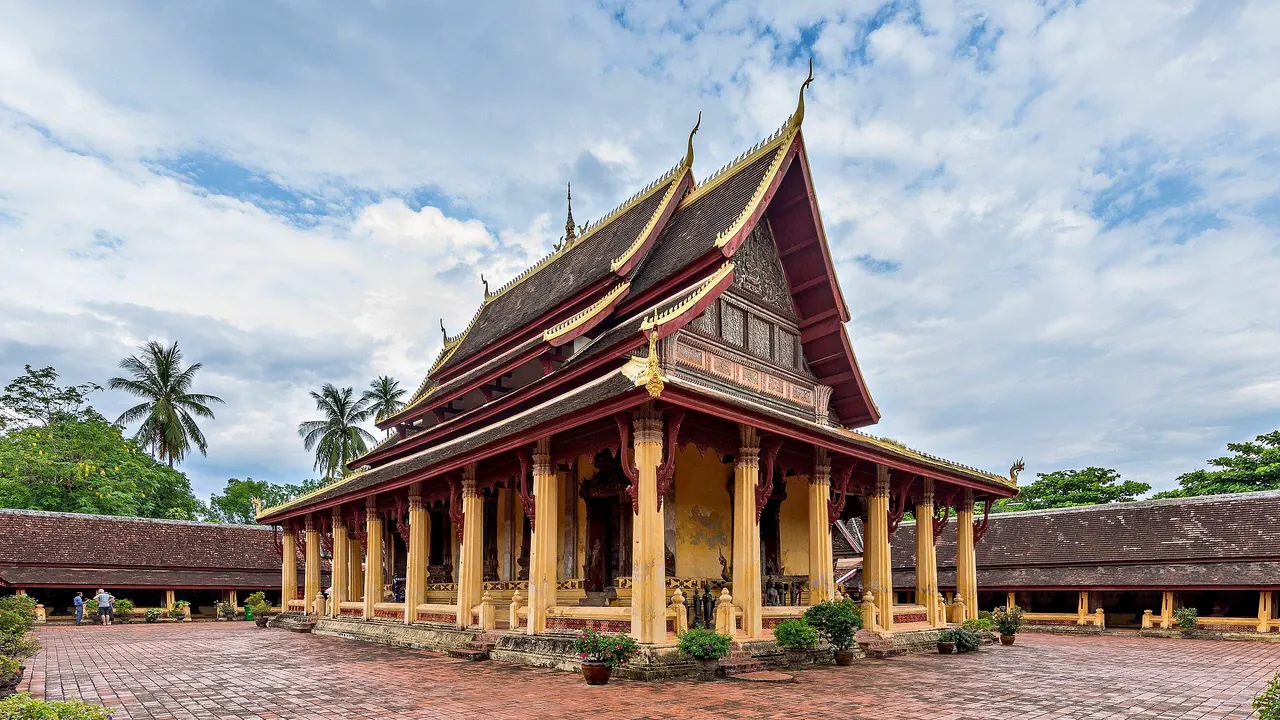
Photos: Hanoi by xiquinhosilva, CC BY 2.0, cropped; Vientiane by Basile Morin, CC BY-SA 4.0, cropped.
Hanoi or Vientiane?
Our verdict in twelve categories, each scored against the same fixed benchmark cities, and the climate month by month, so you can choose for your trip.
Choose Hanoi for
- food and drink
- culture and sights
- nightlife
Hanoi suits the traveller who wants a capital with plenty going on. It has one of Asia's great street-food cultures, centuries of history in the Old Quarter, the Temple of Literature and the Imperial Citadel, and evenings that spill onto the pavements over draught beer. It rewards three or four busy days, and Ninh Binh's limestone country and the craft villages fill the days beyond. In return you get noise, heat and constant motorbike traffic.
Choose Vientiane for
- wellness
- nature and the outdoors
Vientiane is for a slower, quieter stay. There are fewer sights and the food has less range, but the pace is gentle, the traffic is light and the Lao herbal sauna makes a real ritual of winding down. It also works well as a calm base on the railway north, with Vang Vieng's karst peaks and the temples of Luang Prabang within easy reach by train.
Scoreboard
Twelve categories on one fixed scale from 0 to 100. The shaded stretch is the gap between the two.
Your match
Pick a travel style or drag the sliders, and both match scores follow your weighting.
Wins on food and drink and culture and sights with your weighting.
Wins on wellness and nature and the outdoors with your weighting.
What matters to you?
Category by category
What the scores mean for a trip.
Beaches & swimming
Neither city is a place for the sea, and both mean swimming in a hotel pool. Hanoi at least has the coast within reach as a separate stay, at Ha Long Bay, Cat Ba or Sam Son, and it has large water parks by West Lake for a hot afternoon.
Vientiane is landlocked, and nobody swims in the Mekong beside it. The nearest cool water is the river and lagoons around Vang Vieng, a short train ride north.
Food & drink
Hanoi is one of the great eating cities of the region. Family-run shopfronts have cooked a single dish for decades: pho in the morning, bun cha at midday, cha ca fried at the table, banh cuon, sweet soups on street corners. The coffee rituals, from iced coffee with condensed milk to egg coffee, are an attraction of their own.
Vientiane has good food with less range. Lao sticky rice, larb, papaya salad and grilled river fish are worth seeking out, and pâté baguettes make a fine breakfast. Beyond the riverside grill stalls and a short list of French and neighbouring cuisines, though, it runs out of variety much sooner.
Culture & sights
Hanoi gives you several days of history: the Old Quarter's tube houses and communal temples, the Temple of Literature, the French Quarter's boulevards, Ba Dinh's mausoleum and the excavated Thang Long citadel. It also has proper museums, with the Museum of Ethnology the strongest and Hoa Lo prison telling the twentieth century.
Vientiane's sights fit into a day or two: the golden stupa of Pha That Luang, the cloister of Buddha images at Wat Si Saket and the Patuxai arch. Buddha Park and the COPE centre are memorable, but there is no great museum and no historic quarter on Hanoi's scale.
Nightlife
Neither is a late city, since both go quiet around midnight. Hanoi still has much more evening life before then: bia hoi crowds on the Old Quarter pavements, the loud backpacker lanes around Ta Hien, rooftop and cocktail bars, a craft-beer scene by West Lake and the weekend promenade around Hoan Kiem.
In Vientiane, an evening usually means a Beerlao at a riverside table while the sun sets over Thailand, maybe followed by an expat bar or one of a handful of Lao pop clubs.
Nature & outdoors
The two are broadly level here, and in both the best scenery lies outside town. Hanoi's green spaces are its lakes, with the West Lake shoreline path and dawn tai chi at Hoan Kiem. Its signature landscape is Ninh Binh, about two hours south by road, where you are rowed through caves among limestone towers and rice paddies.
Vientiane's riverside promenade is its main open space, but Vang Vieng's karst peaks are only an hour away by train and offer more active options: climbing, kayaking, tubing and balloon flights. Phou Khao Khouay's waterfalls and the lanes along the rice fields are closer still.
Day trips
Hanoi has more variety within a few hours. You can visit Ninh Binh with the old capital of Hoa Lu and the Bai Dinh pagoda, ride a boat to the Perfume Pagoda, see the ceramics of Bat Trang and the silk of Van Phuc, and walk among the laterite houses of Duong Lam. Ha Long Bay is better done as an overnight trip.
Vientiane's outings depend on the railway north: a long day in Luang Prabang or an easy one in Vang Vieng. Across the Friendship Bridge are Nong Khai and the sculpture garden of Sala Keoku, but after that the choices thin out and the border adds time.
Good for families
Hanoi gives children more to do, and Vientiane gives them calmer streets. In Hanoi, the water puppet show by Hoan Kiem Lake is short enough for small ones, and the zoo, the village houses at the Museum of Ethnology and the water parks fill other mornings. The cost is the traffic: crossing a road full of motorbikes with a pushchair takes nerve, and the summers are hot and humid.
Vientiane is quiet and unthreatening, and children tend to love the giant statues at Buddha Park. Beyond a small water park and the riverside play areas, though, little is made for them. With the heat, the patchy pavements and the tuk-tuk rides, a hotel with a pool ends up doing much of the work.
Getting around
Both centres are compact enough to walk, both have pavements blocked by parked scooters, and neither has rail that helps visitors. The difference is the traffic. In Hanoi you learn to cross slowly through a stream of motorbikes and rely on ride-hailing cars, motorbike taxis or a cyclo around the Old Quarter.
Vientiane's streets are light on traffic and flat, so a rented bicycle is a pleasant way to reach Pha That Luang. Tuk-tuks cover longer distances, and their fares need agreeing first.
Shopping & style
Hanoi offers more, and offers it street by street. Whole Old Quarter rows sell tin boxes, bamboo or votive paper, Hang Gai makes made-to-measure clothes in a day or two, and a weekend night market runs up to Dong Xuan. Bat Trang ceramics, lacquerware and northern hill textiles are the best buys.
Vientiane is a specialist stop. Its handwoven Lao silk and cotton, with patterns that change from one ethnic group to the next, are excellent. Beyond the weaving galleries, Talat Sao and the riverside night market, there is little to browse.
Affordability
Hanoi is the cheaper of two very cheap capitals. Pho at a street stall, a glass of bia hoi and a ride-hailing car across town cost next to nothing, and boutique hotels in the Old Quarter are inexpensive. The bill grows with international hotel chains, imported wine and Ha Long Bay cruises, which vary widely in price.
Vientiane is not far behind. Guesthouses, market meals, Beerlao and massages all stay easy on the budget. Here the extra spending comes from Western-style restaurants, imported wine and the more polished hotels.
Live music & performing arts
Hanoi has a real evening programme for a visitor. Water puppetry with live traditional music plays daily by Hoan Kiem Lake, the colonial Opera House stages symphony, ballet and opera, and ca tru sung poetry can be heard in Old Quarter communal houses, alongside a small jazz scene.
Vientiane offers little beyond a Lao dance show with the khaen mouth organ, cover bands in a few bars and music at temple festivals if your dates fit.
Wellness & relaxation
Vientiane is the more restful city, and it has a bathing tradition of its own: wooden herbal saunas steamed with lemongrass and tamarind beside temples such as Wat Sok Pa Luang, followed by tea and a Lao massage. The slow pace of the city does the rest.
Hanoi has plenty of cheap foot and body massage in the Old Quarter, and some calm spas, but the horns and crowds rarely let up. Real quiet means staying near West Lake or getting to the lakes at dawn.
When should you go?
Pick your month. The climate figures are measured averages, not a forecast.
Hanoi in July
Vientiane in July
Daytime high, °C
Rainfall in the month, mm
Where the figures come from
Hanoi's sunshine is measured 86 km from the centre, at Phu Lien.
Temperature and rainfall are climate normals, averaged over the years shown. Hanoi: 1991-2020 normals, Ha Noi (4.4 km from centre). Vientiane: 1991-2020 normals, Vientiane (7.6 km from centre).
The two cities have opposite winters. Hanoi has a real cool season: January highs are around 19°C, which makes walking pleasant, but the skies are grey and the sun is scarce from January to April. Its rains arrive in May, and the summer is hot and wet, reaching 35°C in June with the heaviest rain in July and August. October and November are the best months, warm and drier with a fair amount of sun, and March and April are mild but often overcast.
Vientiane is never cool. Even December and January reach about 29°C, but those months are almost rainless and very sunny, so November to February is the clear time to go. By April the heat builds to 35°C, and from May to September the monsoon is heavy, peaking at 333mm in August. Neither city is a beach destination in any month.
Which traveller are you?
On a culture and arts trip, Hanoi is the clear choice. It has the Temple of Literature, the Imperial Citadel, the Museum of Ethnology and the Old Quarter's guild streets, and in the evenings there is water puppetry or a concert at the Opera House. Vientiane's temples fill only a day or two.
For a food and nightlife trip, choose Hanoi. Pho at breakfast, bun cha at lunch, egg coffee up narrow stairs and bia hoi corners that fill up at dusk give a far richer table and evening than Vientiane's riverside grills and early nights.
On a relaxing and wellness trip, Vientiane wins. It is one of Asia's quietest capitals, with Lao herbal saunas beside temples, cheap massages and sunset walks along the Mekong. Hanoi's horns and crowds make real rest hard outside the West Lake area.
Before you go
| Measure | Hanoi | Vientiane |
|---|---|---|
| Official language | Vietnamese | Lao |
| Currency | Dong (VND) | Lao Kip (LAK) |
| Sockets | ACFG220 V, 50 Hz | ABCEF230 V, 50 Hz |
| Driving side | Right | Right |
| Time zone | UTC+7 | UTC+7 |
| Emergency number | Police 113, ambulance 115, fire 114 | Police 191, ambulance 195, fire 190 |
| Elevation | 10 m | 174 m |
| Main airport | Noi Bai International Airport (HAN)22 km from centre91 non-stop destinations | Wattay International Airport (VTE)7 km from centre41 non-stop destinations |
By the numbers
| Measure | Hanoi | Vientiane |
|---|---|---|
| City population | 8,717,600 | 948,487 |
| People per km² | 2,595 | 242 |
| Museums within 10 km | 14 | 2 |
| UNESCO World Heritage sites within 50 km | 1 | 1 |
Where else could you go?
Every comparison below shares a destination with this one, so you can follow Hanoi or Vientiane somewhere new.
- Luang Prabangvs Vientiane
- Chiang Raivs Vientiane
- Chiang Maivs Vientiane
- Luang Prabangvs Hanoi
- Ayutthayavs Vientiane
- Bangkokvs Vientiane