Photos: Pai by Christophe95, CC BY-SA 4.0, cropped; Yangon by Marcin Konsek, CC BY-SA 4.0, cropped.
Pai or Yangon?
Our verdict in twelve categories, each scored against the same fixed benchmark cities, and the climate month by month, so you can choose for your trip.
Choose Pai for
- nature and the outdoors
- wellness
- nightlife
Pai suits travellers who want to slow down in the countryside rather than tick off sights. Its strengths are the green valley, the canyon and waterfalls you reach by scooter, hot springs in the morning, cheap massage and yoga, and a sociable backpacker evening on the walking street. It is best for an unhurried stay of a week or more, provided you are happy on two wheels or with hired drivers.
Choose Yangon for
- culture and sights
- day trips
- food and drink
Yangon is the choice for the trip that runs on history, temples and food. The Shwedagon at dusk, the weathered colonial streets downtown, tea-shop breakfasts and Chinatown's evening grills give it a depth Pai doesn't try to offer, and Bago makes a proper day out. There is little nature nearby and not much to do after dark, but for two or three days of looking and eating it is much the richer of the two.
Scoreboard
Twelve categories on one fixed scale from 0 to 100. The shaded stretch is the gap between the two.
Your match
Pick a travel style or drag the sliders, and both match scores follow your weighting.
Too close to call, 1 point apart
Wins on nature and the outdoors and wellness with your weighting.
Wins on culture and sights and day trips with your weighting.
What matters to you?
Category by category
What the scores mean for a trip.
Beaches & swimming
Neither city is anywhere near a usable beach, so plan sea and sand for another leg of the trip. What differs is what you get instead.
In Pai you can float down the river on an inner tube in the hot season or splash under Mo Paeng waterfall. In Yangon the brown river is not for swimming. Chaung Tha and Ngwe Saung are a separate trip of several nights, so a swim in the city means a hotel pool.
Food & drink
Yangon is the far better place to eat. Burmese cooking can be had at its source: mohinga and palata in tea shops, slow-cooked curries with their spread of side dishes, laphet thoke, and Indian and Chinese quarters that add biryani, dosa and dim sum. The barbecue and draught beer on 19th Street round off the evening.
Pai's night market is cheap and pleasant, with khao soi and Shan dishes, and Santichon adds Yunnanese noodles. Much of the rest is smoothie bowls, pizza and vegan cafés aimed at long-staying travellers. It is easy food rather than a cuisine to explore.
Culture & sights
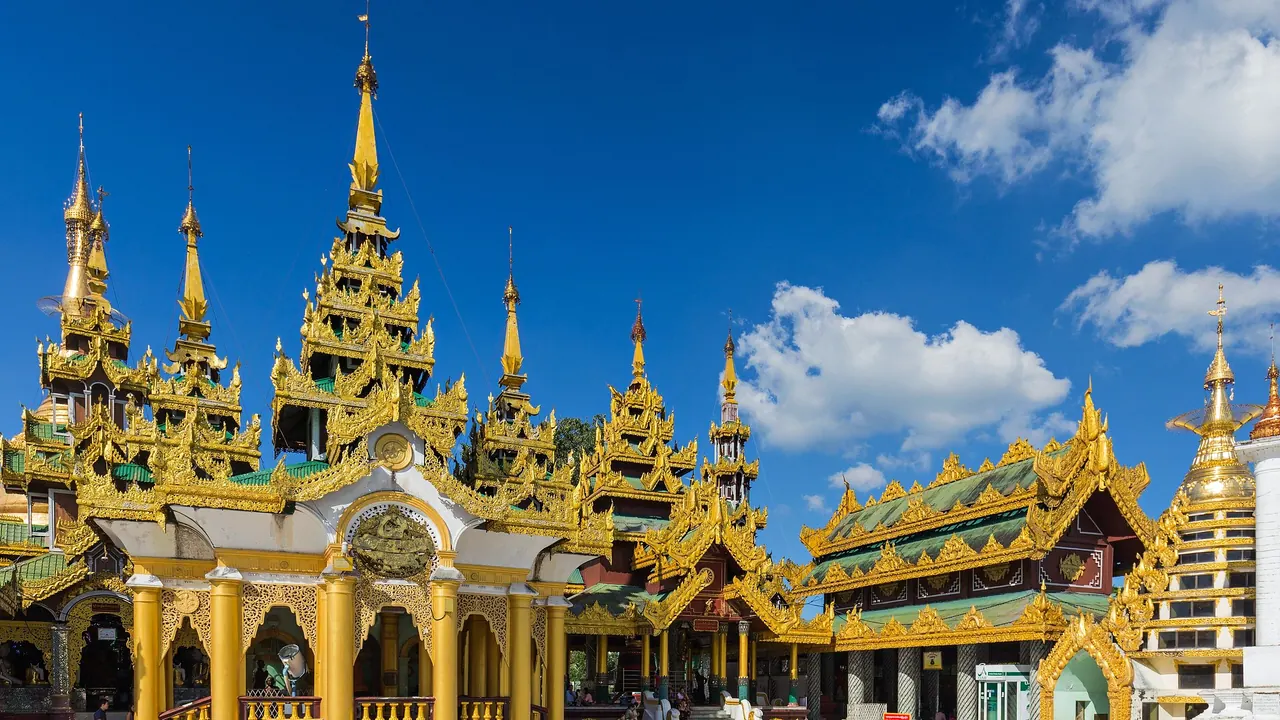
Here the gap is wide. Yangon has the Shwedagon, a gilded stupa nearly 100m tall that is best seen barefoot on the terrace at dusk. It also has the mirrored interior of Botataung, the reclining Buddha at Chaukhtatgyi and a downtown of crumbling colonial landmarks such as the Secretariat and the Strand.
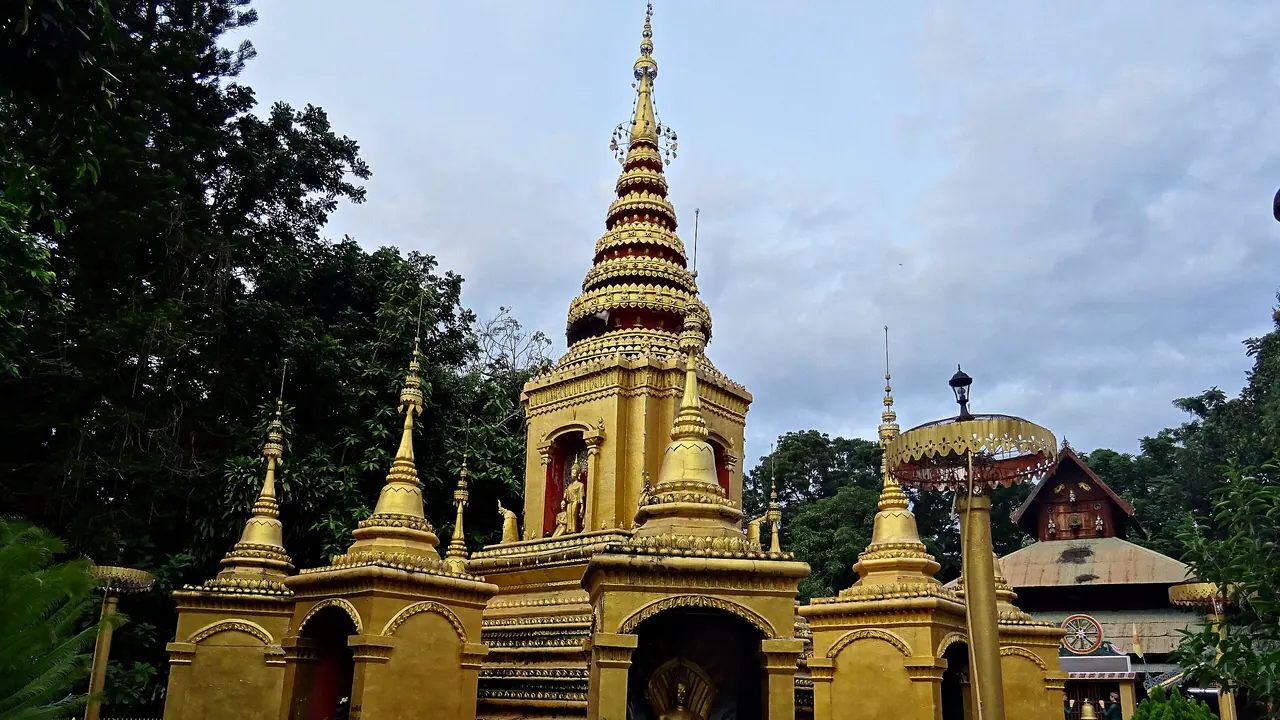
In Pai, culture is a pleasant extra rather than the point. You can climb to the white Buddha at Wat Phra That Mae Yen, see the wartime iron bridge, a few Shan temples and the mud-brick houses of Santichon, and you will be done within the day.
Nightlife
Pai has the livelier evenings, though they are modest by any wider standard. Reggae bars and fairy-lit garden bars fill with young backpackers after the night market, and the odd party runs out of town. Most of it winds down around midnight.
Yangon's nights are quieter and more local. You can watch football over draught beer in a beer station, eat skewers on 19th Street or have a drink at a hotel rooftop, and most of the city is asleep before midnight.
Nature & outdoors
Pai wins easily, because the landscape is the whole reason to go. Misty valley viewpoints at Yun Lai, sunset on the canyon ridges, waterfalls, hill-tribe treks, rafting in the wet season and the swiftlet cave at Tham Lod all lie within reach.
Yangon sits on flat delta land with no hills or trails. Its outdoors means a walk on the Kandawgyi boardwalk, an evening by Inya Lake or the park at Hlawga, and the heat cuts even those short.
Day trips
Yangon gives you more to do beyond the city. Bago, a former royal capital with the Shwemawdaw Pagoda and the Shwethalyaung reclining Buddha, is a comfortable day out by road or train. Twante's pottery kilns and the island pagoda at Kyauktan are closer still.
Pai is too remote for that. Apart from the Lahu and Lisu villages around Soppong, the nearby towns sit hours away along winding mountain roads. It works better as one stop on a loop through the northern hills.
Good for families
Neither city is built for children, and both suit older children better than toddlers. The difficulties differ in kind.
In Pai, the trouble is getting there: the road from Chiang Mai is notorious for making passengers sick, and the sights are spread across the valley. Once there, waterfalls, hot springs, farm visits and river tubing give outdoorsy children plenty to do. Yangon's problems are relentless heat, broken pavements and heavy traffic, softened only by an old-fashioned zoo, a small amusement park and the lakeside lawns.
Getting around
Yangon is the easier of the two, mainly because cheap taxis and ride-hailing cover the spread-out city, even if they get stuck in traffic. The downtown grid can be walked with care, and the slow Circular Railway is worth riding for the views.
Pai's centre takes minutes on foot, but everything worth seeing lies out in the valley with no public transport. That leaves a rented scooter, risky for beginners on the hill roads, or hired songthaews and tours.
Shopping & style
Yangon has more to buy and it is more interesting. Bogyoke Aung San Market is a colonial market hall full of lacquerware, puppets, longyi and gemstones, though gems call for caution. The spice and street markets of Chinatown and the Indian quarter add to it.
In Pai, shopping is an evening browse along the walking street for cotton trousers, woven bags, hill-tribe textiles and jewellery. It is enjoyable and mostly locally made, but the same goods repeat from stall to stall.
Affordability
Both are cheap, and Pai is a little gentler on a long stay. Simple bungalows, night-market dinners and scooter hire cost so little that travellers stay for weeks, and most sights are free or nearly so.
Yangon's street food, tea shops and taxis are just as cheap. The difference is in comfortable hotels, which cost noticeably more there, and in the Shwedagon, which charges foreigners an entry fee that the other pagodas mostly don't.
Live music & performing arts
Pai has more on most nights, in a casual way: acoustic sets, blues and jazz jams in bars, played by local and travelling musicians. The quality is uneven, but it comes free with a drink.
Yangon's stage life is scarcer but more distinctly Burmese. Marionette shows, classical dance at the barge-shaped Karaweik Palace and, if you are lucky, an all-night zat pwe at a pagoda festival are the occasions to look for.
Wellness & relaxation
Pai is built for unwinding. You can soak in the Tha Pai hot springs in the cool morning air, then find cheap Thai massage, yoga and detox retreats, and the slow pace of the valley does the rest, at least outside the hazy burning season.
Yangon's offer is narrower but serious. Firm Burmese massage and hotel spas are easy to find, and the long-established Mahasi centre takes foreigners for vipassana retreats. Outside quiet moments at the Shwedagon or Inya Lake, though, the city is not restful.
When should you go?
Pick your month. The climate figures are measured averages, not a forecast.
Pai in July
Yangon in July
Daytime high, °C
Rainfall in the month, mm
Where the figures come from
Pai's temperatures are measured 64 km from the centre, at Mae Hong Son.
Pai's station stands 242 m below the city centre, so the centre is likely a little cooler than the figures say.
Pai has no rain gauge within 25 km of the centre, so its rainfall comes from a gridded climate dataset read at the city rather than from a gauge further away.
Pai's sunshine is measured 86 km from the centre, at Chiang Mai.
Temperature and rainfall are climate normals, averaged over the years shown. Pai: 1971-2000 (sunshine 1991-2020, rainfall 1991-2020) normals, Mae Hong Son (63.7 km from centre). Yangon: 1991-2020 normals, Yangon (3.2 km from centre).
Both cities follow the same basic year: a dry season from November to April and a monsoon from May to October. Where they differ is in how far the extremes go. Pai is at its best from November to January, with sunny, mild days of around 29°C to 31°C and almost no rain, ideal for scooter rides and walks in the hills. February stays dry but grows warmer, and by March and April the valley turns very hot and the haze from field burning settles in. The summer rains are real but much lighter than Yangon's. They cut the sunshine and leave the valley green.
Yangon is hot all year. Even December and January, the coolest months of its dry season, reach about 33°C, and April touches 38°C, so plan to explore early in the morning and at dusk. The monsoon brings the year's lowest highs, but it is far heavier than in Pai, with close to 590mm a month from June to August, and that makes walking the streets tiring. If you want both cities on one trip, December and January are the most comfortable months.
Which traveller are you?
On a culture and arts trip, Yangon is the clear choice. The Shwedagon, the Sule and Botataung pagodas and one of Southeast Asia's largest colonial quarters fill several days. Pai has a hilltop Buddha and a Yunnanese village, which take about half a day.
For an outdoors trip, choose Pai. Rice fields, forested hills, the ridges of Pai Canyon, waterfalls, hill-tribe treks and the great cave at Tham Lod are all within a scooter ride. Yangon's flat delta offers city lakes and a river ferry, and not much more.
On a relaxing and wellness trip, Pai is the easier place to unwind. It has hot springs, massage on every street, yoga and meditation retreats, and hammocks with views over the fields. Yangon's vipassana centres are distinctive, but the city around them is hot and loud.
Before you go
| Measure | Pai | Yangon |
|---|---|---|
| Official language | Thai | Burmese |
| Currency | Baht (THB) | Kyat (MMK) |
| Sockets | ABCF220 V, 50 Hz | CFG230 V, 50 Hz |
| Driving side | Left | Right |
| Time zone | UTC+7 | UTC+6:30 |
| Emergency number | Police 191, ambulance 1669, fire 199 | Police 199, ambulance 192, fire 191 |
| Elevation | 509 m | 15 m |
| Main airport | Chiang Mai International Airport (CNX)86 km from centre28 non-stop destinations | Yangon International Airport (RGN)13 km from centre27 non-stop destinations |
By the numbers
| Measure | Pai | Yangon |
|---|---|---|
| City population | 3,598 | 6,874,000 |
| People per km² | - | 11,934 |
| Museums within 10 km | 0 | 5 |
| UNESCO World Heritage sites within 50 km | 0 | 0 |
| Swim season, months above 21 °C | - | 12 months |
Where else could you go?
Every comparison below shares a destination with this one, so you can follow Pai or Yangon somewhere new.