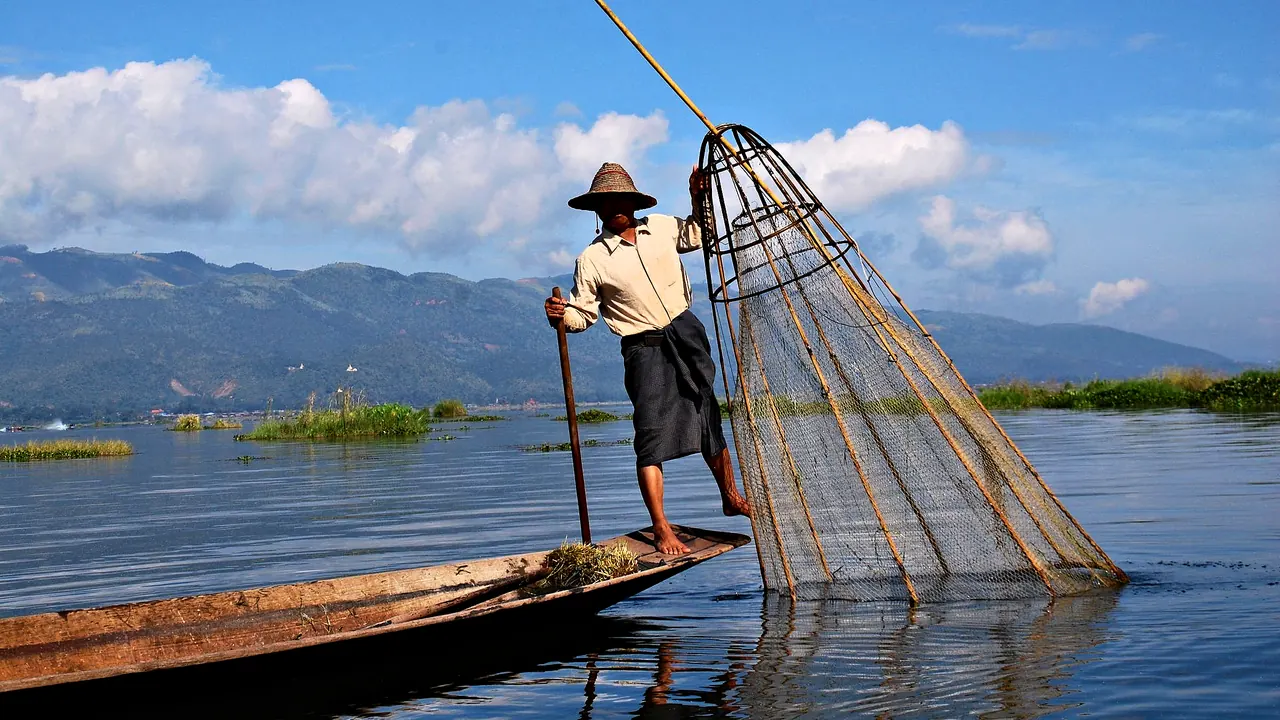
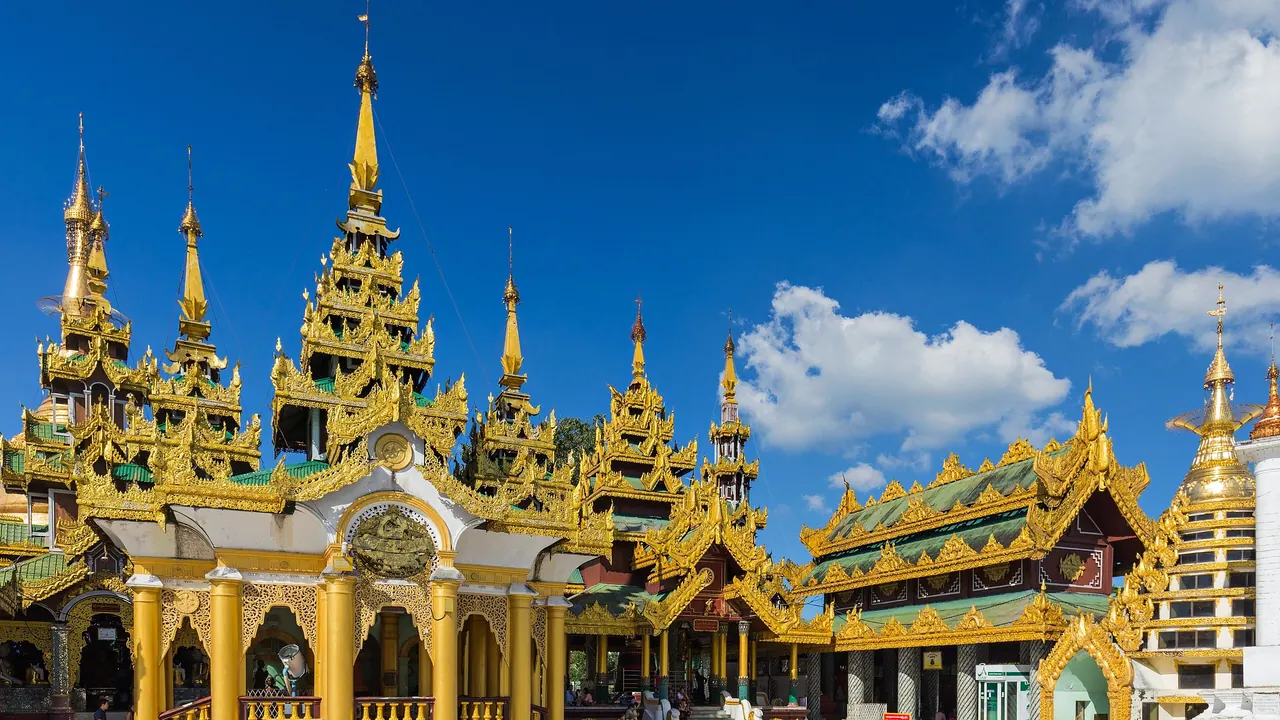
Photos: Inle Lake by Micha Höfer, Pexels License; Yangon by Marcin Konsek, CC BY-SA 4.0, cropped.
Inle Lake or Yangon?
Our verdict in twelve categories, each scored against the same fixed benchmark cities, and the climate month by month, so you can choose for your trip.
Choose Inle Lake for
- nature and the outdoors
- wellness
- day trips
Inle Lake suits travellers who want landscape and a slower pace: early boats through mist on a highland lake, cycling to stilt villages and hot springs, treks in the Shan hills and the stupa fields of Indein and Kakku. It is cooler and quieter than the city, and a few unhurried days there suit it better than a packed itinerary.
Choose Yangon for
- food and drink
- culture and sights
- nightlife
For a city trip built around temples, old streets and food, Yangon is the better pick. The Shwedagon at dusk, a colonial downtown of weathered landmarks and the country's widest range of food, from tea-shop mohinga to Chinatown skewers and Indian biryani, give it far more to see and taste. The trade-off is heat, traffic and flat delta land with no hills or trails to escape to.
Scoreboard
Twelve categories on one fixed scale from 0 to 100. The shaded stretch is the gap between the two.
Your match
Pick a travel style or drag the sliders, and both match scores follow your weighting.
Too close to call, 1 point apart
Wins on nature and the outdoors and wellness with your weighting.
Wins on food and drink and culture and sights with your weighting.
What matters to you?
Category by category
What the scores mean for a trip.
Beaches & swimming
Neither place is for swimming. Inle is a shallow working lake of reed beds and floating gardens, and Yangon sits on a silty brown river, so in both a swim means a hotel or resort pool. The difference is that Yangon is the usual starting point for the Bay of Bengal beaches at Chaung Tha and Ngwe Saung, a long day's drive away and best planned as a separate stay of several nights.
Food & drink
Yangon is the far better place to eat. Its tea shops serve mohinga, palata and samosas from early morning, and Burmese curries come with their spread of side dishes and laphet thoke. The Indian and Chinese quarters add biryani, dosa and dim sum, and 19th Street in Chinatown fills with grills each evening.
Inle has one good thing to offer, the light Shan and Intha cooking of noodles, chickpea tofu and steamed lake fish. Over a few days, though, Nyaungshwe's handful of noodle shops and family restaurants begins to feel repetitive.
Culture & sights
At Inle, culture means the life of the lake rather than a set of monuments: stilt villages, monasteries standing in the water, Phaung Daw Oo Pagoda with its gold-swollen Buddha images, and workshops for lotus weaving and silver. Its one great site is the overgrown stupa field at Indein.
Yangon's sights carry more weight. The Shwedagon, a gilded stupa nearly 100m tall, is the country's holiest shrine. Around it are the Sule and Botataung pagodas, Chaukhtatgyi's huge reclining Buddha and one of Southeast Asia's largest groups of colonial buildings, from the Secretariat to the Strand riverfront.
Nightlife
Yangon has an evening scene of sorts, and Inle has almost none. In the city you can watch football over draught beer at a beer station, eat grilled skewers in the crowds on 19th Street, or go up to a hotel rooftop or one of a few small clubs, though most streets are quiet before midnight.
At Inle, Nyaungshwe's few terraces serve beer and local wine until shortly after dinner. Then the town goes to bed ahead of the dawn boats.
Nature & outdoors
This is Inle's great strength. The lake sits in a valley at about 900m between the blue Shan ridges, and misty dawn boat rides, herons over the reeds and floating tomato gardens make up a landscape you will not find anywhere else. Around it you can cycle to rice fields and hot springs, take hill walks to Pa-O villages or do the trek in from Kalaw.
Yangon's outdoors is limited to the boardwalk at Kandawgyi Lake, evening walks by Inya Lake and river ferries across flat delta land. There are no hills or trails within reach.
Day trips
The outings from Inle are more striking. Kakku's forest of more than two thousand stupas in Pa-O country, the gilded cave at Pindaya and the old hill station of Kalaw each make a full day, though all of them need a car and driver.
From Yangon the main trip is Bago, a former royal capital with the Shwemawdaw Pagoda and a great reclining Buddha, plus the ferry ride to the pottery town of Twante. The Golden Rock is too far to see comfortably without a night away.
Good for families
Both are hard going with young children, but in different ways. At Inle the appeal for older children is the adventure of long-tail boats, one-legged rowers and easy cycling on flat roads, set against long days on wooden seats, slow roads and basic medical care. In Yangon there is a zoo, a small amusement park and the lawns of People's Park, but the heat, broken pavements and traffic wear families down faster.
Getting around
Getting around is about equally awkward in both, for different reasons. At Inle, Nyaungshwe is walkable, bicycles reach nearby villages and a hired boatman takes you anywhere on the lake. The hard part is reaching the lake, with Heho airport about an hour away by winding road, and any trip beyond it needs a car.
Yangon's colonial grid can be walked on uneven pavements. The rest of the city means taxis or ride-hailing stuck in traffic, because there is no metro, and the slow Circular Railway is a sight in itself rather than transport.
Shopping & style
Inle sells what is made on and around the lake: lotus-fibre and Shan silk weaving, silver and cheroots. You buy them at workshops on the boat route, where a sales pitch comes with the visit, or at the rotating five-day markets where Pa-O traders come down from the hills.
Yangon gathers goods from the whole country under one roof at Bogyoke Aung San Market, from jade, rubies and Bagan lacquerware to puppets and longyi. Chinatown and the Indian quarter add street and spice markets, and there are malls for imported brands. Neither place has much in the way of fashion or design.
Affordability
Inle is a little cheaper on simple terms. Nyaungshwe guesthouses, noodle meals, bicycle hire and a boat shared between a few people cost very little, and spending only goes up if you stay in the resorts over the water or hire a private car.
In Yangon, tea shops, street food, taxis and the mostly free pagodas are just as easy on the budget. The bigger cost is a comfortable international-standard hotel, which takes a larger share of the money than the rest of the stay would suggest.
Live music & performing arts
Formal performance is thin in both, and each has a small marionette show keeping Burmese puppetry alive. Yangon adds evening dinner shows of classical dance at the barge-shaped Karaweik Palace and the occasional all-night zat pwe at pagoda festivals. Inle's real spectacle is the Phaung Daw Oo festival in September or October, when golden images tour the lake on a royal barge escorted by teams of racing leg-rowers.
Wellness & relaxation
Inle is the more restful place. Days follow the light, resorts on the water wake to mist and birdsong, and the thermal pools at Khaung Daing are an easy cycle and boat ride away, with Burmese massage and resort spas as well.
Yangon offers firm Burmese massage and hotel spas too. Its distinctive draw is serious vipassana practice at meditation centres such as Mahasi, but outside them the city is hot, loud and congested.
When should you go?
Pick your month. The climate figures are measured averages, not a forecast.
Inle Lake in July
Yangon in July
Daytime high, °C
Rainfall in the month, mm
Where the figures come from
Inle Lake has no weather station within reach, so its figures come from a gridded climate model rather than a measured record, and read a broad area rather than one spot.
Temperature and rainfall are climate normals, averaged over the years shown. Inle Lake: 2001-2020 normals, NASA POWER reanalysis grid, no weather station within 90 km. Yangon: 1991-2020 normals, Yangon (3.2 km from centre).
Inle Lake sits high enough to stay mild. The dry season from November to April is the time to go, with crisp mornings and highs near 24°C in December and January, warming to the low thirties by April. The rains run from May to October and peak at about 270mm in August, enough to muddy the hill trails but rarely enough to stop a boat day.
Yangon is hot all year. March and April climb towards 38°C, too hot for long walks between pagodas, and its monsoon is far heavier than the lake's, close to 590mm a month from June to August. November to February is the only comfortable stretch, and even then the middle of the day is best spent in the shade. In the cool season the two fit well together, with the lake as a break from the city's heat.
Which traveller are you?
On an outdoors trip, Inle Lake is the clear choice. It has dawn boats among leg-rowing fishermen and floating gardens, flat cycling routes to hot springs and the trek over the Shan hills from Kalaw. Yangon's flat delta offers little beyond lakeside promenades.
For a culture and arts trip, Yangon gives more. The Shwedagon, the Sule and Botataung pagodas and a whole district of colonial buildings fill several rich days. Inle's stilt villages and the stupas at Indein are memorable, but you can see them quickly.
On a relaxing and wellness trip, Inle Lake works better. A resort over the water, dark and quiet evenings, the hot springs at Khaung Daing and massage in Nyaungshwe all slow the days down. In Yangon the calm is limited to meditation centres and early mornings.
Before you go
| Measure | Inle Lake | Yangon |
|---|---|---|
| Official language | Burmese | Burmese |
| Currency | Kyat (MMK) | Kyat (MMK) |
| Sockets | CFG230 V, 50 Hz | CFG230 V, 50 Hz |
| Driving side | Right | Right |
| Time zone | UTC+6:30 | UTC+6:30 |
| Emergency number | Police 199, ambulance 192, fire 191 | Police 199, ambulance 192, fire 191 |
| Elevation | - | 15 m |
| Main airport | Heho Airport (HEH)11 non-stop destinations | Yangon International Airport (RGN)13 km from centre29 non-stop destinations |
By the numbers
| Measure | Inle Lake | Yangon |
|---|---|---|
| Population | - | 6,874,000 |
| People per km² | - | 11,934 |
| Museums within 10 km | - | 5 |
| UNESCO World Heritage sites within 50 km | - | 0 |
| Swim season, months above 21 °C | - | 12 months |
Where else could you go?
Every comparison below shares a destination with this one, so you can follow Inle Lake or Yangon somewhere new.
- Baganvs Inle Lake
- Chiang Maivs Inle Lake
- Chiang Maivs Yangon
- Paivs Yangon
- Kanchanaburivs Yangon
- Baganvs Yangon