Photos: Bagan by Vyacheslav Argenberg, CC BY 4.0, cropped; Yangon by Marcin Konsek, CC BY-SA 4.0, cropped.
Bagan or Yangon?
Our verdict in twelve categories, each scored against the same fixed benchmark cities, and the climate month by month, so you can choose for your trip.
Choose Bagan for
- culture and sights
- nature and the outdoors
- prices
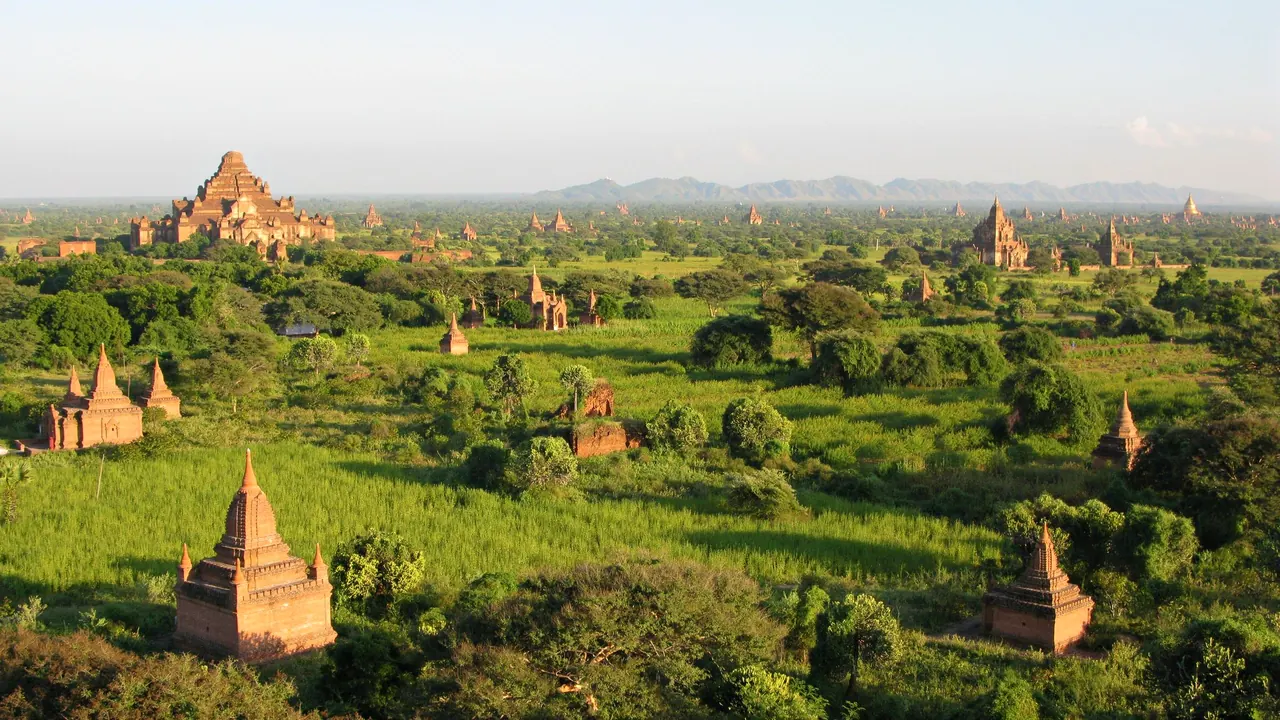
Bagan is the trip for travellers who want one of Asia's great historic landscapes and are content to give their days to it. Two thousand and more brick temples spread across a plain by the Irrawaddy, seen by e-bike, from a river boat or a dawn balloon, make an experience Yangon cannot match. In return you get early nights, simple food and long, hot rides between monuments.
Choose Yangon for
- food and drink
- nightlife
- day trips
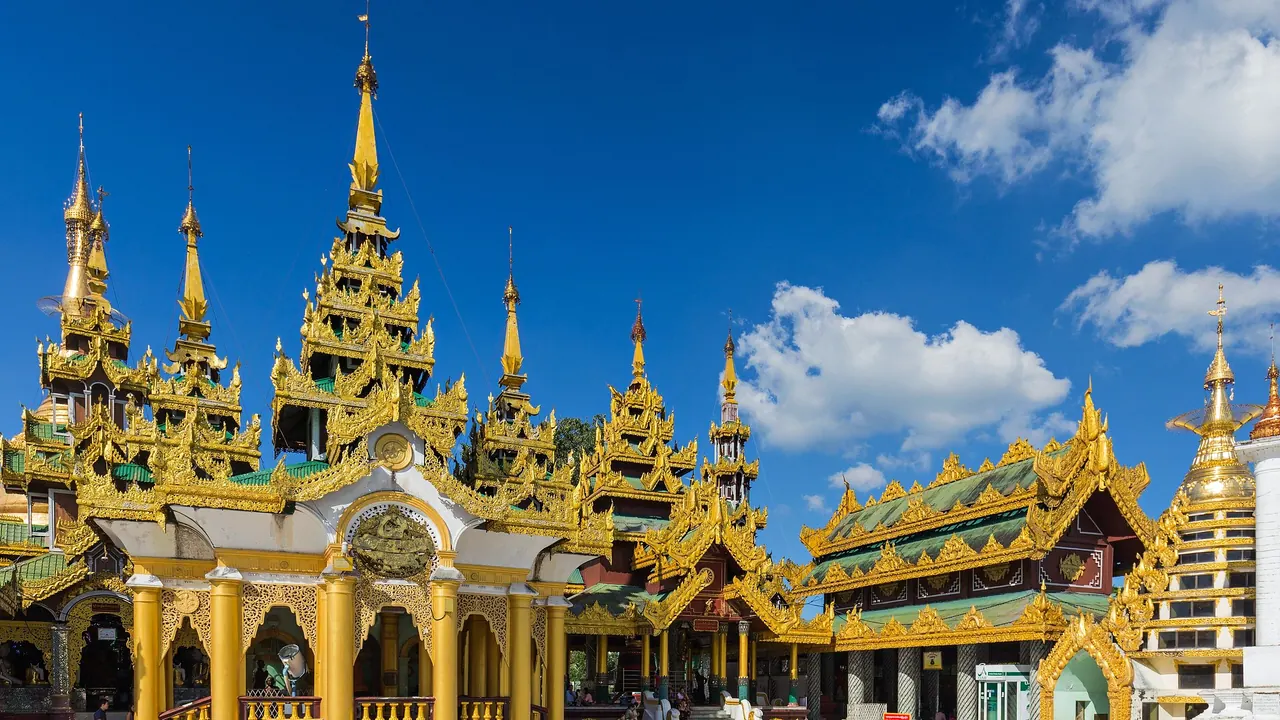
Yangon works better for anyone who wants a real city around the sights. The Shwedagon and the colonial downtown fill two or three days, and the tea shops, street stalls and the Indian and Chinese quarters make eating far more interesting. Evenings on 19th Street, a walkable centre and easier outings to Bago and Twante add a variety that Bagan's temple plain does not offer.
Scoreboard
Twelve categories on one fixed scale from 0 to 100. The shaded stretch is the gap between the two.
Your match
Pick a travel style or drag the sliders, and both match scores follow your weighting.
Wins on culture and sights and nature and the outdoors with your weighting.
Wins on food and drink and nightlife with your weighting.
What matters to you?
Category by category
What the scores mean for a trip.
Beaches & swimming
Neither city is a place to swim, so a pool at your hotel is the answer in both. In Bagan the Irrawaddy is for sunset boat trips, not bathing.
From Yangon the Bay of Bengal beaches at Chaung Tha and Ngwe Saung can at least be reached, but only as a separate trip of several nights, not as an outing.
Food & drink
Yangon is the far better place to eat. Its tea shops, street stalls across the downtown grid, Burmese noodle dishes and the Indian and Chinese quarters, with dosa, dim sum and evening barbecue on 19th Street, give you something new at every meal.
Bagan has good Burmese curry spreads, tea-leaf salad and local palm sugar sweets, but its restaurants are scattered and many serve the same tourist menu. Neither city has much in the way of refined dining.
Culture & sights
For sightseeing, Bagan is clearly the stronger of the two. Yangon has one monument of world rank in the Shwedagon, but Bagan has a whole plain of them, and the pleasure is in how far it goes on. Several days of riding between monuments still leave much of it unseen, and the Archaeological Museum explains what you are looking at. The 2016 earthquake and some heavy-handed restoration have left their mark, but they take little away from the whole.
Yangon has more kinds of sight but fewer of each. Besides the Shwedagon at dusk, there are the reclining Buddha at Chaukhtatgyi and the mirrored interior of Botataung. The leaning colonial blocks of the Secretariat, the High Court and the Strand also add a later layer of history that Bagan does not have. Its museums are modest, though, and once you have seen the pagodas and the old downtown, there is little left to keep you.
Nightlife
Yangon at least has evenings to go out in: beer stations showing football, crowded tables on 19th Street in Chinatown, rooftop hotel bars and a few small clubs, although it still goes quiet before midnight. Bagan has almost nothing after dinner, because everyone is up before dawn for the temples, and the town is asleep by ten.
Nature & outdoors
Bagan offers more time outdoors, even though its plain of scrub and peanut fields is flat and dry. Riding between temples, drifting over them in a balloon and taking a sunset boat on the Irrawaddy are memorable, and Mount Popa adds forest walks within reach.
Yangon's outdoors is mostly its own parks. You can walk the Kandawgyi boardwalk, stroll by Inya Lake or take a ferry onto the delta, but there are no hills or trails nearby, and the monsoon cuts down outdoor time for half the year.
Day trips
Yangon has the better choice of outings. Bago, a former royal capital with the Shwemawdaw Pagoda and the Shwethalyaung reclining Buddha, can be reached by road or train, and the ferry to Twante's pottery kilns and the island pagoda at Kyauktan are closer still.
From Bagan, the climb to Taung Kalat on Mount Popa is the one classic outing. The teak monastery at Salay and the market town of Pakokku come after that, and then the options run out.
Good for families
Both are hard work with children, and the difference is in the kind of experience. Bagan offers adventure for older children, with horse carts, bikes and possibly a balloon, but it has long dusty distances and basic medical care.
Yangon has a zoo, a small amusement park and lawns in People's Park, and better facilities if something goes wrong. The price is broken pavements and chaotic traffic.
Getting around
Yangon is easier to get around. The colonial downtown can be walked, uneven pavements and all, and cheap taxis and ride-hailing cover the rest, slowed only by traffic. The Circular Railway is worth riding as an outing in its own right.
In Bagan, Nyaung U, Old Bagan and New Bagan lie several kilometres apart with no public transport. Most visitors hire an electric scooter, which is fun but can be awkward on the sandy tracks.
Shopping & style
Yangon has more to buy, nearly all of it under one roof at Bogyoke Aung San Market. Its stalls sell jade, rubies, puppets, longyi and lacquerware from Bagan, and Chinatown and the Indian quarter add markets for spices and everyday goods.
Bagan is the place to see lacquerware made, in the workshops of Myinkaba and New Bagan. Apart from that, it has little more than sand paintings and Nyaung U market.
Affordability
Both are cheap places to travel, and simple guesthouses and tea-shop breakfasts cost very little in either. The extra costs differ. In Bagan they are the archaeological zone fee and the dawn balloon flights, both easy to budget for.
In Yangon the larger cost is a comfortable hotel, which costs more than everything else suggests, while most pagodas apart from the Shwedagon cost little or nothing.
Live music & performing arts
The stage offer is much the same in both: marionette shows and traditional dance performed over dinner for visitors, and no theatre or concert scene. Yangon stages its shows at the barge-shaped Karaweik Palace on Kandawgyi Lake. In Bagan, the Ananda Temple festival gives you a better chance of catching an all-night zat pwe.
Wellness & relaxation
Yangon has the more distinctive option. At meditation centres such as Mahasi, visitors can join vipassana practice for days or weeks, and Burmese massage is easy to find, though the city around you stays loud and congested.
Bagan is calmer in itself. Afternoons are spent resting by the pools and gardens of the riverside resorts in Old and New Bagan, and evenings watching the light fade over the plain, with only dust and touts at the busiest temples to disturb you.
When should you go?
Pick your month. The climate figures are measured averages, not a forecast.
Bagan in July
Yangon in July
Daytime high, °C
Rainfall in the month, mm
Where the figures come from
Bagan has no weather station within reach, so its figures come from a gridded climate model rather than a measured record, and read a broad area rather than the city itself.
Temperature and rainfall are climate normals, averaged over the years shown. Bagan: 2001-2020 normals, NASA POWER reanalysis grid, no weather station within 90 km. Yangon: 1991-2020 normals, Yangon (3.2 km from centre).
Both cities are hot all year, and for both the comfortable season is November to February. Bagan is at its mildest in December and January, with highs around 30°C, which suits long days cycling between temples. From March the dry plain heats up sharply, reaching about 39°C in April, and midday outdoors becomes hard work. Bagan lies in Myanmar's dry zone, so even its wettest months bring only about 71mm, and the rains hardly get in the way of a visit.
Yangon is a different story from May to October. The monsoon arrives in earnest, with close to 590mm falling in each of June, July and August, and many days are spent dodging downpours and flooded streets. Its dry season runs from November to April, and its hottest stretch is March and April, at about 38°C. If you are combining the two, December to February is the safest window.
Which traveller are you?
On a culture and arts trip, Bagan is the clear choice. Its plain of Pagan-era temples, from the Ananda to the smaller muralled shrines along dirt tracks, is a sight of a different order, while Yangon's Shwedagon and colonial streets fill only a couple of days.
For a food and nightlife trip, choose Yangon. Tea shops, Shan noodles, biryani in the Indian quarter and skewers with draught beer on 19th Street give it real range, while in Bagan restaurant menus repeat themselves and the town is dark by ten.
On an outdoors trip, Bagan offers more to do. You can ride an e-bike along sandy tracks, take a balloon over the temples at dawn or walk the forested slopes of Mount Popa, while Yangon has flat delta land and lakeside promenades.
Before you go
| Measure | Bagan | Yangon |
|---|---|---|
| Official language | Burmese | Burmese |
| Currency | Kyat (MMK) | Kyat (MMK) |
| Sockets | CFG230 V, 50 Hz | CFG230 V, 50 Hz |
| Driving side | Right | Right |
| Time zone | UTC+6:30 | UTC+6:30 |
| Emergency number | Police 199, ambulance 192, fire 191 | Police 199, ambulance 192, fire 191 |
| Elevation | 75 m | 15 m |
| Main airport | Bagan Airport (NYU)7 km from centre | Yangon International Airport (RGN)13 km from centre27 non-stop destinations |
By the numbers
| Measure | Bagan | Yangon |
|---|---|---|
| City population | 22,000 | 6,874,000 |
| People per km² | - | 11,934 |
| Museums within 10 km | 1 | 5 |
| UNESCO World Heritage sites within 50 km | 1 | 0 |
| Swim season, months above 21 °C | - | 12 months |
Where else could you go?
Every comparison below shares a destination with this one, so you can follow Bagan or Yangon somewhere new.