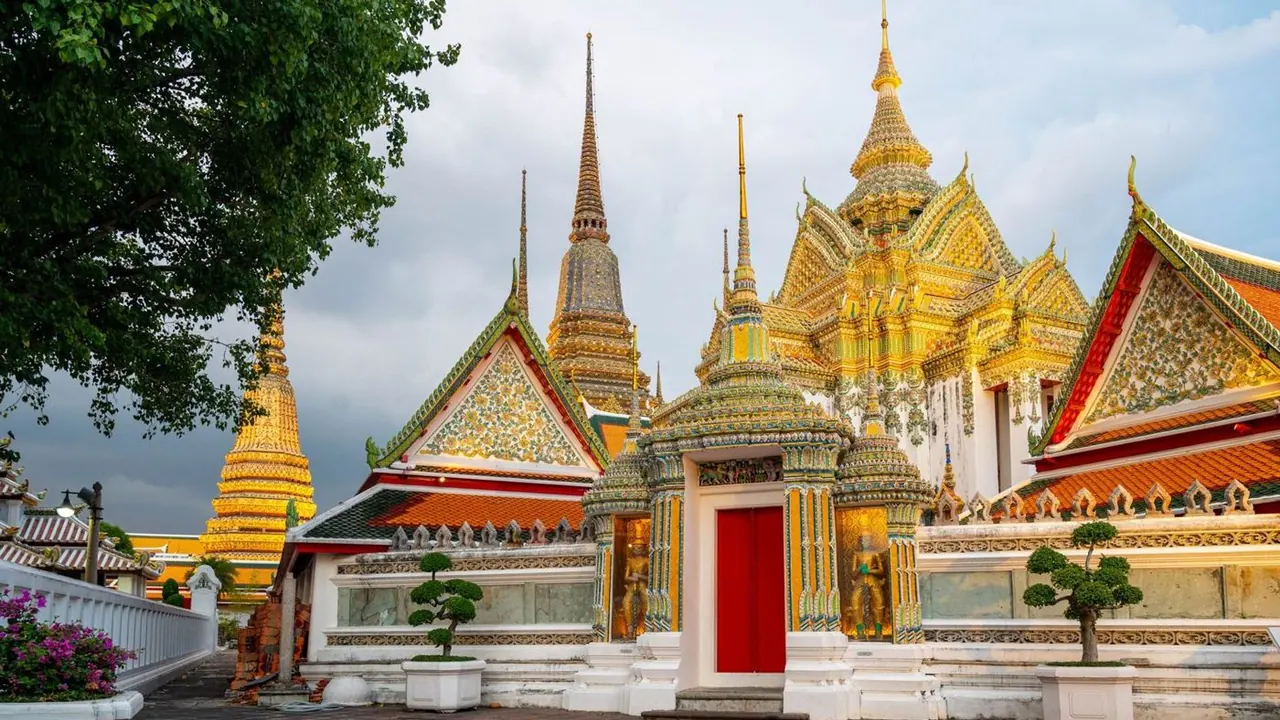
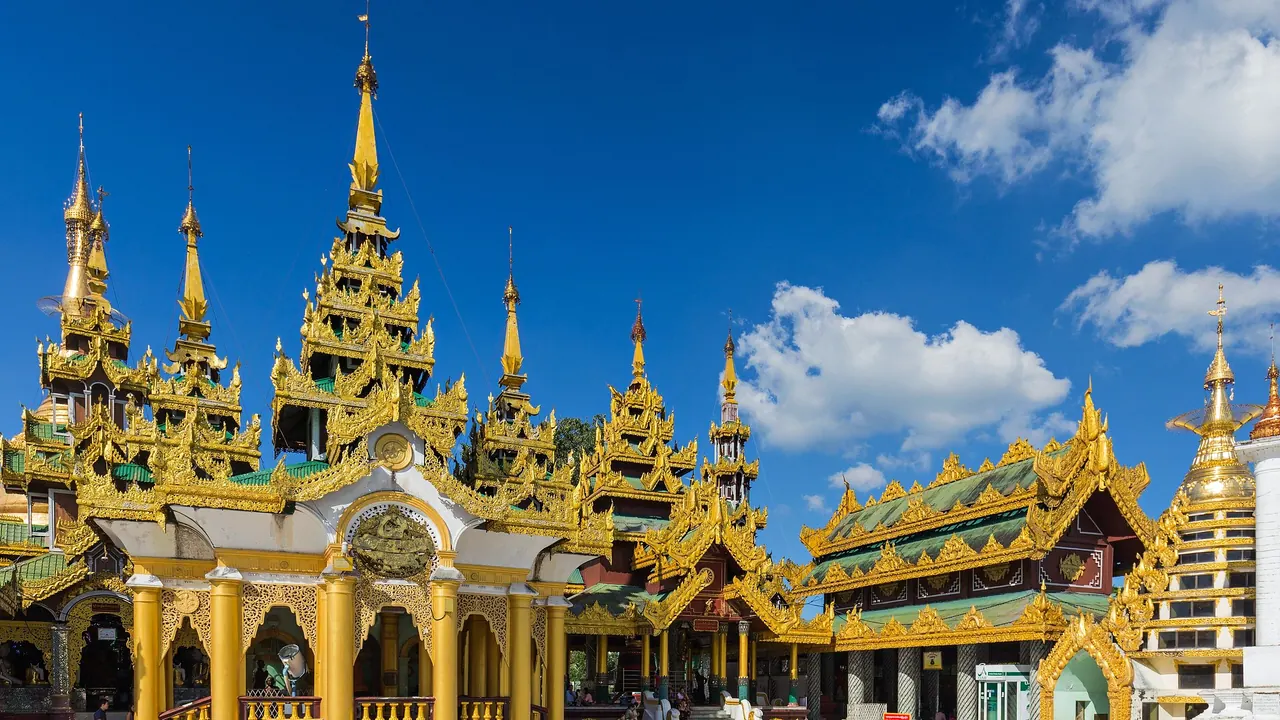
Photos: Bangkok by Lu Zhao, Pexels License; Yangon by Marcin Konsek, CC BY-SA 4.0, cropped.
Bangkok or Yangon?
Our verdict in twelve categories, each scored against the same fixed benchmark cities, and the climate month by month, so you can choose for your trip.
Choose Bangkok for
- nightlife
- shopping
- live music and the arts
Bangkok is the stronger all-round choice, and by a wide margin for anyone who travels to eat, go out or shop. Its street food and shophouse cooking run from breakfast to the small hours, its nights range from rooftop bars to backpacker streets, and the Skytrain makes a family stay or a first visit to Asia much easier. Ayutthaya and the floating markets also give it more to do beyond the city.
Choose Yangon for
Yangon does not lead in any category we score.
Yangon is for the traveller who wants a quieter, slower city. Its draw is concentrated: the Shwedagon Pagoda at dusk, a downtown of weathered colonial buildings, tea-shop breakfasts of mohinga, and evenings that end early. It works best as a stop of two or three days within a wider trip through Myanmar, or for anyone drawn to its Buddhist meditation centres, rather than as a base for a varied city break.
Scoreboard
Twelve categories on one fixed scale from 0 to 100. The shaded stretch is the gap between the two.
Your match
Pick a travel style or drag the sliders, and both match scores follow your weighting.
Wins on nightlife and shopping with your weighting.
Has no clear advantage with the weighting you have chosen.
What matters to you?
Category by category
What the scores mean for a trip.
Beaches & swimming
Neither city is for a beach trip, and in both a swim means a hotel pool, though Bangkok's rooftop pools make that more of a pleasure.
Bangkok has the edge on reach. Bang Saen and Pattaya are close enough for a long day out. From Yangon, the Bay of Bengal beaches at Chaung Tha and Ngwe Saung need a separate trip of several nights.
Food & drink
Bangkok is one of the world's great food cities, and the gap here is wide. Boat noodles, som tam, grilled pork skewers and shophouse curries are everywhere at every hour, Or Tor Kor shows off the produce, and a strong field of ambitious Thai, Japanese and Chinese kitchens, cocktail bars and coffee roasters sits on top.
Yangon is rewarding in a narrower way. Tea shops serving mohinga and palata, laphet thoke and oily Burmese curries with their side dishes are well worth exploring, and the Indian and Chinese quarters add biryani and dim sum. Beyond that the polished end is thin, and wine and cocktails are an afterthought.
Culture & sights
Bangkok has more to see. The Grand Palace with the Emerald Buddha, Wat Pho's Reclining Buddha and the porcelain tiers of Wat Arun cluster around Rattanakosin and the river, backed by the National Museum, the Jim Thompson House and the canals of Thonburi.
Yangon's appeal is different in kind. One supreme monument, the gilded Shwedagon walked barefoot at dusk, is joined by one of Southeast Asia's largest sets of colonial buildings, including the brick Secretariat and the Strand riverfront. Bangkok has no colonial streetscape to match it, but Yangon's museums are modest and two or three days cover the city.
Nightlife
This is where the two differ most. Bangkok offers several separate nights out: polished cocktail bars and clubs in Thonglor and Ekkamai, the street-level noise of Khao San Road, Silom's gay scene and rooftop bars above the skyline, all running until about two.
Yangon's evenings are a draught beer at a beer station with football on the screens, or a table on 19th Street among the grill smoke. A few hotel bars and small clubs aside, the city is asleep well before midnight.
Nature & outdoors
Both are flat, steamy delta cities where the outdoors means parks, and neither is a reason to come for walking or wild country. The parks themselves differ. Bangkok offers early runs in Lumphini among monitor lizards and cycling on Bang Krachao's raised paths through orchards, with Khao Yai and Kanchanaburi as overnight escapes.
Yangon's green spaces are its lakes: the Kandawgyi boardwalk with the Shwedagon in view, evening strolls at Inya and the Hlawga park on the city's edge. A river ferry gives a glimpse of delta life, but there are no hills within reach.
Day trips
Bangkok has more within a day's reach. Ayutthaya's ruined temples are a first-rate day by bicycle, and the canal country to the west adds the Amphawa and Damnoen Saduak floating markets, the Maeklong railway market and Nakhon Pathom's great stupa. Kanchanaburi's Death Railway bridge is reachable too, at a stretch.
From Yangon the clear choice is Bago, with the Shwemawdaw Pagoda and the Shwethalyaung reclining Buddha. Nearer in, the ferry to the pottery town of Twante and Kyauktan's island pagoda make shorter outings. The Golden Rock, the best-known sight in the region, needs a night away.
Good for families
Heat and broken pavements make both cities tiring with small children, but Bangkok gives families far more to work with. Sea Life under Siam Paragon, Safari World, Dream World, KidZania and big air-conditioned play areas in the malls fill hot afternoons, and the Skytrain and river boats are entertainment in themselves.
Yangon has an old-fashioned zoo, a small amusement park and the lawns of People's Park, and little else built for children. Older children who enjoy temples and markets will manage a few days, helped by how warmly Burmese people treat them.
Getting around
Bangkok's air-conditioned BTS and MRT lines, plus the Chao Phraya Express boats to the Grand Palace, get a visitor across much of the city without touching the traffic. The old city and the gaps between stations are the weak spots.
Yangon has no metro, so anything beyond downtown means taxis or ride-hailing stuck in heavy traffic. The colonial grid can be walked, though, and with motorbikes kept out of the centre its streets feel calmer than Bangkok's. The Circular Railway is a sightseeing ride rather than a way to get anywhere.
Shopping & style
Bangkok is a major shopping city. Malls linked by walkways line Siam and Ratchaprasong, from the luxury floors of Siam Paragon and ICONSIAM to the bargain electronics of MBK, and Chatuchak's thousands of stalls fill a weekend morning. Thai silk, celadon and benjarong are good things to take home.
Yangon's shopping centres on one place, Bogyoke Aung San Market, with jade, rubies, Bagan lacquerware, puppets and longyi. It is a fine stop for crafts, best approached with care over gems, but there is little fashion or design beyond it.
Affordability
Both are cheap for a visitor, and money goes far in either. Where the costs fall is what differs. In Bangkok, comfortable hotels with rooftop pools are good value and the extra costs come from imported drink and international restaurants.
In Yangon, everyday eating and taxis cost very little, but international-standard hotels cost more than the rest of a stay would suggest, so budget travellers lean on simple guesthouses. Each city charges foreigners at its headline sight, the Grand Palace and the Shwedagon.
Live music & performing arts
Bangkok gives a visitor more to see on a stage. Masked khon drama at the Sala Chalermkrung and the National Theatre, the symphony at the Thailand Cultural Centre, small jazz bars and the ritual and music of Muay Thai at Rajadamnern and Lumpinee give several good evenings.
Yangon has very little in the way of formal stage life. A marionette performance or a classical dance dinner show at the Karaweik Palace on Kandawgyi Lake is about the extent of it, and the all-night zat pwe at pagoda festivals is a local occasion that is hard to find.
Wellness & relaxation
Bangkok makes pampering easy. It has the Thai massage school within Wat Pho, parlours open late on every street and some of Asia's most refined hotel spas, though the city's noise means people unwind in short spells.
Yangon offers less of this but has something different. Firm, stretch-based Burmese massage is cheap and widely available. More unusually, meditation centres such as Mahasi take foreigners for vipassana practice, so it suits a quiet, inward kind of rest rather than spa treatments.
When should you go?
Pick your month. The climate figures are measured averages, not a forecast.
Bangkok in July
Yangon in July
Daytime high, °C
Rainfall in the month, mm
Temperature and rainfall are climate normals, averaged over the years shown. Bangkok: 1991-2020 normals, Bangkok (5.7 km from centre). Yangon: 1991-2020 normals, Yangon (3.2 km from centre).
Both cities are hot all year, so the deciding factor is rain. In Bangkok the dry, slightly less fierce months from November to February are the most comfortable for walking the old city, with plenty of sunshine. March and April are the hottest, reaching 36°C, and from May to October the rains set in, heaviest in September at around 331mm. Even then the rain usually comes in bursts, and the city is still workable.
Yangon follows the same pattern but at both extremes. November to February is dry and the best time to visit. April is the hottest month, close to 38°C, which makes daytime sightseeing hard work. The monsoon from June to August is far wetter than Bangkok's, close to 590mm a month, and turns the streets to puddles. Neither city has swimmable water nearby. The sea along both coasts stays warm all year, around 29°C, but in both cases it is reached on a separate trip.
Which traveller are you?
For a food and nightlife trip, Bangkok wins clearly. Chinatown's Yaowarat Road, the Banglamphu stalls and a deep tier of serious Thai restaurants lead into nights at Thonglor cocktail bars or rooftop terraces. Yangon's beer stations and Chinatown skewers are pleasant but quiet by comparison.
On a shopping trip, Bangkok is the place. The connected malls around Siam, the Chatuchak Weekend Market and the Pratunam wholesale lanes offer far more than Yangon, where the main event is Bogyoke Aung San Market's jade, lacquerware and longyi.
For a meditation retreat, Yangon has something Bangkok does not put at the centre of a visit. Long-established centres such as Mahasi take foreigners for days or weeks of vipassana practice, and early mornings at the Shwedagon add to the calm.
Before you go
| Measure | Bangkok | Yangon |
|---|---|---|
| Official language | Thai | Burmese |
| Currency | Baht (THB) | Kyat (MMK) |
| Sockets | ABCF220 V, 50 Hz | CFG230 V, 50 Hz |
| Driving side | Left | Right |
| Time zone | UTC+7 | UTC+6:30 |
| Emergency number | Police 191, ambulance 1669, fire 199 | Police 199, ambulance 192, fire 191 |
| Elevation | 2 m | 15 m |
| Main airport | Suvarnabhumi Airport (BKK)26 km from centre150 non-stop destinations | Yangon International Airport (RGN)13 km from centre27 non-stop destinations |
By the numbers
| Measure | Bangkok | Yangon |
|---|---|---|
| City population | 5,676,648 | 6,874,000 |
| People per km² | 3,619 | 11,934 |
| Museums within 10 km | 61 | 5 |
| UNESCO World Heritage sites within 50 km | 0 | 0 |
| Swim season, months above 21 °C | 12 months | 12 months |
Where else could you go?
Every comparison below shares a destination with this one, so you can follow Bangkok or Yangon somewhere new.
- Ayutthayavs Bangkok
- Pattayavs Bangkok
- Kanchanaburivs Bangkok
- Hua Hinvs Bangkok
- Siem Reapvs Bangkok
- Chiang Maivs Yangon