
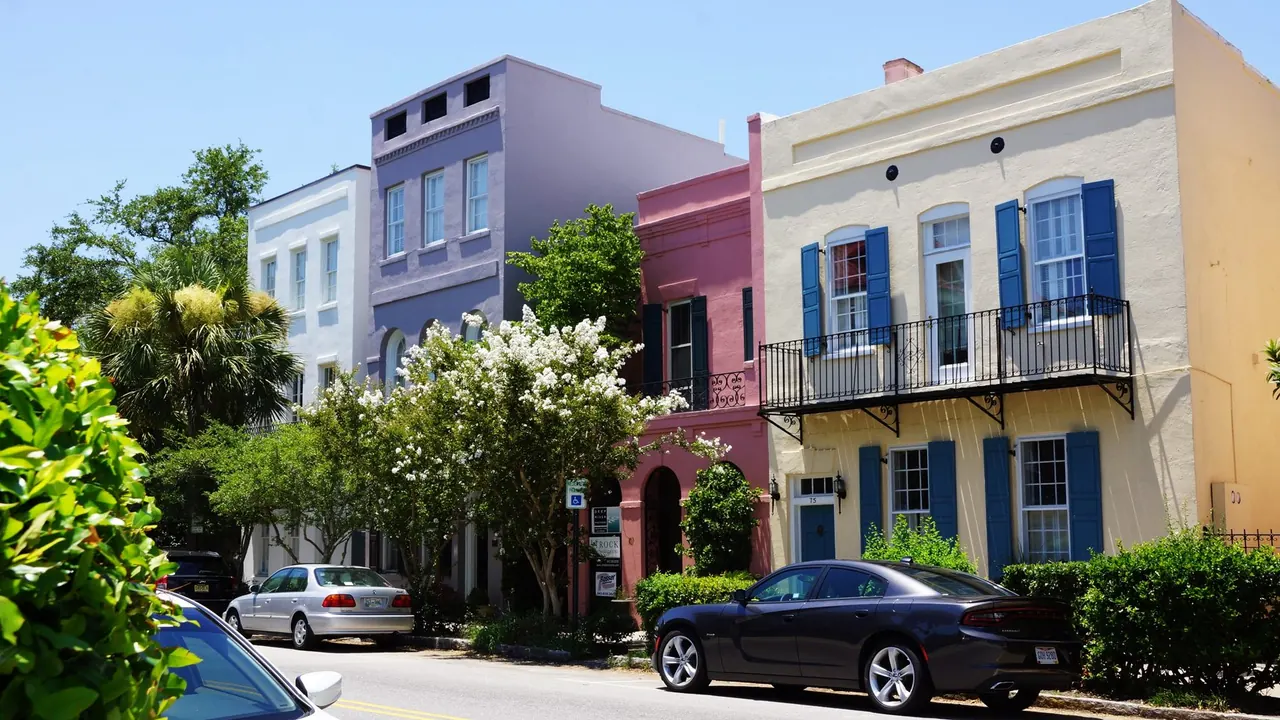
Photos: Baltimore by Styves Exantus, Pexels License; Charleston by NealVickers, CC BY-SA 4.0, cropped.
Baltimore or Charleston?
Our verdict in twelve categories, each scored against the same fixed benchmark cities, and the climate month by month, so you can choose for your trip.
Choose Baltimore for
- day trips
- prices
- live music and the arts
Baltimore suits the traveller who wants a city with real collections and a good base for exploring. Its free art museums, a year-round orchestra and conservatory concert season, and fast trains to Washington and Philadelphia make it a strong choice for a culture-led trip that takes in more than one place. It is also the cheaper place to stay. The trade-off is that there is almost no beach and little calm, so come for the museums, the crab houses and the rail links rather than for rest.
Choose Charleston for
- beaches
- shopping
- wellness
Charleston is the better pick for a slower, warmer trip that mixes old streets with time on the sand. Barrier-island beaches lie half an hour from a historic peninsula you can walk end to end, and Lowcountry cooking makes the meals a highlight of the stay. King Street gives you more to browse, and the gardens and porches set a gentler pace. You pay for all of this, because rooms and well-known restaurants are expensive, and almost every outing beyond the old town needs a car.
Scoreboard
Twelve categories on one fixed scale from 0 to 100. The shaded stretch is the gap between the two.
Your match
Pick a travel style or drag the sliders, and both match scores follow your weighting.
Wins on day trips and prices with your weighting.
Wins on beaches and shopping with your weighting.
What matters to you?
Category by category
What the scores mean for a trip.
Beaches & swimming
Baltimore is a harbour city with no swimming of its own. The nearest sand is Sandy Point on the Chesapeake, about forty minutes away, which makes a family afternoon but has brackish water, summer sea nettles and closures after storms. The Atlantic surf is a separate trip.
Charleston has three quite different beaches within half an hour: surfy Folly, quiet, dune-backed Sullivan's Island and the wider, resort-style Isle of Palms, with emptier stretches at Kiawah. The water is murky from the tides rather than clear, but here a beach day fits easily alongside sightseeing.
Food & drink
Baltimore's cooking comes down to the blue crab, while Charleston has a whole regional cuisine behind it. In Baltimore the crab arrives steamed and cracked with mallets on brown paper, or packed into crab cakes, and Lexington Market, the old market halls and the red-sauce kitchens of Little Italy give it real local character. Once you look past the seafood and the pit beef, though, the range is narrow.
Charleston is the better place to eat. Lowcountry cooking, rooted in Gullah Geechee and West African traditions, runs from shrimp and grits and she-crab soup to whole-hog barbecue and winter oyster roasts, and local chefs treat it as a serious cuisine. Book the well-known tables ahead, and don't expect much cheap international food.
Culture & sights
These two are evenly matched, but you see them in different ways. Baltimore's strength is inside its museums: the Cone Collection of Matisse at the Baltimore Museum of Art, the Walters' run from Egypt to Fabergé, and the roundhouse of the B&O Railroad Museum. Fort McHenry adds the War of 1812 story.
In Charleston the city itself is the main sight. Its Georgian and antebellum streets south of Broad and its house museums are best seen on slow walks, and the history it tells is starker, from Fort Sumter's opening shots of the Civil War to the slave-trade history at the International African American Museum.
Nightlife
Neither city has much of a club scene, and bars close around 2am in both. Baltimore spreads its evenings across more neighbourhoods: old waterfront taverns in Fells Point, rooftops and game-day crowds on Federal Hill, and dive bars with an arty crowd in Station North. Some of the streets in between are quiet, and a taxi is wiser at night.
Charleston's nightlife is concentrated on upper King Street, where craft cocktail rooms, oyster bars and rooftops fill with students and weekend groups. You'll find quieter wine bars in the French Quarter and beach bars out on Folly.
Nature & outdoors
There is about as much to do outdoors in each, but the landscapes differ. Baltimore has wooded river country: the gorges of Patapsco Valley at the city's edge, trout streams along Gunpowder Falls, and the Blue Ridge and the Appalachian Trail an hour and a half west. On the water, you can sail the wide Chesapeake out of Annapolis.
Charleston is flat marsh and maritime forest, best explored by kayak through the tidal creeks, where dolphins are a common sight. The ACE Basin and Francis Marion forest add alligators and birdlife, but there are no hills, and the summer mosquitoes are worse.
Day trips
This is one of Baltimore's clearest advantages. Washington DC and Philadelphia are each about an hour by train, so the Smithsonian or Independence Hall make easy day trips without a car. Annapolis, Gettysburg and Harpers Ferry are all short drives.
Charleston's nearest outings are the Ashley River plantations, where gardens and grand houses sit alongside the history of the enslaved people who worked them. Savannah and Beaufort are good longer trips, but they are two hours and an hour and a half away, and every one of them needs a car.
Good for families
In Baltimore the children's attractions sit together around the Inner Harbor, while Charleston mixes a few smaller sights with time on the beach. Baltimore's big draw is the National Aquarium, with its rainforest pyramid and shark ring, and the science centre, Port Discovery and the zoo at Druid Hill can fill more days. Away from the water the city is uneven.
Charleston's aquarium and children's museum are smaller, but Patriots Point has an aircraft carrier for children to climb through, and an afternoon on the sand makes an easy break between sights. It has no zoo, and small children will soon get bored on the house tours.
Getting around
Within town, Charleston is slightly easier. The historic peninsula is flat, most sights are within about 3km, and pedicabs and a free shuttle cover the gaps. Leave the peninsula, though, and it becomes a car town, with buses barely reaching the beaches or plantations.
Baltimore's walkable core is its waterfront, from Federal Hill to Fells Point, with water taxis out to Fort McHenry. Hampden, the art museum and the zoo mean a bus or a taxi, and the single metro and light rail lines do little for visitors. Its intercity trains, though, are far better.
Shopping & style
Charleston is the better shopping city, mostly thanks to King Street, which runs from antiques dealers and galleries through national fashion names to independent boutiques at its upper end. The sweetgrass baskets woven by Gullah artisans at City Market make a souvenir with real local roots.
Baltimore offers a few good afternoons rather than a shopping street: vintage and kitsch on the Avenue in Hampden, and antiques and records in Fells Point. For mainstream fashion, residents head out to suburban malls.
Affordability
Baltimore is the cheaper stay, with hotels well below Washington's and two major art museums that charge nothing, which is why many people visiting the capital sleep here. Meals, taxis and harbour-front rooms still add up.
Charleston costs more at almost every step. Inns on the peninsula charge big-city rates, especially on spring and autumn weekends, and paid house and plantation tours and parking push the daily total higher. Walking the old streets and the beaches costs nothing, and staying in Mount Pleasant saves money if you don't mind driving in.
Live music & performing arts
Baltimore has more going on through the year. The Symphony plays a full season at the Meyerhoff, the Peabody Institute puts on frequent concerts in Mount Vernon, often free, and touring Broadway shows come to the Hippodrome. Station North's small clubs add indie and experimental music, and Pennsylvania Avenue carries a long jazz history.
Charleston's high point is Spoleto Festival USA in late spring, when opera, dance and chamber music fill the city for over two weeks, something Baltimore, without a resident opera, cannot match. For the rest of the year, there is the Dock Street Theatre, the Gaillard Center and Gullah storytelling.
Wellness & relaxation
Neither city has a bathing tradition, but Charleston is much the easier place to slow down. Its old town moves gently, with walled gardens, church courtyards and evenings at White Point Garden, and the resort spas on Kiawah Island are a short drive away.
Baltimore offers hotel spas around the harbour and a quiet hour in Druid Hill Park or the Walters galleries. Otherwise its pace is brisk and urban, and people who want real rest leave for the Eastern Shore.
When should you go?
Pick your month. The climate figures are measured averages, not a forecast.
Baltimore in July
Charleston in July
Daytime high, °C
Rainfall in the month, mm
Temperature and rainfall are climate normals, averaged over the years shown. Baltimore: 1991-2020 (sunshine 1971-2000) normals, Baltimore (0.4 km from centre). Charleston: 1991-2020 (sunshine 1981-2010) normals, Charleston Airport (16.1 km from centre).
Baltimore has four distinct seasons. Winters are cold, with daytime highs around 6°C in January, and July and August reach about 31°C with heavy humidity, which makes long walks hard going. Rain falls fairly evenly all year. The best months for sightseeing are May, September and October, when the days are warm, sunny and comfortable. The Bay at Sandy Point is only warm enough for a swim from late June to early September.
Charleston runs warmer at both ends. Winter days are mild enough for walking the peninsula, and spring arrives early, so March to May is the most pleasant time to come. Summer brings highs of about 33°C, and from June to September the rain roughly doubles to around 170mm a month, often in heavy afternoon storms. The sea is the reward, reaching about 28°C in July and August and staying warm enough to swim from May into October. October and early November are the second sweet spot.
Which traveller are you?
On a beach and sun trip, Charleston is the clear choice. Folly Beach, Sullivan's Island and Isle of Palms are all close to town and the Atlantic stays warm for months, while Baltimore's harbour is not for swimming and the ocean is three hours away.
For a trip on a tight budget, Baltimore goes further. Hotels cost less than on Charleston's historic peninsula, and the Baltimore Museum of Art and the Walters are free. In Charleston, inns, house tours and the famous restaurants all cost big-city money.
On a relaxing and wellness trip, Charleston suits you better. Its slow old town, shaded gardens, porches and resort spas on Kiawah make it easy to unwind, while Baltimore's pace is urban and gritty, and locals leave town when they want to rest.
Before you go
| Measure | Baltimore | Charleston |
|---|---|---|
| Currency | US Dollar (USD) | US Dollar (USD) |
| Sockets | AB120 V, 60 Hz | AB120 V, 60 Hz |
| Driving side | Right | Right |
| Time zone | UTC-5, UTC-4 in summer | UTC-5, UTC-4 in summer |
| Emergency number | 911 | 911 |
| Elevation | 10 m | 6 m |
| Main airport | Baltimore/Washington International Thurgood Marshall Airport (BWI)13 km from centre89 non-stop destinations | Charleston International Airport (CHS)16 km from centre56 non-stop destinations |
| Public holidays this year | 12 days | 12 days |
By the numbers
| Measure | Baltimore | Charleston |
|---|---|---|
| City population | 585,708 | 150,227 |
| People per km² | 2,457 | 532 |
| Museums within 10 km | 27 | 19 |
| UNESCO World Heritage sites within 50 km | 0 | 0 |
| Swim season, months above 21 °C | 3 months | 6 months |
Where else could you go?
Every comparison below shares a destination with this one, so you can follow Baltimore or Charleston somewhere new.
- Washington DCvs Baltimore
- Savannahvs Charleston
- Myrtle Beachvs Charleston
- Philadelphiavs Baltimore
- Rehoboth Beachvs Baltimore
- Bethany Beachvs Baltimore