
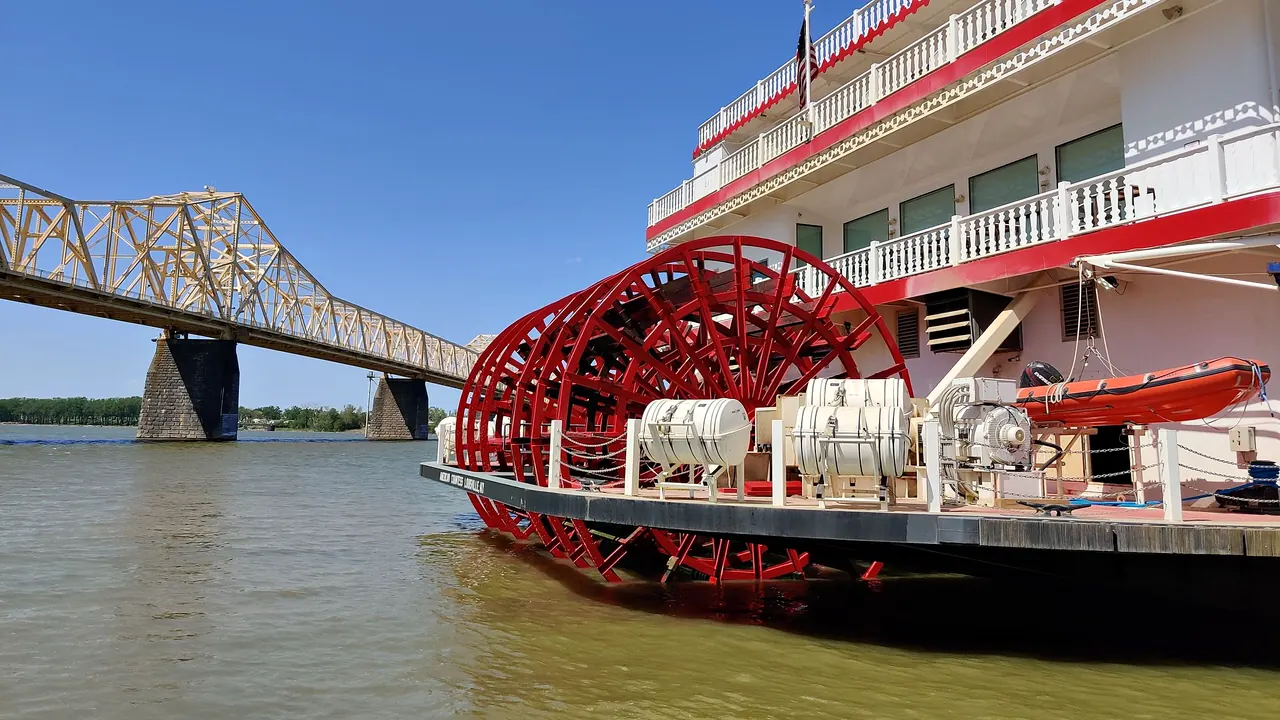
Photos: Baltimore by Styves Exantus, Pexels License; Louisville by NachoServant, CC BY-SA 4.0, cropped.
Baltimore or Louisville?
Our verdict in twelve categories, each scored against the same fixed benchmark cities, and the climate month by month, so you can choose for your trip.
Choose Baltimore for
- day trips
- beaches
- culture and sights
Baltimore is the better pick for a traveller who wants to see a lot without a car. Free art museums with a remarkable Matisse collection, Fort McHenry and the old streets of Fells Point give it more to see. The harbour core can be walked or crossed by water taxi, and Washington and Philadelphia are each about an hour away by train, so the city also works as a base for the wider East Coast.
Choose Louisville for
- wellness
- shopping
Louisville suits someone who arrives with a car and a taste for whisky. Its pull is bourbon, from the bars of Whiskey Row to the distillery roads around Bardstown, together with horse racing at Churchill Downs and the thoroughbred farms near Lexington. It is a slower, more Southern place, better for a few relaxed days of tasting and driving than for a packed museum itinerary.
Scoreboard
Twelve categories on one fixed scale from 0 to 100. The shaded stretch is the gap between the two.
Your match
Pick a travel style or drag the sliders, and both match scores follow your weighting.
Wins on day trips and beaches with your weighting.
Wins on wellness and shopping with your weighting.
What matters to you?
Category by category
What the scores mean for a trip.
Beaches & swimming
Neither city is a beach destination, but Baltimore at least has one within reach. Sandy Point State Park is about forty minutes away on the Chesapeake and has a sandy strip with warm summer water, although sea nettles and closures after heavy rain limit it. The Atlantic coast is a separate trip.
Louisville lies far inland on a barge-heavy Ohio River, so swimming there means a pool or a drive to a reservoir lake in the Kentucky countryside.
Food & drink
The two eat equally well, but around entirely different staples. Baltimore's table is built on the blue crab, steamed and hammered open on brown paper in summer or pressed into lump-meat cakes all year. Old market halls such as Lexington Market and the red-sauce kitchens of Little Italy fill out the picture.
Louisville is built around bourbon rather than seafood, with Whiskey Row and its tasting rooms, then rich Southern plates such as the hot brown and burgoo, and the better kitchens in NuLu and the Highlands. The choice comes down to shellfish or whisky.
Culture & sights
Baltimore gives a visitor more to see. It has two free art museums, one of them holding a remarkable body of Matisse, along with Fort McHenry, the B&O roundhouse and the historic ships of the Inner Harbor. Whole neighbourhoods such as Fells Point and Mount Vernon are worth walking for their own sake.
Louisville's sights are narrower and tied to what made it famous: Churchill Downs, the Muhammad Ali Center and the Slugger museum on Whiskey Row. The Victorian mansions of Old Louisville are its best street-level heritage, and the Speed Art Museum is solid rather than exceptional.
Nightlife
Both are bar towns with little clubbing, so the difference is in the setting. Baltimore's nights centre on old taverns around the cobbled waterfront square of Fells Point and the rooftops of Federal Hill, which are loudest after Orioles and Ravens games, and last call is at 2am.
Louisville spreads out along the dives and patios of Bardstown Road and the bourbon bars of NuLu, with Fourth Street Live for groups. Some of its bars are licensed to stay open very late, so a night there can run on after Baltimore has closed.
Nature & outdoors
Neither has dramatic scenery, so the choice is between water and woodland. Baltimore looks to the Chesapeake, with kayaking on the harbour, sailing out of Annapolis and ospreys and eagles in the marshes, plus the river gorges of Patapsco Valley on the city's edge.
Louisville's strength is its Olmsted parks inside the city, Cherokee and Iroquois, along with the fossil beds at the Falls of the Ohio. Mammoth Cave, about an hour and a half away, is a sight Baltimore has nothing to match.
Day trips
Day trips are where Baltimore pulls well clear. Washington's Smithsonian museums and Philadelphia's Independence Hall are each about an hour away by train, and Annapolis, Gettysburg and Harpers Ferry are short drives, so a stay here can take in much of early American history.
Louisville's outings are fewer and built around themes: the distilleries around Bardstown, the horse farms and Keeneland at Lexington, Shaker Village and Lincoln's birthplace. They are rewarding, but almost all of them need a car, and someone sober to drive it.
Good for families
Both cities work well with children, in different ways. Baltimore keeps its family day around the Inner Harbor, where the National Aquarium, the Maryland Science Center and Port Discovery are a short walk apart and the historic ships fill the gaps.
Louisville offers more thrills, with the roller coasters and water park at Kentucky Kingdom, underground ziplines in the Mega Cavern and splash areas by the river. These are scattered around the city, though, and you need a car to get between them.
Getting around
Baltimore is the easier city without a car. Its harbour neighbourhoods are linked by a waterfront promenade and by water taxi, a metro and a light rail line reach the airport and Penn Station, and fast trains run to Washington and Philadelphia.
Louisville has no rail transit and only a thin bus network. Downtown and NuLu are walkable, but Churchill Downs, the Highlands and the big parks are all a drive away. Traffic is light, so driving is easy.
Shopping & style
Neither city is a shopping destination, and both offer the same kind of local browsing. Baltimore's best strip is 36th Street in Hampden, with its kitsch and vintage, plus antiques in Fells Point and Old Bay souvenirs from the market halls.
Louisville's equivalents are the design shops of NuLu and the records and vintage of Bardstown Road. The thing most worth carrying home is a bottle of bourbon that is rarely sold elsewhere.
Affordability
Costs are much the same in both: cheaper than the big coastal cities, but with the usual American tax, tips and taxi fares added. Baltimore saves you money through free entry to its two main art museums and hotels that are cheaper than those in nearby Washington.
Louisville's savings come from moderate hotel rates and free parks and riverfront. Against that, it charges admission at its museums and distilleries, a car or ride-hailing adds to every day, and during Derby week room rates rise several times over.
Live music & performing arts
The two are close, with different strengths. Baltimore has the Baltimore Symphony at the Meyerhoff and the Peabody Institute, whose many free concerts are a real bonus. It also has an indie and punk club circuit in Station North and a long jazz history on Pennsylvania Avenue.
Louisville has resident opera and ballet at the Kentucky Center and the new American plays of Actors Theatre. Summer brings outdoor concerts and Shakespeare in the parks, and its bars lean towards bluegrass and Americana.
Wellness & relaxation
The real difference lies outside town, because within both cities wellness comes down to hotel spas and a few day spas. Baltimore's calm moments are a morning on the harbour promenade, the shade of Druid Hill Park or a quiet hour in the Walters galleries, and anyone wanting proper rest drives out to the Eastern Shore.
Louisville is the slightly gentler place, where unwinding means a slow afternoon on a porch in the Highlands or a drive through horse country. It also has a genuine spa break within reach: the grand old mineral-spring resorts of French Lick and West Baden Springs, about an hour and a half away in southern Indiana.
When should you go?
Pick your month. The climate figures are measured averages, not a forecast.
Baltimore in July
Louisville in July
Daytime high, °C
Rainfall in the month, mm
Temperature and rainfall are climate normals, averaged over the years shown. Baltimore: 1991-2020 (sunshine 1971-2000) normals, Baltimore (0.4 km from centre). Louisville: 1991-2020 (sunshine 1981-2010) normals, Standiford Field (8.2 km from centre).
The two cities have much the same year. Winters are cold, with daytime highs around 6°C in January, and summers are hot and humid, peaking at 31°C to 32°C in July and August, which makes long days of walking hard work. The most comfortable weather for exploring on foot comes in May, September and October in both. Baltimore's rain is spread fairly evenly through the year and is heaviest in late summer. Louisville is wettest in spring, with about 132mm in May, and has sunnier summers but noticeably greyer winters.
Only Baltimore has open water worth mentioning. The Bay is warm enough for a swim at Sandy Point from July to September and reaches 26°C in August. For a sightseeing trip to either city, late September and October bring warm days without the summer heat.
Which traveller are you?
For a culture and arts trip, Baltimore is the stronger choice. The Baltimore Museum of Art and the Walters are both free, Fort McHenry and the historic ships add American history, and Peabody concerts fill the evenings. Louisville's museums centre on racing, baseball bats and Ali.
For a short city break, Baltimore works better without a car. The Inner Harbor, Fells Point, Federal Hill and Little Italy line one waterfront promenade linked by water taxis, and the train from Washington or Philadelphia takes about an hour. In Louisville most sights need a drive.
For whisky lovers, Louisville is the obvious destination. Whiskey Row pours hundreds of Kentucky bourbons, distilleries run tasting rooms downtown, and the stills and stone warehouses around Bardstown are an easy day out. Baltimore's drinking culture runs to beer with crabs instead.
Before you go
| Measure | Baltimore | Louisville |
|---|---|---|
| Currency | US Dollar (USD) | US Dollar (USD) |
| Sockets | AB120 V, 60 Hz | AB120 V, 60 Hz |
| Driving side | Right | Right |
| Time zone | UTC-5, UTC-4 in summer | UTC-5, UTC-4 in summer |
| Emergency number | 911 | 911 |
| Elevation | 10 m | 142 m |
| Main airport | Baltimore/Washington International Thurgood Marshall Airport (BWI)13 km from centre89 non-stop destinations | Louisville Muhammad Ali International Airport (SDF)10 km from centre40 non-stop destinations |
| Public holidays this year | 12 days | 14 days |
By the numbers
| Measure | Baltimore | Louisville |
|---|---|---|
| City population | 585,708 | 246,161 |
| People per km² | 2,457 | 1,434 |
| Museums within 10 km | 27 | 15 |
| UNESCO World Heritage sites within 50 km | 0 | 0 |
| Swim season, months above 21 °C | 3 months | - |
Where else could you go?
Every comparison below shares a destination with this one, so you can follow Baltimore or Louisville somewhere new.
- Washington DCvs Baltimore
- Philadelphiavs Baltimore
- Rehoboth Beachvs Baltimore
- Cape Mayvs Baltimore
- Bethany Beachvs Baltimore
- Ocean City, Marylandvs Baltimore