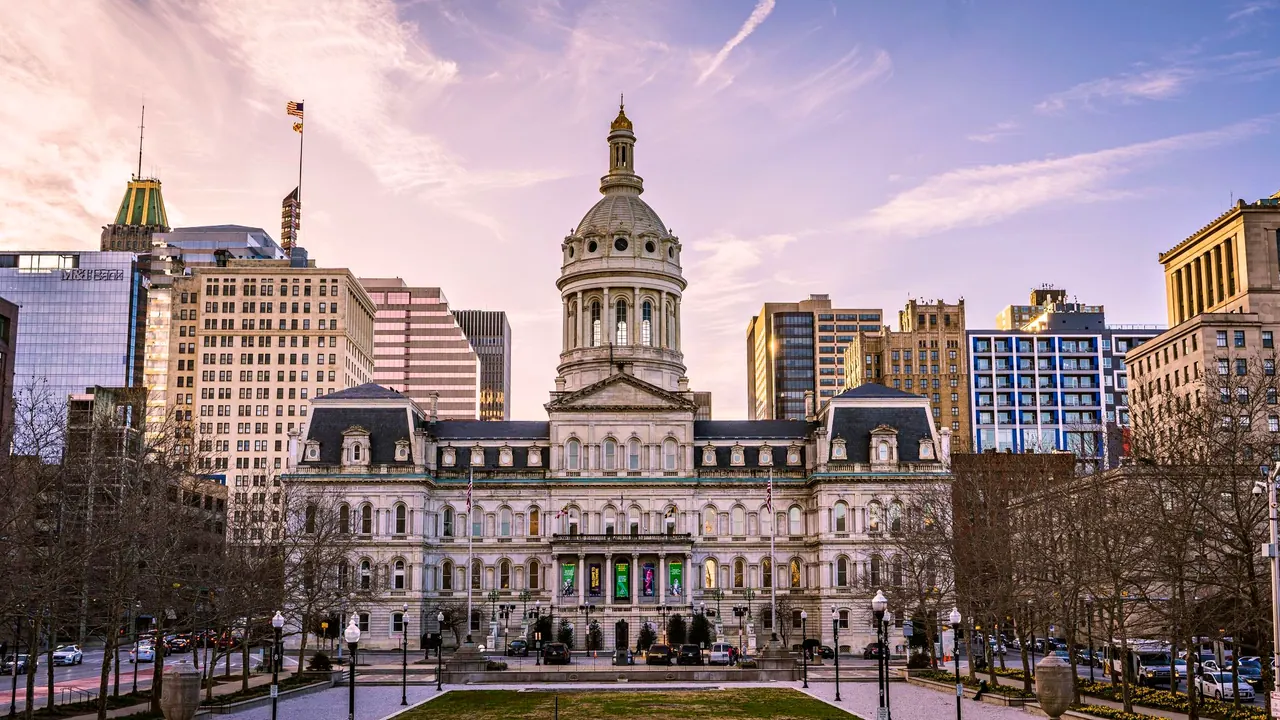
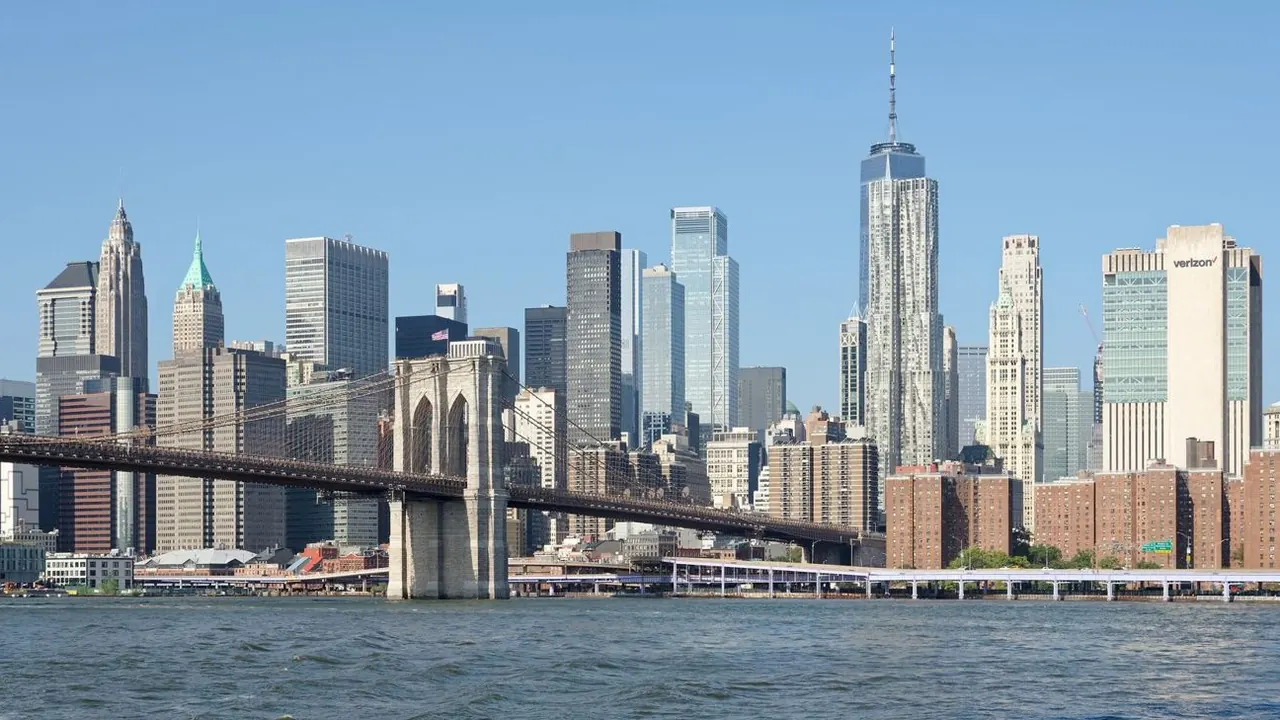
Photos: Baltimore by Styves Exantus, Pexels License; New York by Jakub Hałun, CC BY 4.0, cropped.
Baltimore or New York?
Our verdict in twelve categories, each scored against the same fixed benchmark cities, and the climate month by month, so you can choose for your trip.
Choose Baltimore for
- prices
- day trips
Baltimore suits travellers who want an East Coast base without big-city costs and are happy to spend part of the trip elsewhere. Washington and Philadelphia are each about an hour away by train, the two main art museums are free, and the crab houses, the harbour and the rowhouse neighbourhoods fill two or three easy days in between.
Choose New York for
- shopping
- nightlife
- live music and the arts
If the city itself is the whole point of the trip, choose New York. Its museums, theatres, restaurants, shops and late nights are on a far bigger scale, the subway means you never need a car, and there are even beaches at the end of the subway lines. The catch is the bill, because few places anywhere cost more to stay in.
Scoreboard
Twelve categories on one fixed scale from 0 to 100. The shaded stretch is the gap between the two.
Your match
Pick a travel style or drag the sliders, and both match scores follow your weighting.
Wins on prices and day trips with your weighting.
Wins on shopping and nightlife with your weighting.
What matters to you?
Category by category
What the scores mean for a trip.
Beaches & swimming
Neither city is a beach destination, but New York has real ocean beaches inside the city limits. Coney Island, Brighton Beach and the Rockaways are reached by subway and offer a boardwalk, surf and open Atlantic sand, and Long Island's longer beaches are about an hour away.
Baltimore's harbour is for looking at, not for swimming. The nearest sand is at Sandy Point, about forty minutes' drive away, where the brackish bay is warm but sea nettles drift in during high summer. The ocean coast is three hours away.
Food & drink
Baltimore does a few things very well: steamed blue crabs with Old Bay at a table covered in brown paper, crab cakes made mostly of lump meat, and snacks from Lexington Market. Around them are red-sauce Italian restaurants in Little Italy and a few chef-led places in Hampden and Harbor East. That makes for a memorable meal or two rather than a reason to stay longer.
New York cooks on a far bigger scale. Whole neighbourhoods such as Flushing, Jackson Heights and Arthur Avenue cook for their own communities, and the fine-dining scene runs very deep. For the days in between, there are slices, bagels and deli pastrami on almost every block.
Culture & sights
Baltimore has more to see than its reputation suggests. The free Baltimore Museum of Art holds the Cone Collection of Matisse, and there are also the Walters, Fort McHenry and the cobbled streets of Fells Point. Two or three days cover it well.
New York's collections are on another level. The Met, MoMA, the Guggenheim and the Natural History museum could each take up a day, and the Statue of Liberty, the Brooklyn Bridge and Grand Central add landmarks known around the world. A culture trip there can last a week without repeating itself.
Nightlife
Baltimore is good for a bar crawl and not much more: centuries-old taverns around the square in Fells Point, rooftops and game-night crowds in Federal Hill, and dive bars in Station North. Everything winds down at 2am.
New York keeps going all night. The East Village and Lower East Side alone have more cocktail and dive bars than most cities, the West Village has wine bars and historic gay bars, and the warehouse clubs of Williamsburg and Bushwick carry on until morning. Trains run all night to get you home.
Nature & outdoors
The two are broadly level, and neither has dramatic scenery on the doorstep, but the outdoors works differently in each. Baltimore's green space is wilder and closer. The wooded gorges of Patapsco Valley start at the city's edge, Leakin Park is a real urban forest, and sailing on the Chesapeake out of Annapolis brings ospreys and bald eagles into view. Most of this needs a car.
New York's green space is designed rather than wild, in Central Park, Prospect Park and the High Line. Even so, a train up the Hudson reaches the steep climbs of Breakneck Ridge without a car, and the October colour in the Highlands is the highlight of the year.
Day trips
Baltimore is better placed for day trips. Washington and Philadelphia are each about an hour away by train, so two major cities are easy to add, and Annapolis, Gettysburg, Harpers Ferry and the villages of the Eastern Shore are all a comfortable drive away.
New York's day trips are good but longer. Philadelphia takes about an hour and a half, the Hudson Valley estates, Dia Beacon and Storm King make pleasant days out to the north, and the Hamptons or the North Fork make for a long day. Washington, so close to Baltimore, is better as an overnight trip from New York.
Good for families
Baltimore makes the first family days easy. The National Aquarium, with its circling sharks and rainforest, the Science Center and Port Discovery are all a short walk apart around the Inner Harbor. Beyond the water, the zoo and the railroad museum need a car or taxi.
New York has more for a longer stay: the dinosaur halls at the Natural History museum, the Bronx Zoo, the aircraft carrier on the Hudson and the free Staten Island Ferry. The cost is effort, because stations with only stairs, small hotel rooms and the Midtown crowds tire young children quickly.
Getting around
In Baltimore you can walk the waterfront from Fells Point to Federal Hill, and water taxis link the piers. Beyond that, there is only one metro line and one light rail line, so Hampden, the art museum and the zoo mean a bus or a taxi.
In New York you never need a car. Manhattan's grid is easy to walk, and the subway, which runs around the clock, together with the ferries and bike docks reaches almost anywhere. The main annoyances are the airport transfers and weekend service changes.
Shopping & style
Baltimore is for browsing rather than shopping: vintage and kitsch on Hampden's Avenue, antiques and records in Fells Point, and Old Bay souvenirs in the market halls. It has no luxury street and no major department store, and locals drive to the suburban malls for chain fashion.
New York is one of the world's great shopping cities. It runs from the flagships of Fifth Avenue and the luxury houses of Madison Avenue to SoHo's brands, the boutiques of Nolita and the vintage shops of Williamsburg, and the historic department stores are sights in their own right.
Affordability
Baltimore is the cheaper base, enough that many people visiting Washington stay there instead. Hotels cost noticeably less than in New York and the two big art museums are free, although tips, crab feasts and frequent taxis still add up.
New York is one of the most expensive cities anywhere. Manhattan rooms are small and costly, and theatre, observation decks and museums all charge steep prices. Pizza slices, food carts, the flat-fare subway and a room in Brooklyn or Queens soften the cost, but it is still by far the dearer trip.
Live music & performing arts
Baltimore has a respectable stage scene of its own. The symphony plays at the Meyerhoff, Peabody students give free concerts, touring Broadway productions come to the Hippodrome, and indie and punk bands play the small rooms of Station North.
New York sets the standard. Broadway is where many of those touring shows start, and Lincoln Center is home to the Metropolitan Opera, the Philharmonic and City Ballet. Carnegie Hall, jazz in the Village basements, gospel in Harlem and Brooklyn's indie venues fill the rest of the week.
Wellness & relaxation
Baltimore has no bathing tradition. Relaxing there means a hotel spa, a yoga class in Harbor East or Hampden, a morning on the harbour promenade or a quiet hour in Druid Hill Park. People who want real rest drive out to the Eastern Shore.
New York is hardly restful either, but it does have places to sweat it out: the Russian and Turkish baths in the East Village, open since the late 1800s, the banyas of Brighton Beach and large Korean-style spas in Queens and New Jersey. For quiet, there are the gardens of the Cloisters and a ferry across the harbour.
When should you go?
Pick your month. The climate figures are measured averages, not a forecast.
Baltimore in July
New York in July
Daytime high, °C
Rainfall in the month, mm
Temperature and rainfall are climate normals, averaged over the years shown. Baltimore: 1991-2020 (sunshine 1971-2000) normals, Baltimore (0.4 km from centre). New York: 1991-2020 normals, LaGuardia Airport (12.9 km from centre).
Both cities follow the same pattern: hot, humid summers, cold winters and steady rain spread across every month. That makes May and late September into October the best weeks for walking in either city. Baltimore runs a little hotter, with highs of 31°C in July and August against New York's 30°C or just under, so midday sightseeing is heavy going in both. Winters match closely, with highs of around 5°C in December and January.
In both cities the swimming season runs only from late June to early September. The Chesapeake has the warmer water, about 26°C in August against roughly 23°C off New York's Atlantic beaches, but New York's beaches are the ones you can reach by subway. Baltimore gets the most sunshine in midsummer, and July is its brightest month.
Which traveller are you?
On a trip on a tight budget, Baltimore stretches the money further. Rooms cost less, the best art is free to see, and you can visit Washington by train for the day without paying capital-city hotel rates at night.
For a shopping trip, New York is the clear choice. Luxury, high-street, independent and secondhand shops are all in one city, along with specialists in rare books, sneakers and cameras. In Baltimore, shopping fills an afternoon of browsing at most.
On a food and nightlife trip, New York gives you a different evening every night of a long stay. You can eat a new country's cooking each night, then go on as late as you like. Baltimore is good for one crab feast and a few tavern evenings.
Before you go
| Measure | Baltimore | New York |
|---|---|---|
| Currency | US Dollar (USD) | US Dollar (USD) |
| Sockets | AB120 V, 60 Hz | AB120 V, 60 Hz |
| Driving side | Right | Right |
| Time zone | UTC-5, UTC-4 in summer | UTC-5, UTC-4 in summer |
| Emergency number | 911 | 911 |
| Elevation | 10 m | 25 m |
| Main airport | Baltimore/Washington International Thurgood Marshall Airport (BWI)13 km from centre89 non-stop destinations | John F. Kennedy International Airport (JFK)21 km from centre189 non-stop destinations |
| Public holidays this year | 12 days | 13 days |
By the numbers
| Measure | Baltimore | New York |
|---|---|---|
| City population | 585,708 | 8,804,190 |
| People per km² | 2,457 | 7,256 |
| Museums within 10 km | 27 | 161 |
| UNESCO World Heritage sites within 50 km | 0 | 2 |
| Swim season, months above 21 °C | 3 months | 3 months |
Where else could you go?
Every comparison below shares a destination with this one, so you can follow Baltimore or New York somewhere new.
- Washington DCvs Baltimore
- Philadelphiavs New York
- Philadelphiavs Baltimore
- Rehoboth Beachvs Baltimore
- Atlantic Cityvs New York
- Bethany Beachvs Baltimore