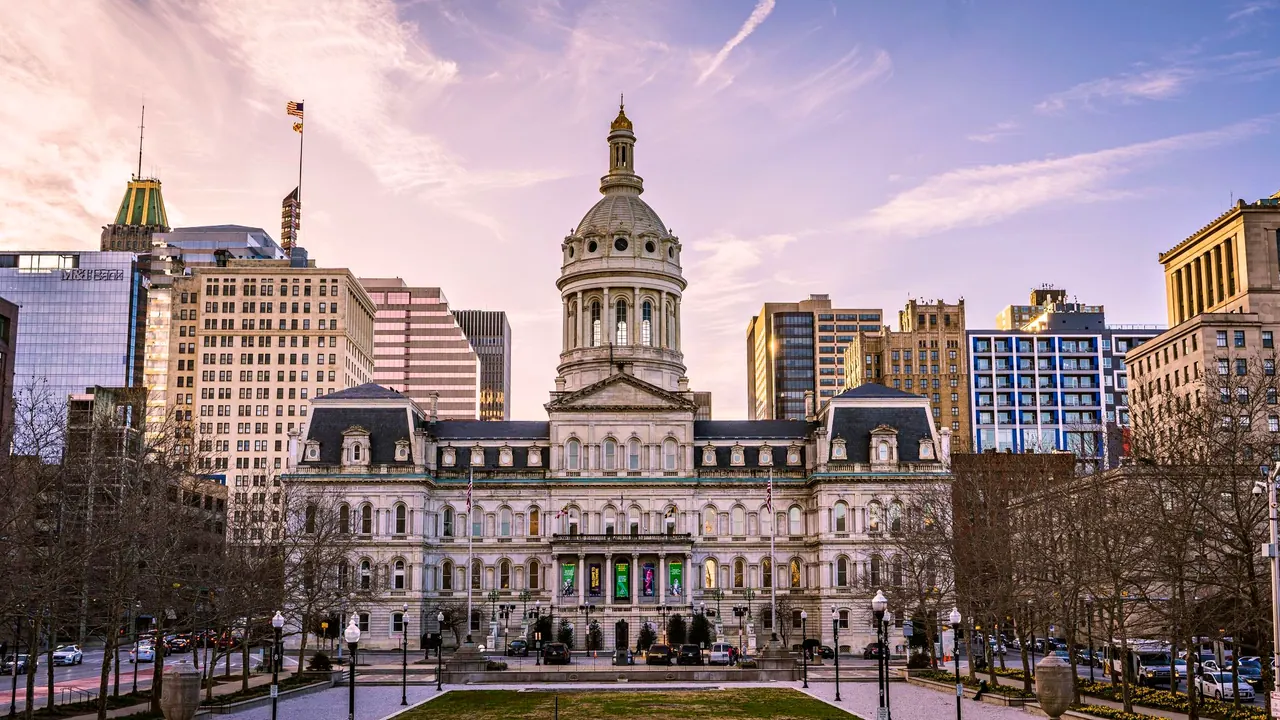
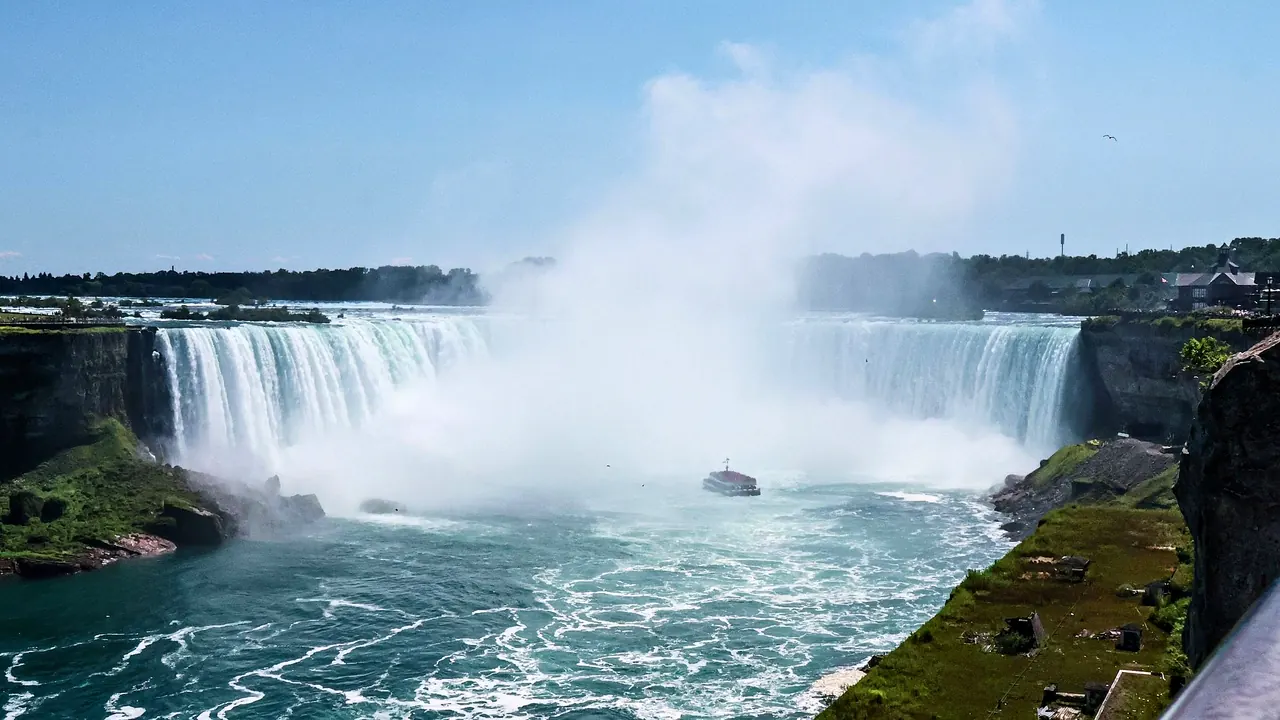
Photos: Baltimore by Styves Exantus, Pexels License; Niagara Falls by Juju, Pexels License.
Baltimore or Niagara Falls?
Our verdict in twelve categories, each scored against the same fixed benchmark cities, and the climate month by month, so you can choose for your trip.
Choose Baltimore for
- culture and sights
- food and drink
- nightlife
Baltimore suits travellers who want a real city with depth. You get free art museums, including the Cone Collection's Matisses, plus Fort McHenry and the brick streets of Fells Point and Mount Vernon. In the evening there are crab houses and taverns. Fast trains to Washington and Philadelphia also make it a good base for a longer trip that mixes city sightseeing with excursions.
Choose Niagara Falls for
- nature and the outdoors
- getting around
- beaches
Choose Niagara Falls when you want the landscape to shape the trip. The Horseshoe Falls, the gorge trails and the riverside cycle path fill a few days. Families get boats into the spray, the arcades of Clifton Hill and a compact resort area that is easy on foot. Add the wineries and the Shaw Festival at Niagara-on-the-Lake and it makes a scenic short escape, though not a trip for museums or a night out.
Scoreboard
Twelve categories on one fixed scale from 0 to 100. The shaded stretch is the gap between the two.
Your match
Pick a travel style or drag the sliders, and both match scores follow your weighting.
Wins on culture and sights and food and drink with your weighting.
Wins on nature and the outdoors and getting around with your weighting.
What matters to you?
Category by category
What the scores mean for a trip.
Beaches & swimming
Neither is a beach destination, but Niagara Falls makes summer swimming a little easier. Baltimore's harbour is for boats. The nearest sand is Sandy Point, about forty minutes away, on brackish bay water where sea nettles drift in during high summer and swimming can close after heavy rain.
From Niagara Falls, the Lake Erie shore at Crystal Beach is half an hour away, with soft sand and shallow fresh water that suits children. The water is cooler than the Chesapeake, and the lake beaches are only really usable from July to early September.
Food & drink
Baltimore has a food identity that Niagara Falls lacks. Its centre is the blue crab: steamed and piled on brown paper in summer, or served as crab cakes all year. Around that are the stalls of Lexington Market, the red-sauce kitchens of Little Italy and the chef-led rooms of Hampden and Harbor East.
In Niagara Falls itself, eating means chains, diners and steakhouses on Clifton Hill, with views costing extra. The good meals are out in the wine country, where winery restaurants, summer fruit stands and icewine reward visitors who plan their meals around tastings.
Culture & sights
Baltimore is the far richer place for sightseeing. The Matisses at the Baltimore Museum of Art, the Walters' collection from Egypt to Fabergé, the B&O roundhouse and the warehouse streets of Fells Point fill two or three full days.
The two share one thread, the War of 1812. Baltimore has Fort McHenry and the story of the anthem. Niagara has Brock's Monument at Queenston Heights and the Lundy's Lane battlefield. Beyond those battlefields and its early hydroelectric stations, Niagara's sights come down to the falls and the neon spectacle of Clifton Hill.
Nightlife
Baltimore gives you more evenings out, though both lean towards bars rather than clubs. Fells Point has taverns in centuries-old buildings around its cobbled square, Federal Hill gets loud after Orioles and Ravens games, and Station North draws an artier crowd to its dive bars.
Niagara's nights start with the falls lit in colour and, in summer, fireworks over the gorge. After that come the casino lounges and the pubs of Clifton Hill, a resort strip for couples and families that goes quiet in winter.
Nature & outdoors
Around Baltimore, the outdoors gives you a break from the city. Niagara's outdoors is the reason people go. From Baltimore you might spend a morning on foot or by mountain bike in the wooded Patapsco valley just past the city limits, or cast for trout in the Gunpowder Falls valley. A longer option is a day under sail from Annapolis on the broad, calm Chesapeake, watching ospreys and eagles over the marshes. It is soft, green country, and it is best in spring and autumn, when the humidity lifts.
At Niagara the scenery is the whole point. You can stand close enough to the Horseshoe Falls to get wet, then follow the river north as it cuts a deep gorge. Rough paths drop down to white water, and a cycle route runs all the way to Queenston, where the Bruce Trail begins. Beyond the gorge the land flattens into orchards and vineyards, so all the drama sits along one short stretch of river.
Day trips
Baltimore's location is hard to beat. Washington's Smithsonian museums and Philadelphia's Independence Hall are each about an hour away by train, and colonial Annapolis, Gettysburg and Harpers Ferry are all easy drives.
Niagara's best outing is close by: the clapboard streets and Fort George of Niagara-on-the-Lake, surrounded by wineries. Toronto is about an hour and a half away for a big-city day, and Buffalo's early skyscrapers and Frank Lloyd Wright houses are across the border, which means bringing a passport.
Good for families
Both work well for children, in different ways. Baltimore's draw is a cluster of serious institutions around the Inner Harbor: the National Aquarium with its shark ring and rainforest, the science centre, Port Discovery, and later the zoo in Druid Hill. Families often need taxis beyond the harbour, though, and the summer heat is heavy.
At Niagara the falls are the attraction. Children ride the boats into the spray, walk the tunnels behind the water, then head to the mini golf and arcades of Clifton Hill. The area is compact and easy with a pushchair, but there is no zoo or aquarium, and the paid extras add up.
Getting around
Niagara Falls is the easier place to get around without a car. The promenade, the hotels on the bluff and Clifton Hill are all within walking distance, joined by the Falls Incline Railway, and visitor buses run along the parkway to the Whirlpool and Queenston. You only really need a car for touring the wineries.
Baltimore's waterfront is walkable from Harbor East to Federal Hill, and the water taxis to Fort McHenry are a pleasure. Off the water, though, a single metro line and light rail leave Hampden, the art museum and the zoo to buses or taxis. The excellent rail links to Washington and Philadelphia partly make up for this.
Shopping & style
Neither is a shopping destination, and what each offers is quite different. In Baltimore it is independent browsing: vintage clothing, kitsch and local art along the Avenue in Hampden, and antique and record shops in Fells Point.
Niagara's useful shopping is at the discount outlet centres on the edge of town, with a few boutiques in Niagara-on-the-Lake and icewine as the one local thing worth taking home.
Affordability
Costs are broadly similar, but they build up in different ways. In Baltimore, hotels are cheaper than in Washington or New York and the two big art museums are free, but restaurant tips and the taxis you end up taking push up the daily total.
Niagara swings with the season. Hotels with a view of the falls are expensive in summer, while motels and winter stays cost far less. Watching the falls from the promenade is free, so it can come out slightly cheaper for anyone who skips the paid attractions.
Live music & performing arts
Baltimore has a performing arts life of its own. The symphony plays a full season at the Meyerhoff, the Peabody Institute holds frequent concerts, many of them free, touring Broadway shows fill the Hippodrome, and small clubs in Station North host indie and experimental music.
In Niagara Falls itself, the stage means casino shows, tribute acts and magic. The exception is the Shaw Festival in Niagara-on-the-Lake, whose repertory season from spring into autumn can justify the trip for theatre lovers on its own.
Wellness & relaxation
Niagara offers a little more for unwinding. Its wine-country inns pair a massage with a day of tastings, and the slow pace of Niagara-on-the-Lake or a quiet winter weekend makes up for the noisy summer strip.
Baltimore has hotel spas and yoga studios but a gritty urban pace. A morning on the harbour promenade or under the trees of Druid Hill Park is the calmest it gets, and anyone wanting real rest heads to the Eastern Shore.
When should you go?
Pick your month. The climate figures are measured averages, not a forecast.
Baltimore in July
Niagara Falls in July
Daytime high, °C
Rainfall in the month, mm
Where the figures come from
Niagara Falls's sunshine is measured 34 km from the centre, at Buffalo Airport.
Temperature and rainfall are climate normals, averaged over the years shown. Baltimore: 1991-2020 (sunshine 1971-2000) normals, Baltimore (0.4 km from centre). Niagara Falls: 1991-2020 (rainfall 1981-2010) normals, Niagara Falls / Walmore (9.8 km from centre).
Baltimore is at its best in May and again in September and October, when the streets are warm but comfortable for walking. July and August reach about 31°C with heavy humidity, which makes sightseeing on foot hard going. Rain falls fairly evenly all year with no dry season, and winters are cool and grey rather than harsh. The bay warms to around 26°C in August, but the swimming is out at Sandy Point, not in the city.
Niagara Falls has the sharper seasons. Winter daytime highs sit around 0°C with very little sunshine, though ice on the falls in a hard winter is a sight of its own. June to September is the main season, with July near 28°C and long sunny days, which makes midsummer more pleasant for walking than in Baltimore. Lake Erie only reaches about 23°C in August, so the beach window is short.
Which traveller are you?
For a culture and arts trip, Baltimore is the clear choice. The Walters and the Baltimore Museum of Art are free, Fort McHenry and the B&O roundhouse tell real history, and the symphony and Peabody concerts fill the evenings. Niagara offers little beyond the Shaw Festival.
On a food and nightlife trip, Baltimore wins again. You can spend an evening over steamed crabs, then move on to the old taverns of Fells Point or the rooftops of Federal Hill. Niagara's evenings mean casinos and Clifton Hill pubs, and its better meals are out at the wineries.
On an outdoors trip, Niagara Falls is the stronger pick. There are boats into the mist, scrambles down to the rapids in the Niagara Glen, and a riverside trail to cycle along the whole gorge. Baltimore's wooded valleys and harbour paddling are pleasant, but gentle by comparison.
Before you go
| Measure | Baltimore | Niagara Falls |
|---|---|---|
| Official language | - | French, English |
| Currency | US Dollar (USD) | Canadian Dollar (CAD) |
| Sockets | AB120 V, 60 Hz | AB120 V, 60 Hz |
| Driving side | Right | Right |
| Time zone | UTC-5, UTC-4 in summer | UTC-5, UTC-4 in summer |
| Emergency number | 911 | 911 |
| Elevation | 10 m | 173 m |
| Main airport | Baltimore/Washington International Thurgood Marshall Airport (BWI)13 km from centre89 non-stop destinations | Toronto Pearson International Airport (YYZ)77 km from centre191 non-stop destinations |
| Public holidays this year | 12 days | 11 days |
By the numbers
| Measure | Baltimore | Niagara Falls |
|---|---|---|
| City population | 585,708 | 88,071 |
| People per km² | 2,457 | 420 |
| Museums within 10 km | 27 | 10 |
| UNESCO World Heritage sites within 50 km | 0 | 0 |
| Swim season, months above 21 °C | 3 months | 2 months |
Where else could you go?
Every comparison below shares a destination with this one, so you can follow Baltimore or Niagara Falls somewhere new.
- Washington DCvs Baltimore
- Torontovs Niagara Falls
- Philadelphiavs Baltimore
- Rehoboth Beachvs Baltimore
- Bethany Beachvs Baltimore
- Ocean City, Marylandvs Baltimore