
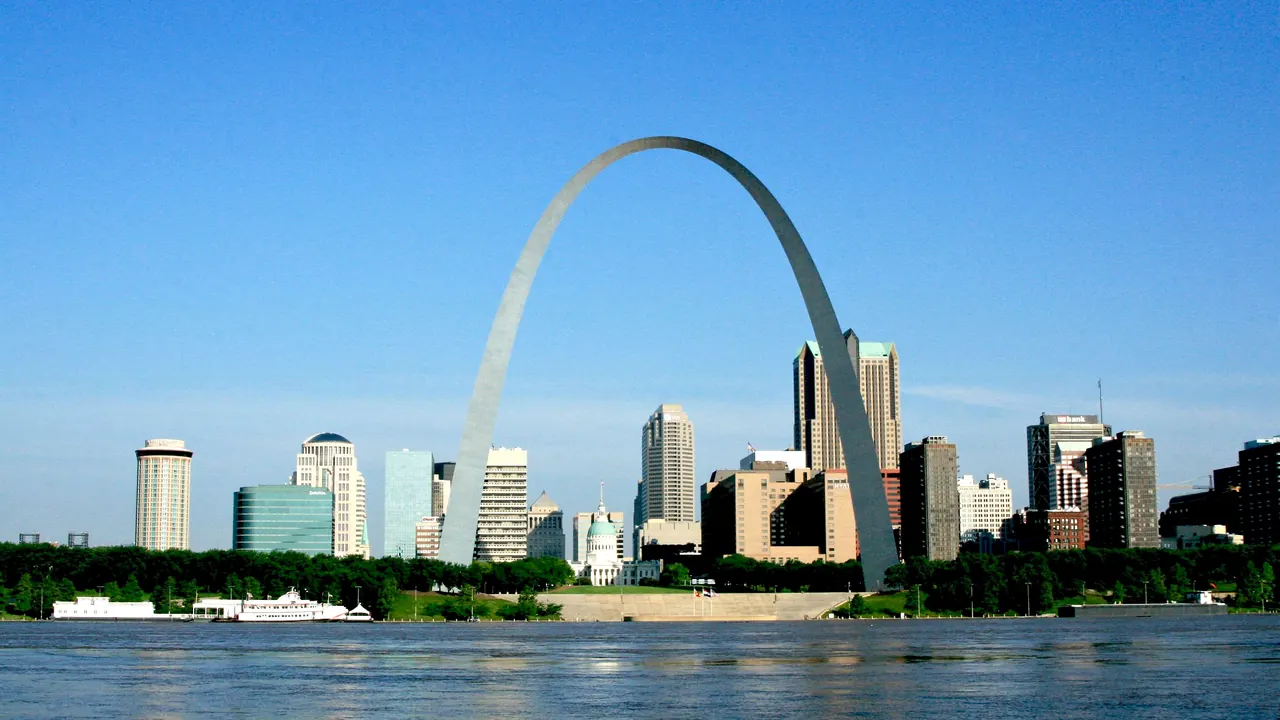
Photos: Baltimore by Styves Exantus, Pexels License; St. Louis by Holly Cheng, CC BY 2.0, cropped.
Baltimore or St. Louis?
Our verdict in twelve categories, each scored against the same fixed benchmark cities, and the climate month by month, so you can choose for your trip.
Choose Baltimore for
- day trips
- beaches
- nightlife
Baltimore suits travellers who want a compact waterfront base with a much wider region close by. Washington and Philadelphia are an easy train ride away, the harbour neighbourhoods link up on foot, and Fells Point and Federal Hill give a livelier bar evening. It works best for adults and couples who want to combine a city stay with a wider East Coast tour.
Choose St. Louis for
- families
- live music and the arts
- prices
Families, and anyone who plans their evenings around a stage, will get more from St. Louis. The City Museum, the free zoo and science centre in Forest Park and the Muny's summer musicals make it the easier city with children. Its orchestra and blues heritage run deeper, and day-to-day costs are a little lower. Expect to drive, because the city and its sights are spread out.
Scoreboard
Twelve categories on one fixed scale from 0 to 100. The shaded stretch is the gap between the two.
Your match
Pick a travel style or drag the sliders, and both match scores follow your weighting.
Wins on day trips and beaches with your weighting.
Wins on families and live music and the arts with your weighting.
What matters to you?
Category by category
What the scores mean for a trip.
Beaches & swimming
Neither city is a beach destination, but Baltimore at least has a bay within reach. Sandy Point State Park, about forty minutes' drive, offers a sandy afternoon by the Bay Bridge in brackish water, with sea nettles in high summer. The Atlantic surf is about three hours away.
St. Louis sits on fast-flowing working rivers far from any coast. Swimming there means a pool, or a long drive to a reservoir lake in the Ozarks.
Food & drink
Both cities cook with a strong local accent rather than great range, and the difference is in the speciality. Baltimore eats from the Chesapeake: steamed blue crabs on brown paper in summer and early autumn, lump crab cakes all year, and oysters and coddies in old market halls such as Lexington Market.
St. Louis eats inland, with rib barbecue, toasted ravioli, thin Provel-topped pizza and frozen custard, Italian cooking on the Hill and Bosnian grills along South Grand. It is also the stronger beer town, from the Anheuser-Busch brewery in Soulard to its many taprooms.
Culture & sights
Each city fills two or three days of sightseeing, with free art museums at the heart of both. Baltimore leans towards collections and maritime history: the Matisse holdings of the Cone Collection, the Walters' range from Egypt to Fabergé, Fort McHenry and the historic ships of the Inner Harbor. Fells Point and Mount Vernon are good streets to walk.
St. Louis is built around one landmark and its architecture. There is the Gateway Arch with its museum of westward expansion, the Old Courthouse where the Dred Scott case began, the early skyscraper of the Wainwright Building and the mosaics of the Cathedral Basilica, with the art museum out in Forest Park.
Nightlife
Neither city is for clubbing, but Baltimore makes the easier night out. Fells Point packs centuries-old taverns around a cobbled square by the water, and Federal Hill and Canton are a walk away along the harbour, so a bar crawl needs no taxi.
St. Louis spreads its evenings across separate pockets: blues taverns in Soulard, dance bars on Washington Avenue, the Grove for LGBTQ+ nights and the student Delmar Loop, usually with a taxi in between. Outside game nights and weekends, many of its streets go quiet early.
Nature & outdoors
The countryside around both cities is green and rolling rather than dramatic, and spring and autumn are the seasons for it. Baltimore's outdoors leans towards water and wooded gorges: kayaking on the harbour, sailing the sheltered Chesapeake from Annapolis, and the trails of Patapsco Valley at the city's edge.
St. Louis turns towards rock and rivers. It has the bluffs and caves of Castlewood, the boulders of Elephant Rocks and the pools of Johnson's Shut-Ins in the Ozark foothills, the Katy Trail for cyclists and the large Forest Park inside the city. Both get bald eagles, on Baltimore's marshes and on the winter bluffs near Alton.
Day trips
Here Baltimore pulls well ahead. Washington DC and Philadelphia are each about an hour away by train, so you can visit the Smithsonian or Independence Hall without a car. Annapolis, Gettysburg, Harpers Ferry and the Eastern Shore villages give you a second tier of trips by road.
St. Louis has one outstanding trip, Cahokia Mounds, twenty minutes across the river, and a set of gentler ones: French colonial Ste. Genevieve, the German wine towns of Hermann and Augusta, and Hannibal. They make pleasant days out, but almost all of them need a car and none compares with a national capital.
Good for families
St. Louis is the better choice with children. The City Museum, a climbable maze of tunnels and slides in an old shoe warehouse, has no real equivalent elsewhere. The zoo and Science Center in Forest Park are free, and the Magic House and the Arch tram pods add more.
Baltimore's strength is that its attractions sit together. The National Aquarium, the Maryland Science Center and Port Discovery are all on the Inner Harbor, which makes the first days easy. Beyond that cluster the choice thins, and families end up relying on cars and taxis there too.
Getting around
Baltimore is the easier city without a car, at least around the water. The Inner Harbor, Fells Point, Federal Hill and Little Italy link up along a waterfront promenade, water taxis run between the piers, and fast trains reach Washington and Philadelphia.
St. Louis is laid out for driving. MetroLink covers the airport, Forest Park, downtown and Clayton, but Soulard, the Hill and nearly every day trip need a car. The consolation is easy parking and uncongested roads.
Shopping & style
Baltimore's shops sell the city's own character back to you. Hampden's 36th Street, known as the Avenue, mixes vintage, kitsch and local art. Fells Point adds antiques and record shops, and the market halls sell crab mallets and Old Bay to take home.
St. Louis's browsing is more spread out and more international, with the antiques row and Latin American shops of Cherokee Street, the student-feel stores of the Delmar Loop and the galleries of the Central West End. In both cities fashion and big names are in the suburban malls, and an afternoon is enough.
Affordability
St. Louis comes out a little cheaper. Its hotels cost less than on the coasts, even downtown, and the zoo, art museum, history museum and science centre are all free. Barbecue and the Bosnian grills keep everyday meals modest.
Baltimore is good value next to Washington or New York, which is why many visitors to the capital stay there, and its two main art museums are free. Waterfront hotels and crab feasts push costs up, though, and in both cities taxis or a hire car add to the daily spend.
Live music & performing arts
St. Louis has the deeper stage. Its symphony, founded in 1880, plays in the ornate Powell Hall, and the Muny puts on summer musicals outdoors in Forest Park. The Opera Theatre runs an early-summer festival, and the blues heritage of Chuck Berry and W.C. Handy lives on in bars downtown and in Soulard.
Baltimore has a solid season of its own: its symphony at the Meyerhoff, frequent free concerts at the Peabody Institute and touring Broadway shows at the Hippodrome. It has no resident opera of note, though, and its club music leans towards indie and punk around Station North.
Wellness & relaxation
Baltimore finds its calm by the water. You can take a morning on the harbour promenade or an hour under the trees of Druid Hill, and for real rest, people head out to the Eastern Shore.
In St. Louis the calm comes from gardens and an easy pace: the Japanese garden at the Missouri Botanical Garden, slow mornings in Forest Park and streets where crowds are rarely a problem. Apart from that, both cities offer only hotel spas and yoga studios, and neither suits a restorative vacation.
When should you go?
Pick your month. The climate figures are measured averages, not a forecast.
Baltimore in July
St. Louis in July
Daytime high, °C
Rainfall in the month, mm
Temperature and rainfall are climate normals, averaged over the years shown. Baltimore: 1991-2020 (sunshine 1971-2000) normals, Baltimore (0.4 km from centre). St. Louis: 2006-2020 (sunshine 1981-2010, rainfall 1991-2020) normals, Cahokia / Maplewood Park (7.2 km from centre).
Both cities have a continental year. Winters are cold, with daytime highs around 5°C, and July and August are hot and humid at about 31°C, which makes long walks and hikes hard work. Late spring and autumn are the comfortable seasons for being on foot, and both cities get plenty of sun through the summer.
The rain is where they differ. St. Louis has a wet spring, peaking at about 123mm in May, and dries out from late summer, so September and October are its most dependable months. Baltimore's rain is spread evenly through the year, so no season is much drier than another. Mild May and October are its best months for the streets. Only Baltimore has water to swim in, and the bay is warm enough from July into early September, reaching 26°C in August.
Which traveller are you?
For a short city break, Baltimore works better. You can arrive by train, walk the harbour from Fells Point to Federal Hill, take a water taxi to Fort McHenry and see the Cone Collection's Matisse works, all without a car.
On a family trip with children, St. Louis has the edge. The City Museum fills a day of climbing on its own, the zoo and Science Center in Forest Park are free, and the tram pods up the Arch suit all ages. You will need a car, though.
On a food and nightlife trip, Baltimore is the livelier choice. A summer crab feast with Old Bay and beer, followed by a walk between the bars of Fells Point, Canton and Federal Hill, beats St. Louis's scattered pockets. St. Louis does win on barbecue and blues.
Before you go
| Measure | Baltimore | St. Louis |
|---|---|---|
| Currency | US Dollar (USD) | US Dollar (USD) |
| Sockets | AB120 V, 60 Hz | AB120 V, 60 Hz |
| Driving side | Right | Right |
| Time zone | UTC-5, UTC-4 in summer | UTC-6, UTC-5 in summer |
| Emergency number | 911 | 911 |
| Elevation | 10 m | 149 m |
| Main airport | Baltimore/Washington International Thurgood Marshall Airport (BWI)13 km from centre89 non-stop destinations | St. Louis Lambert International Airport (STL)20 km from centre64 non-stop destinations |
| Public holidays this year | 12 days | 14 days |
By the numbers
| Measure | Baltimore | St. Louis |
|---|---|---|
| City population | 585,708 | 301,578 |
| People per km² | 2,457 | 1,764 |
| Museums within 10 km | 27 | 18 |
| UNESCO World Heritage sites within 50 km | 0 | 1 |
| Swim season, months above 21 °C | 3 months | - |
Where else could you go?
Every comparison below shares a destination with this one, so you can follow Baltimore or St. Louis somewhere new.
- Washington DCvs Baltimore
- Philadelphiavs Baltimore
- Rehoboth Beachvs Baltimore
- Cape Mayvs Baltimore
- Bethany Beachvs Baltimore
- Ocean City, Marylandvs Baltimore