Photos: Baltimore by Styves Exantus, Pexels License; Williamsburg, Virginia by Brian Magill, Pexels License.
Baltimore or Williamsburg, Virginia?
Our verdict in twelve categories, each scored against the same fixed benchmark cities, and the climate month by month, so you can choose for your trip.
Choose Baltimore for
- nightlife
- live music and the arts
- food and drink
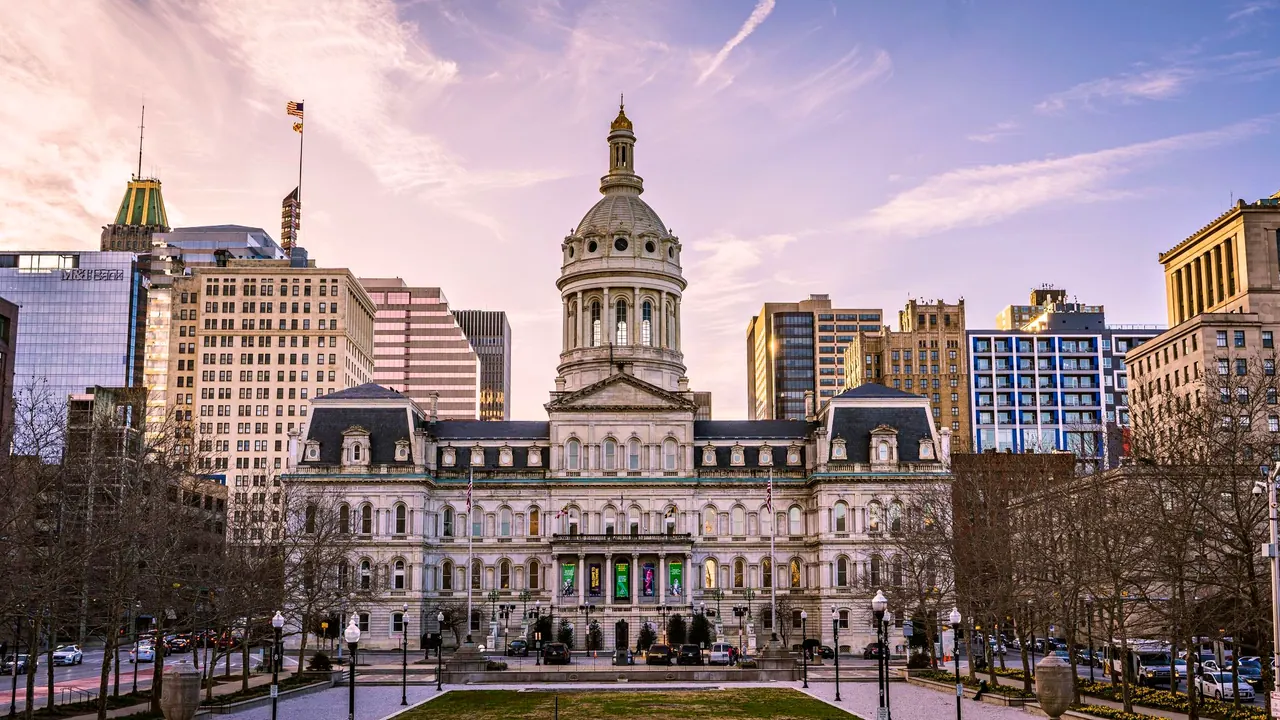
Baltimore suits adults who want a working city with real evenings. Crab feasts and old market halls, bar-lined streets in Fells Point and Federal Hill, the symphony and the Peabody concerts give a few days some depth. The train to Washington and Philadelphia also makes it a strong base for a wider East Coast trip.
Choose Williamsburg, Virginia for
- families
- beaches
- wellness
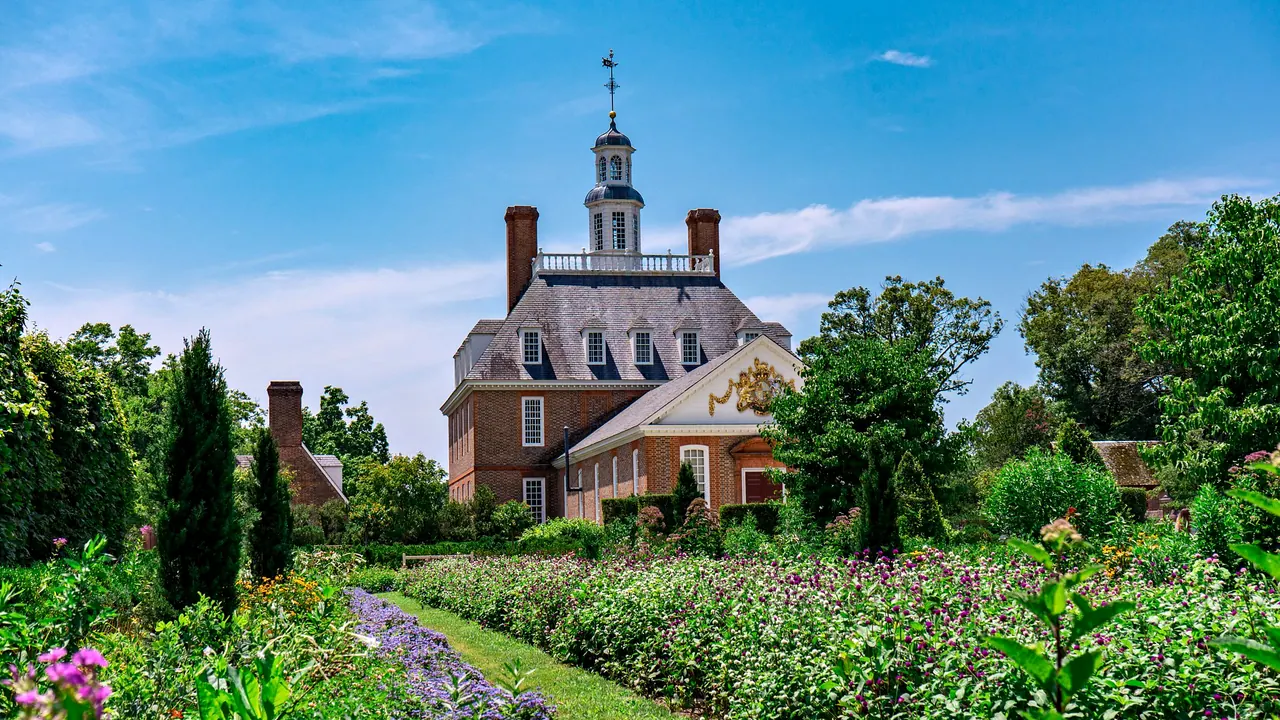
Williamsburg is the better pick for families and for anyone who wants to spend their days inside early American history. The restored colonial capital, Jamestown and Yorktown sit within a short drive of each other, and Busch Gardens and the water park keep children busy between them. Expect quiet nights, simple food and a car for almost everything.
Scoreboard
Twelve categories on one fixed scale from 0 to 100. The shaded stretch is the gap between the two.
Your match
Pick a travel style or drag the sliders, and both match scores follow your weighting.
Wins on nightlife and live music and the arts with your weighting.
Wins on families and beaches with your weighting.
What matters to you?
Category by category
What the scores mean for a trip.
Beaches & swimming
Neither is a beach destination, but Williamsburg brings the sand closer. The calm strip at Yorktown is about twenty minutes away, and the long Atlantic beaches at Virginia Beach are about an hour's drive, so a proper ocean day fits easily into a week.
From Baltimore, the nearest sand is Sandy Point, a bay beach about forty minutes away under the Bay Bridge. The Atlantic surf is about three hours off, which makes it a separate trip. Sea nettles drift into the bay near both in high summer.
Food & drink
Baltimore eats with far more character. The crab feast on brown paper, lump crab cakes, oysters at Lexington Market and the Cross Street and Broadway halls, pit beef and the old Italian kitchens of Little Italy give it a food identity worth planning around. Hampden and Harbor East add chef-led cooking.
Williamsburg's best meals are the simple Virginia ones: a country ham biscuit, peanut soup, oysters or soft-shell crab in season. The candlelit colonial taverns are about the setting more than the cooking, and Richmond Road is mostly pancake houses and family chains.
Culture & sights
The two are about level for sightseeing, but the experience is very different. Baltimore spreads its culture across a real city: free entry to the Cone Collection's Matisse works and the Walters, the ramparts of Fort McHenry, the railroad roundhouse and the brick streets of Fells Point and Mount Vernon.
Williamsburg is one immersive place. You walk Duke of Gloucester Street from the Capitol to the Wren Building, past costumed blacksmiths and printers in a carefully rebuilt eighteenth-century capital, with folk and decorative art museums alongside. Each fills two or three good days.
Nightlife
Baltimore has a genuine bar scene. There are centuries-old taverns around the cobbled square in Fells Point, rooftops and sports bars on Federal Hill that get loud after Orioles games, and dive bars with an artistic crowd in Station North. Clubs are few, though, and it is best to take a taxi between areas late at night.
Williamsburg goes to bed early. There are student pubs near the college and a few taprooms, but for a proper night out people drive to Norfolk or Richmond.
Nature & outdoors
Baltimore has more variety close at hand. The wooded gorges of Patapsco Valley begin at the city edge, Gunpowder Falls has trout streams and a rail trail, and you can sail the open Chesapeake out of Annapolis. The Appalachian hills are about an hour and a half west.
Williamsburg's Tidewater is flat and peaceful rather than varied. Its strengths are cycling the empty Colonial Parkway or the Virginia Capital Trail and paddling the Chickahominy among ospreys and herons, with no hills at all and plenty of mosquitoes in summer.
Day trips
Baltimore's position is hard to beat. Washington's Smithsonian museums and monuments and Philadelphia's Independence Hall are each about an hour away by train, so two major cities can be added without a car. Annapolis, Gettysburg, Harpers Ferry and the Eastern Shore villages are within reach by road.
Williamsburg's best outings are so close they feel like part of the stay. Jamestown and Yorktown are each under twenty minutes away, and the James River plantations and Richmond are further out. These places matter more to American history than to foreign visitors, and nearly all of them need a car.
Good for families
Williamsburg is built around family vacations. Busch Gardens has big coasters and gentle rides, Water Country USA is next door, and children can march with the fife and drum or question a blacksmith in the Historic Area. Family motels with pools and relaxed restaurants make the logistics easy.
Baltimore offers a strong day or two at the Inner Harbor, with the National Aquarium's shark ring and rainforest, the science centre and Port Discovery all within a short walk. Beyond the waterfront the city is patchier for children, and getting around it takes more planning.
Getting around
Neither is easy without a car, but the limits fall in different places. Baltimore's harbour neighbourhoods link up along a waterfront promenade and by water taxi, and fast trains run to Washington and Philadelphia. That makes a car-free stay workable if you base yourself by the water.
Williamsburg's walkable part is the small, flat historic district, where Duke of Gloucester Street is closed to traffic by day. Everything else, from the theme parks to Jamestown, is spread along highways, so nearly every visitor rents a car.
Shopping & style
Williamsburg has a little more to buy and a clearer theme. Colonial workshops sell pewter, pottery and hand-printed books, Merchants Square has Virginia gifts and kitchenware, and there is a large outlet centre on Richmond Road.
Baltimore's best browsing is quirkier: vintage and local art on the Avenue in Hampden, and antiques and records in Fells Point. Neither city has luxury shopping.
Affordability
Overall costs are similar, but the money goes in different places. In Baltimore, hotels are cheaper than in Washington and the two great art museums are free. The bills that grow are restaurant meals and the taxis you end up taking.
In Williamsburg, motel rooms off-peak are the easy part. Admission tickets to the colonial town, Jamestown, Yorktown and the theme parks are the big expense, along with a rental car, so combination passes are worth checking.
Live music & performing arts
Baltimore offers a proper season. The symphony plays at the Meyerhoff, the Peabody Institute holds frequent concerts in Mount Vernon, touring Broadway shows come to the Hippodrome and Center Stage produces its own theatre. Indie and punk fill the small clubs of Station North, and Pennsylvania Avenue has a long jazz history.
In Williamsburg, performance comes with the period setting: candlelit recitals, fife-and-drum corps and colonial theatre, plus college events in term time. These are charming, but for an orchestra or serious theatre you have to drive to Richmond or Norfolk.
Wellness & relaxation
Williamsburg makes the calmer stay. The historic inn and the golf resorts on the James River have full spas and pools, and the town slows right down early in the morning and once the theme-park crowds have gone.
Baltimore offers hotel spas and yoga studios in Harbor East and Hampden, but its pace is urban. Its restful moments are short ones, like a walk on the harbour promenade or an hour in Druid Hill Park.
When should you go?
Pick your month. The climate figures are measured averages, not a forecast.
Baltimore in July
Williamsburg, Virginia in July
Daytime high, °C
Rainfall in the month, mm
Where the figures come from
Williamsburg, Virginia's sunshine is measured 60 km from the centre, at Richmond International Airport.
Temperature and rainfall are climate normals, averaged over the years shown. Baltimore: 1991-2020 (sunshine 1971-2000) normals, Baltimore (0.4 km from centre). Williamsburg, Virginia: 2006-2020 (sunshine 1981-2010, rainfall 1991-2020) normals, Williamsburg / Kingspoint (3.6 km from centre).
Both places have hot, humid summers and are at their most comfortable for walking in spring and autumn. Williamsburg sits further south, so its winters are milder and its warm season comes earlier. Baltimore drops to about 5°C by December and feels properly cold, while Williamsburg stays fit for gentle sightseeing through most of the winter. In midsummer Williamsburg reaches about 33°C, which makes a full day on the colonial streets or at a theme park tiring, and Baltimore is only a little cooler.
The bay is warm enough to swim off both from late June to early September, at about 26°C in August. Williamsburg gets more sunshine all year, but its late summer is also the wetter of the two, with August bringing about 151mm in heavy showers. For either city, May and late September into October give the best balance of warmth and comfort.
Which traveller are you?
On a family trip with children, Baltimore's aquarium and harbour fill a day or two, but Williamsburg suits a whole week. Theme-park rides, living history and replica ships keep children busy, and the town is safe and set up for families.
For a food and nightlife trip, Baltimore wins clearly. Crab feasts, market-hall oysters and Little Italy's red-sauce kitchens lead on to the old taverns of Fells Point. Williamsburg's evenings end with a tavern dinner or a ghost walk.
On a relaxing trip, Baltimore is a hard fit: the pace is urban, and visitors wanting to unwind usually head to the Eastern Shore. Williamsburg suits couples happy to go slowly, with resort spas and evenings that end early.
Before you go
| Measure | Baltimore | Williamsburg, Virginia |
|---|---|---|
| Currency | US Dollar (USD) | US Dollar (USD) |
| Sockets | AB120 V, 60 Hz | AB120 V, 60 Hz |
| Driving side | Right | Right |
| Time zone | UTC-5, UTC-4 in summer | UTC-5, UTC-4 in summer |
| Emergency number | 911 | 911 |
| Elevation | 10 m | 15 m |
| Main airport | Baltimore/Washington International Thurgood Marshall Airport (BWI)13 km from centre89 non-stop destinations | Newport News Williamsburg International Airport (PHF)24 km from centre1 non-stop destination |
| Public holidays this year | 12 days | 13 days |
By the numbers
| Measure | Baltimore | Williamsburg, Virginia |
|---|---|---|
| City population | 585,708 | 15,425 |
| People per km² | 2,457 | 656 |
| Museums within 10 km | 27 | 8 |
| UNESCO World Heritage sites within 50 km | 0 | 0 |
| Swim season, months above 21 °C | 3 months | 4 months |
Where else could you go?
Every comparison below shares a destination with this one, so you can follow Baltimore or Williamsburg, Virginia somewhere new.
- Washington DCvs Baltimore
- Virginia Beachvs Williamsburg, Virginia
- Philadelphiavs Baltimore
- Rehoboth Beachvs Baltimore
- Cape Mayvs Baltimore
- Bethany Beachvs Baltimore