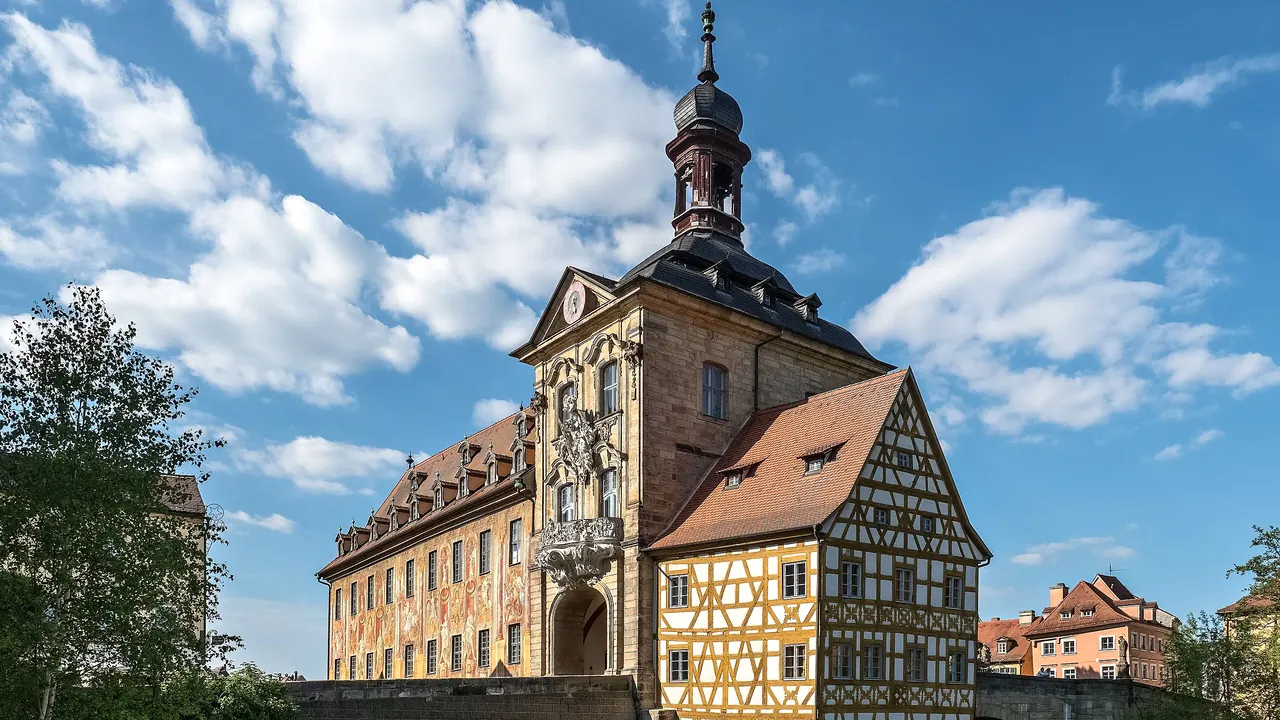
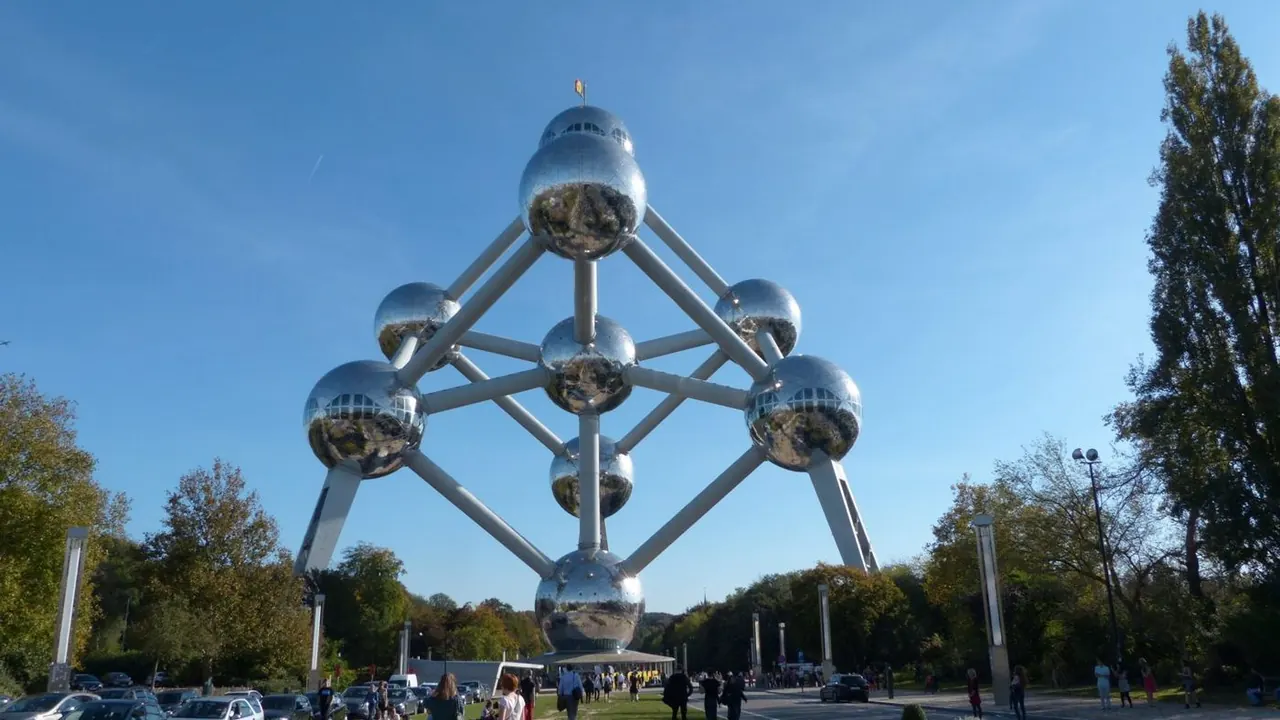
Photos: Bamberg by Ermell, CC BY-SA 4.0, cropped; Brussels by Ettanghe, CC BY-SA 4.0, cropped.
Bamberg or Brussels?
Our verdict in twelve categories, each scored against the same fixed benchmark cities, and the climate month by month, so you can choose for your trip.
Choose Bamberg for
- prices
- wellness
- nature and the outdoors
Bamberg suits a slower, smaller trip: a few days walking an old town that the war left almost untouched, evenings in brewery taverns and hillside beer cellars, and easy country walks or bike rides between village breweries. It costs less than Brussels and is calmer, and it empties of day visitors by evening. If you want a quiet base in Franconia with Nuremberg and Würzburg a short train ride away, it is the better choice.
Choose Brussels for
- shopping
- nightlife
- live music and the arts
Brussels is for travellers who want more going on. It has a far wider range of food, real nights out, an opera house and concert halls, and museums with Bruegel, Rubens and Magritte. It is also the stronger choice with children, and as a base for Ghent, Bruges and Antwerp. You give up an intact historic centre and pay capital-city prices, but there is more to fill a week.
Scoreboard
Twelve categories on one fixed scale from 0 to 100. The shaded stretch is the gap between the two.
Your match
Pick a travel style or drag the sliders, and both match scores follow your weighting.
Wins on prices and wellness with your weighting.
Wins on shopping and nightlife with your weighting.
What matters to you?
Category by category
What the scores mean for a trip.
Beaches & swimming
Neither city is a swimming destination, but Brussels at least has a real coast within reach. Ostend, De Haan and Knokke are a little over an hour away by train, with wide sandy North Sea beaches. The water is cool and the season short, so it makes a breezy day out rather than a reason to come.
Bamberg is a full day from any sea. Swimming there means the old river bathing spot in the Hain, the gravel-pit lakes on the edge of town and the public pools. That is enough to cool off on a hot afternoon, and nothing more.
Food & drink
Both cities take beer seriously, but in different ways. Bamberg is about depth in one tradition: smoky Rauchbier poured from wooden barrels, Schäufele with dumplings, and summer tables in the Bierkeller. It has little to offer beyond Franconian cooking.
Brussels eats more broadly and more ambitiously. It has French-Belgian classics like waterzooi and carbonnade, hundreds of beer styles including the city's own lambics, and praline makers around the Sablon. Matonge, Saint-Josse and Ixelles add immigrant cooking that Bamberg cannot match.
Culture & sights
Brussels has more to see, Bamberg the more complete townscape. The Grand-Place is one of Europe's great squares, and add Horta's UNESCO-listed Art Nouveau houses, the Royal Museums with Bruegel and Magritte, and the Cinquantenaire collections, and you have days of sightseeing. The catch is the city in between, where office blocks break up the historic quarters.
Bamberg is the reverse. The museums are small, but the whole old town is a UNESCO site: the four-towered cathedral on its hill, the Old Town Hall on its island in the Regnitz, and the fishermen's houses of Little Venice. Here the town itself is the sight.
Nightlife
Brussels is much the livelier city after dark. Bars fill the streets around Saint-Géry and the Bourse, locals gather around Place Flagey and Châtelain, and there is a techno club in the Marolles that draws DJs from across Europe, plus an active queer scene.
Bamberg's evenings are brewery taverns, beer cellars on summer nights and student bars in the Sand quarter during term. The town is quiet well before the small hours, and for a proper night out locals take the train to Nuremberg.
Nature & outdoors
Bamberg has the better countryside on its doorstep. Franconian Switzerland's limestone valleys, rock towers and caves begin less than an hour away, the Steigerwald beech forests lie to the west, and cycle paths along the Main link orchard villages and their breweries.
Brussels has one fine forest, the Sonian Forest, with its tall beech stands on the city's edge. Beyond it the land is flat farmland. For hills you need the Ardennes valleys around Dinant, a much longer trip.
Day trips
Both are good bases, but Brussels is one of the best in Europe. Ghent is about half an hour away, Antwerp about forty minutes and Bruges about an hour, with Leuven and Mechelen closer still. High-speed trains also put Paris within a long day's reach.
Bamberg's circle is regional and still rewarding. Nuremberg, Würzburg's Residence, Coburg and Bayreuth are each about an hour away, and the baroque Vierzehnheiligen and Banz Abbey face each other across the Main valley. These are fine towns, but not the run of first-rank cities that Brussels offers.
Good for families
Brussels gives children far more to do. The Atomium and Mini-Europe stand side by side, the Natural Sciences museum has its herd of Iguanodons, comic murals cover the centre's walls, and Walibi and Pairi Daiza are easy outings. Heavy traffic and rainy days are the drawbacks.
Bamberg is safer and calmer but has little made for young visitors. There are playgrounds and boat hire in the Hain, a leisure pool with slides for rainy days, and beer gardens where children play among the tables, but most of the sights are churches.
Getting around
Both are easy without a car, in different ways. In Bamberg you walk: the island town, the cathedral hill and Little Venice are minutes apart, bikes suit the flat lower town, and only the short cobbled climbs and the walk from the station take any effort.
Brussels is bigger and depends on transport. The historic core is compact, but you reach Ixelles, Saint-Gilles and the Bois de la Cambre by tram or metro, paying with a tap of a bank card. Driving is a burden in either city, and much more so in Brussels.
Shopping & style
Brussels is a real shopping city where Bamberg is not. It has chocolatiers in the Galeries Royales and on the Sablon, antiques and the Jeu de Balle flea market in the Marolles, Belgian designers on Rue Antoine Dansaert and luxury brands on Avenue Louise.
Bamberg fills an hour or so. There are chain stores and independent bookshops around Grüner Markt, smoked beer from the brewery shops and produce from the market gardens to take home, but no fashion or design scene.
Affordability
Bamberg is the cheaper stay. Beer and tavern meals cost less than in a big city, guesthouses are moderately priced outside weekends and the Christmas market season, and you walk everywhere.
Brussels is mid-to-upper priced. Weekday hotels are aimed at EU and business travellers, so weekends are the better deal. Frites and the immigrant neighbourhoods keep daily spending down, but sit-down dinners add up quickly.
Live music & performing arts
Bamberg has one real asset: the Bamberg Symphony, an orchestra with an international reputation, alongside the ETA Hoffmann Theatre and church concerts. It has no opera company of its own, and Bayreuth's festival is the nearest.
Brussels offers far more. La Monnaie stages adventurous opera, Bozar and Flagey host major orchestras, the Queen Elisabeth Competition is a fixture of the classical calendar, and dance, theatre and touring rock acts add range.
Wellness & relaxation
Bamberg is the more restful of the two, mostly because of its pace: quiet riverside mornings, shaded beer gardens and a town that settles by evening. The leisure pool has a sauna, and the thermal brine baths of Bad Staffelstein are half an hour away by train.
Brussels offers hammams, day spas and Art Deco pools. Its slow pleasures, a long lunch in Ixelles or a walk in the Sonian Forest, come against heavy traffic, and Spa itself is a long way off.
When should you go?
Pick your month. The climate figures are measured averages, not a forecast.
Bamberg in July
Brussels in July
Daytime high, °C
Rainfall in the month, mm
Temperature and rainfall are climate normals, averaged over the years shown. Bamberg: 1991-2020 normals, Bamberg (2.8 km from centre). Brussels: 1991-2020 normals, Uccle (5.2 km from centre).
Bamberg has the more continental climate. Summer is warm and sunny, reaching about 26°C in July, with long bright days for the beer gardens, the river bathing spot in the Hain and rides through the countryside. It is also the wettest time of year, with about 79mm of rain in July. For dry walking weather, February to April is the driest spell, and by April it is mild enough to enjoy. Winters are cold, with daytime highs of only about 4°C in December and January, so the cobbled hill lanes are chilly going then.
Brussels is milder and greyer all year. Its summers are a few degrees cooler, peaking at about 23°C, and its winters are a little less cold. Rain falls in every month, rising to around 90mm in August and nearly as much in December, so April and May are the driest and most comfortable months for walking the streets. Neither city is warm enough for a beach trip, but Bamberg has the warmer and sunnier summer of the two.
Which traveller are you?
For a food and nightlife trip, Brussels is the clear choice. You get mussels, frites, lambic cafés and Congolese and Moroccan cooking, followed by late bars in Saint-Géry and Saint-Gilles and a respected techno club. Bamberg's evenings centre on smoked beer and wind down early.
On a trip on a tight budget, Bamberg goes further. Brewery taverns serve cheap beer and roast pork, guesthouses are moderately priced, and the whole town is walkable, so you barely need transport. In Brussels, hotels and sit-down meals cost more, especially on weekdays.
For a relaxing and wellness trip, Bamberg is the gentler place: river mornings, long afternoons under chestnut trees, and the warm brine pools of Bad Staffelstein half an hour away. Brussels runs at the pace of a working capital, and its spa town is far off.
Before you go
| Measure | Bamberg | Brussels |
|---|---|---|
| Official language | German | French, German, Dutch |
| Currency | Euro (EUR) | Euro (EUR) |
| Sockets | CF230 V, 50 Hz | CE230 V, 50 Hz |
| Driving side | Right | Right |
| Time zone | UTC+1, UTC+2 in summer | UTC+1, UTC+2 in summer |
| Emergency number | 112 | 112 |
| Elevation | 262 m | 70 m |
| Main airport | Nuremberg Airport (NUE)46 km from centre56 non-stop destinations | Brussels Airport (BRU)11 km from centre191 non-stop destinations |
| Public holidays this year | 12 days | 14 days |
By the numbers
| Measure | Bamberg | Brussels |
|---|---|---|
| City population | 77,218 | 195,546 |
| People per km² | 1,414 | 5,908 |
| Museums within 10 km | 11 | 106 |
| UNESCO World Heritage sites within 50 km | 1 | 11 |
Where else could you go?
Every comparison below shares a destination with this one, so you can follow Bamberg or Brussels somewhere new.
- Antwerpvs Brussels
- Ghentvs Brussels
- Nurembergvs Bamberg
- Rothenburg ob der Taubervs Bamberg
- Brugesvs Brussels
- Maastrichtvs Brussels