Photos: Bamberg by Ermell, CC BY-SA 4.0, cropped; Dresden by Maksym Kozlenko, CC BY-SA 4.0, cropped.
Bamberg or Dresden?
Our verdict in twelve categories, each scored against the same fixed benchmark cities, and the climate month by month, so you can choose for your trip.
Choose Bamberg for
- food and drink
- wellness
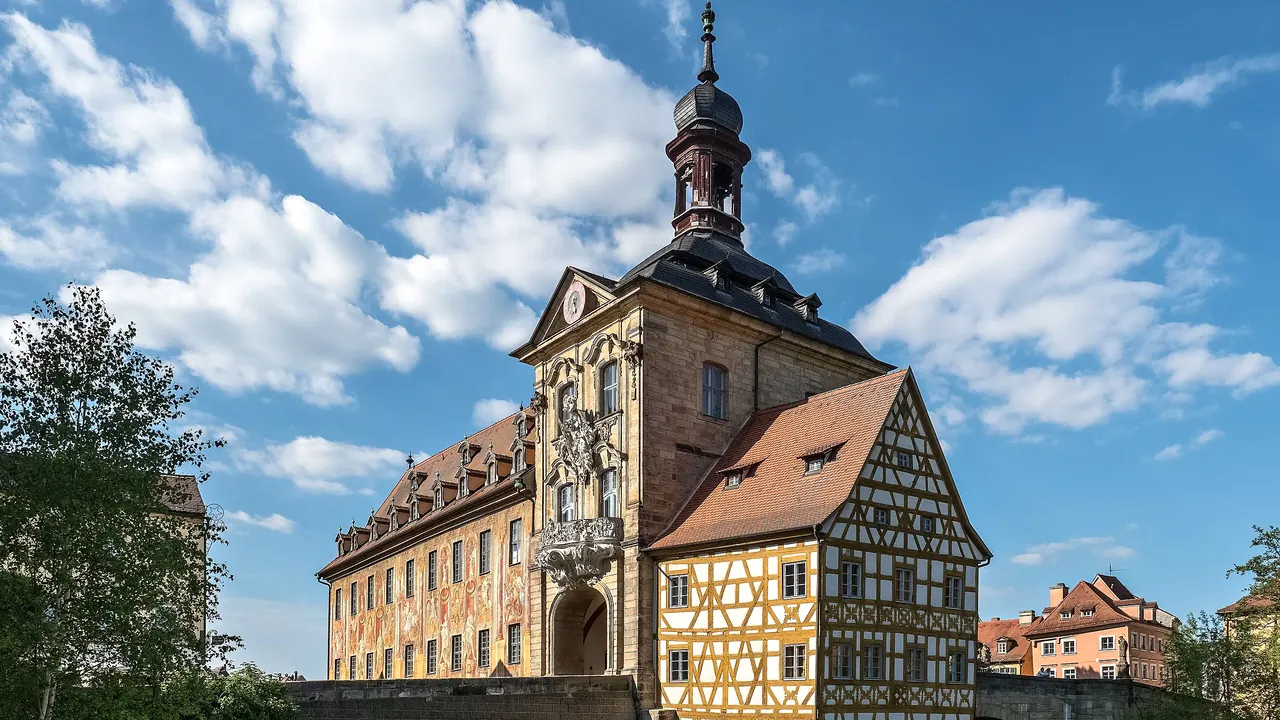
Bamberg suits travellers who want an old town that survived intact and a slow, beer-centred rhythm. You come for the cathedral hill, the town hall on its island and Little Venice, then spend the evenings in brewery taverns and hillside beer cellars. It is small enough to understand in a weekend, and its rail line makes it an easy base for the rest of Franconia.
Choose Dresden for
- live music and the arts
- nature and the outdoors
- families
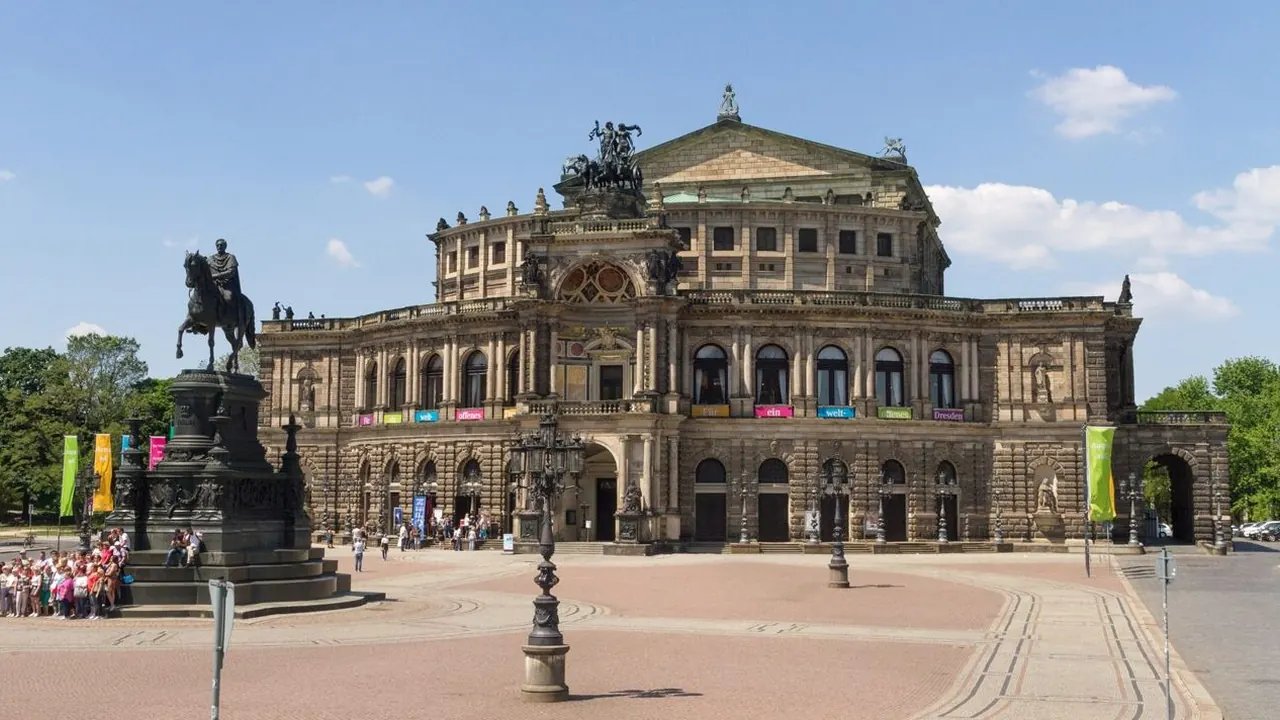
Dresden is the better choice for a fuller trip with more variety. Its picture galleries and treasuries are of world rank, the Semperoper and its orchestra make it a real music destination, and Saxon Switzerland gives you dramatic sandstone scenery a short train ride away. Families, people who like to go out at night and anyone staying several days will get more from it, although the food is plainer than Bamberg's.
Scoreboard
Twelve categories on one fixed scale from 0 to 100. The shaded stretch is the gap between the two.
Your match
Pick a travel style or drag the sliders, and both match scores follow your weighting.
Wins on food and drink and wellness with your weighting.
Wins on live music and the arts and nature and the outdoors with your weighting.
What matters to you?
Category by category
What the scores mean for a trip.
Beaches & swimming
Neither city has a beach, and the sea is far from both, so any beach time belongs elsewhere on the trip. The difference is the river. In Bamberg you can actually swim in the Regnitz at the old bathing spot in the Hain park. Dresden's Elbe has shipping and strong currents, so there people cool off in outdoor pools, gravel-pit lakes and the ponds around Moritzburg.
Food & drink
Bamberg is the better place to eat and drink, mostly because of its beer. Smoky Rauchbier is poured from wooden barrels in centuries-old brewery taverns, and in summer people sit at long tables in the Bierkeller on the hillsides. Plates of Schäufele and dumplings make the town a destination in its own right for anyone who travels for beer.
Dresden's strengths are coffee and cake, with Eierschecke and Christstollen, along with dry wines from the Elbe valley. The Neustadt also has more international range than anything in Bamberg. Beyond that, Saxon cooking is plain and the old town leans towards tourist menus.
Culture & sights
Dresden has the greater collections. The Old Masters in the Zwinger, the Green Vault in the Residenzschloss and the Albertinum's Romantic painting are enough for three or four full days, around the rebuilt Frauenkirche and Brühl's Terrace. Much of what you see is reconstruction, though, and post-war blocks stand close by.
Bamberg works the other way round. Its museums are small, but the whole old town survived the war and is listed by UNESCO. The pleasure is walking between the Imperial Cathedral, the Old Town Hall on its island and Little Venice, all of them original.
Nightlife
Dresden has a real nightlife district. The Äußere Neustadt is a grid of streets full of small bars, beer kiosks and courtyard pubs, with crowds drinking on the pavements in summer and a few clubs in old industrial buildings.
Bamberg's evenings are about beer rather than dancing. You get full brewery taverns, the student bars of the Sand quarter during term and long nights in the beer cellars, but most of the town is quiet well before the small hours.
Nature & outdoors
Bamberg's countryside is the gentler of the two, more for easy walking and cycling than for big views. The limestone valleys, caves and castle-topped crags of Franconian Switzerland begin less than an hour east, and the beech woods of the Steigerwald lie to the west. Cycle paths along the Main and Regnitz pass orchards and meadows, and many walks lead from one village brewery to the next.
Dresden's sandstone is the bigger draw. Saxon Switzerland is a national park of rock towers, gorges and table mountains, with the Bastei view above the Elbe and a long tradition of free climbing, all reached by suburban train in well under an hour. Closer in, the Elbe meadows and the Dresden Heath give easy green space, and the Ore Mountains add summer hiking and some cross-country skiing in winter.
Day trips
Both are excellent bases, and what differs is the kind of place you reach. From Bamberg the trips are a run of Franconian towns, each about an hour away: Nuremberg's castle, Würzburg's Residence, Bayreuth's opera house and Coburg's fortress, with the baroque basilica of Vierzehnheiligen closer still.
Dresden's list is more varied. It covers porcelain and a cathedral in Meissen, a lakeside lodge at Moritzburg, the Königstein fortress on its table mountain, Leipzig and Görlitz, and Prague across the border at the far edge of a day.
Good for families
Dresden gives children much more to do. The Großer Garten has a zoo and a miniature railway largely run by children, and the Transport Museum is full of trams and trains. The Hygiene Museum has a hands-on children's section, and paddle steamers go up the Elbe.
Bamberg is safe and relaxed, with playgrounds and boat hire in the Hain and a leisure pool with slides, and children play freely in the beer gardens. Beyond that it is churches and steep cobbles, which suit a slow pace better than a busy week.
Getting around
Neither needs a car, but they work differently. Bamberg is a town you cover on foot or by bike, with short, steep, cobbled climbs to the cathedral and Michaelsberg and a fair walk from the station. Dresden's old town and Neustadt are also walkable, and a dense tram network, suburban trains along the Elbe and paddle steamers to Pillnitz take you further out.
Shopping & style
In Bamberg, shopping is best kept for souvenirs. Bottled Rauchbier from the brewery shops and produce from the town's market gardens are the things worth taking home. Otherwise there are chain stores on the pedestrian streets, a few independent bookshops and the antique dealers near the cathedral, which together fill an hour between sights.
Dresden gives you more to browse. The Neustadt has second-hand clothes, small design shops and the decorated courtyards of the Kunsthofpassage. Meissen porcelain and wooden Ore Mountain toys are proper local buys, and in Advent the Striezelmarkt fills the Altmarkt with craft stalls. Neither city is much use for fashion or luxury.
Affordability
Both cost about the same, at moderate Western European levels, but the money goes on different things. In Bamberg, cheap local beer and tavern meals keep daily costs down, and getting around costs almost nothing because you walk everywhere. In Dresden, eating in the Neustadt is good value and a day ticket covers trams and trains, but separate entry fees at the big museums add up over a few days. Rooms in both old towns get dearer during the Christmas markets.
Live music & performing arts
Dresden is one of Germany's great music cities. The Semperoper, home of the Staatskapelle, has premieres by Wagner and Strauss in its history, and the Philharmonic plays in the Kulturpalast. Add the Kreuzchor, Bach at the Frauenkirche and a festival calendar, and a music lover could plan a trip around it.
Bamberg's scene is smaller but has one real draw: the Bamberg Symphony, an orchestra with an international reputation, alongside the ETA Hoffmann Theatre and church concerts. It has no opera company of its own, although the Bayreuth Festival is an hour away.
Wellness & relaxation
Both cities are restful because of their pace rather than their spas, and each has thermal bathing within reach. From Bamberg, the warm brine pools of Bad Staffelstein are about half an hour by train. From Dresden, the thermal pool at Bad Schandau is under an hour away and pairs well with a day in Saxon Switzerland. Calm in Bamberg means a shaded beer garden, while in Dresden it means the wide Elbe meadows and coffee and cake above the river.
When should you go?
Pick your month. The climate figures are measured averages, not a forecast.
Bamberg in July
Dresden in July
Daytime high, °C
Rainfall in the month, mm
Temperature and rainfall are climate normals, averaged over the years shown. Bamberg: 1991-2020 normals, Bamberg (2.8 km from centre). Dresden: 1991-2020 normals, Dresden-Strehlen (3.8 km from centre).
The two cities have almost the same climate, so the season matters more than the choice between them. Both are at their best from May to September, when afternoons are warm enough for beer gardens, riverside walks and a swim in a lake or pool. July and August are the warmest months at about 26°C, which is pleasant rather than too hot for sightseeing. These are also the wettest months, with short summer downpours that peak at around 80mm in Dresden in August.
Winter is cold and grey in both places, with highs of about 4°C in January. Bamberg is noticeably gloomier from November to January, with barely 40 hours of sunshine in December, while Dresden gets a little more light. Late April and September are good times to walk either town in mild weather, and Dresden's slightly warmer autumn gives it a small edge in October.
Which traveller are you?
For a culture and arts trip, Dresden is the clear choice. The Sistine Madonna, the Green Vault and the Albertinum can fill several days, and in the evening there is opera at the Semperoper or the Kreuzchor singing in its own church.
On an outdoors trip, Dresden has the stronger landscape. Saxon Switzerland's sandstone towers, the Bastei viewpoint and the Malerweg trail are under an hour away by suburban train. Bamberg's surroundings are gentler limestone valleys and woods.
For a short city break, Bamberg works better. The intact old town, the cathedral hill and the riverside lanes are all a few minutes apart and can be enjoyed in two days. The evenings take care of themselves in its brewery taverns and beer cellars.
Before you go
| Measure | Bamberg | Dresden |
|---|---|---|
| Official language | German | German |
| Currency | Euro (EUR) | Euro (EUR) |
| Sockets | CF230 V, 50 Hz | CF230 V, 50 Hz |
| Driving side | Right | Right |
| Time zone | UTC+1, UTC+2 in summer | UTC+1, UTC+2 in summer |
| Emergency number | 112 | 112 |
| Elevation | 262 m | 126 m |
| Main airport | Nuremberg Airport (NUE)46 km from centre56 non-stop destinations | Dresden Airport (DRS)10 km from centre13 non-stop destinations |
| Public holidays this year | 12 days | 11 days |
By the numbers
| Measure | Bamberg | Dresden |
|---|---|---|
| City population | 77,218 | 562,764 |
| People per km² | 1,414 | 1,713 |
| Museums within 10 km | 11 | 70 |
| UNESCO World Heritage sites within 50 km | 1 | 1 |
Where else could you go?
Every comparison below shares a destination with this one, so you can follow Bamberg or Dresden somewhere new.
- Nurembergvs Bamberg
- Rothenburg ob der Taubervs Bamberg
- Leipzigvs Dresden
- Karlovy Varyvs Dresden
- Praguevs Dresden
- Karlovy Varyvs Bamberg