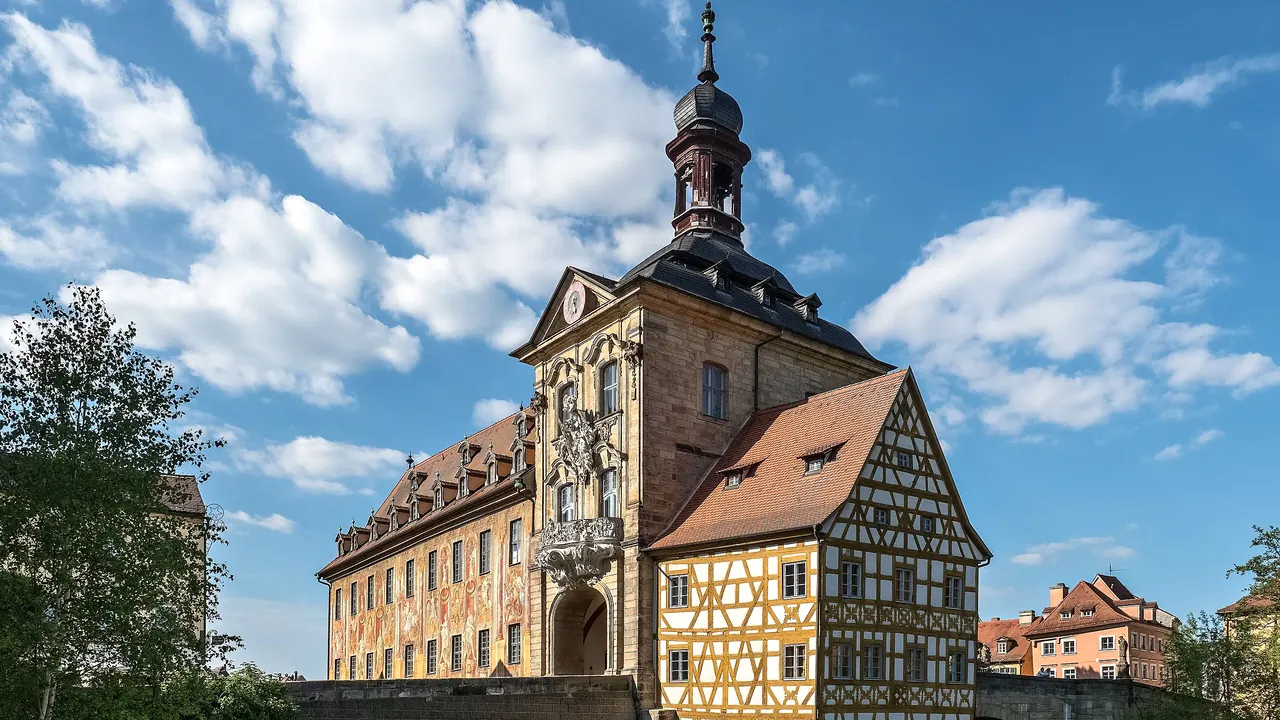
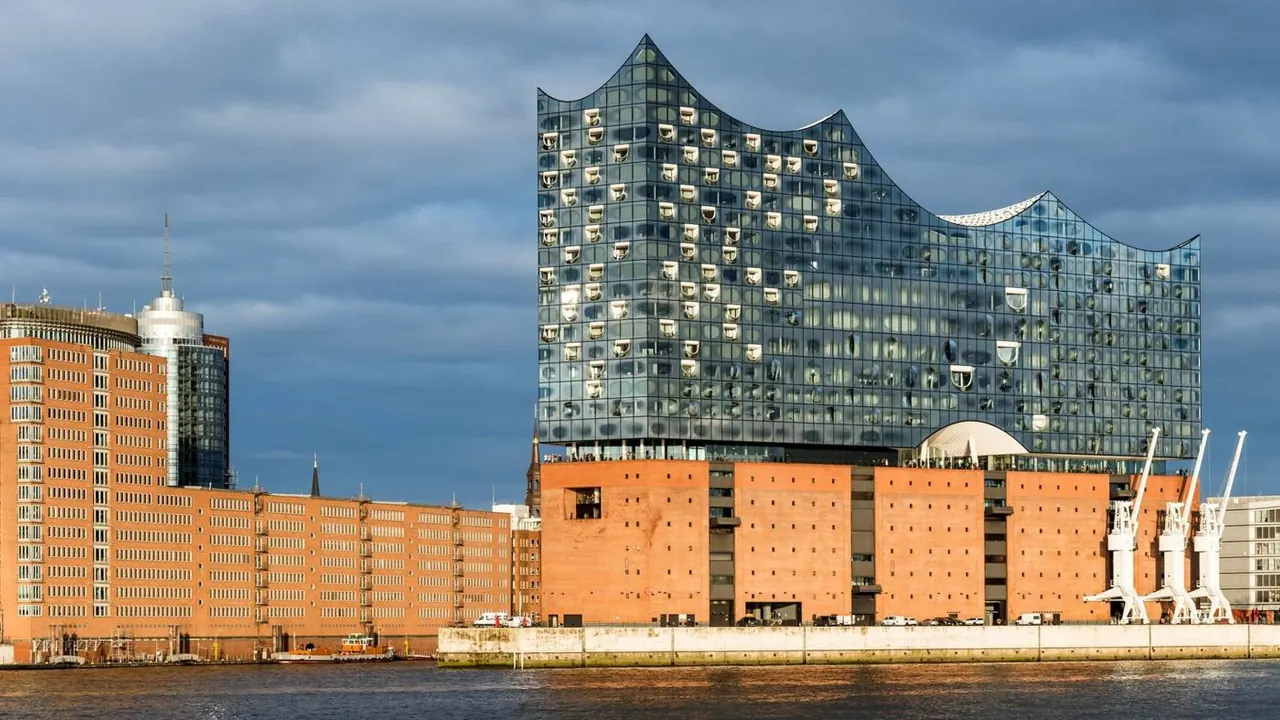
Photos: Bamberg by Ermell, CC BY-SA 4.0, cropped; Hamburg by Wolfgang Weiser, Pexels License.
Bamberg or Hamburg?
Our verdict in twelve categories, each scored against the same fixed benchmark cities, and the climate month by month, so you can choose for your trip.
Choose Bamberg for
- prices
- culture and sights
- food and drink
Bamberg suits travellers who want a slow, walkable trip through an intact old town, with beer and hearty Franconian cooking at the centre of the day and Nuremberg, Würzburg and Bayreuth a short train ride away. It costs less to stay and eat, and its evenings end in beer cellars and taverns rather than clubs.
Choose Hamburg for
- nightlife
- live music and the arts
- families
Pick Hamburg for the range only a big port city can give: the Elbphilharmonie, opera and musicals, late nights in St Pauli, serious shopping and plenty to keep children busy. It is the dearer and wetter of the two, but it gives you enough to fill a longer stay.
Scoreboard
Twelve categories on one fixed scale from 0 to 100. The shaded stretch is the gap between the two.
Your match
Pick a travel style or drag the sliders, and both match scores follow your weighting.
Wins on prices and culture and sights with your weighting.
Wins on nightlife and live music and the arts with your weighting.
What matters to you?
Category by category
What the scores mean for a trip.
Beaches & swimming
Neither city is a beach destination, but Hamburg at least has sand. The Elbe shore at Oevelgoenne and Blankenese is a fine place to sit and watch the container ships, though not to swim, and the Baltic resorts at Travemuende and Timmendorfer Strand are about an hour away.
Bamberg is a full day from any coast. You can swim at the old river bathing spot in the Hain, in the gravel-pit lakes and in the pools. That is enough for a hot afternoon and nothing more.
Food & drink
The two eat equally well but very differently. Bamberg is about beer first: Rauchbier poured from wooden barrels, hillside Bierkeller under chestnut trees, and pork shoulder with dumplings, with little outside that tradition.
Hamburg cooks like a port, with fish rolls on the piers, Labskaus and Franzbroetchen, and behind them a wider spread of international cooking and a proper fine-dining tier. Go to Bamberg for depth in one tradition and to Hamburg for variety.
Culture & sights
Bamberg has the more complete historic town. Its UNESCO-listed old town came through the war largely intact, and the Imperial Cathedral, the Old Town Hall on its island and Little Venice are all a short walk apart. The museums are small, so the pleasure is in the streets.
Hamburg lost much of its old centre in the war and offers something else: the red-brick Speicherstadt and the Chilehaus, the Elbphilharmonie, and much stronger collections at the Kunsthalle. It is better for galleries, while Bamberg is better for a whole old town to walk through.
Nightlife
Hamburg offers by far the bigger night out. The Reeperbahn, the pavement bars of the Schanzenviertel and clubs in bunkers and beside the harbour often keep going until dawn, especially at weekends.
Bamberg's evenings belong to brewery taverns, summer beer cellars and the student bars of the Sand quarter, and the town goes quiet well before the small hours. People who want to dance take the train to Nuremberg.
Nature & outdoors
Both have gentle countryside rather than mountains, but of different kinds. Around Bamberg it is hills and rock: the limestone valleys and crags of Franconian Switzerland less than an hour away, the beech forests of the Steigerwald, and walking routes that link one village brewery to the next.
Hamburg's outdoors is about water. You can sail or paddle on the Alster, walk the Elbe path to Blankenese, cycle through the orchards of the Altes Land, and reach the heather of Lueneburg Heath in about an hour.
Day trips
Both make excellent bases with fast trains, so the choice is about which region you want to see. Bamberg puts Franconia's imperial and baroque towns within easy reach: Nuremberg's castle, Würzburg's Residence, Bayreuth, and the basilica of Vierzehnheiligen.
From Hamburg the trips run to the brick Gothic towns and Hanseatic ports of the north. Luebeck comes first, then Lueneburg, Bremen and Schwerin's castle on its lake, with the Baltic beaches as a summer extra.
Good for families
Hamburg is much better set up for children. Miniatur Wunderland, Hagenbeck's moated enclosures and aquarium, the Stadtpark planetarium and the water play areas in Planten un Blomen make a full programme, and two theme parks are about an hour away.
Bamberg is safe and relaxed, with playgrounds in the Hain, boats to hire on the Regnitz and beer gardens where children play among the tables. Beyond that there is little aimed at young visitors, and the cobbled climbs wear out small legs.
Getting around
Hamburg is the easier city to get around. The U-Bahn, S-Bahn and harbour ferries all run on one ticket, the airport is on the S-Bahn, and outlying sights like Blankenese are a single train ride away.
Bamberg barely needs transport, because its sights are minutes apart on foot. Still, the steep cobbled climbs to the cathedral and Michaelsberg and the fair walk from the station make it a little harder on the legs.
Shopping & style
Hamburg is a proper shopping city. Luxury labels line Neuer Wall, covered arcades around the Jungfernstieg are handy on wet days, the Alsterhaus stands on the water, and the Karolinenviertel and Schanzenviertel have vintage and small design shops.
Bamberg fills an hour between sights, with chain stores and bookshops around Grüner Markt. The local finds are bottled smoked beer, produce from the market gardens and antiques near the cathedral.
Affordability
Bamberg is the cheaper place to stay. Beer and tavern meals cost less than in a big city, rooms are moderately priced outside busy weekends, and you walk everywhere.
Hamburg is one of Germany's pricier cities, with dearer hotels and restaurants in the centre and HafenCity. A day ticket that covers the ferries, the free waterfront sights and cheap fish rolls take some of the edge off.
Live music & performing arts
This is where Hamburg pulls furthest ahead. It has the Elbphilharmonie and the Laeiszhalle, the State Opera and the Hamburg Ballet, two leading drama theatres, long-running musicals reached by boat, and the St Pauli club circuit where the Beatles started out.
Bamberg's strength is narrower but real. You can hear the Bamberg Symphony, an orchestra of international standing, in its home hall, along with organ and choral concerts in the cathedral. For opera, people go to Bayreuth, an hour away.
Wellness & relaxation
Neither is a spa destination, and they help you unwind in different ways. Bamberg's calm comes from its slow pace and quiet evenings, and for real thermal bathing the warm brine pools of Bad Staffelstein are half an hour away by train.
Hamburg relies on its city bathhouses with large sauna areas, such as the art nouveau Holthusenbad, and on gentle outings like a boat ride on the Alster or an afternoon in the Japanese garden of Planten un Blomen.
When should you go?
Pick your month. The climate figures are measured averages, not a forecast.
Bamberg in July
Hamburg in July
Daytime high, °C
Rainfall in the month, mm
Temperature and rainfall are climate normals, averaged over the years shown. Bamberg: 1991-2020 normals, Bamberg (2.8 km from centre). Hamburg: 1991-2020 normals, Hamburg Airport (9.3 km from centre).
Both cities are at their best from May to September. Bamberg runs a little warmer and drier, with July highs around 26°C against 23°C in Hamburg, so a Franconian summer is the better time for long afternoons in the beer gardens and a swim at the river spot in the Hain. Hamburg is the wetter city all year, and summer is its rainiest stretch, about 82mm in July, so expect showers even in high season. Spring is a good choice in both. April is the driest month in each, around 35mm in Bamberg, and the hours of sunshine climb quickly from then on.
Winters are much alike, cold and grey at around 4°C, with little sun from November to January. Hamburg copes better in that season, because its concert halls, museums and covered arcades keep you indoors, while Bamberg's main pleasure is walking its streets and hills.
Which traveller are you?
On a family trip with children, Hamburg is the clear choice. Miniatur Wunderland, Hagenbeck's zoo and the harbour ferries fill whole days, and the pavements suit pushchairs. Bamberg has riverside playgrounds, but its sights are churches up steep cobbles.
For a food and nightlife trip, Hamburg wins once the sun goes down, with St Pauli, the Schanzenviertel and bars that keep no fixed hours. Bamberg eats just as well in its own way, smoked beer and Schäufele in brewery taverns, but goes quiet early.
On a tight budget, Bamberg goes further. The local beer is cheap, the brewery taverns serve generous plates, rooms are moderately priced most of the year and you walk everywhere. Hamburg's hotels and central restaurants cost noticeably more.
Before you go
| Measure | Bamberg | Hamburg |
|---|---|---|
| Official language | German | German |
| Currency | Euro (EUR) | Euro (EUR) |
| Sockets | CF230 V, 50 Hz | CF230 V, 50 Hz |
| Driving side | Right | Right |
| Time zone | UTC+1, UTC+2 in summer | UTC+1, UTC+2 in summer |
| Emergency number | 112 | 112 |
| Elevation | 262 m | 6 m |
| Main airport | Nuremberg Airport (NUE)46 km from centre56 non-stop destinations | Hamburg Helmut Schmidt Airport (HAM)9 km from centre120 non-stop destinations |
| Public holidays this year | 12 days | 10 days |
By the numbers
| Measure | Bamberg | Hamburg |
|---|---|---|
| City population | 77,218 | 1,869,473 |
| People per km² | 1,414 | 2,476 |
| Museums within 10 km | 11 | 77 |
| UNESCO World Heritage sites within 50 km | 1 | 1 |
Where else could you go?
Every comparison below shares a destination with this one, so you can follow Bamberg or Hamburg somewhere new.
- Nurembergvs Bamberg
- Lubeckvs Hamburg
- Rothenburg ob der Taubervs Bamberg
- Karlovy Varyvs Bamberg
- Frankfurtvs Bamberg
- Heidelbergvs Bamberg