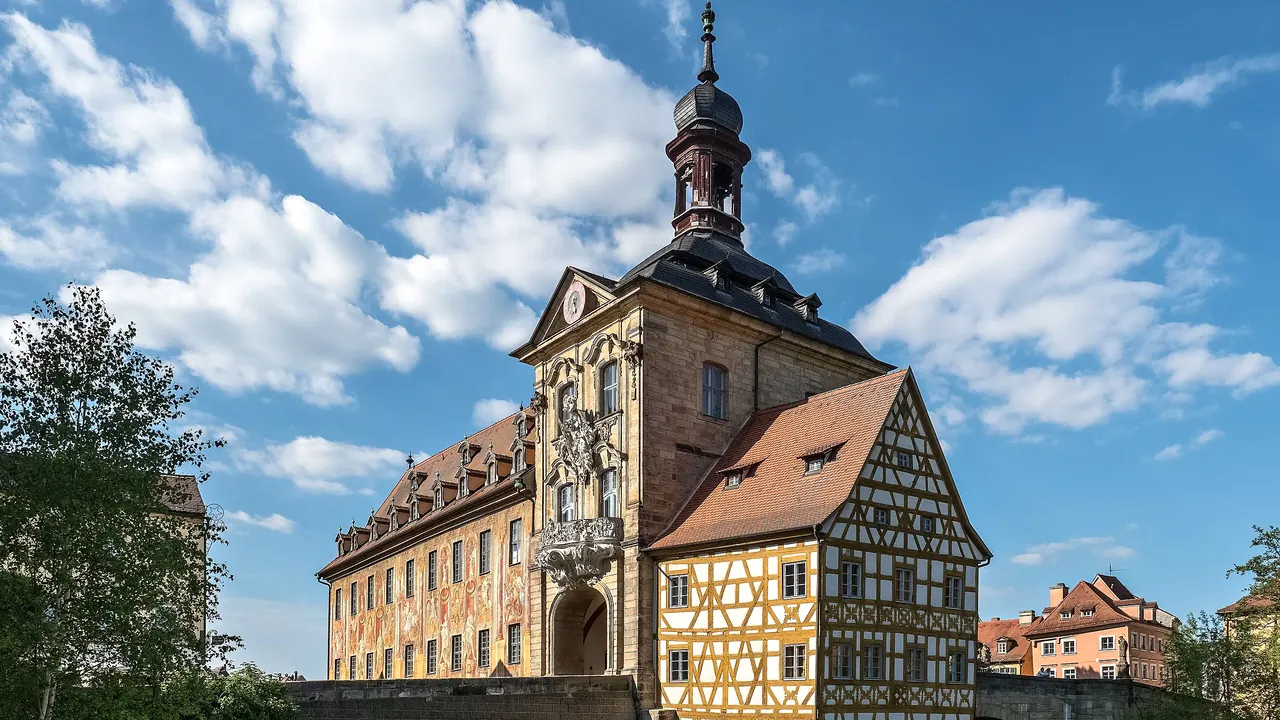
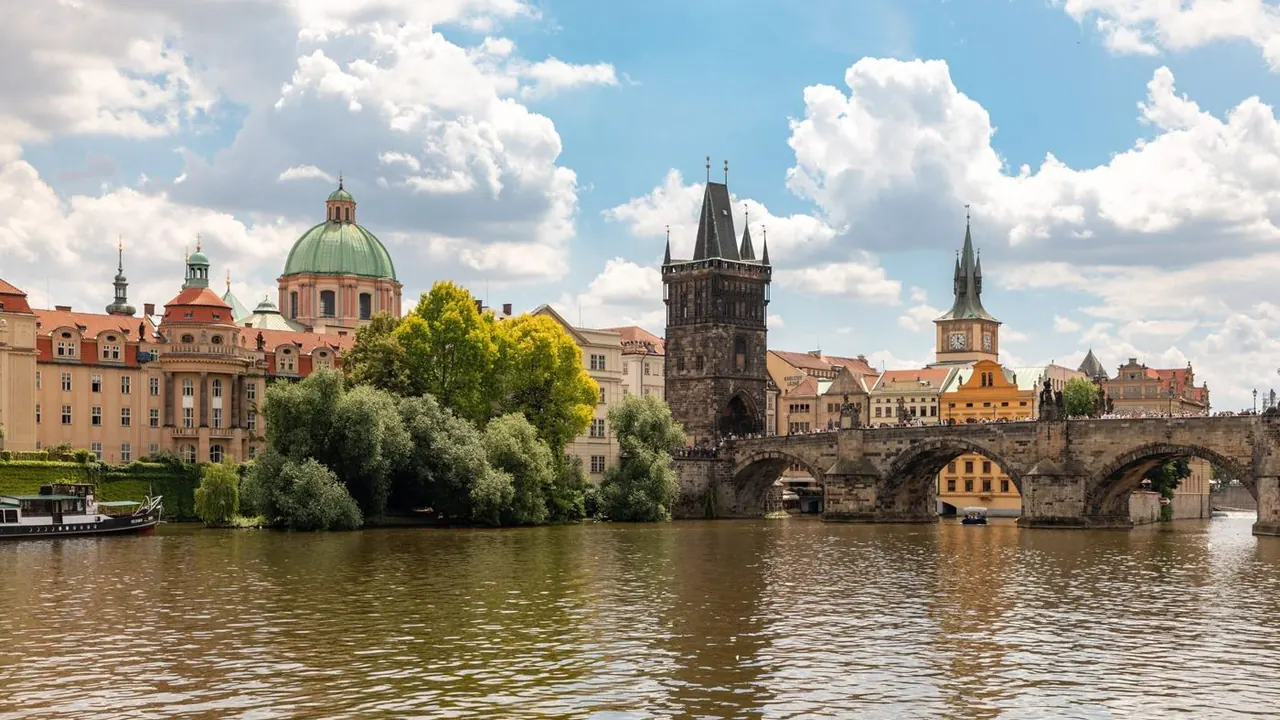
Photos: Bamberg by Ermell, CC BY-SA 4.0, cropped; Prague by Dietmar Rabich, CC BY-SA 4.0, cropped.
Bamberg or Prague?
Our verdict in twelve categories, each scored against the same fixed benchmark cities, and the climate month by month, so you can choose for your trip.
Choose Bamberg for
- food and drink
- wellness
Bamberg suits travellers who want a German old town at walking pace. Its UNESCO-listed townscape spreads over seven hills, the brewery taverns pour smoked beer from wooden barrels, and summer evenings belong to the hillside beer cellars. It also makes a quiet base for Franconia, with Nuremberg, Würzburg and Bayreuth all close by rail. It is for visitors who would rather wander than queue.
Choose Prague for
- nightlife
- live music and the arts
- shopping
Prague is the bigger and fuller trip. The castle, the Charles Bridge, the Jewish Quarter and the Art Nouveau and Cubist buildings give days of sightseeing. Three opera stages and the Czech Philharmonic fill the evenings, and the pubs, wine bars and clubs of Zizkov, Vinohrady and Holesovice keep going long after Bamberg has gone to bed. Pick it for a city break with plenty to fill every day, and accept the crowds that come with that.
Scoreboard
Twelve categories on one fixed scale from 0 to 100. The shaded stretch is the gap between the two.
Your match
Pick a travel style or drag the sliders, and both match scores follow your weighting.
Wins on food and drink and wellness with your weighting.
Wins on nightlife and live music and the arts with your weighting.
What matters to you?
Category by category
What the scores mean for a trip.
Beaches & swimming
Neither city is a beach destination, and both keep swimming for warm summer days. Bamberg's spots are close to the centre: the long-established river bathing place in the Hain park on the Regnitz and the gravel-pit lakes on the edge of town. Prague's are further out. You can swim at the Dzban reservoir in the Sarka valley or the wooded Slapy reservoir an hour south, but not in the Vltava in town.
Food & drink
Both are beer towns with heavy pork-and-dumpling cooking, but Bamberg does it with more character. Smoked Rauchbier drawn from wooden barrels in old brewery taverns, the Bierkeller under chestnut trees and the market gardeners' produce on Grüner Markt give every meal a strong local identity, even though international kitchens and fine dining are thin.
Prague's pilsner is poured with great care, and svickova and chlebicky are worth seeking out. The streets around Old Town Square, though, are full of tired tourist menus, so a good meal usually means a tram ride to Vinohrady, Karlin or Letna. Its Moravian wine bars add some range, but less of what you eat tastes of the place.
Culture & sights
Bamberg's cathedral hill, with the Bamberg Horseman and the rose garden of the Neue Residenz, plus the Old Town Hall on its island and the fishermen's houses of Little Venice, fill a day or two of easy walking. Its museums are small, and what it offers in return is a historic townscape without heavy crowds.
Prague works on a far larger scale. The castle with St Vitus Cathedral, the palaces of Mala Strana, the statue-lined Charles Bridge, the Old Jewish Cemetery and its rare Cubist buildings take three or four days. The National Gallery, spread across several palaces, adds collections Bamberg cannot match.
Nightlife
Bamberg's evenings mean brewery taverns, the student bars of the Sand quarter in term time and long summer nights in the hillside beer cellars. Most of the town is asleep before the small hours, and anyone wanting a big night takes the train to Nuremberg.
Prague is a far stronger night out. Plain local pubs in Zizkov stay full late, Vinohrady has cocktail and wine bars, and Letna and Riegrovy sady have summer beer gardens. The clubs run from big all-night venues near Wenceslas Square to techno spaces in Holesovice's old industrial buildings.
Nature & outdoors
Both sit in gentle limestone and sandstone country rather than mountains, so the difference is in what lies closest. Bamberg's best walking is just outside town: the rock towers, caves and castle crags of Franconian Switzerland are less than an hour east, and cycle paths along the Main link one village brewery to the next.
Prague has more wild green inside the city itself, with the orchards of Petrin Hill, the old royal park of Stromovka and the rocky Divoka Sarka gorge. For bigger hikes, the sandstone gateways of Bohemian Switzerland are about two hours away.
Day trips
Both are excellent bases, and the difference lies in the kind of outing. From Bamberg, the trips are to other historic German towns on a fast rail line. Nuremberg's castle, Würzburg's Residence, Bayreuth's opera house and Coburg's fortress are each about an hour away, and the baroque basilica of Vierzehnheiligen is closer still.
Prague's outings lead into Bohemian castle country. Choose from Karlstejn above its wooded valley, silver-mining Kutna Hora with its bone ossuary, the memorial town of Terezin and the vineyards of Melnik. Dresden is two hours away by train, and Cesky Krumlov is best done with an overnight stay.
Good for families
Bamberg is calm and easy for families on a small scale. There are playgrounds in the Hain, rowing boats on the Regnitz and beer gardens where children play between the tables. Beyond the leisure pool, though, little is aimed at young visitors.
Prague gives children more to do. The zoo at Troja, on a riverside hillside with its own chairlift, is one of Europe's best, and the apostles of the astronomical clock, the funicular and mirror maze on Petrin, and the National Technical Museum fill further days. Both have cobbled climbs that are hard work with a pushchair, and Prague adds summer crowds.
Getting around
Bamberg needs hardly any transport: the island town, the cathedral hill and Little Venice are minutes apart on foot, and buses and bicycles cover the rest. Prague covers far more ground and handles it better. Three metro lines, a tram network that reaches nearly every neighbourhood and runs through the night, and one ticket for trams, funicular and ferries make it easy.
Both have steep cobbled climbs, but in Prague a tram will take you up to the castle. Watch your bags on Prague's crowded trams through Mala Strana.
Shopping & style
In Bamberg, shopping fills an hour between sights: chain stores and bookshops on Lange Strasse, bottled smoked beer, market-garden produce and the antique dealers near the cathedral.
Prague has much wider range. Parizska has luxury labels under Art Nouveau facades, and the Czech buys are distinctive: Bohemian glass, garnet jewellery, wooden toys and marionettes. Skip the souvenir strip in the old centre and look for design and vintage shops in Vinohrady and Holesovice.
Affordability
Neither is expensive by Western European standards. In Bamberg, cheap beer and brewery-tavern meals keep costs down, and walking everywhere saves on transport. Rooms in the old town get dearer at weekends and during the Christmas markets, though.
Prague goes a little further for the money once you leave the centre. Beer, pub lunches and trams stay inexpensive, and a base a few stops out in Vinohrady or Zizkov keeps costs low. The hotels around the old core and the exchange booths are priced for tourists.
Live music & performing arts
Bamberg has one real asset in the Bamberg Symphony, an orchestra of international standing that plays in its concert hall on the Regnitz. Add drama at the ETA Hoffmann Theatre and organ concerts in the cathedral, but there is no opera company, and for opera the region looks to Bayreuth.
Prague is in another league. It has opera on three stages, including the Estates Theatre where Mozart premiered Don Giovanni, the Czech Philharmonic at the Rudolfinum and the Prague Spring festival. Black-light theatre and marionette shows also need no Czech.
Wellness & relaxation
Neither town has a bathing culture of its own, so the real difference is how far you have to go for one. Bamberg makes it easy. A short train ride up the Main valley takes you to the thermal brine at Bad Staffelstein, close enough to fit around a morning of sightseeing, and the sauna at the town's leisure pool covers a wet day.
From Prague, the great Bohemian spa towns take most of a day there and back. In the city, the choices are hotel spas, massage studios and beer baths, which are more fun than restful. Calm in a busy capital depends on where you stay. A residential base away from the tourist core does more than any treatment room, with a coffee house or a castle garden for breaks between sights.
When should you go?
Pick your month. The climate figures are measured averages, not a forecast.
Bamberg in July
Prague in July
Daytime high, °C
Rainfall in the month, mm
Temperature and rainfall are climate normals, averaged over the years shown. Bamberg: 1991-2020 normals, Bamberg (2.8 km from centre). Prague: 1991-2020 normals, Praha-Libus (8.1 km from centre).
The two share a central European climate and are at their best at the same time. Both are cold and grey in winter, with Prague around 2°C in January and Bamberg a touch milder. Both warm into comfortable walking weather from May. June to August are the warmest months, around 26°C in Bamberg and 25°C in Prague, and the only stretch warm enough for river bathing, gravel-pit lakes and reservoirs. In both cities sunshine is longest in July and very short in December.
Rain is where they part. Prague is noticeably dry from autumn through early spring but gets its heaviest rain in summer, about 80mm in June, so summer showers are part of a visit. Bamberg's rain is spread more evenly, with July the wettest month. For long days on foot in either town, May, June and September bring warm weather without the July peak.
Which traveller are you?
For a culture and arts trip, Prague is the clear pick. Its castle, Baroque Mala Strana and Josefov synagogues go well beyond Bamberg's smaller old town. In the evenings there is opera on three stages, where Bamberg has one fine orchestra and little more.
On a food and nightlife trip, Prague wins the nights, with late pubs, wine bars in Vinohrady and techno venues in Holesovice. If eating and drinking means Rauchbier, Schäufele and beer cellars before an early bed, Bamberg is the better table.
For a relaxing and wellness trip, Bamberg is the gentler choice. Day visitors leave by evening, the riverside and shaded beer gardens set an unhurried pace, and thermal bathing is a short train ride away. In Prague, calm has to be found away from its crowded core.
Before you go
| Measure | Bamberg | Prague |
|---|---|---|
| Official language | German | Czech |
| Currency | Euro (EUR) | Czech Koruna (CZK) |
| Sockets | CF230 V, 50 Hz | CE230 V, 50 Hz |
| Driving side | Right | Right |
| Time zone | UTC+1, UTC+2 in summer | UTC+1, UTC+2 in summer |
| Emergency number | 112 | 112 |
| Elevation | 262 m | 235 m |
| Main airport | Nuremberg Airport (NUE)46 km from centre56 non-stop destinations | Václav Havel Airport Prague (PRG)12 km from centre178 non-stop destinations |
| Public holidays this year | 12 days | 13 days |
By the numbers
| Measure | Bamberg | Prague |
|---|---|---|
| City population | 77,218 | 1,397,880 |
| People per km² | 1,414 | 2,817 |
| Museums within 10 km | 11 | 88 |
| UNESCO World Heritage sites within 50 km | 1 | 1 |
Where else could you go?
Every comparison below shares a destination with this one, so you can follow Bamberg or Prague somewhere new.
- Nurembergvs Bamberg
- Rothenburg ob der Taubervs Bamberg
- Karlovy Varyvs Prague
- Dresdenvs Prague
- Cesky Krumlovvs Prague
- Karlovy Varyvs Bamberg