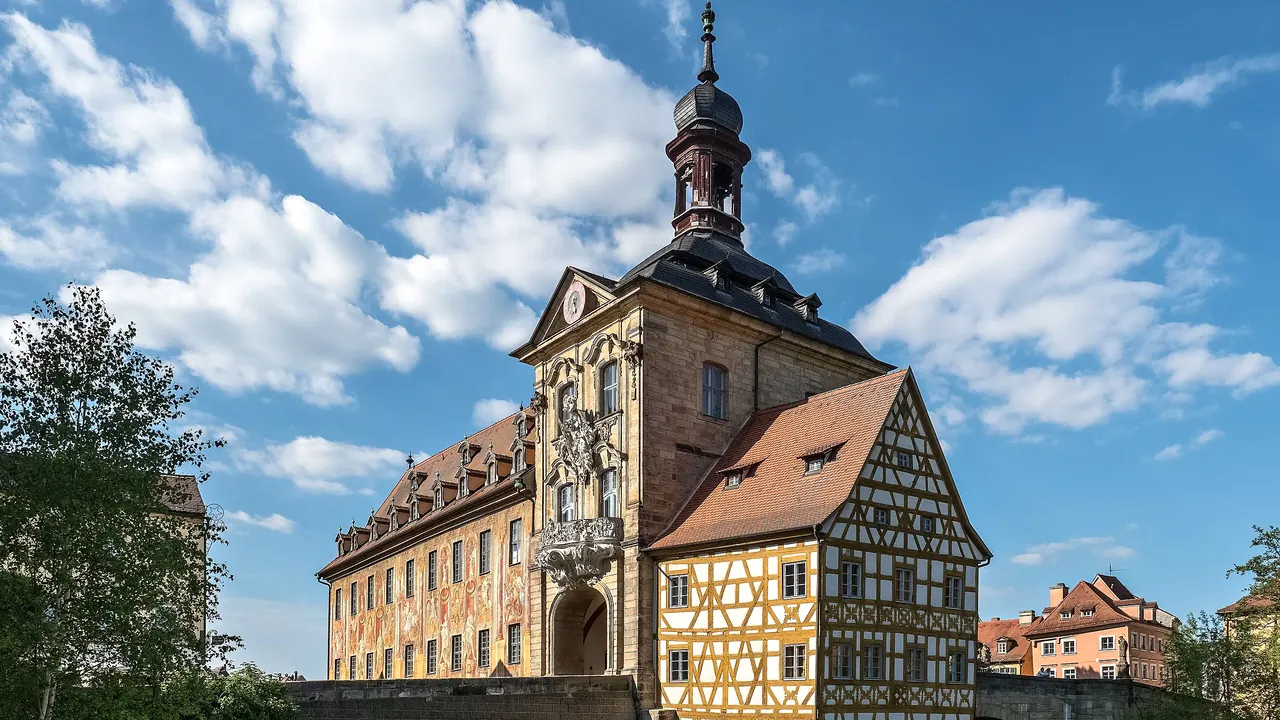
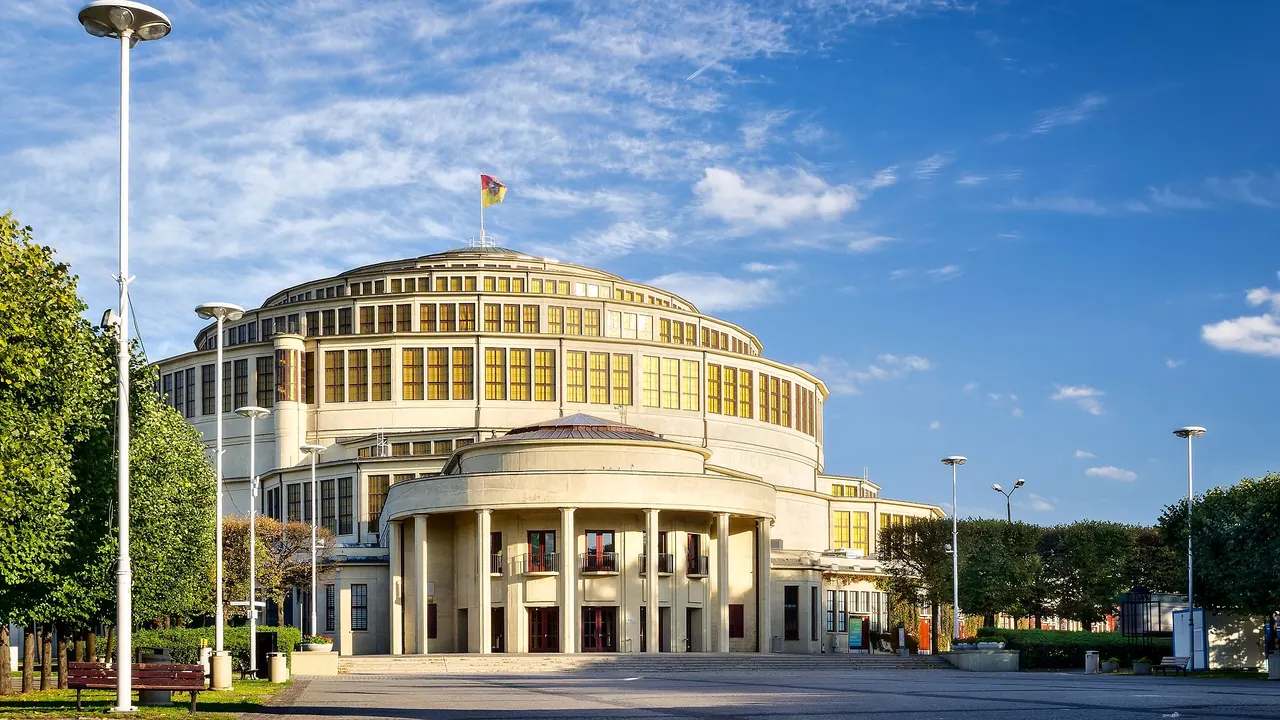
Photos: Bamberg by Ermell, CC BY-SA 4.0, cropped; Wroclaw by Jar.ciurus, CC BY-SA 3.0 PL, cropped.
Bamberg or Wroclaw?
Our verdict in twelve categories, each scored against the same fixed benchmark cities, and the climate month by month, so you can choose for your trip.
Choose Bamberg for
- wellness
- food and drink
- day trips
Bamberg suits a slower, more traditional trip. Its whole old town survived the war intact, the town's small breweries and hillside beer cellars are among the best reasons to visit Franconia, and a main rail line puts Nuremberg, Würzburg, Bayreuth and Coburg within easy reach. Choose it if you like to walk a historic townscape by day, sit under chestnut trees with a smoked beer in the evening and be in bed at a reasonable hour.
Choose Wroclaw for
- nightlife
- prices
- families
Wroclaw is the better pick for a livelier and cheaper break. Evenings run late in the cellar bars around the Market Square. The concert hall and opera house give it more on stage, children have the zoo and the dwarf hunt to keep them busy, and hotels and meals cost noticeably less. It also suits travellers who want a bigger city with more museums, plus castles and mountains a drive away.
Scoreboard
Twelve categories on one fixed scale from 0 to 100. The shaded stretch is the gap between the two.
Your match
Pick a travel style or drag the sliders, and both match scores follow your weighting.
Wins on wellness and food and drink with your weighting.
Wins on nightlife and prices with your weighting.
What matters to you?
Category by category
What the scores mean for a trip.
Beaches & swimming
Neither city is a beach destination, and the sea is about a day's travel from both. They differ in what summer water means. In Bamberg you actually swim, at the old river bathing spot in the Hain park or in the gravel-pit lakes at the edge of town. Wroclaw's sandy beaches along the Oder are for deckchairs and a drink rather than a swim, and getting into the water means a pool or a lake out in the countryside.
Food & drink
Bamberg is the stronger place to eat and drink, mainly because of its beer. Rauchbier poured from wooden barrels in old brewery taverns, and summer evenings at the Bierkeller on the hillsides, give it a food culture people travel for. The Franconian cooking of Schäufele, dumplings and Bratwurst is hearty and well done, though there is little else on offer.
Wroclaw's pierogi, żurek in a bread bowl and milk-bar lunches are satisfying, and the bistros just off the Market Square bring a lighter touch. Its brewpubs and craft taps are good, but nothing here matches the depth of Bamberg's brewing tradition.
Culture & sights
The two are well matched for sightseeing, but in different ways. Bamberg is a genuine medieval and baroque town whose old town survived the war largely intact and is listed by UNESCO as a whole. You get to know it by walking between the cathedral hill, the Old Town Hall on its island and Little Venice, rather than by visiting its small museums.
Wroclaw's grand Market Square is largely a careful post-war rebuild, and that layered history is part of its interest. It also has more to see indoors: the Racławice Panorama, Silesian art at the National Museum, the gilded Aula Leopoldina and the Centennial Hall of 1913. It is the better choice if you like collections as well as streets.
Nightlife
Wroclaw is clearly the better place for a night out. Its huge student population fills the cellar bars and the courtyard passage off Ruska Street, and at weekends people move from shot bars to cocktail bars until well after 2am.
Bamberg's evenings belong to brewery taverns and summer beer cellars. The student bars in the Sand quarter are fun during term, but most of the town is quiet early, and locals take the train to Nuremberg for a bigger night.
Nature & outdoors
Both offer pleasant rather than spectacular outdoors, and the difference is in the distances. From Bamberg, the limestone valleys, rock towers and castle crags of Franconian Switzerland start less than an hour away, and cycle paths along the Main and Regnitz link village breweries through orchards.
Wroclaw is flat, green with islands and parks, and good for kayaks in summer. Its real hills are further off. Ślęża makes an easy half-day hike, and the Karkonosze and the sandstone Table Mountains, about two hours away, give proper mountain days with skiing in winter, which Bamberg cannot offer.
Day trips
Bamberg makes the stronger base, mainly because of its rail connections. Nuremberg, Würzburg's Residence, Coburg and Bayreuth are each about an hour away by train, and the baroque basilica of Vierzehnheiligen is closer still.
Wroclaw's surroundings are rich too: Książ castle, the wooden Churches of Peace and Krzeszów Abbey. But these are scattered castles and abbeys rather than major cities, and you need a car to combine several in one day.
Good for families
Wroclaw has much more for children. There is the dwarf-statue hunt across the centre, one of Poland's oldest and largest zoos with its Afrykarium shark tunnel, a hands-on water science centre and the fountain shows by the Centennial Hall on summer evenings.
Bamberg is safe and relaxed, with the Hain park, rowing boats and family-friendly beer gardens. Beyond those, its sights are churches and townscape, and the cobbled climbs are hard work with a pushchair.
Getting around
Both centres are best explored on foot, and neither needs a car in town. Bamberg is smaller and everything is a few minutes apart, though the walks up to the cathedral and Michaelsberg are steep and cobbled. Wroclaw is flat and more spread out, so its large tram network matters more for reaching the zoo and the Centennial Hall. A car helps there for castles and mountain villages, whereas trains cover most of Bamberg's excursions.
Shopping & style
Neither city is a shopping destination, but Wroclaw has a little more depth. Its malls cover the chains, the 1930s Renoma building is worth seeing for its facade, and Bolesławiec stoneware, Baltic amber and Nadodrze's vintage shops make better souvenirs. Bamberg's pedestrian streets are pleasant for an hour. The best things to take home are market-garden produce, bottled smoked beer and pieces from the antique dealers near the cathedral.
Affordability
Wroclaw is the clear winner on cost. Central hotels and apartments, milk-bar lunches, trams and museum tickets are all cheap by European Union standards, as long as you stay away from the terraces on the Market Square.
Bamberg is reasonable for Germany, with cheap local beer and good-value tavern meals. Still, its rooms cost ordinary Western European prices, and they become scarcer and dearer at weekends and in the Christmas market season.
Live music & performing arts
Wroclaw offers a much fuller programme. The National Forum of Music, the opera house near the moat, a theatre tradition going back to Grotowski, and festivals such as Wratislavia Cantans and Jazz on the Oder mean there is usually something on. The drama is in Polish, though.
Bamberg's great strength is a single one: the Bamberg Symphony, an orchestra of international standing, along with organ and choral concerts in the cathedral. It has no opera of its own, so opera lovers go to Bayreuth.
Wellness & relaxation
Bamberg is the more restful choice. The town quietens once day visitors leave, beer gardens and river mornings set a slow pace, and the brine pools of Bad Staffelstein are an easy half-day out by train.
Wroclaw relies on hotel spas and an aquapark, and the centre gets crowded on summer weekends. Its historic spa towns, such as Szczawno-Zdrój, are charming but an hour or more away.
When should you go?
Pick your month. The climate figures are measured averages, not a forecast.
Bamberg in July
Wroclaw in July
Daytime high, °C
Rainfall in the month, mm
Temperature and rainfall are climate normals, averaged over the years shown. Bamberg: 1991-2020 normals, Bamberg (2.8 km from centre). Wroclaw: 1991-2020 (rainfall 1961-1990) normals, Wroclaw Copernicus Airport (10.5 km from centre).
The two cities share almost the same temperatures through the year, so the best season is the same in both: May to September, when afternoons are warm enough for beer gardens and riverbanks and July reaches about 26°C. Winters are cold in both, with daytime highs around 3°C to 4°C from December to February. That suits Christmas markets and museums more than long walks. Spring and autumn are mild, and April and October are good months for sightseeing on foot.
Where they differ is in rain and sun. Wroclaw gets most of its rain in summer, around 80mm a month from May to August, but its winters are drier and it gets more sunshine all year, with about 266 hours in July. Bamberg's rain is spread more evenly through the year and its summers are a little cloudier, so it is the slightly safer bet for a dry week in early summer. Wroclaw gives brighter skies from spring to autumn.
Which traveller are you?
On a family trip with young children, Bamberg means a slow pace: mornings by the river and long afternoons in beer gardens while the children play nearby, but not much made for them. Wroclaw fills a week more easily, with whole days out and streets that become a game.
For a trip on a tight budget, Bamberg works if you eat in brewery taverns and walk everywhere, though your room will take a large share of the money. In Wroclaw the same budget goes further, covering a central bed, hearty meals and an evening concert.
For a relaxing and wellness trip, Bamberg suits better. It is a small town with quiet evenings, and you can take a river walk before breakfast and spend a day at the thermal baths by train. Wroclaw is a larger city, so rest there means hotel spas and the islands.
Before you go
| Measure | Bamberg | Wroclaw |
|---|---|---|
| Official language | German | Polish |
| Currency | Euro (EUR) | Zloty (PLN) |
| Sockets | CF230 V, 50 Hz | CE50 Hz |
| Driving side | Right | Right |
| Time zone | UTC+1, UTC+2 in summer | UTC+1, UTC+2 in summer |
| Emergency number | 112 | 112 |
| Elevation | 262 m | 111 m |
| Main airport | Nuremberg Airport (NUE)46 km from centre56 non-stop destinations | Copernicus Wrocław Airport (WRO)11 km from centre84 non-stop destinations |
| Public holidays this year | 12 days | 14 days |
By the numbers
| Measure | Bamberg | Wroclaw |
|---|---|---|
| City population | 77,218 | 673,531 |
| People per km² | 1,414 | 2,299 |
| Museums within 10 km | 11 | 42 |
| UNESCO World Heritage sites within 50 km | 1 | 2 |
Where else could you go?
Every comparison below shares a destination with this one, so you can follow Bamberg or Wroclaw somewhere new.
- Nurembergvs Bamberg
- Rothenburg ob der Taubervs Bamberg
- Karlovy Varyvs Bamberg
- Frankfurtvs Bamberg
- Heidelbergvs Bamberg
- Stuttgartvs Bamberg