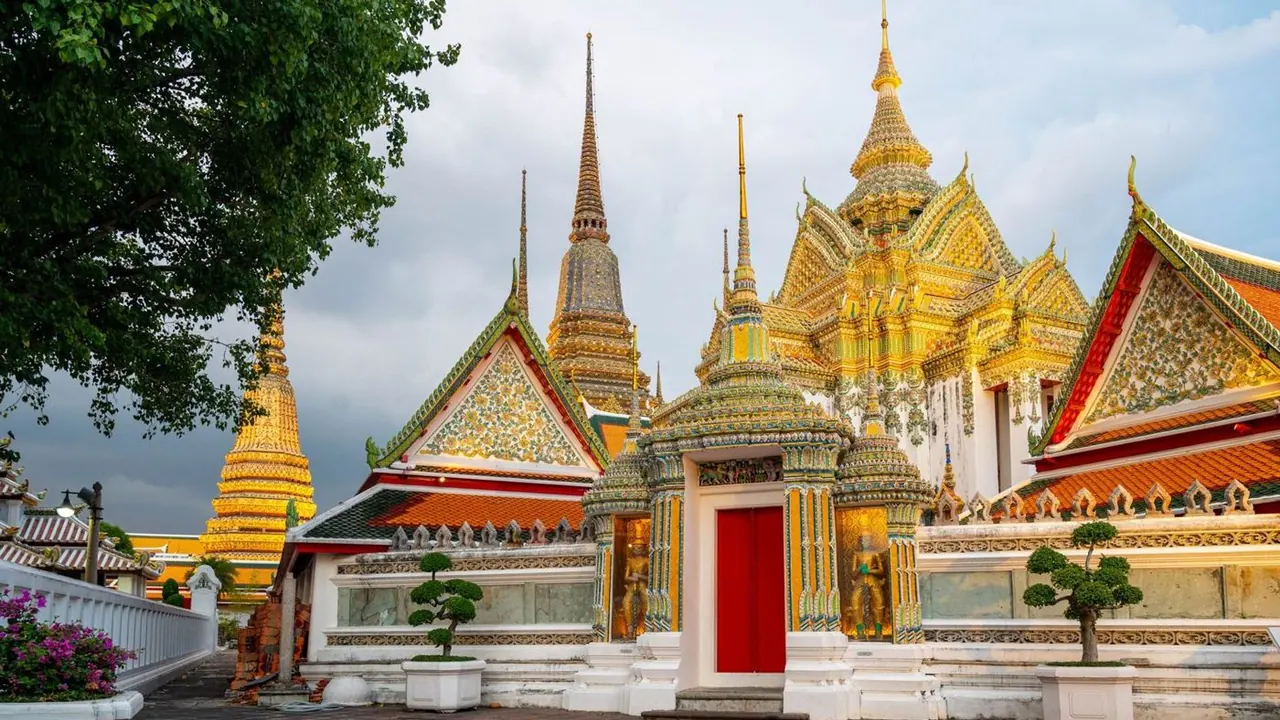
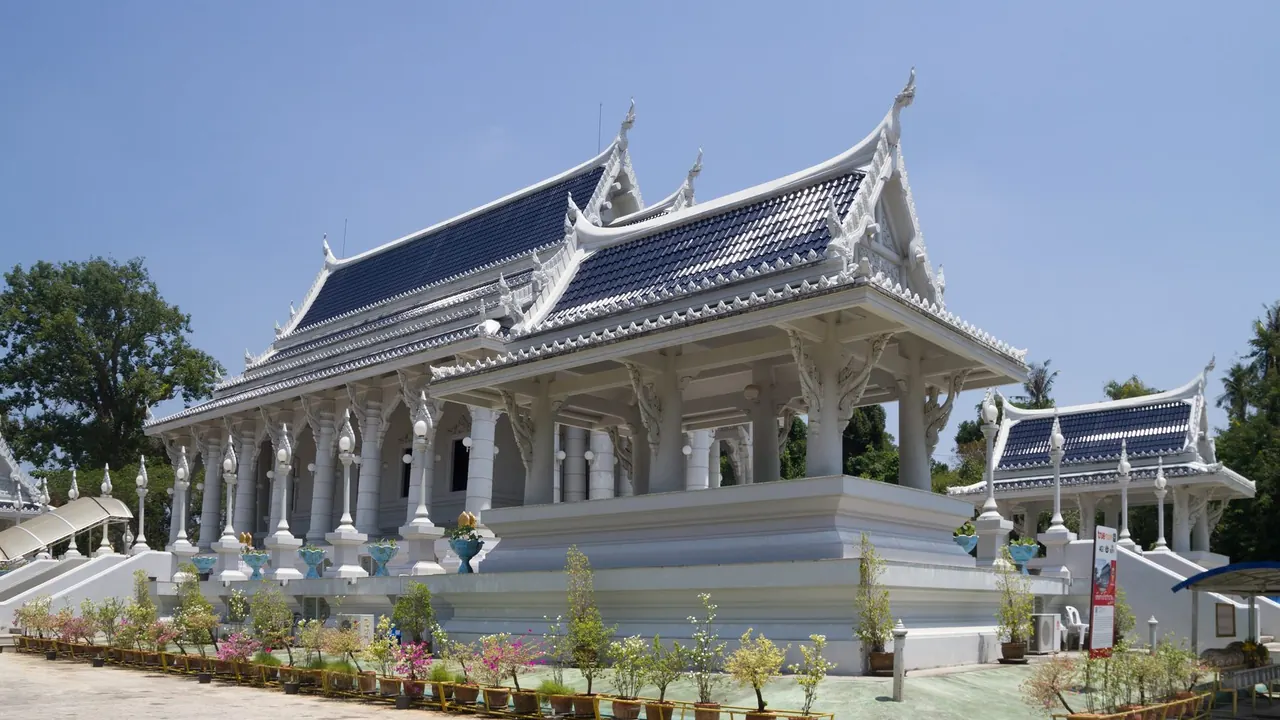
Photos: Bangkok by Lu Zhao, Pexels License; Krabi by Maksym Kozlenko, CC BY-SA 4.0, cropped.
Bangkok or Krabi?
Our verdict in twelve categories, each scored against the same fixed benchmark cities, and the climate month by month, so you can choose for your trip.
Choose Bangkok for
- culture and sights
- shopping
- nightlife
Bangkok is the choice for a trip built around the city itself: eating at street stalls and shophouse counters from breakfast until long after midnight, the gilded temples of Rattanakosin Island, rooftop bars above the river, Chatuchak and the Siam malls. It suits travellers who want a full programme every day and will accept heat, traffic and no beach in return for that range.
Choose Krabi for
- beaches
- nature and the outdoors
- families
Anyone whose picture of Thailand is limestone cliffs dropping into warm sea should head to Krabi instead. Railay, the Hong islands and the mangroves of Ao Thalane make it a place for swimming, kayaking, climbing and slow resort days, with simple southern Thai food and quiet evenings in place of sights, shopping and late nights.
Scoreboard
Twelve categories on one fixed scale from 0 to 100. The shaded stretch is the gap between the two.
Your match
Pick a travel style or drag the sliders, and both match scores follow your weighting.
Wins on culture and sights and shopping with your weighting.
Wins on beaches and nature and the outdoors with your weighting.
What matters to you?
Category by category
What the scores mean for a trip.
Beaches & swimming
Bangkok has no beach to speak of. The coast nearest the city is mudflat and mangrove, so swimming means a hotel pool, though the rooftop pools are a real pleasure, and Pattaya or Bang Saen take a long day there and back.
Krabi is built around its sand. Railay West and Phra Nang, framed by limestone cliffs, are a short boat ride from Ao Nang, Klong Muang and Tubkaek are quieter, and Poda, Chicken Island and Phi Phi are all within reach. Plan for the dry season, when the water is calm and clear, because monsoon seas can make swimming hit and miss.
Food & drink
Bangkok is one of the great eating cities of the world. You can eat boat noodles, som tam and shophouse curries at any hour, Yaowarat becomes one long open-air kitchen after dark, and Or Tor Kor market and the ambitious modern Thai restaurants cover the top end, along with serious cocktails and specialist coffee.
Krabi eats well but simply. Its southern Thai cooking, with fiery curries, turmeric fish soups and roti shaped by the local Muslim communities, is best at the Krabi Town night market, and the grilled seafood is excellent. Ao Nang's strip leans towards pizzas and toned-down curries, and there is little beyond the resorts for a special meal.
Culture & sights
Bangkok has some of Southeast Asia's most spectacular buildings. The Grand Palace and Wat Phra Kaew, Wat Pho's Reclining Buddha and Wat Arun across the river fill a long day on their own, and the National Museum, the Jim Thompson House and the canal houses of Thonburi add more.
Krabi's sightseeing is a short list. The Tiger Cave Temple, with its long climb to a hilltop Buddha above the karst, is the one landmark most people visit, and Krabi Town's shophouses and riverside promenade take an hour or two. Travellers interested in temples and history will find what they want in Bangkok.
Nightlife
Bangkok's nights come in several distinct forms: polished cocktail bars and clubs around Thonglor and Ekkamai, the loud backpacker street life of Khao San Road, Silom's gay scene and rooftop bars high above the skyline. Things start late and run until closing time, with street food still on the go afterwards.
Krabi does sundowners rather than nights out. Ao Nang has a short run of bars with sports screens and the odd dancefloor, Railay has hammocks, reggae and fire-spinning on the sand, and most places are quiet by midnight. The nearest real party is a ferry ride away on Phi Phi.
Nature & outdoors
Krabi's landscape is the main reason to go. Limestone towers rise from the sea and jungle, Railay and Tonsai are world-famous for sport climbing, sea kayaking through the Ao Thalane mangroves and around the Hong islands is outstanding, and there are waterfalls and the hike up Dragon Crest inland.
Bangkok's outdoor life is limited to its parks. There are early runs in Lumphini among the monitor lizards and a bike ride through the palms of Bang Krachao. Khao Yai and Kanchanaburi are a two to three hour journey away and work better as overnight trips.
Day trips
Bangkok has the stronger list of places to visit for the day. The ruined temples of Ayutthaya fill a day by bicycle, the Maeklong railway market and Amphawa's floating market show off canal country, and Kanchanaburi's Death Railway bridge and war cemeteries make a long but rewarding outing.
Krabi's outings are mostly by boat and mostly for the scenery. Phi Phi Don's village and Koh Lanta's stilted Old Town give some sense of place, and the fishing villages of Koh Yao Noi are close by. There are no major heritage sites within easy reach, and Phuket's old town is a long day.
Good for families
The two are about equal for families, and in both places locals make a real fuss of children, but they suit different kinds of days. Bangkok has attractions built for children, such as Sea Life Ocean World, Safari World, Dream World, KidZania and big mall play areas, but the heat, crowded pavements and slow traffic wear small children out.
Krabi offers simpler days. In the dry season the shallow water at Klong Muang and Phra Nang and the resort pools and kids' clubs keep children happy, but there are no zoos or theme parks for a change of scene. Open longtail boats, strong sun and monsoon seas need some planning.
Getting around
Bangkok is easier to get around if you stay near a station. The air-conditioned Skytrain and underground link Siam, Sukhumvit, Silom and Chinatown, river express boats reach the Grand Palace and Wat Arun, and ride-hailing covers the gaps, although road traffic at rush hour is very slow.
Krabi relies on informal transport. Songthaew pickups run between Ao Nang, the northern beaches and Krabi Town, and Railay can only be reached by longtail boat, which stops in heavy seas. Beyond that it is taxis, hired scooters or tour pick-ups. Ao Nang's beachfront is the only stretch that is easy to walk.
Shopping & style
Bangkok is a serious shopping city. Chatuchak's thousands of stalls fill a weekend morning, the Siam and Ratchaprasong malls run from the luxury floors of Siam Paragon to the bargain electronics of MBK, and Thai silk, celadon and benjarong porcelain are easy to find.
In Krabi you browse rather than shop. Ao Nang's main road sells beachwear, souvenirs and tailoring, Krabi Town's weekend walking-street market is more local, and there are no boutiques or design shops. Save the shopping for Bangkok.
Affordability
Both are good value by international standards, and Bangkok stretches a budget a little further. Street food, public transport and taxis cost very little, and comfortable hotels with rooftop pools are cheap compared with Western capitals. Rooftop bars, imported drinks and the Grand Palace entry fee are where you spend more.
Krabi Town is just as cheap, but most visitors stay in Ao Nang or Railay, where prices rise because everything on Railay comes in by boat. Island tours, longtail fares and national park fees are the costs that mount up over a beach stay.
Live music & performing arts
Bangkok has a modest but real stage. Khon masked dance drama at the Sala Chalermkrung Royal Theatre and the National Theatre is worth an evening, the Thailand Cultural Centre hosts the symphony orchestra, and Muay Thai at Rajadamnern or Lumpinee comes with its own ritual music.
Krabi has almost nothing to attend beyond fire-spinning on the beach, cover bands in a few bars and Muay Thai bouts staged for visitors near Ao Nang. Anyone keen on traditional performance should see it in Bangkok.
Wellness & relaxation
Both are good for massage and spa days, but they offer different kinds of rest. In Bangkok you can learn or receive traditional Thai massage at Wat Pho, find inexpensive parlours open late on every street and visit some of Asia's most refined hotel spas, though the city's noise and heat mean you unwind in short breaks.
Krabi suits a slower stay. Resort spas along Klong Muang, Tubkaek and Railay have open-air pavilions facing the sea, yoga retreats are easy to find, and the warm mineral pools of the Khlong Thom hot springs in the forest have nothing to match them in Bangkok.
When should you go?
Pick your month. The climate figures are measured averages, not a forecast.
Bangkok in July
Krabi in July
Daytime high, °C
Rainfall in the month, mm
Where the figures come from
Krabi's temperatures are measured 67 km from the centre, at Phuket Airport.
Krabi has no rain gauge within 25 km of the centre, so its rainfall comes from a gridded climate dataset read at the city rather than from a gauge further away.
Temperature and rainfall are climate normals, averaged over the years shown. Bangkok: 1991-2020 normals, Bangkok (5.7 km from centre). Krabi: 1991-2020 normals, Phuket Airport (66.6 km from centre).
Both places are hot all year, with daytime highs in the low to mid thirties, so the real difference is the rain. Bangkok has a clear dry season from November to March, driest in December at about 7mm. The heat peaks in April at around 36°C, when walking the streets at midday is hard going. The monsoon arrives in May and is heaviest in September at about 331mm, and the sunniest months are December to April.
Krabi's wet season starts later and runs longer. It is driest in January and February, around 38mm in February, and the calm, clear sea that suits swimming and island hops lasts roughly into April. Rain builds from May and peaks in October at about 321mm, and November is still fairly wet, so the best beach weeks begin around December. The sea stays warm all year in both places. December to March is the time to combine the two on one trip.
Which traveller are you?
On a beach and sun trip, Krabi wins easily. Railay West and Phra Nang sit beneath limestone cliffs, island coves are a short longtail ride away, and the sea is warm all year. Bangkok's nearest real beaches, at Pattaya or Bang Saen, make a long day out.
For a food and nightlife trip, Bangkok is far ahead. Yaowarat's night-time street kitchen, the stalls of Banglamphu and the cocktail bars of Thonglor and Ekkamai keep going late. Krabi offers good southern Thai cooking and a few beach bars that go quiet by midnight.
On an outdoors trip, Krabi is the place. Climbers come for the bolted routes at Railay and Tonsai, kayakers for the mangroves and the Hong islands, and there is rainforest at the Emerald Pool. Bangkok's green space comes down to Lumphini Park and the cycling paths of Bang Krachao.
Before you go
| Measure | Bangkok | Krabi |
|---|---|---|
| Official language | Thai | Thai |
| Currency | Baht (THB) | Baht (THB) |
| Sockets | ABCF220 V, 50 Hz | ABCF220 V, 50 Hz |
| Driving side | Left | Left |
| Time zone | UTC+7 | UTC+7 |
| Emergency number | Police 191, ambulance 1669, fire 199 | Police 191, ambulance 1669, fire 199 |
| Elevation | 2 m | 16 m |
| Main airport | Suvarnabhumi Airport (BKK)26 km from centre150 non-stop destinations | Krabi International Airport (KBV)9 km from centre14 non-stop destinations |
By the numbers
| Measure | Bangkok | Krabi |
|---|---|---|
| City population | 5,676,648 | 30,499 |
| People per km² | 3,619 | - |
| Museums within 10 km | 59 | 0 |
| UNESCO World Heritage sites within 50 km | 0 | 0 |
| Swim season, months above 21 °C | 12 months | 12 months |
Where else could you go?
Every comparison below shares a destination with this one, so you can follow Bangkok or Krabi somewhere new.