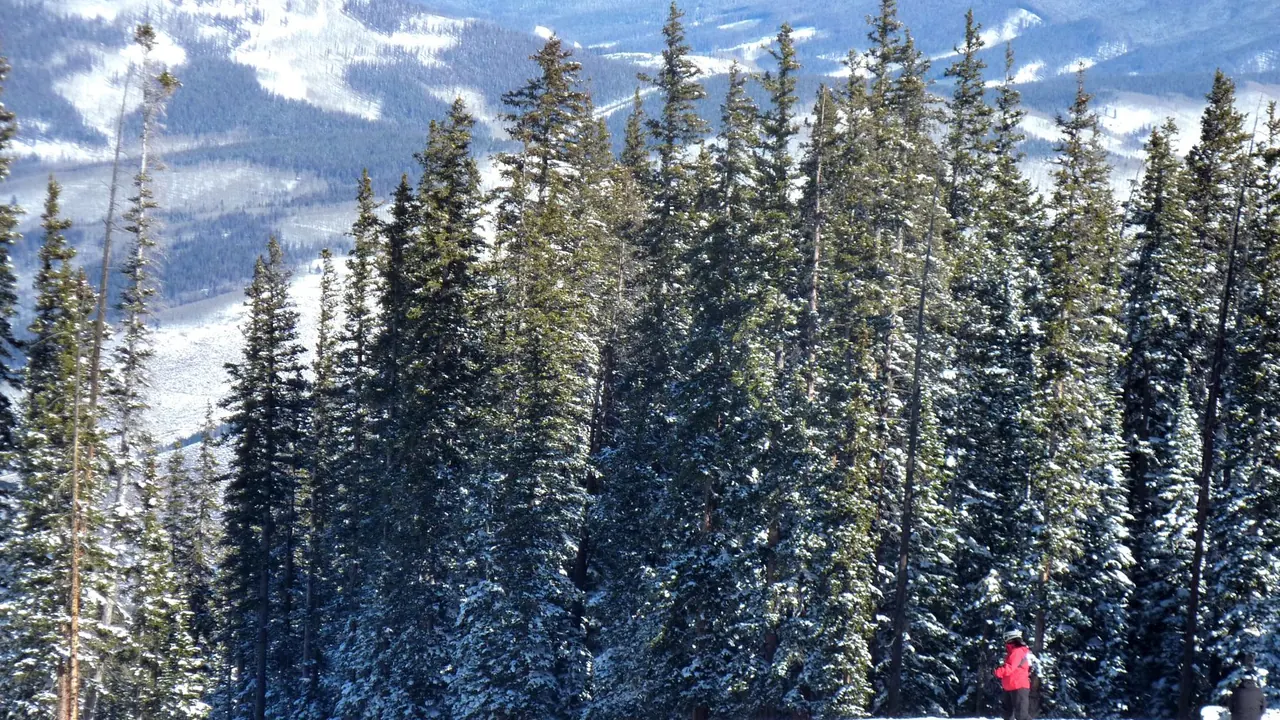
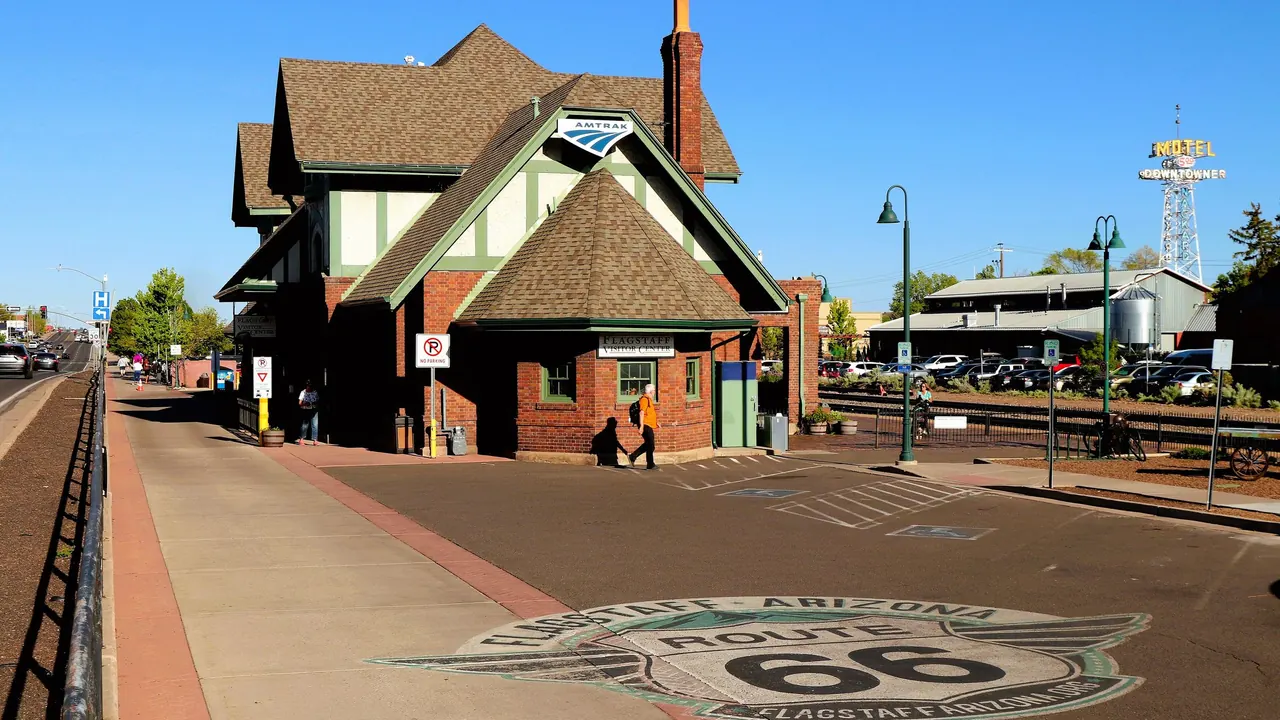
Photos: Beaver Creek by Joe Lin, CC BY 2.0, cropped; Flagstaff by Thank You (25 Millions) views, CC BY 2.0, cropped.
Beaver Creek or Flagstaff?
Our verdict in twelve categories, each scored against the same fixed benchmark cities, and the climate month by month, so you can choose for your trip.
Choose Beaver Creek for
- wellness
- getting around
- live music and the arts
Beaver Creek is for the traveller who wants a polished mountain resort and is happy to pay for it. Choose it for a ski week with ski-in ski-out lodging, a car-free village, big spas and a theatre on the doorstep, or for a summer of hiking and fly-fishing that ends in a hot tub. It is a place to stay put and be looked after, not a place to explore.
Choose Flagstaff for
- prices
- culture and sights
- nightlife
Flagstaff suits the traveller who sees the mountains as a base for a road trip. The forest and peaks are just as good, but the town adds an observatory, a fine museum of Native American art, brewery evenings on old Route 66 and a long list of drives to Sedona, ancient pueblos and the Grand Canyon. It costs much less, as long as you accept a car and a simpler, more casual town.
Scoreboard
Twelve categories on one fixed scale from 0 to 100. The shaded stretch is the gap between the two.
Your match
Pick a travel style or drag the sliders, and both match scores follow your weighting.
Wins on wellness and getting around with your weighting.
Wins on prices and culture and sights with your weighting.
What matters to you?
Category by category
What the scores mean for a trip.
Beaches & swimming
Neither place is for swimmers, and there is little to choose between them. Beaver Creek has the tiny, chilly swimming area at Nottingham Lake down in Avon and heated hotel pools with mountain views.
Flagstaff's option is more of an outing: the cold creek pools and natural rock slide of Oak Creek Canyon on the road to Sedona, which are fun on a hot day but crowded at weekends.
Food & drink
Both eat at about the same level, but in opposite styles. Beaver Creek is refined resort dining: elk, Colorado lamb and trout with long wine lists, and dinners at on-mountain lodges reached by sleigh or chairlift. Cheaper taquerias and diners are down in Avon and Edwards.
Flagstaff is casual and cheap by comparison, built around craft breweries in downtown and the Southside, with Mexican and New Mexican cooking, green chile and Navajo frybread. Go to Beaver Creek for a special dinner and to Flagstaff for a beer on a patio.
Culture & sights
Flagstaff has far more to see. Lowell Observatory, where Pluto was found, and the Museum of Northern Arizona's Hopi, Navajo and Zuni collections are worth a day on their own. The Riordan Mansion and the railroad-era downtown add to them.
Beaver Creek is a ski village built around 1980. Its stone and timber plaza and outdoor sculpture are pleasant, but the nearest real history is in mining towns a drive away.
Nightlife
Neither is a party town, but Flagstaff has more going on after dark. Brewery taprooms, cocktail bars and old Route 66 saloons sit within a short walk of each other downtown, and university students fill them on term-time weekends.
Beaver Creek's evening is après-ski by a fire pit, dinner and then hotel lounges, and the village is quiet soon after. For anything livelier you drive to Vail.
Nature & outdoors
Both are first-rate mountain bases, and the difference is in the landscape. Beaver Creek is a ski mountain first, with uncrowded groomed runs and glades linked to Vail's huge terrain. In summer there are trails into the Holy Cross Wilderness and the Gore Range, plus gold-medal fly-fishing and rafting on the Eagle and Colorado Rivers.
Flagstaff's appeal is the sheer variety of the Southwest within reach: volcanic peaks, endless ponderosa forest, Sunset Crater's lava flows, Sedona's red rock and the Grand Canyon, all under famously dark skies. Its skiing is a modest extra rather than the main reason to go.
Day trips
Flagstaff has the wider choice of outings. Sedona, hillside Jerome, the cliff dwellings of Montezuma Castle, Walnut Canyon and Wupatki, the Grand Canyon railway from Williams and the Hopi mesas make for very different days.
From Beaver Creek, the outings are mostly other mountain towns: Vail, silver-mining Leadville, gold-rush Breckenridge and Glenwood Springs. They are pleasant but much alike, and none matches the ancient sites around Flagstaff.
Good for families
Both work well with children, in different ways. Beaver Creek is built around the family ski week: a large ski school, children's terrain, an ice rink, escalators from the car parks, the warm cookies at lift closing and a car-free plaza where older children can roam.
Flagstaff suits curious children more than young skiers, with telescope evenings at the observatory, dinosaurs at the museum and snow play in winter. Its outings mean longer drives. Altitude tires small children in both places.
Getting around
Beaver Creek is easier on foot once you arrive. The village is pedestrian, escalators link the levels, many lodgings are ski-in ski-out, and free shuttles and valley buses cover the resort and Vail. Eagle airport is about half an hour away, and the drive from Denver crosses passes that winter storms can close.
Flagstaff has a walkable downtown, an urban trail network for cycling and a station on the long-distance railway. But the motels are spread along Route 66 and every major sight is out of town, so a car or a tour is a necessity rather than a convenience.
Shopping & style
Luxury ski wear in a resort plaza against Native American craft from galleries and trading posts: that is the choice here, and Flagstaff's is more worth taking home. Beaver Creek has a small, expensive cluster of technical outerwear, western boots, jewellery and galleries of bronze sculpture and landscape painting. It is fine for browsing on a rest day, but the everyday shops are down the valley.
Flagstaff's speciality comes from the region: Navajo rugs, Hopi kachina carvings, pottery and silver and turquoise jewellery, sold downtown, in the museum shop and at trading posts outside town. Buy from established dealers or directly from the artists to be sure the work is genuine.
Affordability
This is where the two differ most. Beaver Creek is among the costliest vacations in North America, with luxury slopeside lodging, expensive lift tickets and ski school, and dining priced to match. Summer and a room in Avon soften the bill only slightly.
Flagstaff is moderately priced by American standards. Chain motels and brewery meals keep it manageable, though summer weekends push room rates up, and a hire car and park fees add to the bill.
Live music & performing arts
The two are close, with Beaver Creek slightly ahead thanks to its summer. The Vilar Performing Arts Center sits right in the village, and the valley's season peaks with Bravo! Vail's orchestras, the Vail Dance Festival and jazz in Vail's open-air amphitheatre.
Flagstaff's offer is steadier through the year but smaller in scale: the symphony and university concerts, touring bands at the restored Orpheum, community theatre and brewery gigs at weekends.
Wellness & relaxation
Beaver Creek is the clear choice for pampering. Its resort spas are among the largest in the Rockies, with steam rooms and outdoor hot tubs in the snow, and the Glenwood Springs hot pools are about an hour away.
Flagstaff has only a few day spas and no hot springs. Its restful side is the quiet, the pine air and the starry nights, and for proper treatments people drive down to Sedona.
When should you go?
Pick your month. The climate figures are measured averages, not a forecast.
Beaver Creek in July
Flagstaff in July
Daytime high, °C
Rainfall in the month, mm
Where the figures come from
Beaver Creek's temperatures are measured 34 km from the centre, at Eagle County / Gypsum.
Beaver Creek's station stands 268 m below the city centre, so the centre is likely a little cooler than the figures say.
Beaver Creek has no rain gauge within 25 km of the centre, so its rainfall comes from a gridded climate dataset read at the city rather than from a gauge further away.
Flagstaff has no rain gauge within 25 km of the centre, so its rainfall comes from a gridded climate dataset read at the city rather than from a gauge further away.
Temperature and rainfall are climate normals, averaged over the years shown. Beaver Creek: 1992-2020 (rainfall 1991-2020) normals, Eagle County / Gypsum (33.8 km from centre). Flagstaff: 1991-2020 normals, Flagstaff / Fort Tuthill (7.4 km from centre).
Beaver Creek has two clear seasons. From December to February daytime highs sit around freezing, which is weather for skiing rather than strolling. March is milder, reaching about 10°C, and the snow on the mountain lasts into April. Summer is warm, with highs around 29°C in July. Rain is light and spread evenly through the year, so June to September suits hiking, biking and rafting, and late September brings the gold aspens.\n\nFlagstaff has milder winters, around 5°C in January, but they are wetter than Beaver Creek's.
Spring and early summer are its driest stretch, with June at about 6mm, which makes May and June ideal for walking and canyon trips. In July and August the monsoon arrives and close to 60mm a month falls, mostly in afternoon storms, so plan hikes for the morning. October is mild and settled in both towns. Summer days are warm in both, but neither has a sea or a real beach, so the heat is better spent on trails, creek pools and hotel pools.
Which traveller are you?
On a culture and arts trip, Flagstaff wins. Lowell Observatory, the Museum of Northern Arizona and the brick Route 66 downtown give it real substance, and the cliff dwellings and Hopi mesas are within a drive. Beaver Creek's village can be seen in an hour.
For a trip on a tight budget, Flagstaff is the only realistic choice. Motels along Route 66 and brewery meals keep costs manageable, while Beaver Creek has luxury lodging, expensive lift tickets and resort dining, and no cheap way to do it.
On a relaxing and wellness trip, Beaver Creek is the better fit. It has large resort spas with outdoor hot tubs, a quiet car-free village and the Glenwood Springs hot pools an hour away. Flagstaff's calm comes from the pines, and for spas you drive to Sedona.
Before you go
| Measure | Beaver Creek | Flagstaff |
|---|---|---|
| Currency | US Dollar (USD) | US Dollar (USD) |
| Sockets | AB120 V, 60 Hz | AB120 V, 60 Hz |
| Driving side | Right | Right |
| Time zone | UTC-7, UTC-6 in summer | UTC-7 |
| Emergency number | 911 | 911 |
| Elevation | 2,264 m | 2,106 m |
| Main airport | Eagle County Regional Airport (EGE)34 km from centre16 non-stop destinations | Flagstaff Pulliam Airport (FLG)7 km from centre2 non-stop destinations |
| Public holidays this year | 12 days | 12 days |
By the numbers
| Measure | Beaver Creek | Flagstaff |
|---|---|---|
| City population | - | 76,831 |
| People per km² | - | 464 |
| Museums within 10 km | 0 | 1 |
| UNESCO World Heritage sites within 50 km | 0 | 0 |
Where else could you go?
Every comparison below shares a destination with this one, so you can follow Beaver Creek or Flagstaff somewhere new.