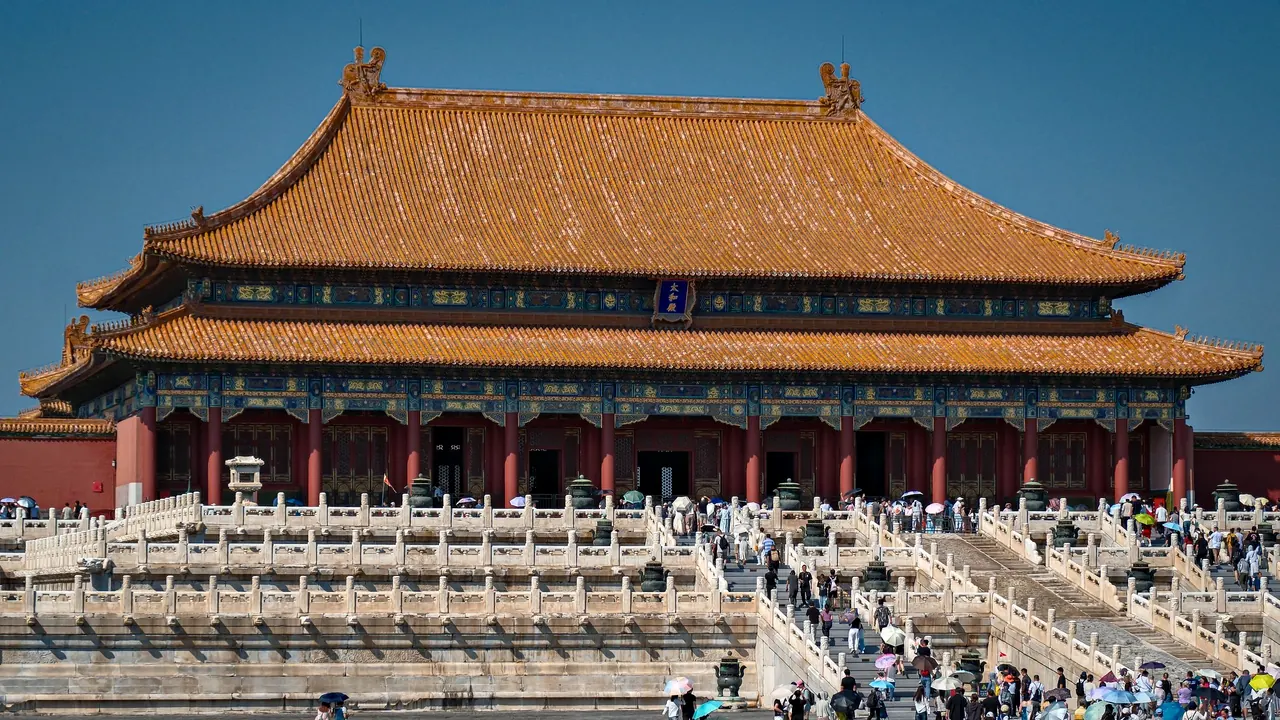
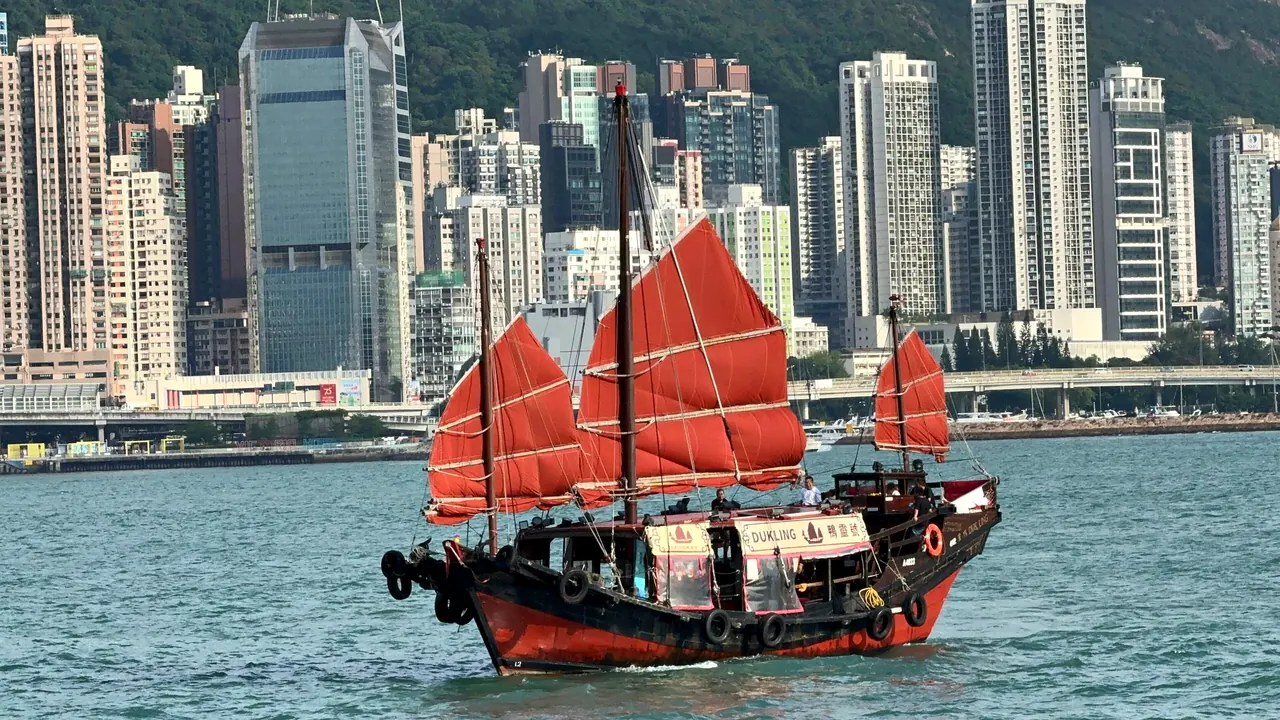
Photos: Beijing by BI ravencrow, Pexels License; Hong Kong by LN9267, CC BY-SA 4.0, cropped.
Beijing or Hong Kong?
Our verdict in twelve categories, each scored against the same fixed benchmark cities, and the climate month by month, so you can choose for your trip.
Choose Beijing for
- prices
- culture and sights
- day trips
Choose Beijing if history on a grand scale is the point of the trip. The Forbidden City, the Temple of Heaven and the Summer Palace sit in the city, and the Great Wall and Chengde are both an easy day out. It also makes your money go further, and Peking opera and roast duck give the evenings a strong sense of place. In return you have to accept a huge, spread-out city where getting from one sight to the next eats into the day.
Choose Hong Kong for
- beaches
- getting around
- nature and the outdoors
Hong Kong is for the traveller who wants a city that runs smoothly and fits a great deal into a small space. Cantonese food at every level, harbour ferries, ridge walks above the towers and an afternoon on the beach are all a short ride apart. It costs considerably more, especially for a room, and there is much less history to see, but for food, shopping, the outdoors and simply getting around it is the easier and fuller choice.
Scoreboard
Twelve categories on one fixed scale from 0 to 100. The shaded stretch is the gap between the two.
Your match
Pick a travel style or drag the sliders, and both match scores follow your weighting.
Too close to call, 2 points apart
Wins on prices and culture and sights with your weighting.
Wins on beaches and getting around with your weighting.
What matters to you?
Category by category
What the scores mean for a trip.
Beaches & swimming
Here there is no real contest. Beijing is far inland, so a swim means a hotel pool or the train to Beidaihe on the Bohai Sea, where the water is shallow, grey and crowded.
Hong Kong has proper beaches close to the towers. Repulse Bay and Deep Water Bay are a short bus ride from Central, Shek O feels like a village outing, and Sai Kung's clearer coves are worth the boat trip or hike to reach them. They are for an afternoon rather than a whole beach vacation, but with warm water, lifeguards and shark nets they put Hong Kong well ahead.
Food & drink
Both are serious eating cities, but they eat very differently. Beijing's food is northern: duck carved at the table, hand-pulled noodles, dumplings, cumin lamb skewers and winter hotpot. On top of that come provincial restaurants from Sichuan to Xinjiang, so you can taste much of China without leaving the capital.
Hong Kong comes out ahead for refinement and range at every price. Dim sum, roast goose and wonton noodles show Cantonese cooking at its best, and the cha chaan teng diner exists nowhere else. It is a short step from a dai pai dong stall to an acclaimed dining room in Central, and Beijing has nothing like the seafood picked live from tanks in Sai Kung or on Lamma.
Culture & sights
Few cities can match Beijing's imperial core for sightseeing. The Forbidden City sits on its north-south axis, and the Temple of Heaven, the Summer Palace and the Lama Temple are all in the city, with the National Museum's collections on Tiananmen Square. The hutong lanes add history at street level. The catch is that each sight takes a morning and they lie far apart.
In Hong Kong the main sight is the skyline and the crowded streets beneath it. Only pieces of the old city survive, such as Man Mo Temple and the lanes of Tai Ping Shan. West Kowloon's M+ and the Palace Museum are strong, though many of the Palace Museum's imperial treasures are on loan from Beijing's Forbidden City, which says a lot about the gap between the two.
Nightlife
Hong Kong's nights are more concentrated and easier to fall into. Lan Kwai Fong's street drinking, the cocktail bars of Soho and Sheung Wan, and the later bars of Wan Chai are all a short walk or tram ride apart. Rooftop bars on both sides of the harbour have the skyline as a backdrop.
Beijing has bigger clubs, around Sanlitun and the Workers' Stadium, and a gentler side in the courtyard and rooftop bars around Gulou. But its going-out areas are far apart and there is less life on the street. Summer skewer-and-beer stalls give it a local night out, much as Kowloon's seafood stalls do in Hong Kong.
Nature & outdoors
In Hong Kong, wild country begins right behind the towers. The Dragon's Back above Shek O, sunrise on Lantau Peak and the MacLehose Trail are all reachable by bus or MTR. Sai Kung adds volcanic rock columns, sea caves and kayaking, and the dry autumns and winters are ideal for hiking.
In Beijing you have to leave the city to get outdoors. The Yanshan ridges, where the unrestored Great Wall makes a superb hike, the Fragrant Hills in their autumn colour and winter skiing at Yanqing are all rewarding. They are further away, though, and dust, summer heat and smog can spoil a day.
Day trips
Beijing has the longer and grander list of day trips, led by the Great Wall. Restored Mutianyu has a cable car and a toboggan run, while Jinshanling and Simatai follow steep ridges further out. The Ming Tombs, the quieter Qing tombs, Chengde's summer palace and Tibetan-style temples, and Tianjin's waterfront of old concession buildings add enough for a week of outings, all reached by road or fast train with no border to cross.
Hong Kong's best-known escapes are Macau's Portuguese squares and Guangzhou's temples, food and Shamian Island, each about an hour away. Guangzhou and Shenzhen lie across the mainland border, though, so they take more planning than any outing from Beijing. The simplest days out are on Hong Kong's own islands: Cheung Chau's fishing harbour, Lamma's car-free villages and the stilt houses of Tai O, all a ferry ride away.
Good for families
Hong Kong makes life with children simpler. Disneyland and Ocean Park are the big draws, and the Peak Tram, the Star Ferry and the Ngong Ping cable car are fun in their own right. Short hops between sights keep tired legs in check. Small hotel rooms and steamy summers are the drawbacks.
Beijing has its own hits: pandas at the zoo, Universal Beijing Resort, the hands-on science museum and the Mutianyu toboggan. But the huge sights, long transfers and harsh summers and winters make it harder going with young children.
Getting around
Hong Kong is one of the easiest cities anywhere to get around. The MTR, trams, buses and ferries all take one card, distances are short, and the Star Ferry and the Mid-Levels escalator are part of the fun.
Beijing's metro is vast, clean and signposted in English. But a city built out across ring roads means long transfers, bag screening at every station and close to an hour between many sights. The hutongs around the lakes are pleasant to walk, the multi-lane avenues elsewhere are not, and the Great Wall usually needs a driver or a tour.
Shopping & style
Both cities have malls full of international labels, but Hong Kong packs them in more densely, from the luxury flagships of Central and Canton Road to Causeway Bay, and there is no sales tax. The Ladies' Market and the bird and goldfish markets in Mong Kok, Sham Shui Po's fabric lanes and the curio shops of Hollywood Road are as much sightseeing as shopping.
Beijing's strengths are older and more specialised. Go early to Panjiayuan for porcelain and calligraphy, to Liulichang for brushes and paper, and to Dashilar for tea and cloth shoes. Expect hard bargaining at the silk and pearl markets, and not much independent fashion.
Affordability
Beijing is much kinder to the wallet. Local meals, metro rides, taxis and entry to the great imperial sights all cost little, and costs only climb with international hotels, famous duck restaurants and private drivers.
In Hong Kong, the hotel room is what hurts. Rooms are among the dearest in Asia and often tiny, and Western dining and cocktails in Central cost as much as in big Western cities. Cheap transport, cha chaan teng meals and free hiking trails help, but the cost of a bed alone keeps Hong Kong well above Beijing.
Live music & performing arts
Each city has its own opera, and Beijing's is the easier one for visitors to enjoy. Peking opera is staged nightly in historic guild halls in short programmes with subtitles, and the acrobatics and kung fu shows need no language at all. The National Centre for the Performing Arts adds ballet, orchestras and visiting companies.
Hong Kong's Cantonese opera is at its most atmospheric at the Xiqu Centre or in village bamboo theatres at festival time, and the Philharmonic plays on the harbour front. Most local theatre is in Cantonese, though, so visitors depend mostly on touring musicals and the annual arts festival.
Wellness & relaxation
Neither city is restful, and both have foot massage and Chinese medicine on almost every street. Beijing goes further, with bathhouses open round the clock that have hot pools, scrubs and sleeping halls, the hot springs at Xiaotangshan to the north, and slow early mornings of tai chi at the Temple of Heaven.
Hong Kong has no tradition of public bathing, so calm there means either a polished hotel spa or leaving the city for the gardens of Chi Lin Nunnery, Ngong Ping or the car-free lanes of Lamma and Cheung Chau.
When should you go?
Pick your month. The climate figures are measured averages, not a forecast.
Beijing in July
Hong Kong in July
Daytime high, °C
Rainfall in the month, mm
Temperature and rainfall are climate normals, averaged over the years shown. Beijing: 1991-2020 normals, Beijing (11.1 km from centre). Hong Kong: 1991-2020 (sunshine 1981-2010, rainfall 1981-2010) normals, King's Park (4.4 km from centre).
Beijing's climate is harsh at both ends of the year. Winters are dry, sunny and bitterly cold, with highs around 2°C in January. Midsummer is hot, humid and wet, and July brings about 163mm of rain. The best months for walking the palaces and the Wall are May, September and early October, when the days are warm, dry and bright. April is pleasant too, though spring can be dusty.
Hong Kong's year runs the other way. Its winter is mild and dry, near 19°C in January, and October to December is the clearest and most comfortable time for walking and hiking. From April the rain builds to very heavy downpours and stays through September, with summer storms. That is also when the sea is warm, reaching about 29°C in high summer, so beach days fall in the wet season. Late winter and early spring are grey, with the least sunshine of the year.
Which traveller are you?
On a culture and arts trip, Beijing is the clear choice. It has six centuries of imperial building, from the Forbidden City to the Temple of Heaven, along with the National Museum, nightly Peking opera and the Great Wall close by. Hong Kong, rebuilt over the years, has nothing on that scale.
For a trip on a tight budget, Beijing goes much further. Hotels, metro rides, taxis and meals in local noodle shops all cost far less than in Hong Kong, whose rooms are among the dearest in Asia, so even careful travellers feel the cost of a bed there.
On a beach and sun trip, Hong Kong is the only real option of the two. Repulse Bay, Shek O and Cheung Sha are an easy bus or ferry ride away, and the sea stays warm for half the year. From Beijing, the nearest sand is two hours away by train.
Before you go
| Measure | Beijing | Hong Kong |
|---|---|---|
| Official language | Putonghua | Standard Chinese |
| Currency | Yuan Renminbi (CNY) | Hong Kong Dollar (HKD) |
| Sockets | ACI220 V, 50 Hz | G220 V, 50 Hz |
| Driving side | Right | Left |
| Time zone | UTC+8 | UTC+8 |
| Emergency number | Police 110, ambulance 120, fire 119 | 999 |
| Elevation | 43 m | 7 m |
| Main airport | Beijing Capital International Airport (PEK)25 km from centre110 non-stop destinations | Hong Kong International Airport (HKG)25 km from centre148 non-stop destinations |
| Public holidays this year | 6 days | 17 days |
By the numbers
| Measure | Beijing | Hong Kong |
|---|---|---|
| Population | 21,893,095 | 7,413,070 |
| People per km² | 1,334 | - |
| Museums within 10 km | 83 | 39 |
| UNESCO World Heritage sites within 50 km | 6 | 0 |
| Swim season, months above 21 °C | - | 8 months |
Where else could you go?
Every comparison below shares a destination with this one, so you can follow Beijing or Hong Kong somewhere new.
- Shenzhenvs Hong Kong
- Macauvs Hong Kong
- Guangzhouvs Hong Kong
- Yangshuovs Hong Kong
- Kaohsiungvs Hong Kong
- Taipeivs Hong Kong