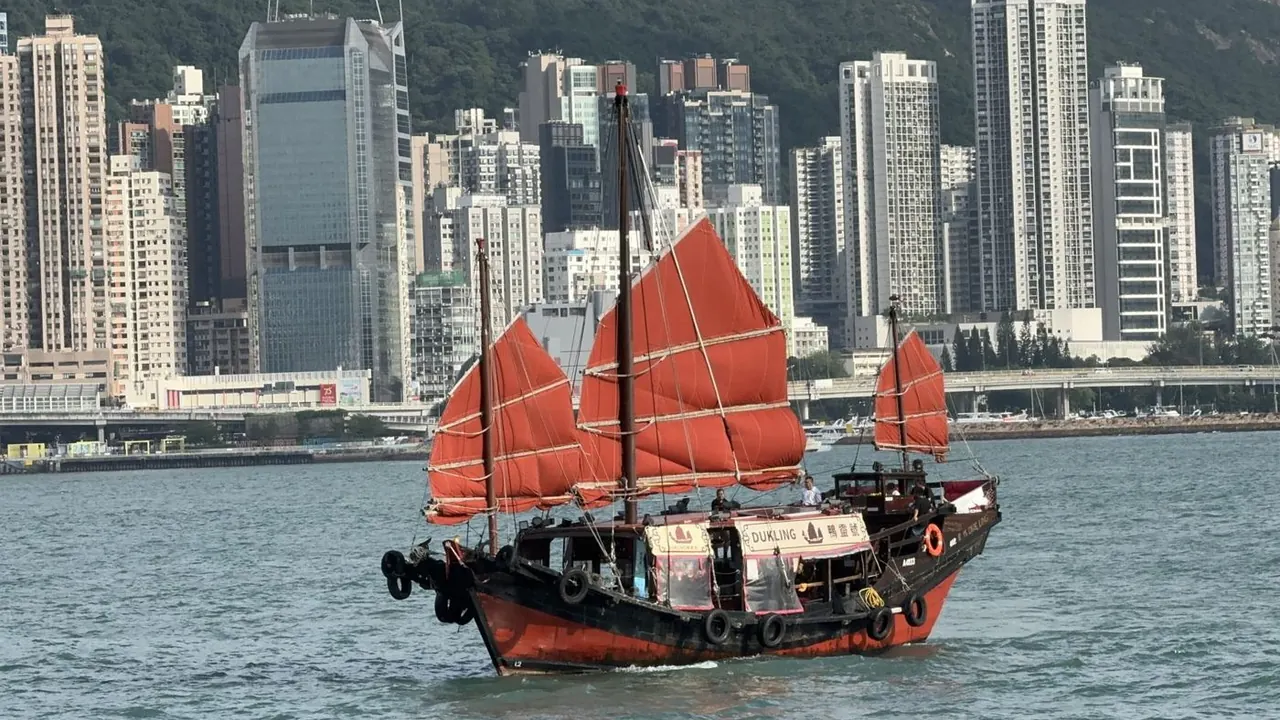
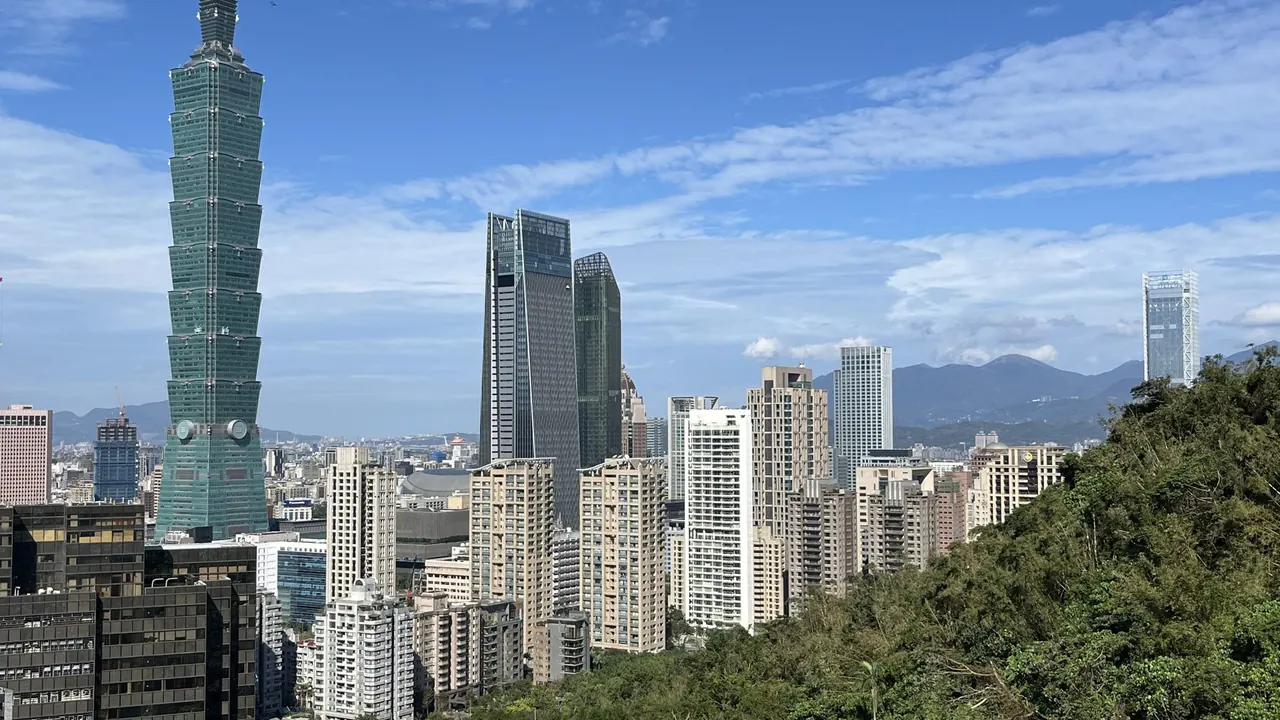
Photos: Hong Kong by LN9267, CC BY-SA 4.0, cropped; Taipei by Another Believer, CC BY-SA 4.0, cropped.
Hong Kong or Taipei?
Our verdict in twelve categories, each scored against the same fixed benchmark cities, and the climate month by month, so you can choose for your trip.
Choose Hong Kong for
- shopping
- getting around
- beaches
Hong Kong suits travellers who want a city that runs at full speed and is easy to use. The harbour, the trams and ferries, the late bars of Central and Wan Chai and the shopping, from luxury flagships to Mong Kok's street markets, all sit close together, and beaches and ridge walks are a short ride from the towers. It costs a lot to sleep there, so it rewards a shorter, fuller stay.
Choose Taipei for
- prices
- wellness
- culture and sights
Taipei is the better choice for a slower, cheaper trip with more to see beyond the city. The National Palace Museum gives it the stronger single sight, Beitou's hot springs are a metro ride away, and Jiufen, the Pingxi line and Tainan make easy outings with no border to cross. Eating well costs little, so the budget stretches over a longer stay.
Scoreboard
Twelve categories on one fixed scale from 0 to 100. The shaded stretch is the gap between the two.
Your match
Pick a travel style or drag the sliders, and both match scores follow your weighting.
Wins on shopping and getting around with your weighting.
Wins on prices and wellness with your weighting.
What matters to you?
Category by category
What the scores mean for a trip.
Beaches & swimming
Hong Kong has the easier swimming. Repulse Bay and Deep Water Bay are a short bus ride from Central, Shek O and Big Wave Bay add a village feel, and most gazetted beaches have lifeguards and shark nets in season.
Taipei has no coastline of its own, so a swim means a day out to Baishawan beyond Tamsui or to Fulong, about an hour by train, where rip currents are common and lifeguarded stretches are short. The sea is equally warm in summer at both, but only in Hong Kong can a beach fit into an ordinary afternoon.
Food & drink
Both cities are worth the trip for food alone, but they feed you differently. Hong Kong's strength is Cantonese cooking at its most polished: dim sum in big teahouses, roast goose and char siu, the milk tea and pineapple buns of the cha chaan teng, and acclaimed Chinese and French dining rooms in Central.
Taipei is more about grazing. Raohe, Ningxia and Shilin night markets, soy milk breakfast halls and xiaolongbao houses show a mix of Hokkien, Hakka, mainland and Japanese influences, and the drinking side, from hill-grown oolong to speciality coffee and bubble tea, is richer than Hong Kong's.
Culture & sights
Taipei has the deeper sightseeing, mainly thanks to the National Palace Museum, whose imperial jade, bronzes and porcelain merit half a day. Longshan and Bao'an temples, the Chiang Kai-shek Memorial Hall and the restored shophouses of Dihua Street give it a steady second tier.
Hong Kong's main sight is the cityscape itself, seen from the Peak or the Tsim Sha Tsui waterfront, since little of the colonial city survives. M+ and the Hong Kong Palace Museum in West Kowloon are strong, and Man Mo Temple and the Big Buddha add interest, but there is less history to walk through than in Taipei.
Nightlife
Hong Kong is the livelier and later night out. Crowds drink in the street in Lan Kwai Fong, Soho and Sheung Wan have serious cocktail bars, and Wan Chai keeps going into the early hours, with rooftop bars on both sides of the harbour.
Taipei is calmer and quieter on weeknights. Its cocktail bars in Da'an and Zhongshan are its strongest suit, using local tea and fruit, and Xinyi has the bigger dance clubs that Hong Kong largely lacks. Karaoke and late beer halls feature in both cities.
Nature & outdoors
Both cities have wild country right on the doorstep, but the landscapes differ. Hong Kong's outdoors leans towards the sea: the Dragon's Back above Shek O, the MacLehose Trail, and Sai Kung's hexagonal rock columns, sea caves and islands reached by kayak or boat.
Taipei's is mountain and volcanic. Yangmingshan, with fumaroles and silvergrass slopes, lies inside the city limits, Elephant Mountain rises right behind Xinyi, and the gondola climbs to the Maokong tea terraces. In both, autumn is the season for hiking.
Day trips
Taipei has more easy outings close at hand. Jiufen's lantern-hung stairways, the sky lanterns along the Pingxi line, Tamsui's fort and Sanxia's carved temple are all short trips, and high-speed rail puts Tainan's old temples and forts within about two hours, with no border to cross.
Hong Kong's star outings are Macau, about an hour away, and Guangzhou by fast train, but both mean passing through immigration. Closer to home, Cheung Chau, Lamma and Tai O's stilt houses make good, simple days out.
Good for families
Both are safe, clean and easy with children. Hong Kong has the big attractions inside the city, with Disneyland on Lantau and Ocean Park on the island's south side, but family hotel rooms are often very cramped.
Taipei's theme parks are an hour or more out, so days centre instead on the zoo and its pandas, the Maokong gondola next door, the science and astronomy museums and riverside cycle paths, with night market games a favourite for older children.
Getting around
Hong Kong is the easier city to move around. The MTR is joined by the Star Ferry, the old trams along the north shore and the Mid-Levels escalator, and sights are packed closely together, with covered walkways to help on humid days.
Taipei's MRT is also excellent, clearly signed in English and reaching Beitou, Tamsui and the Maokong gondola. On foot it is harder going, though: neighbourhoods are further apart than they look, and pavements outside the central arcades are uneven and often blocked by parked scooters.
Shopping & style
Hong Kong is the stronger shopping city by some distance. Luxury flagships line Central and Canton Road, the malls of Causeway Bay and Admiralty carry everything without sales tax, and the Ladies' Market, the goldfish and bird markets, Sham Shui Po's fabric lanes and the Hollywood Road antique shops make browsing a sight in itself.
Taipei is better for smaller finds than for fashion. Design shops sit in the Huashan and Songshan cultural parks, Dihua Street sells herbs and dried goods, and high-mountain oolong, teaware and Yingge pottery make the best things to take home.
Affordability
Taipei is much easier on the wallet. Eating costs very little at every level, transport and taxis are cheap, and guesthouses around Zhongshan and Ximending keep accommodation manageable.
Hong Kong's hotels are among Asia's costliest and smallest, and an evening of cocktails or harbour-view dining in Central costs as much as in a major Western city. Living like a local on noodles, dim sum and the Star Ferry helps, but the room bill still makes Hong Kong the far more expensive stay.
Live music & performing arts
Neither city is a performing arts destination, and in both the most rewarding choice is the local tradition. In Hong Kong that means Cantonese opera at the Xiqu Centre or in village bamboo theatres, alongside the Philharmonic at the Cultural Centre.
Taipei offers glove puppetry and Taiwanese opera in Dadaocheng, contemporary dance from Cloud Gate, the National Theater and Concert Hall, and an indie live-house scene around Gongguan that Hong Kong's few jazz bars cannot match.
Wellness & relaxation
Taipei is far better for unwinding, because it sits on volcanic ground. Beitou's hot-spring hotels, sulphur pools and open-air public bath are a short MRT ride away, with more rustic springs in Yangmingshan and riverside baths at Wulai.
Hong Kong has no bathing culture and a relentless pace. It makes up for this in part with reflexology parlours, Chinese medicine shops and polished hotel spas, but real calm means leaving for Chi Lin Nunnery's gardens or the car-free lanes of Lamma.
When should you go?
Pick your month. The climate figures are measured averages, not a forecast.
Hong Kong in July
Taipei in July
Daytime high, °C
Rainfall in the month, mm
Where the figures come from
Taipei has no rain gauge within 25 km of the centre, so its rainfall comes from a gridded climate dataset read at the city rather than from a gauge further away.
Temperature and rainfall are climate normals, averaged over the years shown. Hong Kong: 1991-2020 normals, King's Park (4.4 km from centre). Taipei: 1992-2020 (rainfall 1991-2020) normals, Sungshan / Taipei (3.5 km from centre).
Hong Kong is at its best from October to December, when the rain largely stops, days settle around 25°C and the skies are often clear, ideal for walking the streets and the hill trails. January to March stays dry but cooler and greyer. The beach season runs from May to October, with the sea near 29°C at its peak, but June to September is hot, humid and very wet, with June the wettest month at 493mm.
Taipei has no real dry season. Even its quietest months see steady rain, so an umbrella belongs in the bag all year. Summer is hotter than in Hong Kong, reaching 35°C in July, which makes daytime walking hard work, while the sea is warm enough for swimming from June to September. Spring and autumn, with highs in the mid to high twenties, are the most comfortable times for both the city and the hills. If dry weather matters, Hong Kong's late autumn is the safer bet of the two.
Which traveller are you?
On a shopping trip, Hong Kong is the clear pick. Shopping can fill whole days there, from luxury malls to street markets and a tailor's fitting, all a short ride apart, while Taipei suits a few hours of browsing for small, well-chosen souvenirs.
For a relaxing and wellness trip, Taipei wins easily. Days can end with a long soak in a hot spring or an afternoon over tea in the hills, at an unhurried pace that Hong Kong, for all its spas, never quite allows.
On a trip on a tight budget, Taipei goes much further. You can eat out three times a day and stay a week instead of a long weekend without counting every meal. In Hong Kong, the cost of a room alone decides how long you can stay.
Before you go
| Measure | Hong Kong | Taipei |
|---|---|---|
| Official language | Standard Chinese | Taiwanese Sign Language, Amis, Taiwanese Hokkien, Rukai, Bunun, Kanakanavu, Standard Taiwanese Mandarin, Paiwan, Yami, Atayal, Saaroa, Kavalan, Tsou, Seediq, Puyuma, Saisiyat, Sakizaya, Taiwanese Hakka, Truku, Matsu dialect, Kinmen dialect, Wuqiu dialect |
| Currency | Hong Kong Dollar (HKD) | New Taiwan Dollar (TWD) |
| Sockets | G220 V, 50 Hz | AB110 V, 60 Hz |
| Driving side | Left | Right |
| Time zone | UTC+8 | UTC+8 |
| Emergency number | 999 | 110 or 112 or 119 |
| Elevation | 7 m | 10 m |
| Main airport | Hong Kong International Airport (HKG)25 km from centre148 non-stop destinations | Taiwan Taoyuan International Airport (TPE)33 km from centre |
| Public holidays this year | 17 days | - |
By the numbers
| Measure | Hong Kong | Taipei |
|---|---|---|
| City population | 7,413,070 | 2,429,429 |
| People per km² | - | 8,938 |
| Museums within 10 km | 39 | 69 |
| UNESCO World Heritage sites within 50 km | 0 | 0 |
| Swim season, months above 21 °C | 8 months | 8 months |
Where else could you go?
Every comparison below shares a destination with this one, so you can follow Hong Kong or Taipei somewhere new.