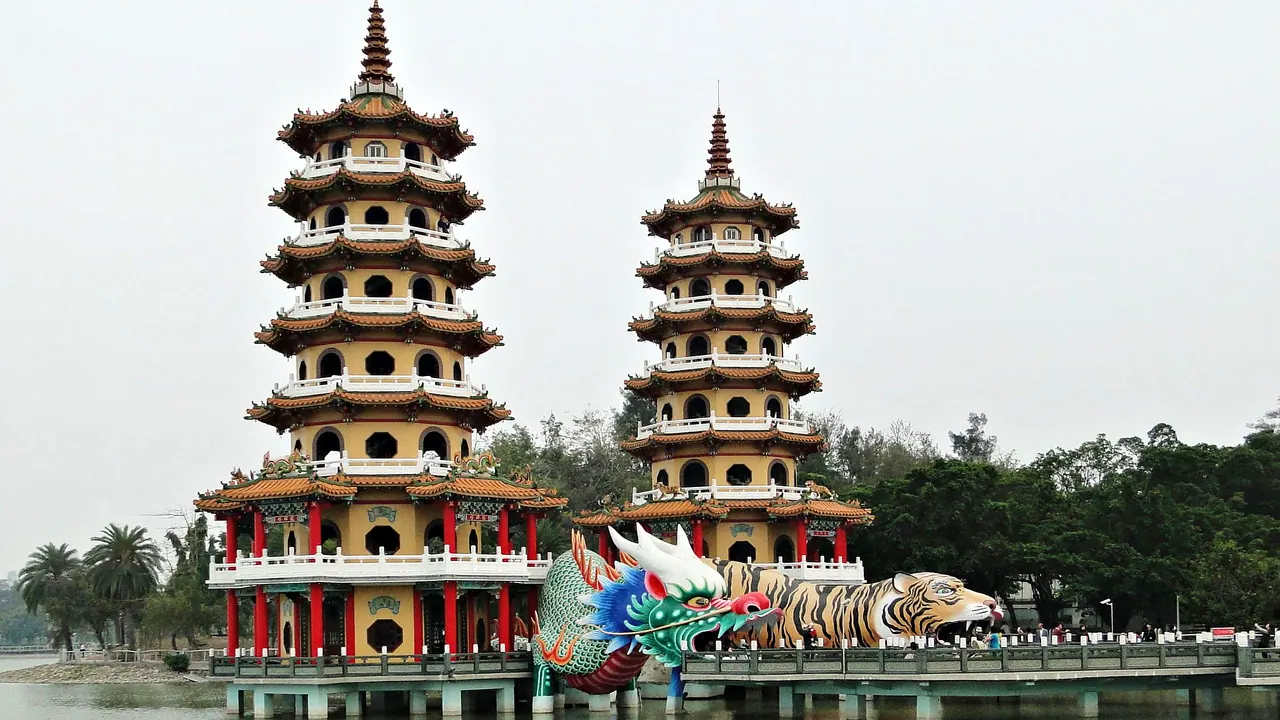
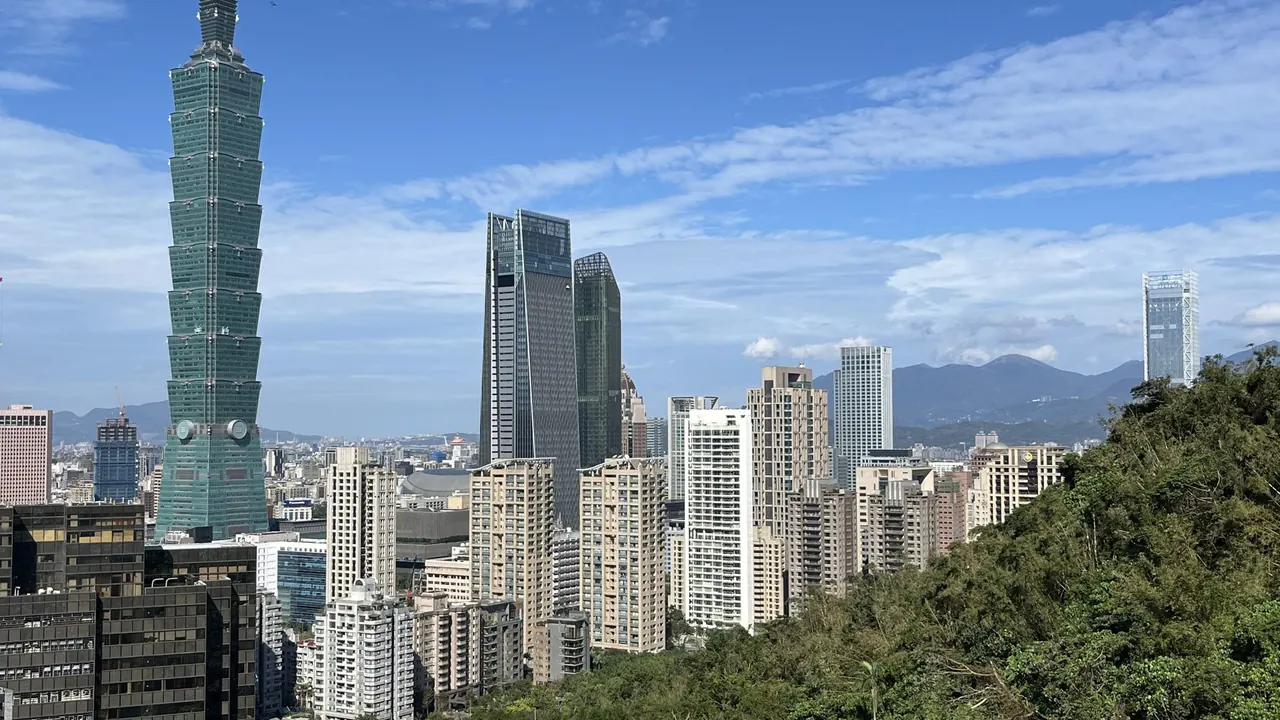
Photos: Kaohsiung by Bernard Gagnon, CC BY-SA 3.0, cropped; Taipei by Another Believer, CC BY-SA 4.0, cropped.
Kaohsiung or Taipei?
Our verdict in twelve categories, each scored against the same fixed benchmark cities, and the climate month by month, so you can choose for your trip.
Choose Kaohsiung for
- prices
Kaohsiung suits a slower, cheaper trip with an eye on the south of Taiwan. It is a port city of harbour walks, seafood and temples on a lake, with hotels that stretch a budget further. Its winters are dry and mild while the north is grey. Tainan is only half an hour away by fast train, and the coral island of Xiaoliuqiu is close too, so it works well as a base for a few days of southern sightseeing.
Choose Taipei for
- wellness
- getting around
- shopping
Taipei is the stronger choice for a first visit to Taiwan or a trip built around eating. Its night markets, dumpling houses and teahouses go deeper, the National Palace Museum is in a class of its own, and the MRT makes it all easy. It also has hot springs a short metro ride from the centre and steep green hills right at the city's edge.
Scoreboard
Twelve categories on one fixed scale from 0 to 100. The shaded stretch is the gap between the two.
Your match
Pick a travel style or drag the sliders, and both match scores follow your weighting.
Wins on prices with your weighting.
Wins on wellness and getting around with your weighting.
What matters to you?
Category by category
What the scores mean for a trip.
Beaches & swimming
Neither city is really a beach destination, but the two differ in where the sand is. Kaohsiung is on the sea itself: Cijin's long dark-sand beach is a short ferry ride across the harbour and is better for sunset walks and seafood than for swimming. Sizihwan has a small sheltered bay that opens for swimming in season, and Xiaoliuqiu offers coral coves where you can snorkel with turtles.
Taipei has no shore of its own. Swimming means a day out to Baishawan beyond Tamsui or to Fulong's golden spit, about an hour away by train. Fulong is the better swimming beach of the two cities, but it is a summer outing rather than something you can slip into an afternoon.
Food & drink
Taipei is one of Asia's great eating cities, and Kaohsiung, good as it is, does not match it. Taipei has the classic night markets of Raohe and Ningxia, dumpling houses pleating xiaolongbao in front of you, and beef noodle shops. Above the street food it has proper restaurants, oolong teahouses and a serious coffee culture in Da'an and Zhongshan.
Kaohsiung's cooking is sweeter and built around seafood. The highlights are picking your fish from the ice on Cijin, milkfish congee at morning stalls, and queueing with locals at Ruifeng night market. It is cheap and satisfying, but there are few places for a special dinner.
Culture & sights
Taipei has the deeper list of sights, and the National Palace Museum's imperial jade, bronzes and porcelain alone justify half a day. Add the smoky halls of Longshan Temple, the Chiang Kai-shek Memorial Hall and the merchant shophouses of Dihua Street, and three or four days fill up easily.
Kaohsiung's sights reflect its life as a working port. There are the pagodas and temples around Lotus Pond, the red-brick British consulate above the harbour mouth, and warehouse galleries at Pier-2. It covers in two or three days, and many visitors add Tainan's older streets nearby.
Nightlife
Taipei offers clearly more after dark. It has cocktail bars that use local tea and fruit and are known well beyond Taiwan, big weekend clubs around Taipei 101, cheaper bars in Ximending, and karaoke rooms for groups.
A night out in Kaohsiung is simpler and more local. You share seafood and crates of Taiwan Beer at a stir-fry hall, then have a drink on a Love River terrace or in the bars around Pier-2. Its few clubs in Sinsing fill only at weekends, so it is pleasant for an easy evening but thin for anyone wanting a big night.
Nature & outdoors
Taipei's green hills begin where the streets end. Elephant Mountain rises right behind Xinyi, the gondola climbs to the tea terraces of Maokong, and Yangmingshan's fumaroles and silvergrass slopes lie inside the city limits. Wulai's gorges and the cliffs of the northeast coast are an easy bus or train ride away.
Kaohsiung has Shoushan, a limestone hill full of macaques beside the harbour, plus flat cycle paths around Lotus Pond and Chengcing Lake. Its more unusual landscapes are an hour or two out: the mudstone badlands of Moon World, the mud volcanoes of Yanchao and the butterfly valleys of Maolin. The coral reefs of Xiaoliuqiu add snorkelling and diving.
Day trips
Both cities make good bases, and Taipei has more easy outings close at hand. These include the lantern-hung stairways of Jiufen, sky lanterns in the old coal towns of the Pingxi line, the Spanish-built fort at Tamsui and the potters of Yingge, all within easy reach by train or bus.
Kaohsiung's advantage is the south. Tainan is about half an hour away by high-speed rail, compared with roughly two hours from Taipei, which makes it an easy day trip. Fo Guang Shan's giant Buddha, the Hakka umbrella town of Meinong and the ferry to Xiaoliuqiu complete a strong but shorter list.
Good for families
Both cities are safe and warm towards children, and Taipei is the easier of the two with a family. Its metro has lifts throughout, Taipei Zoo has pandas and sits beside the Maokong gondola, and the astronomical museum and science centre are good for a rainy day.
Kaohsiung has a hands-on science museum, the ferry to Cijin, a harbourside mall with a Ferris wheel on its roof, and a big theme park in Dashu. Taipei's theme parks are an hour or more away. In Kaohsiung, scooter-blocked pavements and the spread-out layout make getting around with a pushchair harder.
Getting around
Taipei's MRT is the standout here. It reaches almost every sight, including Beitou, Tamsui and the Maokong gondola, and covered arcades in the centre keep you out of the sun and rain between stations.
Kaohsiung's two metro lines and its harbour light rail are clean and clearly signed, but they cover too little of a widely spread city. Many trips end with a long walk in the heat or a taxi. One stored-value card works in both cities and covers the Cijin ferry too.
Shopping & style
Taipei has more variety and more character. There are luxury flagships in Xinyi's linked department stores and design shops in the old industrial parks of Huashan and Songshan. Dihua Street sells herbs and dried goods from merchant shophouses, and Guanghua is the place for electronics.
Kaohsiung's shopping is mostly malls and Japanese-style department stores around Sanduo, with sneakers and youth fashion in the Xinjuegang lanes. A few design shops sit at Pier-2. Pineapple cakes, tea and dried mullet roe are the souvenirs worth packing.
Affordability
Both cities are good value, and Kaohsiung is somewhat cheaper. Everyday food, transport and free temples and parks cost about the same in each. The difference is the hotel bill: Kaohsiung's business hotels are fairly priced, while central Taipei rooms are small and costly, especially in Xinyi and at weekends.
Live music & performing arts
The two cities are broadly level, and both offer solid programmes rather than famous ones. Kaohsiung's arts are concentrated in Weiwuying, a single huge wave-roofed complex with opera house, concert hall and playhouse, plus big Mandarin pop shows at the harbour Music Center.
Taipei spreads its programme over more venues. There is the palace-style National Theater and Concert Hall, the Performing Arts Center in Shilin, and Cloud Gate dance on its doorstep. Independent live houses around Gongguan put on indie and rock, the kind of small-venue music Kaohsiung largely lacks.
Wellness & relaxation
Here the gap is wide. Taipei sits on volcanic ground: Beitou's sulphur pools, steaming Thermal Valley and old bathhouse are at the end of a short metro line. Yangmingshan and Wulai have more springs, and the teahouses of Maokong make for a slow afternoon.
Kaohsiung has no hot springs in the city. Its wellness comes down to skilled, inexpensive foot and body massage and quiet evenings by the Love River. A soak at Baolai means a long drive and a night away.
When should you go?
Pick your month. The climate figures are measured averages, not a forecast.
Kaohsiung in July
Taipei in July
Daytime high, °C
Rainfall in the month, mm
Where the figures come from
Kaohsiung has no rain gauge within 25 km of the centre, so its rainfall comes from a gridded climate dataset read at the city rather than from a gauge further away.
Taipei has no rain gauge within 25 km of the centre, so its rainfall comes from a gridded climate dataset read at the city rather than from a gauge further away.
Temperature and rainfall are climate normals, averaged over the years shown. Kaohsiung: 1991-2020 normals, Kaohsiung International Airport (6.4 km from centre). Taipei: 1992-2020 (rainfall 1991-2020) normals, Sungshan / Taipei (3.5 km from centre).
Kaohsiung's best months are November to March. Afternoons are warm, around 24°C in January, and the weather is almost completely dry, which suits long days of walking and cycling round the harbour. The sea stays warm enough for a swim through most of the year. From May the heat and humidity climb, and the summer monsoon brings very heavy rain, peaking at about 480mm in August. That makes midsummer the hardest time to be outdoors.
Taipei is cooler and much wetter. Winter afternoons are mild rather than warm, and even the driest month brings about 159mm, so expect grey skies and drizzle in winter. Midsummer is the hottest time in either city, with July afternoons around 35°C. The sea on the north coast is only good for swimming from about June to September, when it reaches 29°C. October, November and April are the most comfortable months for walking the streets and hills.
Which traveller are you?
On a trip on a tight budget, Kaohsiung stretches the money further. Start with milkfish congee at a market stall, spend the day at free sights like Lotus Pond's pagodas, Pier-2's outdoor art and the Shoushan trails, and finish at Ruifeng.
For a relaxing and wellness trip, Kaohsiung offers cheap massage and slow evenings by the Love River or Chengcing Lake, but Taipei is the one to book. Beitou's sulphur pools are a short metro ride away, and Maokong's teahouses fill an unhurried afternoon.
For a food and nightlife trip, Kaohsiung's best evening is one long seafood dinner at a stir-fry hall. Taipei gives you several nights without repeating yourself: a different night market each evening, then a tea-based cocktail in Zhongshan or a karaoke room.
Before you go
| Measure | Kaohsiung | Taipei |
|---|---|---|
| Official language | Taiwanese Sign Language, Amis, Taiwanese Hokkien, Rukai, Bunun, Kanakanavu, Standard Taiwanese Mandarin, Paiwan, Yami, Atayal, Saaroa, Kavalan, Tsou, Seediq, Puyuma, Saisiyat, Sakizaya, Taiwanese Hakka, Truku, Matsu dialect, Kinmen dialect, Wuqiu dialect | Taiwanese Sign Language, Amis, Taiwanese Hokkien, Rukai, Bunun, Kanakanavu, Standard Taiwanese Mandarin, Paiwan, Yami, Atayal, Saaroa, Kavalan, Tsou, Seediq, Puyuma, Saisiyat, Sakizaya, Taiwanese Hakka, Truku, Matsu dialect, Kinmen dialect, Wuqiu dialect |
| Currency | New Taiwan Dollar (TWD) | New Taiwan Dollar (TWD) |
| Sockets | AB110 V, 60 Hz | AB110 V, 60 Hz |
| Driving side | Right | Right |
| Time zone | UTC+8 | UTC+8 |
| Emergency number | 110 or 112 or 119 | 110 or 112 or 119 |
| Elevation | 9 m | 10 m |
| Main airport | Kaohsiung International Airport (KHH)7 km from centre35 non-stop destinations | Taiwan Taoyuan International Airport (TPE)33 km from centre |
By the numbers
| Measure | Kaohsiung | Taipei |
|---|---|---|
| City population | 2,713,032 | 2,429,429 |
| People per km² | 919 | 8,938 |
| Museums within 10 km | 20 | 69 |
| UNESCO World Heritage sites within 50 km | 0 | 0 |
| Swim season, months above 21 °C | 12 months | 8 months |
Where else could you go?
Every comparison below shares a destination with this one, so you can follow Kaohsiung or Taipei somewhere new.
- Tainanvs Kaohsiung
- Tainanvs Taipei
- Hong Kongvs Kaohsiung
- Hong Kongvs Taipei
- Busanvs Taipei
- Seoulvs Taipei