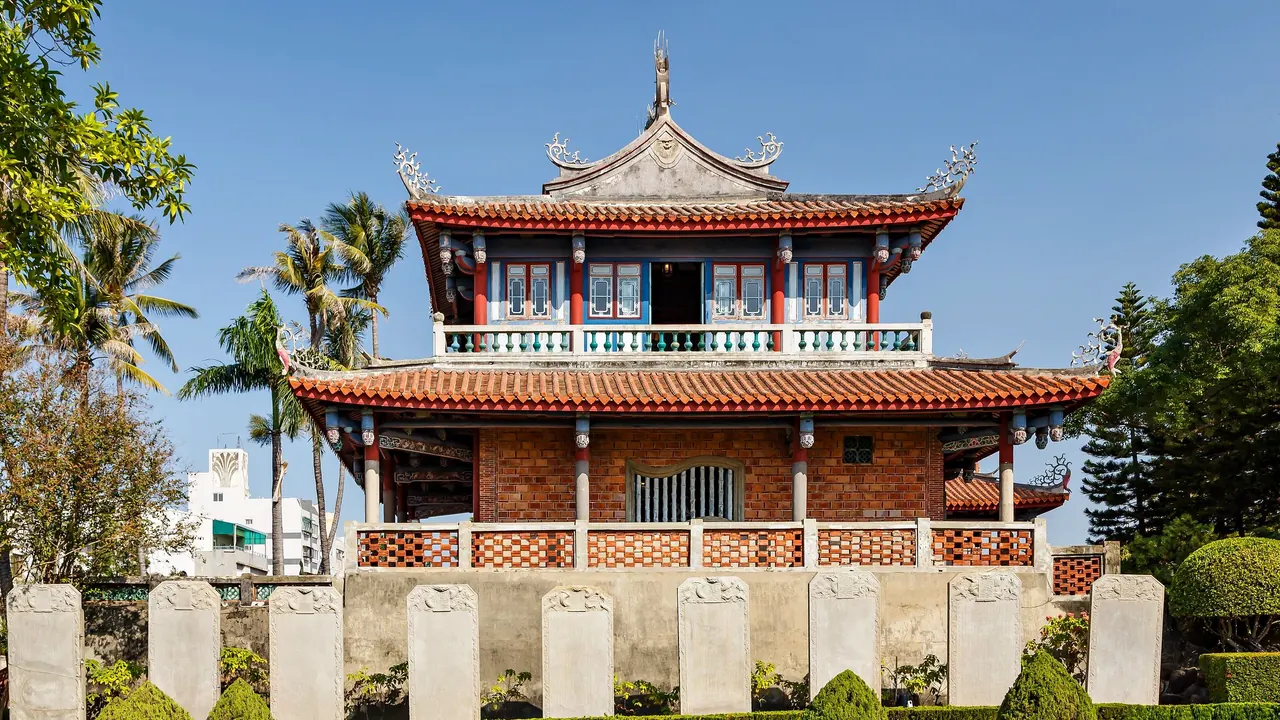
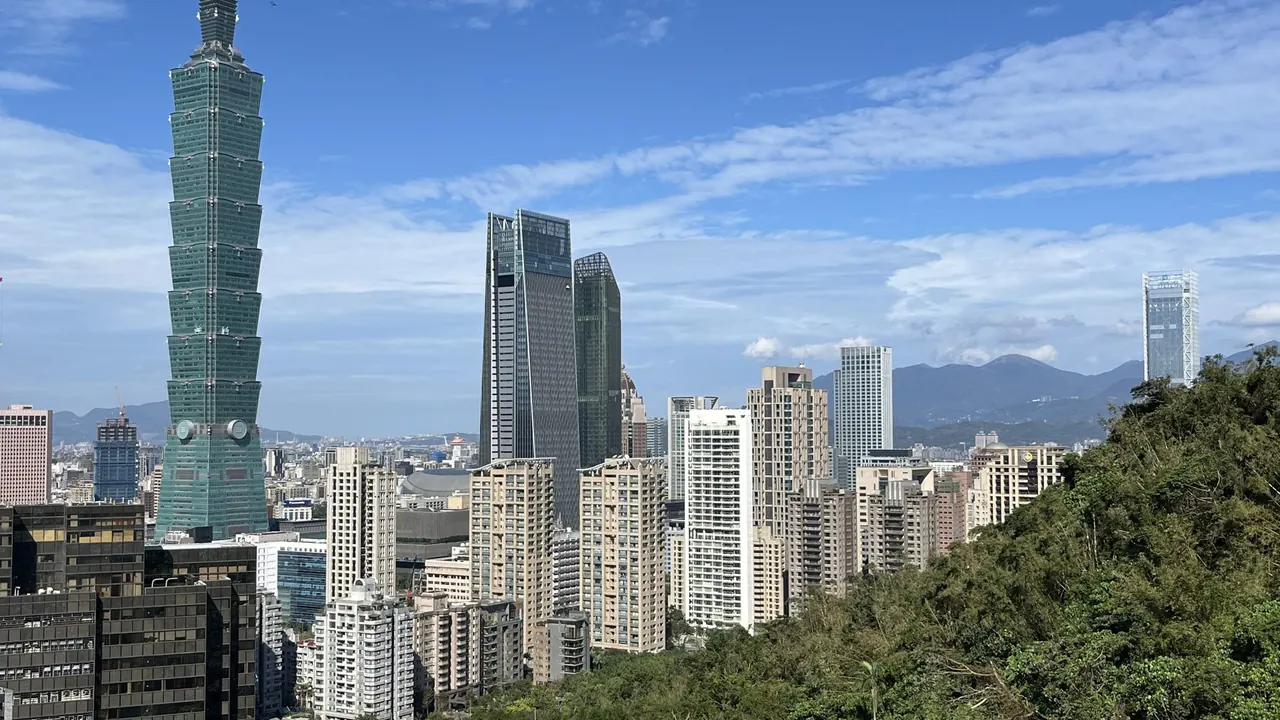
Photos: Tainan by CEphoto, Uwe Aranas, CC BY-SA 3.0, cropped; Taipei by Another Believer, CC BY-SA 4.0, cropped.
Tainan or Taipei?
Our verdict in twelve categories, each scored against the same fixed benchmark cities, and the climate month by month, so you can choose for your trip.
Choose Tainan for
- prices
Tainan suits travellers who want Taiwan's oldest streets and its food heritage at a slower pace. The old capital's temples, Dutch-era forts and single-dish snack stalls sit close together, and rooms cost less. An unhurried few days of grazing and temple-hopping is what it does best, ideally in the dry, warm winter.
Choose Taipei for
- getting around
- wellness
- nature and the outdoors
For a first visit, a family trip or anyone who wants a lot within easy reach, Taipei is the stronger pick. Its metro makes getting about simple, and the Beitou hot springs and the Yangmingshan trails are inside the city. On top of food every bit as good, it has proper nightlife, far more shopping and the National Palace Museum.
Scoreboard
Twelve categories on one fixed scale from 0 to 100. The shaded stretch is the gap between the two.
Your match
Pick a travel style or drag the sliders, and both match scores follow your weighting.
Wins on prices with your weighting.
Wins on getting around and wellness with your weighting.
What matters to you?
Category by category
What the scores mean for a trip.
Beaches & swimming
Neither city is worth choosing for a beach trip, but Taipei gives swimmers more. Tainan's own shore at the Golden Coast and Yuguang Island is grey sand and lagoons for sunset walks, and strong currents often keep people out of the water.
From Taipei, Fulong's golden spit is about an hour away by train and Baishawan lies beyond Tamsui, with a swimming season from about June to September. Lifeguarded stretches are short and rip currents are common, but you can actually swim there, which in Tainan you mostly can't.
Food & drink
Both are among Taiwan's great places to eat, and the difference is in kind. Tainan is a grazing city: beef soup at dawn, milkfish porridge, danzai noodles and coffin bread from single-dish stalls around the temples and along Guohua Road, all cooked sweeter than in the north.
Taipei adds range. Raohe and Ningxia cover the night-market classics, and the city also has xiaolongbao houses, beef noodle shops, serious restaurants with tasting menus, oolong grown in its own hills and a strong speciality coffee culture in Da'an. Go to Tainan for snack heritage and to Taipei for variety and a sit-down dinner.
Culture & sights
The two are level here, but they show their history in different ways. Tainan was the island's capital for more than two centuries, and the past is the streetscape. The Confucius Temple, Chihkan Tower, the Anping forts and hundreds of incense-filled temples sit around the old centre, with the Chimei Museum's European paintings and violins to the south.
Taipei has the single greatest collection, the imperial art of the National Palace Museum, along with Longshan Temple, the Chiang Kai-shek Memorial Hall and the restored shophouses of Dihua Street. Outside these patches it is a modern city, so it is better for museum days than for wandering.
Nightlife
Taipei is the place for a night out. Cocktail bars in Da'an and Zhongshan use local tea and fruit in their drinks, Xinyi has the big clubs around Taipei 101, and Ximending suits a cheaper, younger crowd, with karaoke rooms and stir-fry beer halls in between.
Tainan's evenings revolve around eating. A handful of whisky and craft-beer bars in old townhouses near Shennong Street are good for a quiet drink, but the city winds down by midnight, and anyone wanting clubs takes the train to Kaohsiung.
Nature & outdoors
Taipei has far more on its doorstep. Yangmingshan's fumaroles and silvergrass slopes are inside the city limits, Elephant Mountain rises straight behind Xinyi and a gondola climbs to the tea terraces of Maokong. The gorges at Wulai and the Caoling trail on the northeast coast are a bus or train ride away.
Tainan sits on a flat, hot plain, and its outdoors is quieter: boat rides through the Sicao mangrove tunnel, the salt pans of Taijiang National Park and the black-faced spoonbills that winter at Qigu. It suits birdwatchers more than hikers, because Alishan is too far for a day.
Day trips
Both make good bases, but Taipei's surroundings are richer and closer. Jiufen's lantern-hung stairways, the sky-lantern towns on the Pingxi line, Tamsui's fort and the potteries of Yingge are all short outings, and high-speed rail reaches Taichung in under an hour.
From Tainan, Kaohsiung is under an hour by train, with the Foguangshan Buddha Museum and Meinong's umbrella makers beyond it, and Chiayi is the gateway to the Alishan forest railway. Closer in are the old streets of Xinhua and Yanshui. Tainan itself is a classic outing from Taipei, about two hours by high-speed rail.
Good for families
Taipei is the easier city with children. The metro has lifts, Taipei Zoo has pandas and sits beside the Maokong gondola, and the Astronomical Museum and the science centre save a rainy day. There are also riverside playgrounds and cycle paths.
Tainan is welcoming and safe, and children enjoy clambering around the Anping forts and the Tree House or taking the Sicao boat ride. Still, little is built for them, the heat is draining and most sights need a taxi. The nearest zoo and theme park are in Kaohsiung.
Getting around
This is the widest gap between the two. Taipei's MRT is clean, signed in English and reaches almost everything, from Beitou to Tamsui. A single stored-value card also covers buses and the bike-share, and covered arcades shade the central pavements.
Tainan has no metro, its buses are slow and its high-speed rail station is well outside town. You can walk the old core if you weave around scooters and steps, but Anping and the Chimei Museum mean a taxi or ride-hailing, and most visitors rely on those plus the bike-share.
Shopping & style
The difference is in scale and character. Tainan's shopping is small and personal. Independent shops in old townhouses around Shennong and Zhengxing streets sell indigo-dyed cloth, ceramics, tea and stationery, and the 1930s Hayashi Department Store, with a Shinto shrine on its roof, is worth a visit for the building alone. There is no luxury street.
In Taipei the range is far wider: the linked malls of Xinyi for international brands, Ximending for streetwear, makers' markets in the Huashan and Songshan cultural parks, Guanghua for electronics and Dihua Street for herbs and dried goods. Anyone shopping for fashion or wanting plenty of choice should do it there.
Affordability
Both are cheap places to eat well, but Tainan stretches a budget further, mainly because its hotels and guesthouses cost clearly less than Taipei's. Snack-based meals and free temples keep daily spending low, although taxis add up without a metro.
In Taipei, food and transport are inexpensive, but rooms take the money and are small for what they cost, especially in Xinyi and at weekends. Staying around Zhongshan or Ximending helps.
Live music & performing arts
Taipei has the formal stage. The National Theater and Concert Hall at Liberty Square host the National Symphony Orchestra, opera and dance, the Taipei Performing Arts Center in Shilin stages contemporary work, and live houses around Gongguan put on indie and rock.
Tainan's best performances are unscheduled: Taiwanese opera and glove puppetry on stages outside temples on gods' birthdays, and processions with drum troupes and the Eight Generals. For a concert hall, people in Tainan go to Kaohsiung.
Wellness & relaxation
Hot springs are the heart of the difference. Tainan has an unusual kind, the grey mud springs of Guanziling, but they sit in the hills about an hour out of town. In the centre there is reflexology and an unhurried rhythm of long breakfasts and tea rooms, though scooter noise and summer heat make it less restful than it sounds.
In Taipei the springs are inside the city. Beitou's hot-spring hotels, sulphur pools and open-air public bath are at the end of a short metro branch line, with more springs among the Yangmingshan hills and beside the river at Wulai, and Maokong's hillside teahouses for a slow afternoon.
When should you go?
Pick your month. The climate figures are measured averages, not a forecast.
Tainan in July
Taipei in July
Daytime high, °C
Rainfall in the month, mm
Where the figures come from
Tainan has no rain gauge within 25 km of the centre, so its rainfall comes from a gridded climate dataset read at the city rather than from a gauge further away.
Taipei has no rain gauge within 25 km of the centre, so its rainfall comes from a gridded climate dataset read at the city rather than from a gauge further away.
Temperature and rainfall are climate normals, averaged over the years shown. Tainan: 1949-2025, 35 years observed (rainfall 1991-2020) normals, Tainan Tw-Afb (4.7 km from centre). Taipei: 1992-2020 (rainfall 1991-2020) normals, Sungshan / Taipei (3.5 km from centre).
Tainan is at its best from October to April. Days stay warm, around 23°C even in January, and the skies are dry, with very little rain from November to February. From May the wet season sets in hard, peaking at close to 590mm in August, and the heat limits sightseeing to mornings and evenings. The sea stays warm all year, but the coast is for sunsets rather than swimming.
Taipei is cooler in winter, near 19°C in January, and it rains in every month instead of having one long wet season. Its summer is hotter, reaching 35°C in July, but that is also when its northern beaches are good for swimming. For walking and hiking, March to April and October to November are the comfortable months.
Which traveller are you?
On a trip on a tight budget, choose Tainan. A day of stall food and temple courtyards barely touches the wallet, and a room buys more than it would in the capital. Use the bike-share to keep taxi fares down.
For an outdoors trip, base yourself in Taipei. A volcanic ridge or a steep climb with skyline views can fill a morning with no car needed, and gorges and sea cliffs are a train ride out. Tainan's flat wetlands suit birdwatchers better than walkers.
On a relaxing and wellness trip, Taipei makes soaking easy. Ride the metro to a sulphur bath, then book a massage near your hotel, since parlours are everywhere. Tainan's slow pace appeals, but its unusual mud springs mean a trip into the countryside.
Before you go
| Measure | Tainan | Taipei |
|---|---|---|
| Official language | Taiwanese Sign Language, Amis, Taiwanese Hokkien, Rukai, Bunun, Kanakanavu, Standard Taiwanese Mandarin, Paiwan, Yami, Atayal, Saaroa, Kavalan, Tsou, Seediq, Puyuma, Saisiyat, Sakizaya, Taiwanese Hakka, Truku, Matsu dialect, Kinmen dialect, Wuqiu dialect | Taiwanese Sign Language, Amis, Taiwanese Hokkien, Rukai, Bunun, Kanakanavu, Standard Taiwanese Mandarin, Paiwan, Yami, Atayal, Saaroa, Kavalan, Tsou, Seediq, Puyuma, Saisiyat, Sakizaya, Taiwanese Hakka, Truku, Matsu dialect, Kinmen dialect, Wuqiu dialect |
| Currency | New Taiwan Dollar (TWD) | New Taiwan Dollar (TWD) |
| Sockets | AB110 V, 60 Hz | AB110 V, 60 Hz |
| Driving side | Right | Right |
| Time zone | UTC+8 | UTC+8 |
| Emergency number | 110 or 112 or 119 | 110 or 112 or 119 |
| Elevation | 1 m | 10 m |
| Main airport | Kaohsiung International Airport (KHH)48 km from centre35 non-stop destinations | Taiwan Taoyuan International Airport (TPE)33 km from centre |
By the numbers
| Measure | Tainan | Taipei |
|---|---|---|
| City population | 1,849,762 | 2,429,429 |
| People per km² | 844 | 8,938 |
| Museums within 10 km | 17 | 69 |
| UNESCO World Heritage sites within 50 km | 0 | 0 |
| Swim season, months above 21 °C | 12 months | 8 months |
Where else could you go?
Every comparison below shares a destination with this one, so you can follow Tainan or Taipei somewhere new.