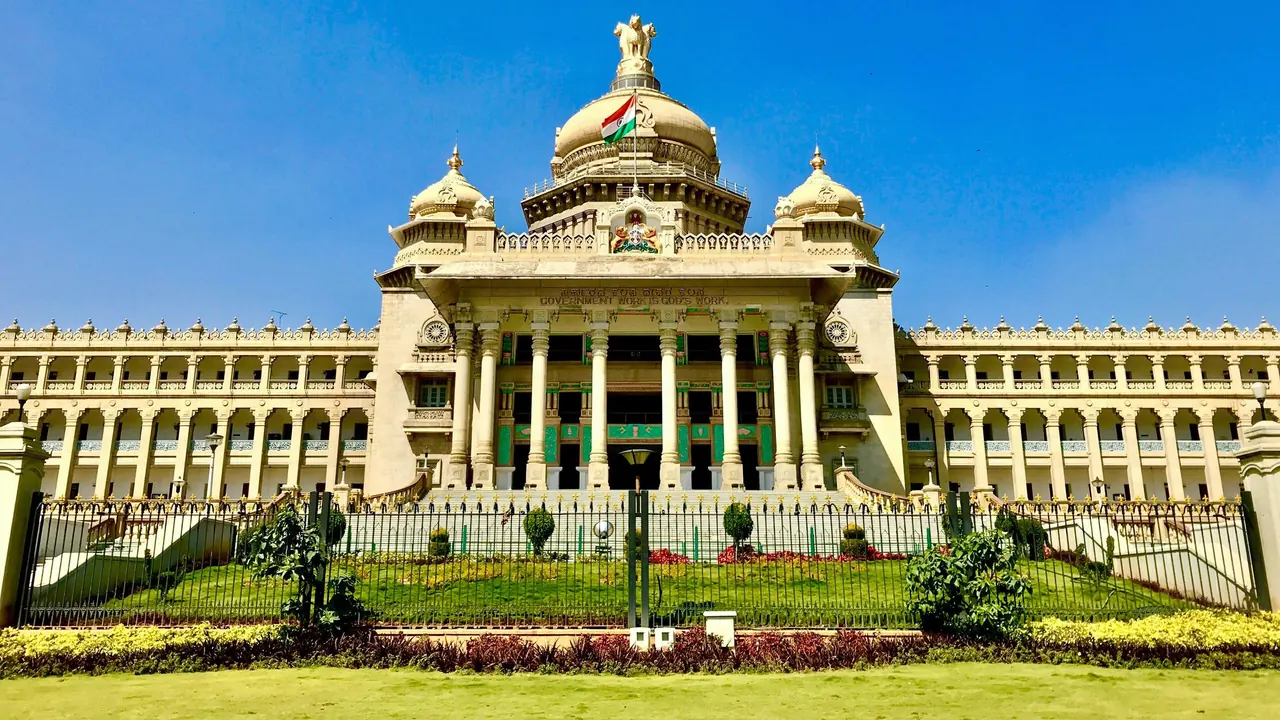
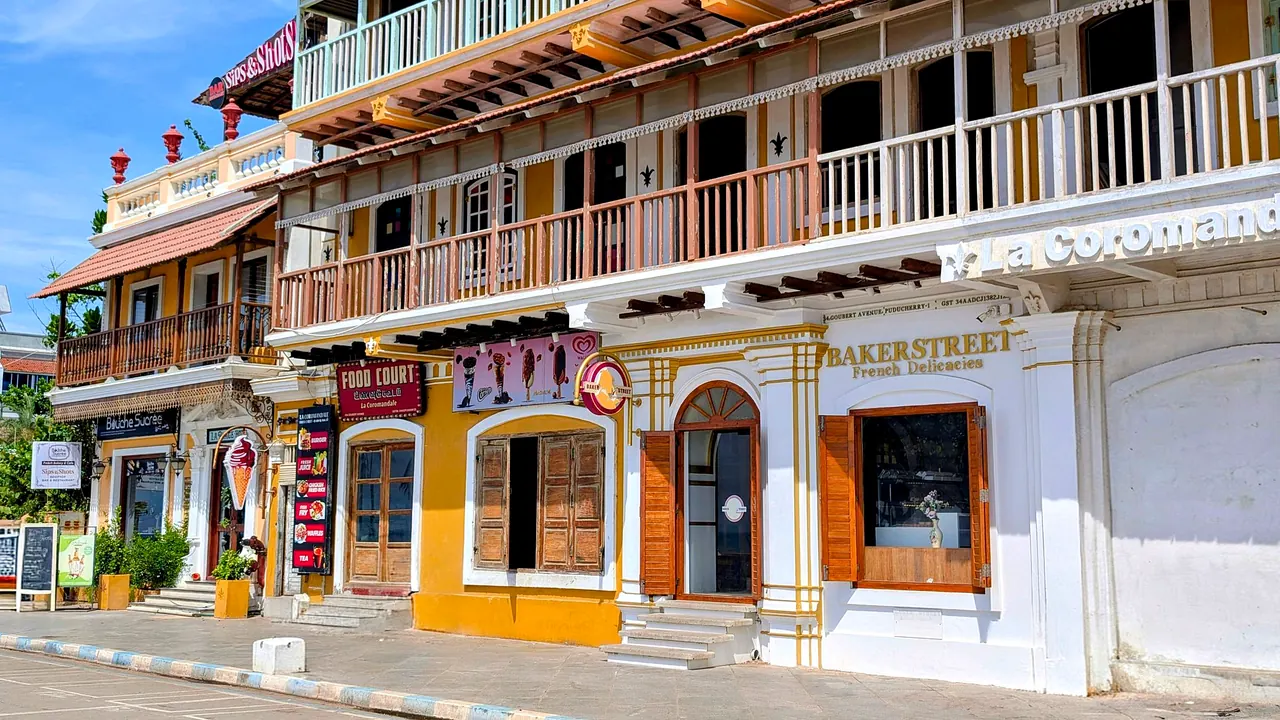
Photos: Bengaluru by IM3847, CC BY-SA 4.0, cropped; Pondicherry by Tushar, Pexels License.
Bengaluru or Pondicherry?
Our verdict in twelve categories, each scored against the same fixed benchmark cities, and the climate month by month, so you can choose for your trip.
Choose Bengaluru for
- nightlife
- live music and the arts
- food and drink
Bengaluru suits travellers who want the eating and drinking of a big modern Indian city. Mornings start with dosa and filter coffee at a darshini, and evenings end over craft beer in Indiranagar. In between there are Carnatic concerts, theatre and small rock gigs. The mild plateau climate makes it comfortable for much of the year, and Mysuru is an easy train ride away. In return you accept a sprawling city, scattered sights and traffic that shapes every plan.
Choose Pondicherry for
- beaches
- wellness
- day trips
Pondicherry is the better choice for a slower trip on the coast. You can walk the French and Tamil quarters on foot, do yoga and meditation at the Ashram and in Auroville, and feel the sea air on the Promenade every evening. The great temples of Tamil country, Mahabalipuram and Chidambaram among them, are within a day's drive. Nights are quiet and the stage is thin, but it is far easier to rest here and to explore than in Bengaluru.
Scoreboard
Twelve categories on one fixed scale from 0 to 100. The shaded stretch is the gap between the two.
Your match
Pick a travel style or drag the sliders, and both match scores follow your weighting.
Wins on nightlife and live music and the arts with your weighting.
Wins on beaches and wellness with your weighting.
What matters to you?
Category by category
What the scores mean for a trip.
Beaches & swimming
Bengaluru has no beach of any kind. It sits on the plateau, a day or an overnight journey from either coast, so swimming means a hotel pool.
Pondicherry is on the Bay of Bengal, but its seafront Promenade faces boulders. The sand lies a scooter ride north at Serenity Beach and Auroville, or a boat trip through the backwaters to Paradise Beach. The surf is strong enough to keep most people in the shallows, so this is a coast for paddling and sunsets rather than long swims.
Food & drink
Bengaluru is the stronger city for eating. The darshinis and the old vegetarian houses of Basavanagudi and Malleswaram are breakfast institutions, and military hotels serve biryani from dawn. Coastal Mangalorean and Kodava dishes add range, and almost every regional Indian cuisine has a place here.
Pondicherry has the more unusual mix but a smaller one. Banana-leaf meals in the Tamil Quarter sit alongside French bakeries and Creole dishes from Franco-Tamil families. Long lunches in courtyard cafés are the highlight, and a few days covers it.
Culture & sights
In Pondicherry the town itself is the sight. You walk from the ochre villas of the French Quarter across the canal to the pillared verandas of the Tamil houses, passing the basilica, the temple elephant at Manakula Vinayagar and the hushed samadhi at the Ashram.
Bengaluru's landmarks are worthwhile but spread across the sprawl and linked by slow road journeys. They include Tipu Sultan's wooden palace, the Bull Temple's monolithic Nandi, the Vidhana Soudha and the modern art gallery in its old mansion. Each city fills two or three days, but Pondicherry's are spent on foot.
Nightlife
Bengaluru has a real night out, even if not a late one. Its large rooftop brewpubs and cocktail bars along 100 Feet Road and around Church Street fill from Friday evening with a young, professional crowd. It is a place for drinking rather than dancing, though, because the bars close early.
In Pondicherry the evening is a walk along the car-free Promenade, then dinner and perhaps a drink on a French Quarter rooftop or at a beach shack. Cheaper alcohol keeps the bars going, but the town is quiet well before Bengaluru's pubs empty.
Nature & outdoors
The outdoors in these two cities is evenly matched but very different. Bengaluru offers hills and old gardens: early mornings in Cubbon Park and Lalbagh, sunrise on Nandi Hills, climbing on the Ramanagara boulders and a safari at Bannerghatta. Getting out of the city in traffic takes time, though.
Pondicherry is flat, so its outdoors is about water. Surf schools work Serenity Beach, divers go out to offshore reefs and wrecks, and flamingos gather at Ousteri Lake in winter. Boats thread through the Pichavaram mangroves, and Auroville's forest has shaded cycling tracks.
Day trips
Pondicherry is the better base for excursions. It is surrounded by Tamil temple country: the Pallava rock carvings and Shore Temple at Mahabalipuram, the living Nataraja temple at Chidambaram, Gingee's hill fortress and the pilgrim town of Tiruvannamalai. Each is a full day by car.
From Bengaluru, Mysuru's palace and Srirangapatna make one excellent day out by train, and Lepakshi's painted temple makes a quieter second. After those, the region's best sites, Hampi and the Hoysala temples, need overnight stays.
Good for families
Neither city is easy with children, but they help in different ways. Bengaluru has more attractions built for children: the zoo, butterfly park and big-cat safari at Bannerghatta, a water park and the science museum and planetarium near Cubbon Park. Its mild climate also helps.
Pondicherry offers simpler pleasures, such as running along the car-free Promenade, a boat to Paradise Beach and the Botanical Garden's toy train. The heat and the rough surf limit what families can do there.
Getting around
Pondicherry is easier to get around, at least in the centre. The flat, quiet French Quarter is a pleasure on foot or by hired bicycle, though the beaches and Auroville mean taking an auto or a scooter on rougher roads.
Bengaluru has no walkable core. Its traffic can turn a few kilometres into an hour, and the metro covers only part of the city. Most visitors rely on autos and app taxis and plan each day around one area.
Shopping & style
Bengaluru has the broader choice. The silk lanes of Chickpet and the state emporia sell Mysore saris, sandalwood and Channapatna's lacquered toys. Commercial Street and the malls cover clothes and international brands.
Pondicherry is smaller and more personal. French Quarter boutiques sell block-printed cotton and linen, the Ashram workshops make handmade paper and incense, and Auroville sells pottery and natural soaps. It is better for gifts than for a full day's shopping.
Affordability
Both cities are very cheap for a visitor, and meals, autos and entry to sights cost little in either. The difference is where the money goes. In Bengaluru, business-oriented hotel rates and heavily taxed alcohol push up the cost of brewpub evenings.
In Pondicherry, drinks are cheaper, but the restored boutique mansions of the French Quarter cost more, especially at weekends and in winter. Staying across the canal keeps a trip inexpensive.
Live music & performing arts
Bengaluru has a working stage scene. Carnatic music fills the sabhas of the southern neighbourhoods and the violin-shaped Chowdiah Memorial Hall, especially around Ramanavami. Ranga Shankara stages plays most evenings, and small venues host rock and indie bands at weekends.
Pondicherry has no regular programme. A visitor may catch a dance recital, an event at the French cultural centre, a concert in Auroville or nadaswaram pipes at a temple festival, but it takes luck and local tips.
Wellness & relaxation
Neither city has a bathing tradition, and both lean on Ayurveda and yoga, so the real difference is where the calm comes from. In Bengaluru you have to seek it out: a drop-in yoga class, an oil massage at one of the clinics, or a quiet hour in the old garden suburbs of Malleswaram and Basavanagudi before the traffic builds. For a proper rest, most people leave for the residential retreats on the rural edge and stay a week or more.
Pondicherry needs no such escape, because the town itself is quiet enough to rest in. Yoga courses run from a few days to several weeks, and Ayurvedic massage and treatment centres are easy to find. The spas are small, often run from hotels, rather than grand. Days settle into an early walk on the Promenade and a long afternoon indoors, away from the heat.
When should you go?
Pick your month. The climate figures are measured averages, not a forecast.
Bengaluru in July
Pondicherry in July
Daytime high, °C
Rainfall in the month, mm
Temperature and rainfall are climate normals, averaged over the years shown. Bengaluru: 1991-2020 normals, Bangalore (1.6 km from centre). Pondicherry: 1991-2020 (rainfall 1961-1990) normals, Cuddalore (19.8 km from centre).
Both cities are at their best from January to March, when the air is dry and the days are warm rather than fierce. After that they part ways. Bengaluru's height keeps it mild all year, and even its hottest spell in April and May stays comfortable for sightseeing. The rain builds from May and peaks in September and October at around 200mm a month. July and August have the fewest sunny hours, but the temperatures stay easy for walking.
Pondicherry grows much hotter from April, reaching 37°C in May and June, when the middle of the day is for staying indoors. Its main rains come late with the north-east monsoon. October to December is the wettest stretch, and November brings about 456mm. The sea stays warm all year, at around 27°C even in winter. In practice, Pondicherry's weather closes in just as Bengaluru's clears.
Which traveller are you?
On a food and nightlife trip, Bengaluru is clearly the better choice. Its darshinis, military hotel biryanis and VV Puram street food go much deeper than Pondicherry's cafés. The brewpubs of Indiranagar and Koramangala keep evenings going long after Pondicherry has gone to bed.
For a relaxing and wellness trip, Pondicherry wins easily. The Ashram's quiet courtyard, Auroville's yoga, breathwork and forest guesthouses, and the shaded French Quarter streets are made for slowing down. Bengaluru's Ayurveda is good, but the city itself is anything but restful.
On a beach and sun trip, only Pondicherry works. You still need to plan around strong surf: Serenity Beach, Paradise Beach and warm water make good days of wading and sunsets. Bengaluru is a full day's travel from any coast.
Before you go
| Measure | Bengaluru | Pondicherry |
|---|---|---|
| Official language | Hindi, English | Hindi, English |
| Currency | Indian Rupee (INR) | Indian Rupee (INR) |
| Sockets | CM230 V, 50 Hz | CM230 V, 50 Hz |
| Driving side | Left | Left |
| Time zone | UTC+5:30 | UTC+5:30 |
| Emergency number | 108 or 112 | 108 or 112 |
| Elevation | 920 m | 3 m |
| Main airport | Kempegowda International Airport Bengaluru (BLR)27 km from centre98 non-stop destinations | Chennai International Airport (MAA)123 km from centre67 non-stop destinations |
By the numbers
| Measure | Bengaluru | Pondicherry |
|---|---|---|
| City population | 12,327,000 | - |
| People per km² | 16,636 | - |
| Museums within 10 km | 9 | 3 |
| UNESCO World Heritage sites within 50 km | 0 | 0 |
| Swim season, months above 21 °C | - | 12 months |
Where else could you go?
Every comparison below shares a destination with this one, so you can follow Bengaluru or Pondicherry somewhere new.
- Mysorevs Bengaluru
- Chennaivs Pondicherry
- Chennaivs Bengaluru
- Mysorevs Pondicherry
- Kochivs Bengaluru
- Kochivs Pondicherry