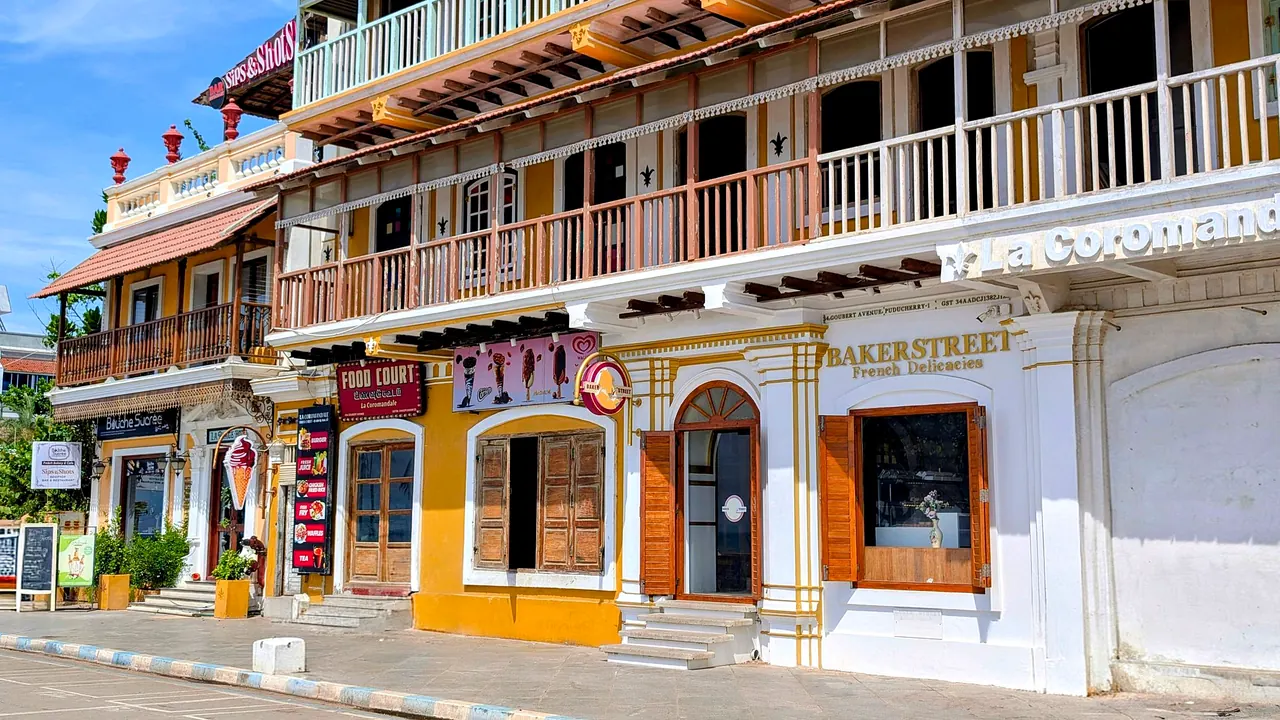
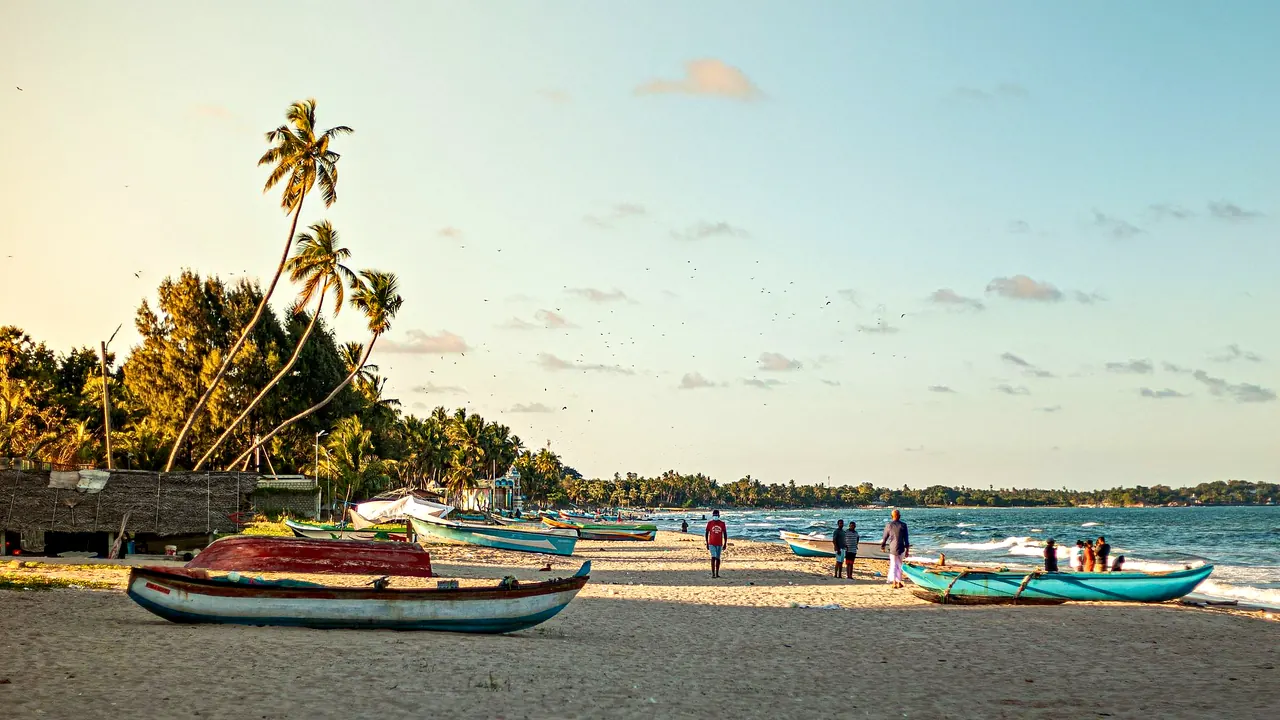
Photos: Pondicherry by Tushar, Pexels License; Trincomalee by Sachith Ravishka Kodikara, Pexels License.
Pondicherry or Trincomalee?
Our verdict in twelve categories, each scored against the same fixed benchmark cities, and the climate month by month, so you can choose for your trip.
Choose Pondicherry for
- shopping
- food and drink
- culture and sights
Pondicherry suits a traveller who wants a town to live in for a few days. You can walk the French and Tamil quarters, eat your way through two cuisines, browse craft boutiques, join yoga or meditation in Auroville and drive out to the great temples of Tamil Nadu. Come for the streets and the slow pace rather than for swimming, because the surf means the sea is mostly for looking at.
Choose Trincomalee for
- beaches
- nature and the outdoors
If the aim is sand and clear water, Trincomalee is the stronger choice. In the right season Nilaveli and Uppuveli offer calm, warm swimming, Pigeon Island and the bay bring reefs, wrecks and whales, and the elephants of Minneriya are a day's outing away. Evenings, shops and sights are thin, so it rewards travellers who are happy with a quiet beach stay and early nights.
Scoreboard
Twelve categories on one fixed scale from 0 to 100. The shaded stretch is the gap between the two.
Your match
Pick a travel style or drag the sliders, and both match scores follow your weighting.
Wins on shopping and food and drink with your weighting.
Wins on beaches and nature and the outdoors with your weighting.
What matters to you?
Category by category
What the scores mean for a trip.
Beaches & swimming
Pondicherry's seafront is a promenade above a wall of boulders. To swim you leave town for Serenity Beach, the Auroville shore or a boat to Paradise Beach, and even there the Bay of Bengal surf keeps most people in the shallows.
Trincomalee is where you can actually swim. Uppuveli and the longer, emptier Nilaveli have pale sand and, from about April to September, flat, clear water, with snorkelling off Pigeon Island and a sheltered cove at Marble Beach. The catch is the northeast monsoon from around November, when the sea turns rough and many beachfront places close.
Food & drink
Pondicherry has more to eat. There are banana-leaf meals and filter coffee in the Tamil Quarter, French bakeries and Creole Franco-Tamil dishes, courtyard cafés in colonial houses and Auroville's farm cooking, and beer and wine are easy to find.
Trincomalee's choice is narrower: rice and curry canteens, evening kottu and Sri Lankan Tamil crab and fish curries in town, then grilled seafood at beach tables. It is good when the catch is fresh, but it changes little from night to night.
Culture & sights
Pondicherry's main sight is the town itself. The ochre villas of the French Quarter and the pillared veranda houses of the Tamil Quarter fill two or three days of walking, with the Basilica, the Ashram's silent samadhi, the elephant at Manakula Vinayagar and the Arikamedu finds along the way.
Trincomalee's history is gathered on one headland: Fort Frederick, with deer among its walls, and Koneswaram on the cliff edge, where visitors can join the puja. Add the war cemetery and you have seen it in a morning.
Nightlife
Neither town has clubs, but Pondicherry gives an evening more to do. Locals stroll the Promenade once it closes to traffic, alcohol is cheap, and rooftop lounges and hotel bars fill with weekend visitors from Chennai and Bangalore before everything shuts early.
In Trincomalee, after dark means a beer on a guesthouse terrace or a beach bar bonfire in Uppuveli during the season, while the town itself goes quiet and conservative.
Nature & outdoors
Trincomalee's outdoors is richer, and most of it is in the water. Pigeon Island has shallow coral with reef sharks and turtles, dive boats visit wrecks around the bay, and blue whales pass over the deep canyon offshore. Inland, Minneriya and Kaudulla add the great elephant gatherings of the late dry season.
Pondicherry's options are gentler: surf lessons at Serenity Beach, some diving, winter flamingos and pelicans at Ousteri Lake, cycling in Auroville's replanted forest and rowing in the Pichavaram mangroves. Both sit on flat coastal plains with no real hiking.
Day trips
Pondicherry has the edge because it is surrounded by temple country. Mahabalipuram's Pallava carvings, the Nataraja temple at Chidambaram, Gingee Fort on its granite hills and the pilgrim town of Tiruvannamalai are all within about two hours, and Auroville is a half day.
Trincomalee reaches some of Sri Lanka's best-known sites, Sigiriya, Dambulla and Polonnaruwa, but each is a long drive and one fills a day. Closer to town there is little beyond the Kanniya hot wells.
Good for families
The two are equally suitable for children, but in different ways. Pondicherry is a town for gentle strolling: children can run along the traffic-free Promenade in the evening, ride the toy train in the Botanical Garden or take a boat to Paradise Beach, though the surf limits the sea to watchful paddling.
Trincomalee is the better pick for water. In the calm season Nilaveli and Marble Beach have shallow, warm water, and older children can snorkel, look for whales or meet the deer at the fort. Long drives and limited medical care argue for a simple beach-based plan.
Getting around
Pondicherry is easier on foot. Its flat, quiet French Quarter is one of the best places to walk in South India, and a hired bicycle covers the old town and seafront, though the beaches and Auroville need an auto-rickshaw or scooter.
In Trincomalee only the town centre and the fort are walkable. Uppuveli and Nilaveli lie several kilometres up the coast, so almost every outing starts with a tuk-tuk, and the buses along the coast road are crowded and irregular.
Shopping & style
Pondicherry is far more rewarding for shopping. The French Quarter boutiques sell block-printed cotton, linen and leather sandals, the Ashram workshops make handmade paper and incense, and Auroville adds pottery and natural soaps, which together make a good bag of gifts.
Trincomalee has a central market for spices, fruit and saris and a few sarong stalls on the beaches. Tea, gems and crafts are better bought elsewhere in Sri Lanka.
Affordability
Both are cheap places to spend a week, with very low costs for canteen meals, rickshaw or tuk-tuk rides and simple guesthouses. Where the money goes is different. In Pondicherry the cost depends mostly on where you sleep: the boutique mansions of the French Quarter and weekend or winter stays cost more, while the Tamil Quarter stays inexpensive.
In Trincomalee the cost depends on what you do. Dives, whale-watching boats, a driver for the Cultural Triangle and the foreigners' fees at parks and ancient sites add up quickly.
Live music & performing arts
Neither has a regular stage, but Pondicherry at least has occasional programmes: Bharatanatyam and Carnatic recitals, events at the French cultural centre and concerts in Auroville's halls. In Trincomalee the live music is drums and nadaswaram at the evening puja in Koneswaram and the town kovils, which Pondicherry's temple festivals also bring, on their own calendar.
Wellness & relaxation
Pondicherry is a place people choose specifically to slow down. You can meditate in the Ashram courtyard, take yoga, breathwork and holistic therapies in Auroville, enrol in courses lasting days or weeks and visit plenty of Ayurvedic centres.
Trincomalee's calm is more personal: a hammock on the veranda, a nap through the heat and a herbal oil massage in your guesthouse's simple treatment room. The Kanniya hot wells, where you pour buckets of water over yourself, are more a curiosity than a soak.
When should you go?
Pick your month. The climate figures are measured averages, not a forecast.
Pondicherry in July
Trincomalee in July
Daytime high, °C
Rainfall in the month, mm
Temperature and rainfall are climate normals, averaged over the years shown. Pondicherry: 1991-2020 (rainfall 1961-1990) normals, Cuddalore (19.8 km from centre). Trincomalee: 1991-2020 normals, Trincomalee (2.6 km from centre).
Pondicherry is at its best from January to March. The rain has stopped by then and daytime highs sit around 30°C, warm enough for the sea and still comfortable for walking the French Quarter. From April the heat builds towards 37°C in May and June, which pushes sightseeing into the early mornings and evenings. The rains begin in August, and the northeast monsoon arrives properly in October, peaks in November at about 456mm and continues through December.
Trincomalee's beach calendar is different. Its calm, clear season runs from roughly April to September, and June is the driest month, although midday is very hot through the summer. It shares the October to December monsoon, but its rain lasts through January and into February, when Pondicherry is already dry. The sea stays warm at both, about 28°C to 30°C all year, so the choice comes down to rain and surf: winter favours Pondicherry and summer favours Trincomalee.
Which traveller are you?
For a beach and sun trip, Trincomalee wins clearly. From April to September Nilaveli and Uppuveli have calm, clear water for real swimming. In Pondicherry the Bay of Bengal surf leaves you wading at Serenity or Paradise Beach and watching sunsets.
On a culture and arts trip, Pondicherry offers far more: two historic quarters to walk, the Ashram, cathedrals and temples in town, occasional Carnatic and dance recitals, and Mahabalipuram and Chidambaram within a day. Trincomalee's sights fill a single morning.
For an outdoors trip, Trincomalee is the better base. Snorkelling with reef sharks and turtles at Pigeon Island, whale-watching over the offshore canyon and elephant safaris inland outdo Pondicherry's birdwatching at Ousteri Lake and cycling on Auroville's forest tracks.
Before you go
| Measure | Pondicherry | Trincomalee |
|---|---|---|
| Official language | Hindi, English | Tamil, Sinhala |
| Currency | Indian Rupee (INR) | Sri Lanka Rupee (LKR) |
| Sockets | CM230 V, 50 Hz | GM230 V, 50 Hz |
| Driving side | Left | Left |
| Time zone | UTC+5:30 | UTC+5:30 |
| Emergency number | 108 or 112 | Police 119, ambulance 110, fire 110 |
| Elevation | 3 m | 8 m |
| Main airport | Chennai International Airport (MAA)123 km from centre68 non-stop destinations | Bandaranaike International Colombo Airport (CMB)214 km from centre58 non-stop destinations |
By the numbers
| Measure | Pondicherry | Trincomalee |
|---|---|---|
| Population | - | 99,135 |
| People per km² | - | 13,218 |
| Museums within 10 km | 3 | 1 |
| UNESCO World Heritage sites within 50 km | 0 | 0 |
| Swim season, months above 21 °C | 12 months | 12 months |
Where else could you go?
Every comparison below shares a destination with this one, so you can follow Pondicherry or Trincomalee somewhere new.
- Chennaivs Pondicherry
- Kandyvs Trincomalee
- Ellavs Trincomalee
- Colombovs Trincomalee
- Bengaluruvs Pondicherry
- Gallevs Trincomalee