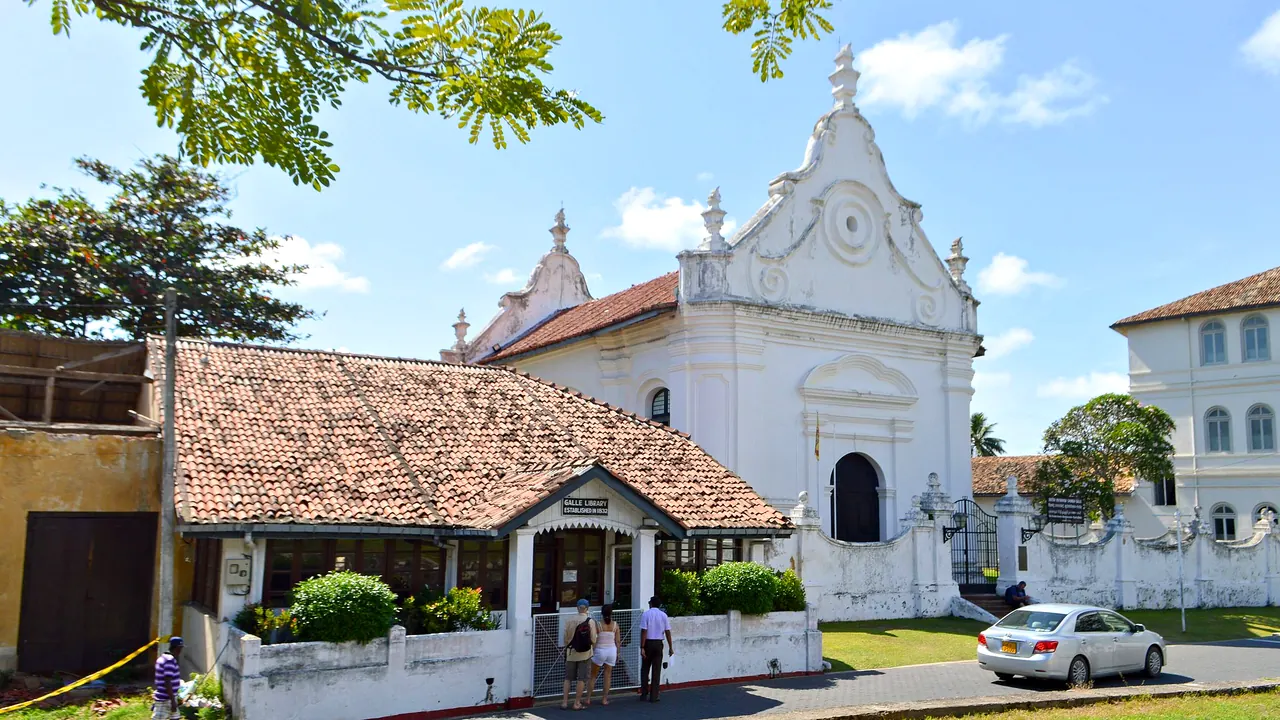
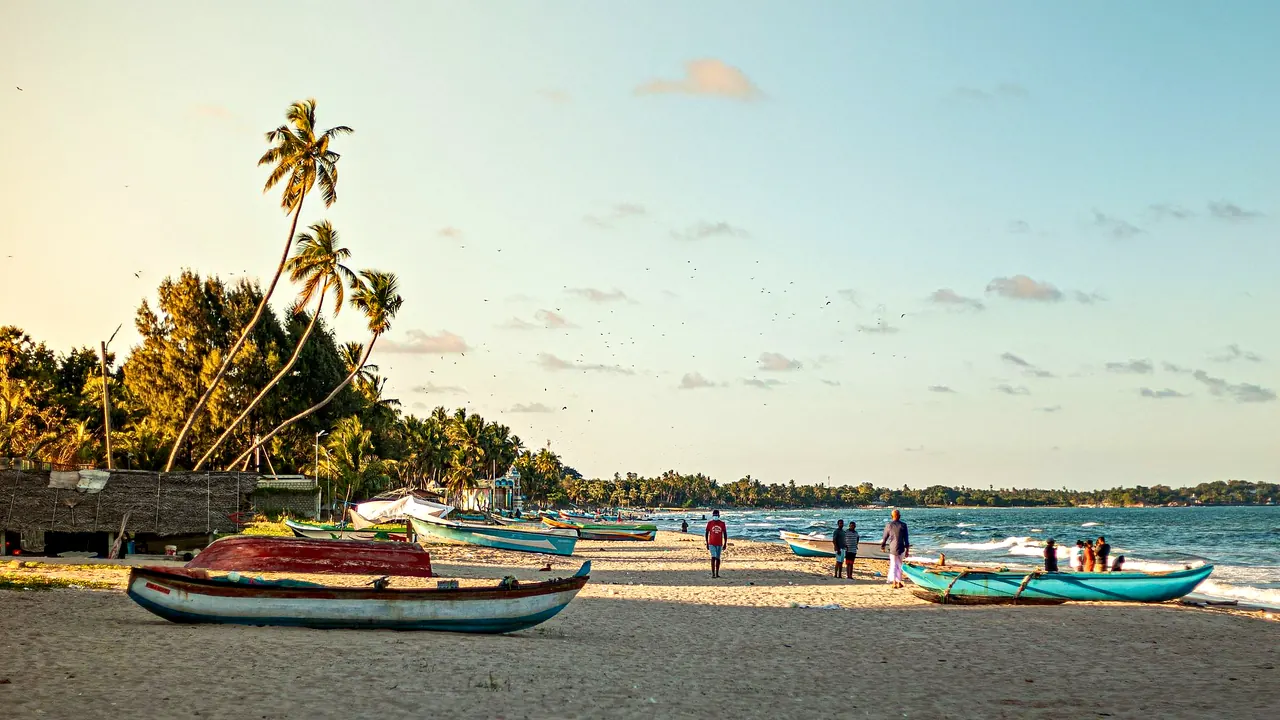
Photos: Galle by Francisco Anzola, CC BY 2.0, cropped; Trincomalee by Sachith Ravishka Kodikara, Pexels License.
Galle or Trincomalee?
Our verdict in twelve categories, each scored against the same fixed benchmark cities, and the climate month by month, so you can choose for your trip.
Choose Galle for
- wellness
- shopping
- culture and sights
Galle suits travellers who want a beach stay with a historic town attached. The walled Dutch fort gives you rampart walks at sunset, courtyard cafés and boutique lanes. The coast either side adds Ayurveda retreats and yoga around Unawatuna and Thalpe. Choose it for a slower, more polished stay with more to eat, see and browse, timed for the northern winter when its seas are calm.
Choose Trincomalee for
- day trips
- prices
Trincomalee is for those who want the sand and little else: the long, empty sweep of Nilaveli, coral off Pigeon Island and evenings even quieter than Galle's. Daily costs are lower, and Sigiriya, Dambulla and Polonnaruwa are within a day's drive, so a beach stay here can include Sri Lanka's ancient cities. Its calm season falls in the European summer, when the south coast is rough.
Scoreboard
Twelve categories on one fixed scale from 0 to 100. The shaded stretch is the gap between the two.
Your match
Pick a travel style or drag the sliders, and both match scores follow your weighting.
Wins on wellness and shopping with your weighting.
Wins on day trips and prices with your weighting.
What matters to you?
Category by category
What the scores mean for a trip.
Beaches & swimming
Both are true beach destinations, but the beaches are not alike. Galle gives you variety along the coast: sheltered Unawatuna minutes away, Jungle Beach below Rumassala, reef pools at Dalawella for snorkelling with turtles, and Mirissa and Weligama within an hour. The town's own shoreline is rock and harbour, though, so every swim means a short ride.
Trincomalee has fewer but bigger beaches: the broad pale sand of Uppuveli, then Nilaveli, longer and emptier, with Pigeon Island's reef just offshore. The two are calm in opposite halves of the year, so the month you travel may decide this for you.
Food & drink
Galle has more range, mostly thanks to the fort. Courtyard cafés in the old Dutch houses serve good coffee and seafood, and heritage villas cook more ambitious dinners. For the best rice and curry, though, eat at the simple local places outside the walls, and get fish buns from the bakery counters in the new town.
Trincomalee is plainer, with canteen lunches, grilled fish at beach tables and no café culture. What it has that Galle does not is the Tamil cooking of the northeast: dosai, vadai and spicy crab curry that taste nothing like the south.
Culture & sights
Galle's fort gives it a clear lead. It is a whole walled town of Dutch lanes, churches, warehouses, temples and a mosque, and you can spend a day or two on it, ending each evening on the bastions.
Trincomalee's history is on one headland. Deer wander through the gate of Fort Frederick, which is still a military base, and at the tip of the rock is Koneswaram, where visitors can join the puja on the cliff edge. Add the war cemetery and a few kovils and you have seen it in a day.
Nightlife
Neither is a place for a night out, though Galle has a little more going on. You can take a drink on a hotel rooftop in the fort or try the beach bars at Unawatuna, and Hikkaduwa is livelier still. In Trincomalee the evening ends with a beer and perhaps a bonfire at an Uppuveli guesthouse, and the conservative town is quiet early.
Nature & outdoors
Both offer plenty outdoors, but of different kinds. Around Galle the country is green and jungly. Kanneliya and Sinharaja rainforests are inland, there are surf breaks at Weligama and Hikkaduwa, boats go through Koggala Lake's mangroves, and blue whale trips leave Mirissa in the dry season.
Trincomalee is mostly about the sea. You can snorkel with reef sharks at Pigeon Island and dive wrecks around the bay, and whales pass close to shore over the deep canyon. Inland it has something Galle cannot match: the elephant gatherings at Minneriya and Kaudulla. The flat scrub around it has no walks to speak of.
Day trips
Trincomalee wins here because of where it sits. Sigiriya, the Dambulla cave temples and the ruins of Polonnaruwa are each about two hours away, so with a driver and an early start you can see one properly and be back on the beach by sunset.
From Galle, the island's ancient cities are too far for a day. The outings follow the coast instead: mask workshops at Ambalangoda, the cliff shrines of Mulkirigala, Dondra Head, and Colombo by the scenic coastal train. They are pleasant, but much of it is more of the coast you are already on.
Good for families
Both work with children in the same way: a beach stay, not a list of attractions. In Galle, children can roam the ramparts in the fort, which has little traffic, paddle at Unawatuna and visit turtle hatcheries, but the main coast road is fast and pavements are poor.
Trincomalee's water at Nilaveli and Marble Beach is shallow and gentle in season. Older children will remember the deer at Fort Frederick and an elephant safari. The heat is harder on small children, the drives are longer and medical facilities are more limited.
Getting around
You will rely on tuk-tuks in both. The difference is how things are laid out. In Galle you can stay inside the fort and walk everywhere on flat, quiet lanes, and the coastal railway and buses to Colombo and the southern towns give you some choice beyond a car.
Trincomalee's beaches are spread out, with Nilaveli about 15km from town, so you ride everywhere by tuk-tuk or scooter. Every trip inland means hiring a car and driver.
Shopping & style
Galle is where you buy things to take home. In its old houses you will find linen and handloom boutiques, tea and spice shops, beeralu lace and gem dealers, though gems need care and some knowledge.
Trincomalee's central market sells saris, spices and household goods to locals, and the beach stalls stop at sarongs. Anyone after souvenirs should do their shopping on the south coast.
Affordability
Both are cheap if you eat local and travel by tuk-tuk, but Trincomalee keeps costs down more easily. Its beach guesthouses are simple and there is little pricey to tempt you. What adds up there is extras: dive trips, drivers to the ancient cities and the park fees charged to foreigners.
Galle has two price levels. Outside the walls it is very good value, but the restored villas, boutique hotels and visitor restaurants in the fort charge close to European resort prices.
Live music & performing arts
Neither has a theatre or concert programme, and keen listeners should look to Colombo. What you might catch differs. In Galle it is Kandyan or low-country dance shows put on at hotels, with the coast's mask-dance tradition at Ambalangoda. In Trincomalee it is drums and nadaswaram pipes at the evening puja at Koneswaram and processions in the Hindu festival calendar.
Wellness & relaxation
Galle is the better place to unwind. Its Ayurveda ranges from guesthouse massages to retreats of a week or more with doctors and prescribed diets, there are yoga studios around Unawatuna and Thalpe, and the fort moves at an easy pace.
Trincomalee's calm comes from the town's slow rhythm and from your own veranda, with simple herbal oil treatments at many guesthouses. The Kanniya hot wells, where you pour buckets of warm water over yourself, are more a curiosity than a real soak.
When should you go?
Pick your month. The climate figures are measured averages, not a forecast.
Galle in July
Trincomalee in July
Daytime high, °C
Rainfall in the month, mm
Where the figures come from
Galle has no weather station within reach, so its figures come from a gridded climate model rather than a measured record, and read a broad area rather than one spot.
Temperature and rainfall are climate normals, averaged over the years shown. Galle: 2001-2020 normals, NASA POWER reanalysis grid, no weather station within 90 km. Trincomalee: 1991-2020 normals, Trincomalee (2.6 km from centre).
The two coasts have opposite seasons. Galle stays close to 28°C all year, so heat is never the problem. Rain decides things. January to March is the driest stretch and the sea is calm and clear from December to April. Rain builds in April and May, the southwest monsoon makes the beaches rough through the summer, and October and November are the wettest months, with November near 334mm.
Trincomalee is dry from March to August and its sea is flat from about April to September, which makes it the summer choice. The catch is heat: daytime highs climb to 36°C in June, so walking around town at midday is hard going. Rain arrives in October, and November and December are very wet, with November around 366mm. The sea is warm on both coasts all year. March is the month when both work well.
Which traveller are you?
For a culture and arts trip, Galle is the better base. It suits someone who would rather wander an intact old town and soak up its atmosphere than queue for big museums. In Trincomalee you will run out of sights in town within a day.
On a relaxing and wellness trip, Galle makes it easier to come home properly rested. Treatments can shape the whole stay rather than fill an odd afternoon, and you will not need to search for them. Trincomalee offers rest, but rest of a plainer, do-it-yourself kind.
On a trip with a tight budget, Trincomalee makes your money last longer, especially over a long stay, since a routine of beach and local food costs little. Keep something back for a trip inland. In Galle, travelling cheaply means staying away from the old town you came to see.
Before you go
| Measure | Galle | Trincomalee |
|---|---|---|
| Official language | Tamil, Sinhala | Tamil, Sinhala |
| Currency | Sri Lanka Rupee (LKR) | Sri Lanka Rupee (LKR) |
| Sockets | GM230 V, 50 Hz | GM230 V, 50 Hz |
| Driving side | Left | Left |
| Time zone | UTC+5:30 | UTC+5:30 |
| Emergency number | Police 119, ambulance 110, fire 110 | Police 119, ambulance 110, fire 110 |
| Elevation | 0 m | 8 m |
| Main airport | Bandaranaike International Colombo Airport (CMB)133 km from centre58 non-stop destinations | Bandaranaike International Colombo Airport (CMB)214 km from centre58 non-stop destinations |
By the numbers
| Measure | Galle | Trincomalee |
|---|---|---|
| Population | 93,118 | 99,135 |
| People per km² | - | 13,218 |
| Museums within 10 km | 2 | 1 |
| UNESCO World Heritage sites within 50 km | 2 | 0 |
| Swim season, months above 21 °C | 12 months | 12 months |
Where else could you go?
Every comparison below shares a destination with this one, so you can follow Galle or Trincomalee somewhere new.