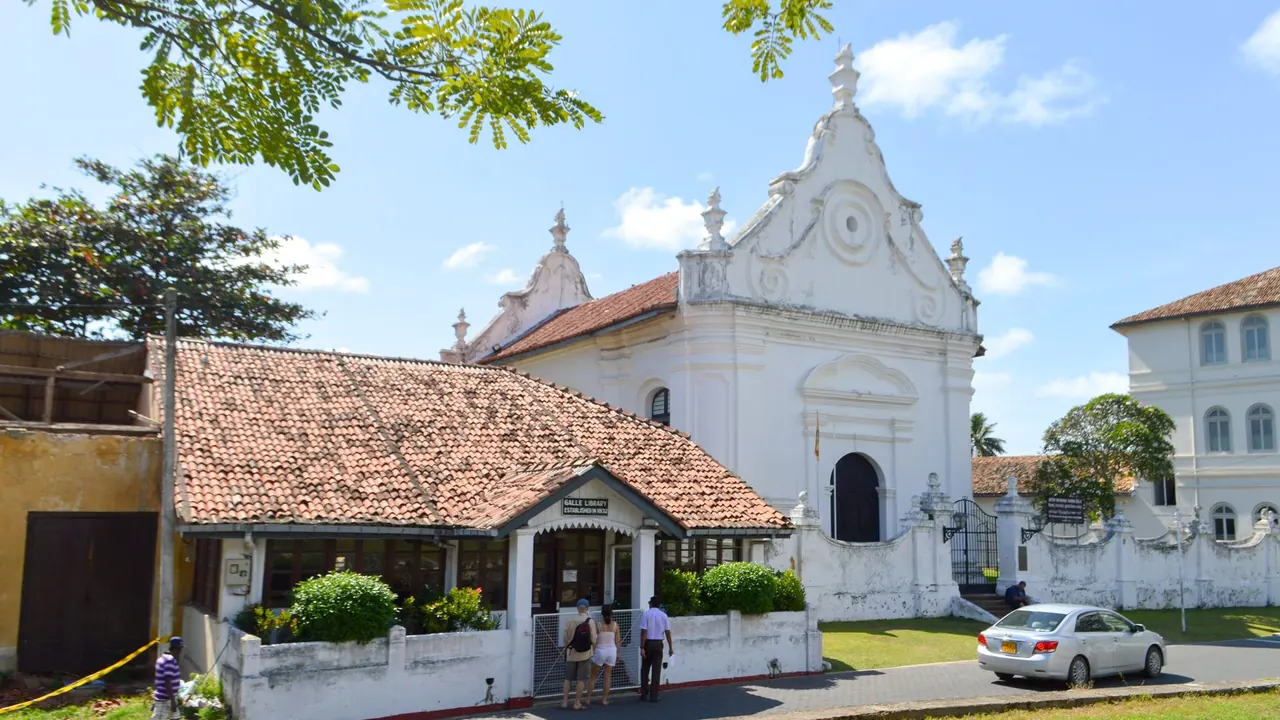
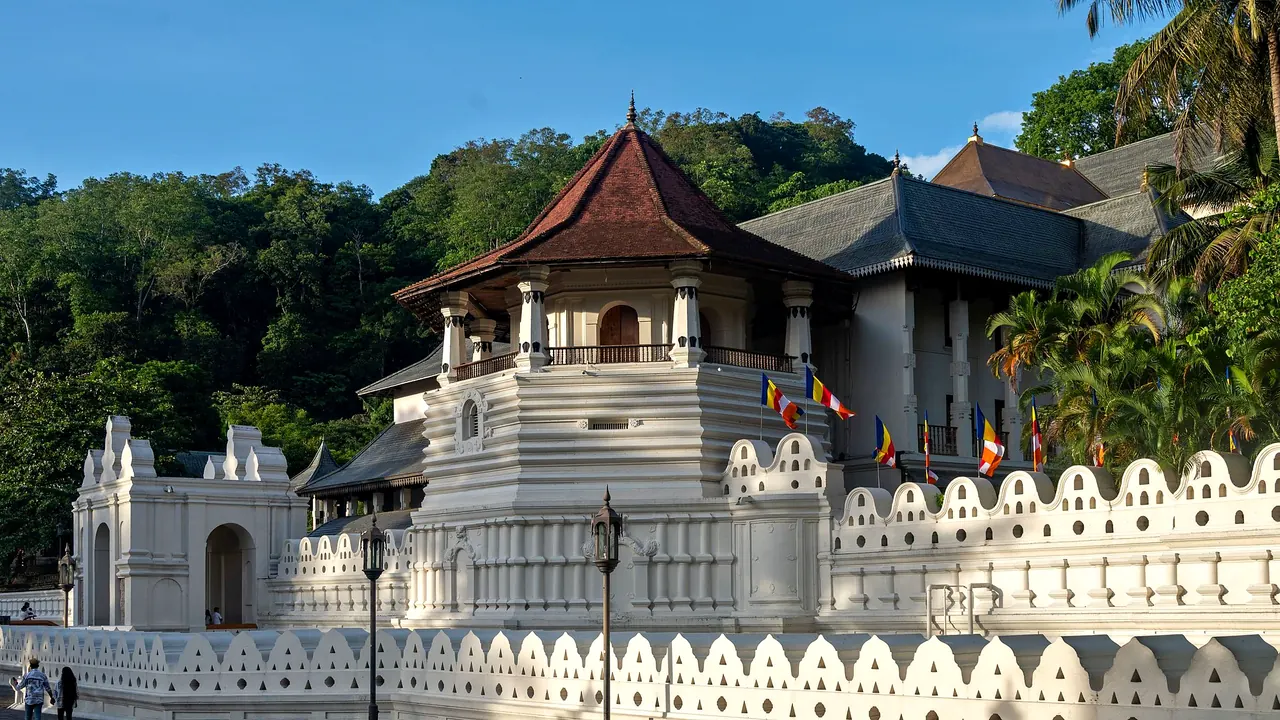
Photos: Galle by Francisco Anzola, CC BY 2.0, cropped; Kandy by xiquinhosilva, CC BY 4.0, cropped.
Galle or Kandy?
Our verdict in twelve categories, each scored against the same fixed benchmark cities, and the climate month by month, so you can choose for your trip.
Choose Galle for
- beaches
- wellness
- food and drink
Galle suits a slower trip by the sea. You get a walled Dutch fort to wander by day, sandy bays such as Unawatuna and the turtle reefs at Dalawella a short tuk-tuk ride away, and Ayurveda and yoga retreats all along the coast. It is the better pick for couples and anyone who wants a beach and a handsome old town in the same place, as long as they come in the calmer dry months.
Choose Kandy for
- live music and the arts
- day trips
- prices
If the island's Buddhist heritage and hill country are the point of the trip, choose Kandy. The Temple of the Sacred Tooth Relic is a working shrine, not a monument, Kandyan dance is staged every evening near the lake, and Dambulla, Sigiriya and the tea estates are within reach for a day out. It is also the cheaper base. The trade-offs are that there is no sea and evenings end early.
Scoreboard
Twelve categories on one fixed scale from 0 to 100. The shaded stretch is the gap between the two.
Your match
Pick a travel style or drag the sliders, and both match scores follow your weighting.
Wins on beaches and wellness with your weighting.
Wins on live music and the arts and day trips with your weighting.
What matters to you?
Category by category
What the scores mean for a trip.
Beaches & swimming
Galle is a beach destination in its own right. Unawatuna's calm curve of sand, Jungle Beach below the Rumassala headland and the snorkelling pools at Dalawella and Thalpe are all a short tuk-tuk ride from the fort, and Mirissa and Weligama are within the hour. The catch is the season: from roughly May to September the southwest monsoon brings surf that makes many beaches unsafe.
Kandy has no beach at all. It sits in the hills about three hours from the coast, the lake is ornamental and the rivers are not safe for bathing. Swimming means a hotel pool, ideally one looking over the forested hills.
Food & drink
Both towns eat the same Sri Lankan staples: rice and curry, hoppers at breakfast, kottu off the griddle and short eats from bakery counters. The difference is range, and Galle has more. Fishermen sell the morning catch on the seafront, fish curries come sharp with goraka, and inside the fort there are courtyard cafés and heritage villas serving good coffee, seafood and more ambitious dinners.
Kandy is plainer. The best meals are in local eating houses near the clock tower and the market, few restaurants aim high, and many visitors end up eating at their hotel. Its own pleasure is tea, tasted at the estates in the surrounding hills.
Culture & sights
Both are UNESCO-listed, but the experience differs. Galle's appeal is a whole colonial townscape: the ramparts, the Dutch Reformed Church with its floor of gravestones, the Maritime Museum in the old warehouses and the white lighthouse. It is best taken in on foot, ending with a sunset walk along the bastions.
Kandy centres on one living shrine, the Temple of the Sacred Tooth Relic. Drummers and pilgrims in white make a visit feel like an occasion as much as a sight, and the royal buildings, the lake and the British Garrison Cemetery lie around it. Each town takes a day or two to see, not a week.
Nightlife
Neither is a place for a night out, but Galle has a little more going on. There are long dinners and drinks on rooftops and verandas in the fort, and a strip of beach bars at Unawatuna with the odd party night in high season. Kandy is a sacred city and empties after dinner, which leaves a hotel terrace over the hills or one of a few old-fashioned bars in the centre.
Nature & outdoors
The outdoors splits into sea and hills. Galle's nature is coastal: reefs for snorkelling and diving, surf breaks at Weligama and Hikkaduwa, blue whales off Mirissa in the dry season, and mangrove boat trips on Koggala Lake. The Kanneliya rainforest is about an hour inland.
Kandy is the better base for walking. Udawatta Kele forest starts directly above the temple, and the Peradeniya gardens spread along a bend of the Mahaweli River. The Hantana hills have tea-estate paths close to town, and the Knuckles Range offers serious hiking through cloud forest further out.
Day trips
From Galle, outings mostly lead to more coast. Along the coast road you find Ambalangoda's mask workshops, the old Dutch town of Matara and the Dondra Head lighthouse, and inland there are cinnamon estates and the Mulkirigala cliff temple. Colombo, about an hour and a half away, is the main change of scene.
Kandy has the stronger list because it opens onto the Cultural Triangle. The painted cave temples of Dambulla are about two hours away, Sigiriya's rock fortress makes a long day, and Embekke, Lankatilaka and Gadaladeniya form a half-day temple circuit. The roads are winding, so every trip takes longer than the map suggests.
Good for families
Galle is the easier of the two with children. The fort's quiet lanes and ramparts are fun to explore, Unawatuna's sheltered bay is good for paddling in the dry months, and turtle hatcheries and whale-watching from Mirissa make simple outings. Monsoon seas and the fast coast road need care.
Kandy's best outings are the lawns at Peradeniya with their monkeys and fruit bats, the elephant visits and the hill-country train. The congested centre and narrow pavements are hard going with small children, though, and the temple asks for quiet. A hotel with a pool and garden outside town makes a big difference.
Getting around
Galle's fort is the easier place of the two to get about on foot. Its lanes are flat and quiet with little traffic, and most visitors spend their days there without needing transport at all. Outside the walls you take a tuk-tuk to the beaches and hire a driver for longer outings, because the narrow coast road leaves no room for walking between bays.
Kandy's centre is just as compact, but it sits in a narrow valley full of traffic and fumes, the pavements are broken and many hotels are up steep hills, so tuk-tuks do much of the work. Kandy has the more memorable railway, though, as the starting point of the famous line through tea country to Ella.
Shopping & style
Neither is a shopping destination, and in both the gem dealers call for caution. Galle's browsing has more style, with design boutiques in the fort's colonial houses selling linen, homeware and handloom textiles, and stalls of beeralu lace. Kandy is about local produce and crafts: tea from the estates, spices, batik, lacquerware and brass, with fixed prices at the government craft shop.
Affordability
Kandy is the cheaper base overall. Guesthouses, local meals and transport all cost little. The main extra costs are the much higher fees foreigners pay at the temple, the botanical gardens and the ancient sites, plus a driver for day trips.
Galle can be just as cheap if you stay at Unawatuna or outside the walls and eat locally. But the fort's restored villas, boutique hotels and restaurants aimed at visitors charge close to European resort prices, and the fort is where most visitors want to stay.
Live music & performing arts
Galle has almost nothing to attend beyond hotel dance shows and the occasional acoustic set. The coast's mask-dance tradition lives further north at Ambalangoda.
Kandy is the home of Kandyan dance. Cultural halls by the lake put on drummers, fire walkers and dancers in silver headdresses every evening, and drumming also accompanies the daily offerings at the temple. In July or August the Esala Perahera brings elephants, dancers and torch bearers through the streets over several nights.
Wellness & relaxation
Galle is the more restful of the two. Residential retreats along the coast offer doctors' consultations and prescribed diets for a week or more, yoga studios cluster around Unawatuna and Thalpe, and many villa hotels have their own treatment rooms. The fort's shaded verandas also keep the days slow.
Ayurveda is the foundation in Kandy too, with treatment centres in town and hillside retreats offering herbal steam baths and yoga with views over forest and tea. The town itself is noisy, though, so for calm you stay up on the hills or walk by the lake early in the morning.
When should you go?
Pick your month. The climate figures are measured averages, not a forecast.
Galle in July
Kandy in July
Daytime high, °C
Rainfall in the month, mm
Where the figures come from
Galle has no weather station within reach, so its figures come from a gridded climate model rather than a measured record, and read a broad area rather than the city itself.
Kandy has no weather station within reach, so its figures come from a gridded climate model rather than a measured record, and read a broad area rather than the city itself.
Temperature and rainfall are climate normals, averaged over the years shown. Galle: 2001-2020 normals, NASA POWER reanalysis grid, no weather station within 90 km. Kandy: 2001-2020 normals, NASA POWER reanalysis grid, no weather station within 90 km.
Galle is warm all year. Daytime highs barely change and the sea stays around 28°C in every month, so the rain and the state of the water are what decide a trip. January to March is the best beach time, with calm, clear sea and the least rain, dropping to about 85mm in February. December already has the calmer water but is still a wet month. Rain builds through April and May, and from roughly May to September the southwest monsoon sends heavy surf onto the coast, making many beaches unsafe for swimming. October and November are the wettest months of all.
Kandy follows a different pattern. January and February are fairly dry and comfortable for walking around the lake and the temple. March and April are the hottest months, reaching 32°C, which makes midday sightseeing tiring. June to August is Kandy's driest stretch, with only about 62mm in July. That is exactly when Galle's sea is at its roughest, so the hills are the better choice in those months. Both towns are very wet from October to December.
Which traveller are you?
On a beach and sun trip, Galle is the clear choice. Unawatuna's sheltered bay, Jungle Beach below Rumassala and the snorkelling reefs at Dalawella are minutes away. Kandy is about three hours from any coast, so swimming there means a hotel pool.
For a culture and arts trip, Kandy has the edge. Galle's fort is a lovely townscape that takes a day or two to see. Kandy adds the daily rituals at the Temple of the Tooth, Kandyan dance every evening and the Cultural Triangle's cave temples and rock fortress within day-trip reach.
On a tight budget, Kandy makes money go further. Guesthouses, local rice and curry and trains are cheap in both towns. Galle's fort, though, draws visitors towards resort-level prices, while Kandy's main extras are the foreigners' fees at sites and a hired driver.
Before you go
| Measure | Galle | Kandy |
|---|---|---|
| Official language | Tamil, Sinhala | Tamil, Sinhala |
| Currency | Sri Lanka Rupee (LKR) | Sri Lanka Rupee (LKR) |
| Sockets | GM230 V, 50 Hz | GM230 V, 50 Hz |
| Driving side | Left | Left |
| Time zone | UTC+5:30 | UTC+5:30 |
| Emergency number | Police 119, ambulance 110, fire 110 | Police 119, ambulance 110, fire 110 |
| Elevation | 0 m | 500 m |
| Main airport | Bandaranaike International Colombo Airport (CMB)133 km from centre57 non-stop destinations | Bandaranaike International Colombo Airport (CMB)84 km from centre57 non-stop destinations |
By the numbers
| Measure | Galle | Kandy |
|---|---|---|
| City population | 93,118 | 120,087 |
| People per km² | - | 4,214 |
| Museums within 10 km | 2 | 6 |
| UNESCO World Heritage sites within 50 km | 2 | 2 |
| Swim season, months above 21 °C | 12 months | - |
Where else could you go?
Every comparison below shares a destination with this one, so you can follow Galle or Kandy somewhere new.