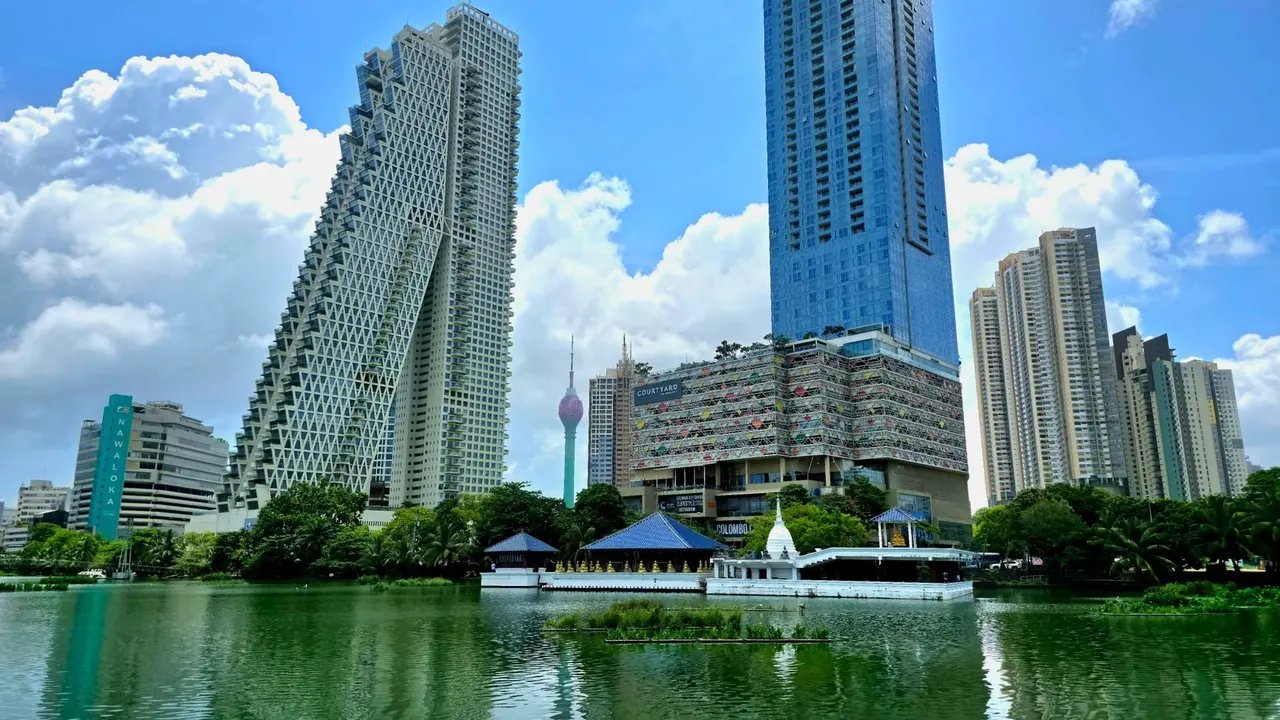
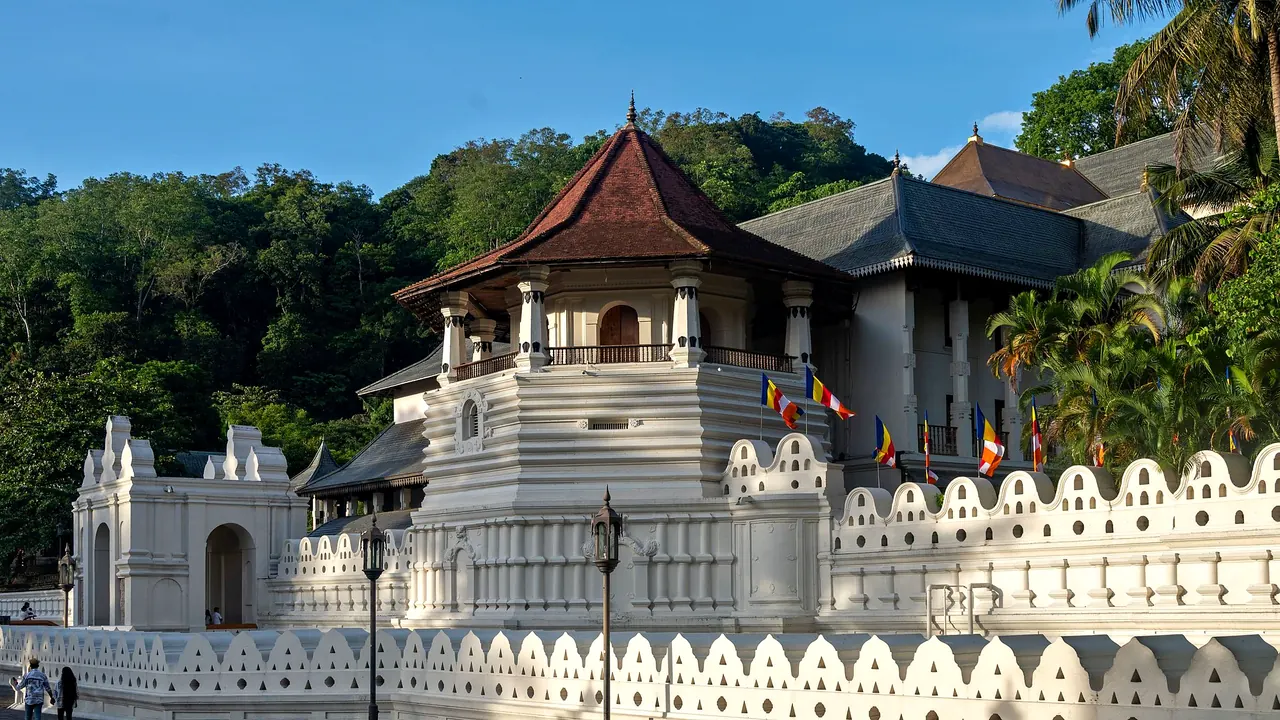
Photos: Colombo by Mohamed Ansaf, Pexels License; Kandy by xiquinhosilva, CC BY 4.0, cropped.
Colombo or Kandy?
Our verdict in twelve categories, each scored against the same fixed benchmark cities, and the climate month by month, so you can choose for your trip.
Choose Colombo for
- beaches
- food and drink
- nightlife
Colombo suits travellers who want to eat well, go out at the weekend and spend some time by the sea, even though the city works better as a staging post than as a resort. It has the widest range of food on the island, from lamprais and lagoon crab to the biryani of the Muslim quarter, and Mount Lavinia and Negombo put sand within easy reach.
Choose Kandy for
- nature and the outdoors
- culture and sights
- day trips
Pick Kandy for the hills, the Temple of the Tooth and the road into the Cultural Triangle. It is the better base for walking in forest and tea country and for visiting Dambulla and Sigiriya. It also makes for a slower and slightly cheaper stay, as long as you are happy with early nights and a drink on a hotel terrace.
Scoreboard
Twelve categories on one fixed scale from 0 to 100. The shaded stretch is the gap between the two.
Your match
Pick a travel style or drag the sliders, and both match scores follow your weighting.
Wins on beaches and food and drink with your weighting.
Wins on nature and the outdoors and culture and sights with your weighting.
What matters to you?
Category by category
What the scores mean for a trip.
Beaches & swimming
Neither city is a beach resort, but only Colombo gives you the sea at all. Mount Lavinia is a usable stretch of sand at the city's southern edge, and Negombo's longer hotel beach is an hour north. The surf there is open and the currents are strong, and swimming is unwise during the monsoon.
Kandy is three hours inland. Its lake is ornamental and its rivers are unsafe for bathing, so swimming means a hotel pool looking out over the hills. Anyone who wants sand on a Kandy trip has to plan a separate stop on the coast.
Food & drink
Both cities serve the same island staples of rice and curry, hoppers and kottu, but in Colombo you can eat far more widely. The sea brings lagoon crab, prawns and cuttlefish, and the Muslim and Tamil quarters add biryani, dosa and thali. Lamprais is a Burgher dish particular to the city, and for a smarter meal there is seafood and hotel dining in Colombo 3 and 7.
Kandy's strength is plain home cooking in the eating houses near the clock tower and the market, and you can taste tea on the estates in the hills. Beyond that the choice narrows, and many visitors end up eating in their hotel.
Culture & sights
Kandy has the deeper draw. The old royal city is a UNESCO site, and the Temple of the Sacred Tooth Relic is the country's most revered Buddhist shrine, with drummers and pilgrims in white at the daily offerings. The lake, the palace buildings and the Garrison Cemetery complete a compact but memorable day.
Colombo has more variety but less weight. It has the National Museum's royal regalia, the eccentric Gangaramaya temple, Bawa's Seema Malaka on Beira Lake, and the mix of colonial buildings, mosque, kovils and church in Fort and Pettah. That fills a day or two, but the island's ancient cities lie far inland, much closer to Kandy.
Nightlife
Colombo is no party city, but it does give you somewhere to go out. There are rooftop lounges over the ocean, hotel bars, a handful of clubs in Colombo 3 and around Galle Face that fill up at weekends, and casinos that stay open late. An arrack cocktail on a sea-facing terrace at sunset is its signature drink.
Kandy is a sacred city and its streets empty after dinner. A night out means a hotel terrace above the hills or one of a few old-fashioned bars in the centre, so save any late nights for the capital.
Nature & outdoors
This is where Kandy pulls far ahead. The town lies in a bowl of green hills at about 500m. Udawatta Kele's forest, with its monkeys and birds, is a walk from the temple, and the Peradeniya gardens spread along the Mahaweli River close by. The Knuckles Range offers cloud forest, villages and waterfalls for serious hiking.
Colombo is flat and built up. Its outdoor options are the shade of Viharamahadevi Park and Beira Lake, and birdwatching in the Diyasaru and Beddagana wetlands or by boat on the Muthurajawela marsh. For rainforest, tea hills or rafting, you have to leave the city.
Day trips
Kandy has the stronger list because it opens onto the Cultural Triangle. The painted caves of Dambulla are about two hours away, with Sigiriya beyond, and the medieval temples of Embekke, Lankatilaka and Gadaladeniya make an easy half-day loop. Winding roads make every outing slower than the map suggests.
Colombo's best day out is south to the walled Dutch fort at Galle, stopping at the Bawa gardens near Bentota, the mask carvers of Ambalangoda and the stupa at Kalutara. To the north, Negombo has a Dutch canal and fish markets. The expressway and the coastal railway make these smoother journeys than anything around Kandy.
Good for families
Colombo's outings for children are city pleasures. There is the zoo at Dehiwala, fish and turtles to feed at temple ponds, kites on Galle Face Green in the evening and a train ride along the coast. The city beaches look inviting, but the sea there is often too rough for small children.
In Kandy the best days with children are spent outside the centre, among the monkeys and fruit bats at Peradeniya, at the elephants or on the hill-country railway. In town, the traffic and the temple's rules on quiet and covered knees make things harder. Pushchairs are impractical in either city, and a garden hotel with a pool on the hills outside Kandy is the easiest base.
Getting around
Both cities run on tuk-tuks, neither has a metro, and in both the local buses are hard for a visitor to read. Colombo is the larger city to cover, so app-booked tuk-tuks and cars do most of the work. The coastal railway is pleasant for Mount Lavinia, and Galle Face and Beira Lake are good for walking.
Kandy's centre is compact, with the temple, lake and market a short walk apart. Even so, traffic squeezed through a narrow valley, fumes and steep climbs up to the hillside hotels make walking tiring. From either city, day trips usually mean hiring a car and driver.
Shopping & style
Colombo gives you more reasons to shop. Pettah's wholesale bazaar, where each street keeps to its own trade, is worth walking for the spectacle alone. In Colombo 3 and 7, design-led stores, some in old colonial villas, sell handloom cotton, batik, homeware and Sri Lankan fashion.
Kandy sticks to local products: tea from the hill estates, spices, lacquerware, brass and carved masks, plus fixed-price crafts at the government shop and a busy central market. Both cities sell gems, so buy only from a reputable dealer. Take extra care in Kandy, where drivers steer visitors to showrooms that pay them a commission.
Affordability
Both cities are cheap by international standards, and Kandy is a little cheaper. Its family-run guesthouses and local eating houses cost little. The main extra costs are the higher entrance fees foreigners pay at the temple, Peradeniya and the ancient sites, and a car and driver for day trips.
Colombo is the most expensive place on the island. You can keep costs low by eating in local houses and using tuk-tuks and trains, but the seafront hotels, rooftop bars and upmarket seafood restaurants charge close to international rates, and imported drink is heavily taxed.
Live music & performing arts
Colombo has the country's formal stages. The lotus-shaped Nelum Pokuna puts on concerts, dance and visiting productions, the Lionel Wendt is the home of English-language drama and recitals, and the Symphony Orchestra of Sri Lanka plays a few times a year. Hotels add jazz and live bands at weekends, though none of this is a nightly programme.
Kandy offers tradition rather than theatre. It is the home of Kandyan dance, with trained troupes performing every evening in halls near the lake, and drummers mark the daily offerings at the temple. Its great event is the Esala Perahera, held over several nights in July or August, when elephants, dancers and torch bearers carry the relic casket through the streets.
Wellness & relaxation
For a full residential Ayurveda course, Colombo sends you down the coast to Beruwala or Bentota, while Kandy has its retreats on its own hills. In the capital, clinics and hotel spas offer warm-oil massage, shirodhara and herbal steam baths. The calm moments there are a sunset on Galle Face or a quiet temple courtyard.
Kandy's hillside hotels combine treatment with yoga and views over forest and tea estates, and the spice gardens on the Matale road sell the oils and remedies. The town below is no quieter than Colombo, so early morning by the lake is the most peaceful time to be in the centre.
When should you go?
Pick your month. The climate figures are measured averages, not a forecast.
Colombo in July
Kandy in July
Daytime high, °C
Rainfall in the month, mm
Where the figures come from
Kandy has no weather station within reach, so its figures come from a gridded climate model rather than a measured record, and read a broad area rather than the city itself.
Temperature and rainfall are climate normals, averaged over the years shown. Colombo: 1991-2020 normals, Colombo (3 km from centre). Kandy: 2001-2020 normals, NASA POWER reanalysis grid, no weather station within 90 km.
Colombo is hot all year, with daytime highs of 30-32°C, so what matters there is the rain rather than the heat. January to March is the best stretch. These are the driest and sunniest months, and the sea at Mount Lavinia is a calm 28°C. The southwest monsoon brings heavy rain in April and May, peaking around 314mm, and keeps the sea rough and often unsafe until about September. October and November are wetter still.
Kandy sits higher and is a few degrees cooler. January and February pair its mildest days with fairly dry weather, which makes them the most comfortable months for walking the town and the trails. The hills also run on a different pattern from the coast. June to August is Kandy's driest stretch, just when Colombo's shore is at its roughest, while October to December brings the hills their heaviest rain and slippery paths. Early in the year works for both cities, and a mid-year trip favours Kandy.
Which traveller are you?
On a beach and sun trip, Colombo is the only real option of the two. Kandy is about three hours from any coast, while Colombo has Mount Lavinia within the city and Negombo an hour north. A proper beach stay still means heading further south.
For an outdoors trip, Kandy is clearly better. Udawatta Kele's forest trails start just above the temple and Peradeniya's gardens are a short ride away. The Knuckles Range and the Hantana tea hills offer real hiking, while Colombo's green space is mostly parks and wetlands.
On a food and nightlife trip, choose Colombo. Its menus run from hoppers and lamprais to crab, biryani and dosa, and at weekends there are rooftop bars and clubs to go to. Kandy offers good home cooking, few ambitious restaurants and quiet evenings.
Before you go
| Measure | Colombo | Kandy |
|---|---|---|
| Official language | Tamil, Sinhala | Tamil, Sinhala |
| Currency | Sri Lanka Rupee (LKR) | Sri Lanka Rupee (LKR) |
| Sockets | GM230 V, 50 Hz | GM230 V, 50 Hz |
| Driving side | Left | Left |
| Time zone | UTC+5:30 | UTC+5:30 |
| Emergency number | Police 119, ambulance 110, fire 110 | Police 119, ambulance 110, fire 110 |
| Elevation | 1 m | 500 m |
| Main airport | Bandaranaike International Colombo Airport (CMB)28 km from centre57 non-stop destinations | Bandaranaike International Colombo Airport (CMB)84 km from centre57 non-stop destinations |
By the numbers
| Measure | Colombo | Kandy |
|---|---|---|
| City population | 647,557 | 120,087 |
| People per km² | 17,361 | 4,214 |
| Museums within 10 km | 10 | 6 |
| UNESCO World Heritage sites within 50 km | 0 | 2 |
| Swim season, months above 21 °C | 12 months | - |
Where else could you go?
Every comparison below shares a destination with this one, so you can follow Colombo or Kandy somewhere new.