Photos: Kandy by xiquinhosilva, CC BY 4.0, cropped; Trincomalee by Sachith Ravishka Kodikara, Pexels License.
Kandy or Trincomalee?
Our verdict in twelve categories, each scored against the same fixed benchmark cities, and the climate month by month, so you can choose for your trip.
Choose Kandy for
- culture and sights
- live music and the arts
- shopping
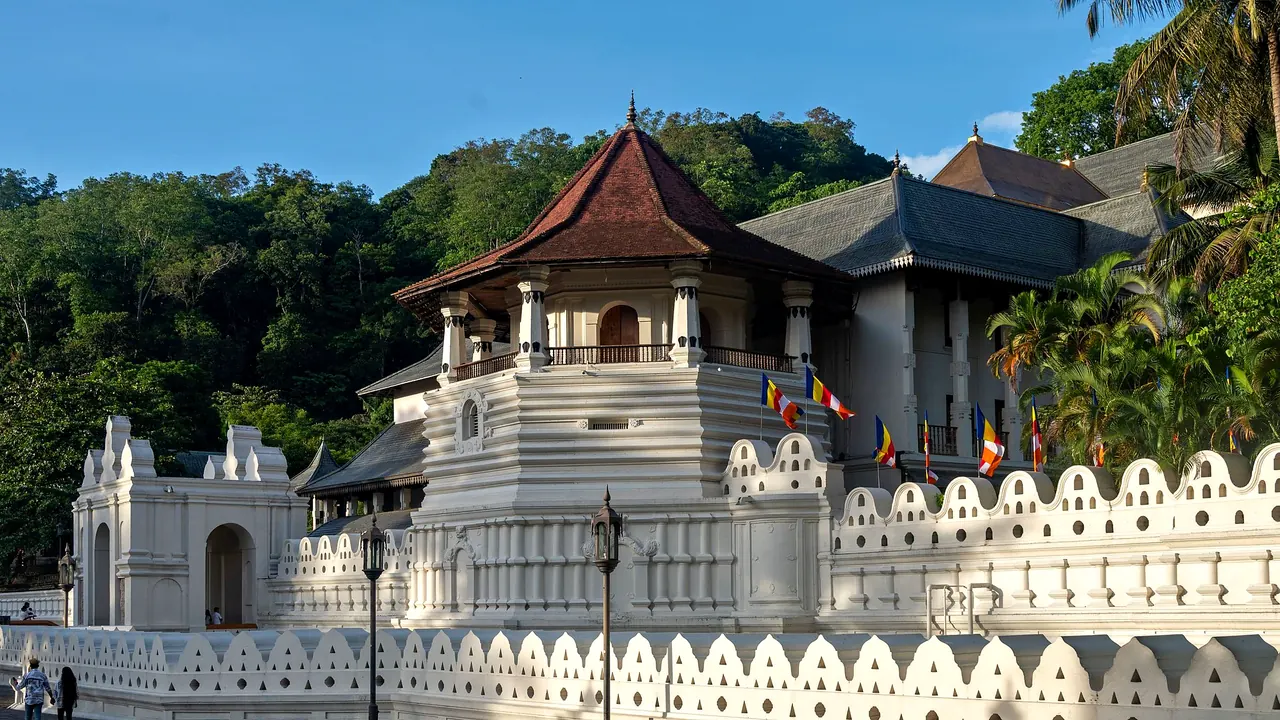
Kandy suits travellers who come to Sri Lanka for its Buddhist heritage and its hill country. The Temple of the Sacred Tooth Relic, the evening Kandyan dance and the forest and tea estates on the hills around the lake give a stay here more to see and do on land, and the town makes a convenient base for the Cultural Triangle and the train up into the tea country. It is not a place to swim or go out, so it works best as one stop on a longer route.
Choose Trincomalee for
- beaches
- families
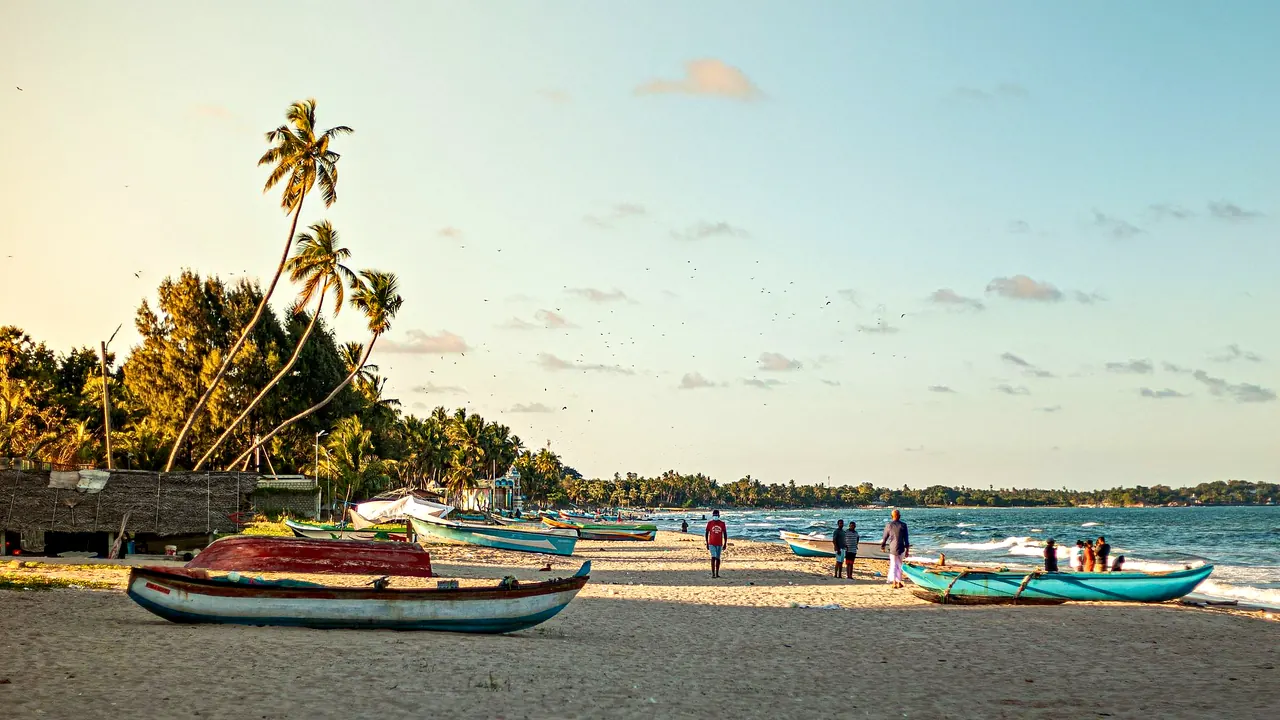
Trincomalee is the choice for a slow beach stay on the east coast. Uppuveli and Nilaveli offer pale sand and calm, warm water in the dry months, with snorkelling at Pigeon Island and whale-watching offshore, and Sigiriya and Polonnaruwa are still within a day's drive. The sights in town fill only a morning, so come for the sea and the quiet rather than for culture or shopping.
Scoreboard
Twelve categories on one fixed scale from 0 to 100. The shaded stretch is the gap between the two.
Your match
Pick a travel style or drag the sliders, and both match scores follow your weighting.
Too close to call, 1 point apart
Wins on culture and sights and live music and the arts with your weighting.
Wins on beaches and families with your weighting.
What matters to you?
Category by category
What the scores mean for a trip.
Beaches & swimming
Kandy has no beach at all. It lies in the central hills, its lake is ornamental and its rivers are unsafe for bathing, so swimming means a hotel pool with a view over the forest.
Trincomalee is built around its beaches: Uppuveli close to town, the longer and quieter Nilaveli up the coast, and the sheltered cove at Marble Beach for the gentlest swim. From spring to late summer the water is calm and clear, with reef snorkelling at Pigeon Island, though the monsoon closes the season from around November.
Food & drink
Both cities eat simply and locally, and neither has much in the way of ambitious restaurants. In Kandy that means hill-country rice and curry at eating houses near the clock tower, hoppers for breakfast and trays of short eats in bakery windows, with tea tastings on the nearby estates as the local speciality.
Trincomalee's cooking has a Tamil accent, with dosai, vadai and spicy crab curries in town, while on the beaches most meals are grilled fish at guesthouse tables. Seafood lovers will eat better on the coast, and tea drinkers in the hills.
Culture & sights
Kandy is the stronger cultural stop by a wide margin. The old royal capital is a World Heritage site, and the Temple of the Sacred Tooth Relic is a working shrine where drummers, pilgrims and lotus offerings matter as much as the gilded architecture, with the palace buildings, the lake and the garrison cemetery close by.
Trincomalee's history is concentrated on its harbour headland: Fort Frederick, with deer among the walls, and the rebuilt Koneswaram temple on the cliff edge. Add the war cemetery and a few kovils and it is done in a morning.
Nightlife
Evenings are quiet in both. Kandy is a sacred town where the lakeside streets empty after dinner, leaving a hotel terrace or an old-fashioned bar in the centre. Trincomalee offers a beer at a beach bar in Uppuveli in season, perhaps by a bonfire, which is a more relaxed setting but no livelier; anyone wanting a real night out should save it for Colombo.
Nature & outdoors
In Kandy the outdoors means walking in forest and hills, and in Trincomalee it means a boat, a mask and the open sea. From the temple in Kandy you can climb straight into the shaded trails of Udawatta Kele, with monkeys overhead. You can also spend a morning among the giant bamboo and fruit bats at Peradeniya, follow tea-estate paths in the Hantana hills or head out for cloud-forest hiking in the Knuckles Range.
Trincomalee's best days start at the jetty. There are reef sharks and turtles in the shallows at Pigeon Island, wrecks and rocky reefs around the bay, and blue whales over the deep canyon offshore in season. Inland the country is flat scrub with no walking of note, though the elephant gatherings at Minneriya and Kaudulla are about two hours away.
Day trips
Both are gateways to the Cultural Triangle, approached from opposite sides. From Kandy, Dambulla is the easy target and Sigiriya a long day, but there are closer outings too: the medieval temple circuit of Embekke, Lankatilaka and Gadaladeniya, tea factories, spice gardens and the elephants at Pinnawala.
From Trincomalee, Sigiriya, Dambulla and Polonnaruwa are all a similar drive, so Polonnaruwa works as a day trip rather than an overnight stop. Near the town itself, though, there is little beyond the Kanniya hot wells.
Good for families
Neither town has anything designed for children, but they work for families in different ways. In Kandy the best days are the lawns and fruit bats at Peradeniya, an elephant visit and the hill-country train, but the congested centre and broken pavements are hard with a pushchair, and the temple expects quiet.
Trincomalee gives children shallow, warm water at Nilaveli and Marble Beach, snorkelling and a whale boat for older ones, at the cost of strong heat, long drives and limited medical care. Both are best with a hotel pool, and the coast is best avoided in the monsoon.
Getting around
Getting around is about equally tiring in both, for different reasons. Kandy's temple, lake and market are close together, but traffic squeezed into a narrow valley, fumes and steep climbs to hillside hotels make walking hard work. In its favour, the railway station connects it with Colombo and with the scenic line to Ella.
Trincomalee is spread out along the coast, with Nilaveli some 15km from town, so you need a tuk-tuk, scooter or driver to reach the beaches. In both places, trips inland mean hiring a car.
Shopping & style
Kandy has the better shopping, though it is about local products rather than style. Tea from the hill estates, spices, batik, lacquerware, brass and carved masks are all easy to find, and the government craft shop sells at fixed prices, but gem showrooms reached through drivers call for caution.
Trincomalee has little beyond its central market, saris and everyday goods, and a few sarong stalls on the beaches, so buy your souvenirs in Kandy.
Affordability
Both are inexpensive, with cheap guesthouses, rice and curry and tuk-tuk rides. What differs is where the money goes. In Kandy it goes on the foreigners' entrance fees at the temple, Peradeniya and the ancient sites, on boutique hotels on the hills, and on rooms during the Perahera.
In Trincomalee the extra spending is on the water and on the coast: dive and whale-watching trips, park fees and beachfront resorts.
Live music & performing arts
Kandy has a living performance tradition of its own. Kandyan dance, with its drummers, fire walkers and silver headdresses, is staged every evening in cultural halls by the lake, and the Esala Perahera fills the streets with elephants, dancers and torch bearers over several nights in July or August.
Trincomalee has no stage life at all. The closest you will come is the drums and nadaswaram pipes at the evening puja at Koneswaram and the kovils in town.
Wellness & relaxation
Kandy's Ayurveda reaches further, with retreats on the surrounding hills running longer programmes with prescribed diets. Many pair these with yoga and views over forest and tea estates. The town itself is too noisy to rest in, so the calm lies up on the hills or by the lake in the early morning.
Trincomalee's treatments are simpler: herbal oil massages and steam baths in plain guesthouse rooms. The real rest is the slow coastal pace, with early starts before the heat and afternoons in a hammock on a shaded veranda. The Kanniya hot wells, where you pour buckets of spring water over yourself, are a curiosity rather than a soak.
When should you go?
Pick your month. The climate figures are measured averages, not a forecast.
Kandy in July
Trincomalee in July
Daytime high, °C
Rainfall in the month, mm
Where the figures come from
Kandy has no weather station within reach, so its figures come from a gridded climate model rather than a measured record, and read a broad area rather than one spot.
Temperature and rainfall are climate normals, averaged over the years shown. Kandy: 2001-2020 normals, NASA POWER reanalysis grid, no weather station within 90 km. Trincomalee: 1991-2020 normals, Trincomalee (2.6 km from centre).
Kandy sits in the hills and stays warm rather than hot all year, with daytime highs from 27°C in December and January to the low thirties in April. The driest and most comfortable stretch for walking and hiking runs from June to August, while October to December brings the heaviest rain, peaking at 279mm in November, when forest trails turn slippery.
Trincomalee runs on a different pattern. From March to August it is dry and the sea is flat and warm at about 30°C, which is the beach season, but the heat builds to 36°C in June, so walking around town is best done early. The northeast monsoon arrives in October and is at its wettest in November at 366mm, with rough seas lasting into January. Kandy stays more pleasant through the inland heat of mid-year, and Trincomalee is at its best when Kandy is at its driest, so a summer route can take in both.
Which traveller are you?
For a beach and sun trip, Trincomalee is the clear choice. Uppuveli and Nilaveli have long sandy beaches and warm, clear water from spring to late summer, while Kandy lies inland in the hills and offers nothing more than a hotel pool.
On a culture and arts trip, Kandy wins comfortably. The Temple of the Sacred Tooth Relic, the old royal compound, the nightly Kandyan dance and the Esala Perahera give far more depth than Trincomalee's fort and cliff-top Koneswaram shrine.
On a shopping trip, Kandy is the better bet, though neither is a fashion destination. Tea from the hill estates, spices, batik, lacquerware and masks, plus a fixed-price government craft shop, beat Trincomalee's market stalls and beach sarongs.
Before you go
| Measure | Kandy | Trincomalee |
|---|---|---|
| Official language | Tamil, Sinhala | Tamil, Sinhala |
| Currency | Sri Lanka Rupee (LKR) | Sri Lanka Rupee (LKR) |
| Sockets | GM230 V, 50 Hz | GM230 V, 50 Hz |
| Driving side | Left | Left |
| Time zone | UTC+5:30 | UTC+5:30 |
| Emergency number | Police 119, ambulance 110, fire 110 | Police 119, ambulance 110, fire 110 |
| Elevation | 500 m | 8 m |
| Main airport | Bandaranaike International Colombo Airport (CMB)84 km from centre58 non-stop destinations | Bandaranaike International Colombo Airport (CMB)214 km from centre58 non-stop destinations |
By the numbers
| Measure | Kandy | Trincomalee |
|---|---|---|
| Population | 120,087 | 99,135 |
| People per km² | 4,214 | 13,218 |
| Museums within 10 km | 6 | 1 |
| UNESCO World Heritage sites within 50 km | 2 | 0 |
| Swim season, months above 21 °C | - | 12 months |
Where else could you go?
Every comparison below shares a destination with this one, so you can follow Kandy or Trincomalee somewhere new.