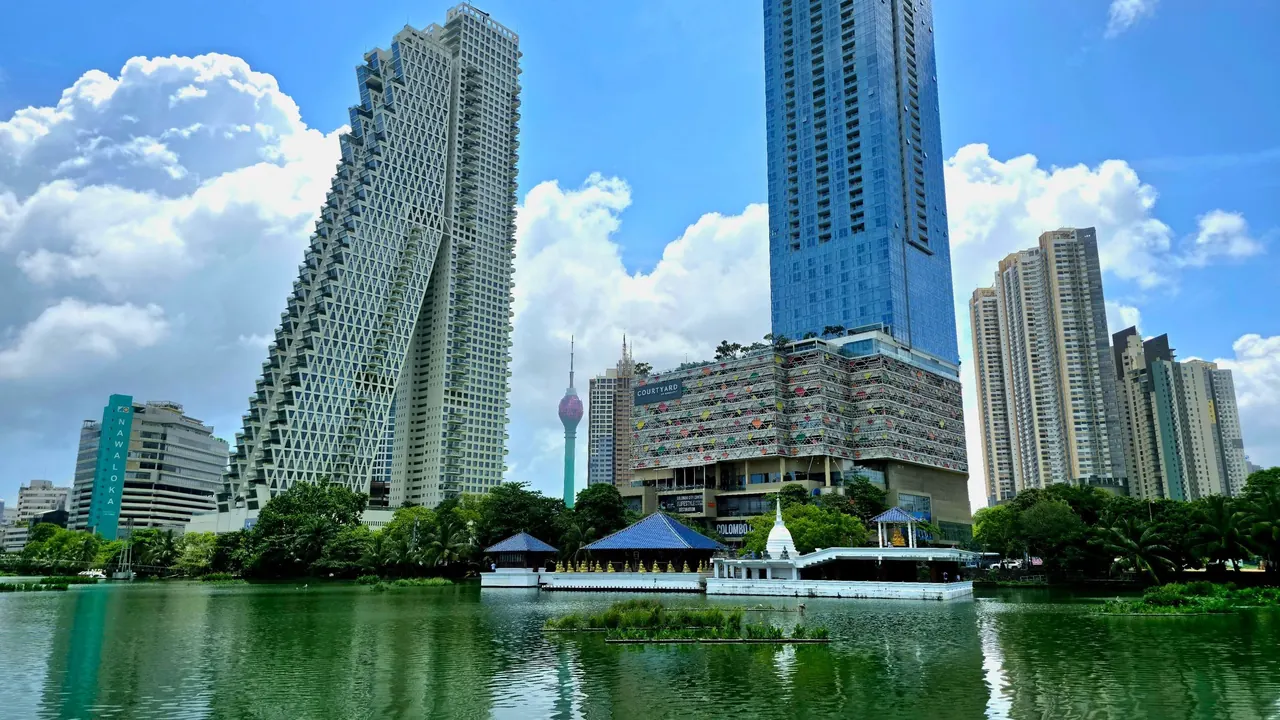
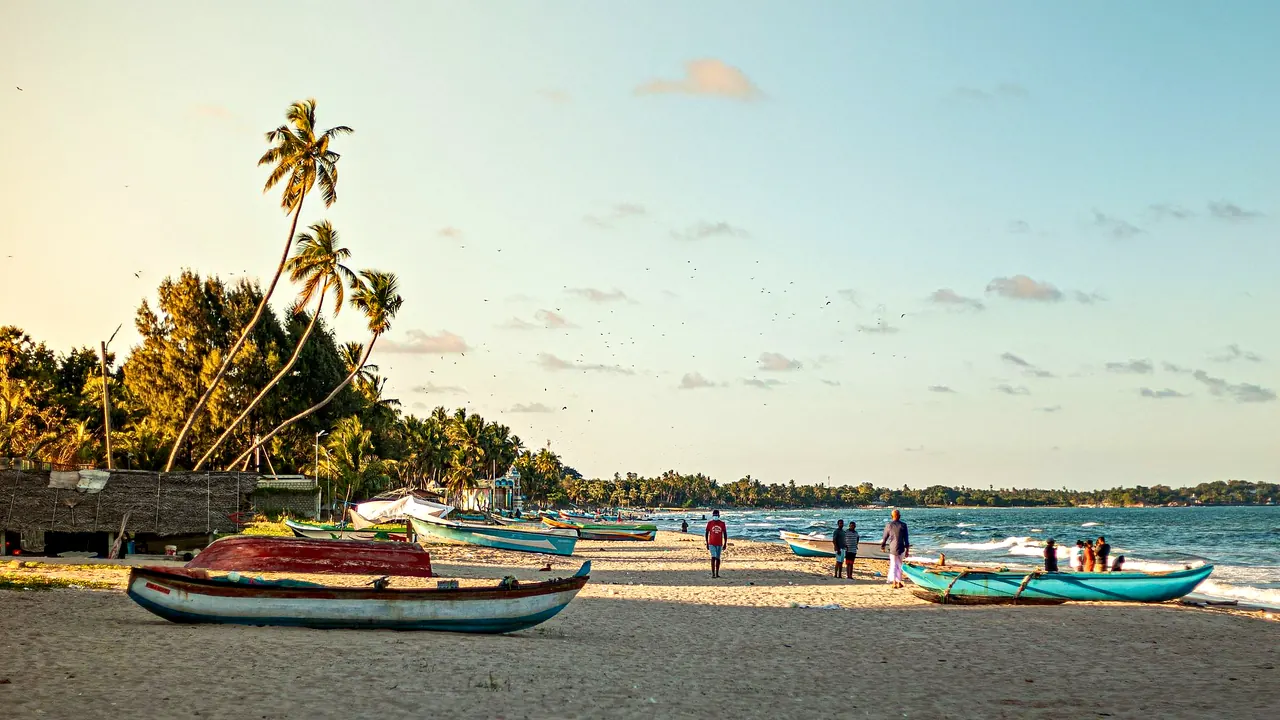
Photos: Colombo by Mohamed Ansaf, Pexels License; Trincomalee by Sachith Ravishka Kodikara, Pexels License.
Colombo or Trincomalee?
Our verdict in twelve categories, each scored against the same fixed benchmark cities, and the climate month by month, so you can choose for your trip.
Choose Colombo for
- shopping
- food and drink
- nightlife
Colombo suits a traveller who wants a city with real depth at the table. It offers hoppers, lamprais and crab, the Pettah bazaar to wander, the National Museum, and sunset drinks on a sea-facing terrace. It works best as the opening or closing stop of a Sri Lanka trip, with Galle for a day out, and during the dry, calm months at the turn of the year.
Choose Trincomalee for
- nature and the outdoors
- beaches
- day trips
Trincomalee is for a slow beach stay on the east coast between spring and early autumn. The day is pale sand at Uppuveli and Nilaveli, snorkelling at Pigeon Island and whale trips offshore. Elephants and the great ruins of the Cultural Triangle are within a day's drive. Come ready for quiet evenings, simple meals and very little to buy.
Scoreboard
Twelve categories on one fixed scale from 0 to 100. The shaded stretch is the gap between the two.
Your match
Pick a travel style or drag the sliders, and both match scores follow your weighting.
Wins on shopping and food and drink with your weighting.
Wins on nature and the outdoors and beaches with your weighting.
What matters to you?
Category by category
What the scores mean for a trip.
Beaches & swimming
Colombo faces the Indian Ocean but is not really a beach base. Galle Face Green is a promenade, and Mount Lavinia's broad sand meets open surf and strong currents. Travellers who want a proper beach stay move on to Negombo or Bentota.
In Trincomalee the beach is the point of the trip. Uppuveli lies a short tuk-tuk ride from town, Nilaveli further up the coast is longer and calmer, and Marble Beach is a sheltered cove. When the sea is flat there is reef snorkelling off Pigeon Island. Both seas are equally warm, but Trincomalee's calm months are the very ones when Colombo's coast turns rough.
Food & drink
Colombo is the place to eat. Rice and curry comes with sambols and mallung, hoppers appear at breakfast and supper, and the Burgher lamprais is found nowhere else. Lagoon crab and the biryani and dosa of the Muslim and Tamil quarters widen the choice, and at the upper end there is seafood and hotel dining in Colombo 3 and 7.
Trincomalee's Tamil cooking has its own character, with dosai, vadai and crab curries that taste different from the south, and the morning catch at the harbour feeds the beach tables. But meals come from plain canteens and guesthouse kitchens, and there is no fine dining.
Culture & sights
Neither is a heritage capital, but Colombo has more to see within the city. The National Museum holds royal regalia and ancient sculpture, and Gangaramaya and Bawa's Seema Malaka sit by Beira Lake. In Fort and Pettah, colonial buildings stand beside the striped mosque, Hindu kovils and the Dutch church.
Trincomalee's sights cluster on a single headland. Deer wander inside Fort Frederick's walls, and Koneswaram stands on the cliff above the sea, holding pujas that visitors can join. Add the war cemetery and the town kovils, and one day covers it.
Nightlife
Colombo has a modest but real night out. There are rooftop lounges over the ocean and hotel bars, a handful of clubs in Colombo 3 and around Galle Face that fill at weekends, and casinos that stay open late. Arrack cocktails at sunset are its signature drink.
Trincomalee has almost none of this. A few beach bars and guesthouse terraces in Uppuveli serve drinks in season, sometimes around a bonfire, and the town is quiet and conservative after dark. In both cities, bars stop serving on Poya days.
Nature & outdoors
Colombo's outdoors is urban. There is shade in Viharamahadevi Park and around Beira Lake, birdwatching in the Diyasaru and Beddagana wetlands, and boat trips into the Muthurajawela marsh. Rainforest, tea hills and whales all mean a long drive.
Trincomalee has wildlife close by, mostly at sea. Pigeon Island has shallow coral with reef sharks and turtles, dive boats visit wrecks around the bay, and whale trips go out over the deep canyon offshore. Inland, Minneriya and Kaudulla draw great gatherings of elephants, though the flat scrub country offers no hiking.
Day trips
Colombo's best outings run south along the coast. Galle's ramparted fort town is about two hours away, with the Bawa gardens at Bentota, Ambalangoda's masks and Kalutara's white stupa along the route. Negombo's canal and fish markets are an hour north, while Kandy works better as an overnight stop.
Trincomalee has the edge for famous sights. Sigiriya, Dambulla and Polonnaruwa are each about two hours away by road, close enough to see one properly with a driver and be back for sunset. Nearer to town, though, there is little beyond the Kanniya hot wells.
Good for families
Neither city is built around children, so the real difference is the kind of day on offer. Colombo has the zoo at Dehiwala, kites on Galle Face Green and train rides along the coast. But heat, traffic and broken pavements wear families down, and the sea is often too rough for small children.
Trincomalee swaps city outings for beach time. In the calm season the water at Nilaveli and Marble Beach is shallow and warm, and older children can see the deer at the fort, snorkel or go out on a whale trip. There are no playgrounds, medical care is limited, and every excursion means a long drive.
Getting around
Both cities run on tuk-tuks, and neither has public transport a visitor would choose. In Colombo they are app-booked and quick to find, though Galle Road traffic slows everything at peak hours. The coastal railway is the pleasant way to Mount Lavinia, and walking works around Galle Face, Beira Lake and Fort.
In Trincomalee the town and the fort are walkable, but the beaches lie between a few kilometres and 15km to the north. Daily life means a tuk-tuk or scooter, and anything inland needs a car and driver.
Shopping & style
Colombo is the one to shop in. The Pettah wholesale bazaar, with each street keeping to its own trade of fabrics, spices or jewellery, is worth walking for its own sake. The design stores of Colombo 3 and 7 sell handloom, batik and Sri Lankan fashion, some of them in colonial villas, and tea, cinnamon and gems are the classic buys.
Trincomalee's central market sells spices, fruit and saris for local needs, and beach stalls offer sarongs. Leave the souvenir buying for Colombo.
Affordability
Both are cheap for everyday spending: rice and curry, tuk-tuks and simple rooms cost little in either. The difference lies in where the extra money goes. Colombo is the island's priciest city, and the cost comes from upscale seafood, rooftop bars, the big seafront hotels and heavily taxed imported drinks.
In Trincomalee the extras are the outings themselves: dive and whale-watching trips, a private driver to the Cultural Triangle, and the fees foreigners pay at national parks and ancient sites.
Live music & performing arts
Colombo has the country's main stages, even if the programme is modest. Nelum Pokuna, the lotus-shaped theatre, hosts concerts and dance, and the Lionel Wendt stages English-language drama. There are occasional symphony concerts, and Kandyan dance with its drumming and acrobatic leaps is worth seeking out.
Trincomalee has no theatre or concert life. Its music is devotional: drums and nadaswaram pipes at the evening puja in Koneswaram and the town kovils, and processions at festival time.
Wellness & relaxation
Ayurveda links the two, with warm-oil massage and herbal steam in both, but the setting differs. Colombo has dedicated clinics and spas offering shirodhara and prescribed courses, as well as hotel spas. The city around them is loud and hot, though, and longer programmes mean moving on to Beruwala or Bentota.
Trincomalee gives treatments in simple rooms at hotels and guesthouses, and its calm comes from the pace of the place: early starts, hammocks and quiet afternoons. The Kanniya hot wells are a curiosity rather than a soak.
When should you go?
Pick your month. The climate figures are measured averages, not a forecast.
Colombo in July
Trincomalee in July
Daytime high, °C
Rainfall in the month, mm
Temperature and rainfall are climate normals, averaged over the years shown. Colombo: 1991-2020 normals, Colombo (3 km from centre). Trincomalee: 1991-2020 normals, Trincomalee (2.6 km from centre).
The two cities run on opposite calendars. Colombo is hot in every month, with highs of about 31°C, and its sea stays warm all year. January to March is the best stretch: the driest and sunniest months, with a calm sea on the west coast. Rain builds in April. From about May to September the southwest monsoon makes the sea rough, and swimming is often unsafe. The rain peaks twice, first in May and then in October and November, when over 340mm can fall in a month.
Trincomalee is the reverse. From March to August it is dry, with barely 24mm in June, and the sea is flat, warm and clear just when Colombo's coast is at its roughest. The town itself reaches 36°C in midsummer, so walks are best kept to early morning or evening. The northeast monsoon arrives in October, is heaviest in November and December and lingers into January, bringing rough water to this coast. Winter belongs to Colombo and summer to Trincomalee.
Which traveller are you?
On a beach and sun trip, Trincomalee is the clear pick. Uppuveli and Nilaveli are long, pale and calm through the dry months, and Marble Beach offers a sheltered swim. Colombo's shore is open surf with currents, and its better sand lies an hour or more away.
For a food and nightlife trip, Colombo wins comfortably. Hoppers, lamprais, lagoon crab and the Tamil and Muslim kitchens give it real range, and weekends bring rooftop bars, clubs and casinos. Trincomalee offers grilled fish on the sand and a town that goes quiet early.
On an outdoors trip, Trincomalee has far more on its doorstep: reef sharks and turtles at Pigeon Island, dive boats over wrecks, blue whales offshore and elephants at Minneriya about two hours inland. Colombo's wild side stops at birdwatching in the wetlands on its edge.
Before you go
| Measure | Colombo | Trincomalee |
|---|---|---|
| Official language | Tamil, Sinhala | Tamil, Sinhala |
| Currency | Sri Lanka Rupee (LKR) | Sri Lanka Rupee (LKR) |
| Sockets | GM230 V, 50 Hz | GM230 V, 50 Hz |
| Driving side | Left | Left |
| Time zone | UTC+5:30 | UTC+5:30 |
| Emergency number | Police 119, ambulance 110, fire 110 | Police 119, ambulance 110, fire 110 |
| Elevation | 1 m | 8 m |
| Main airport | Bandaranaike International Colombo Airport (CMB)28 km from centre58 non-stop destinations | Bandaranaike International Colombo Airport (CMB)214 km from centre58 non-stop destinations |
By the numbers
| Measure | Colombo | Trincomalee |
|---|---|---|
| Population | 647,557 | 99,135 |
| People per km² | 17,361 | 13,218 |
| Museums within 10 km | 10 | 1 |
| UNESCO World Heritage sites within 50 km | 0 | 0 |
| Swim season, months above 21 °C | 12 months | 12 months |
Where else could you go?
Every comparison below shares a destination with this one, so you can follow Colombo or Trincomalee somewhere new.
- Kandyvs Colombo
- Gallevs Colombo
- Ellavs Colombo
- Kandyvs Trincomalee
- Ellavs Trincomalee
- Gallevs Trincomalee