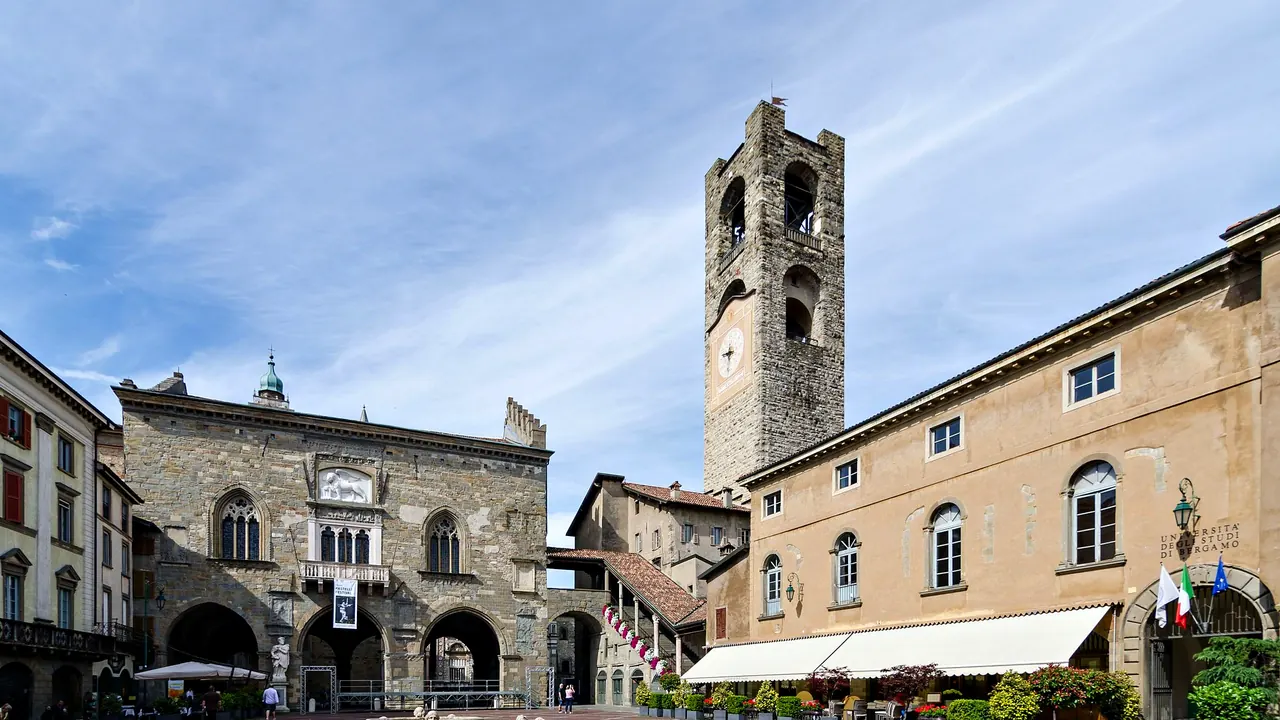
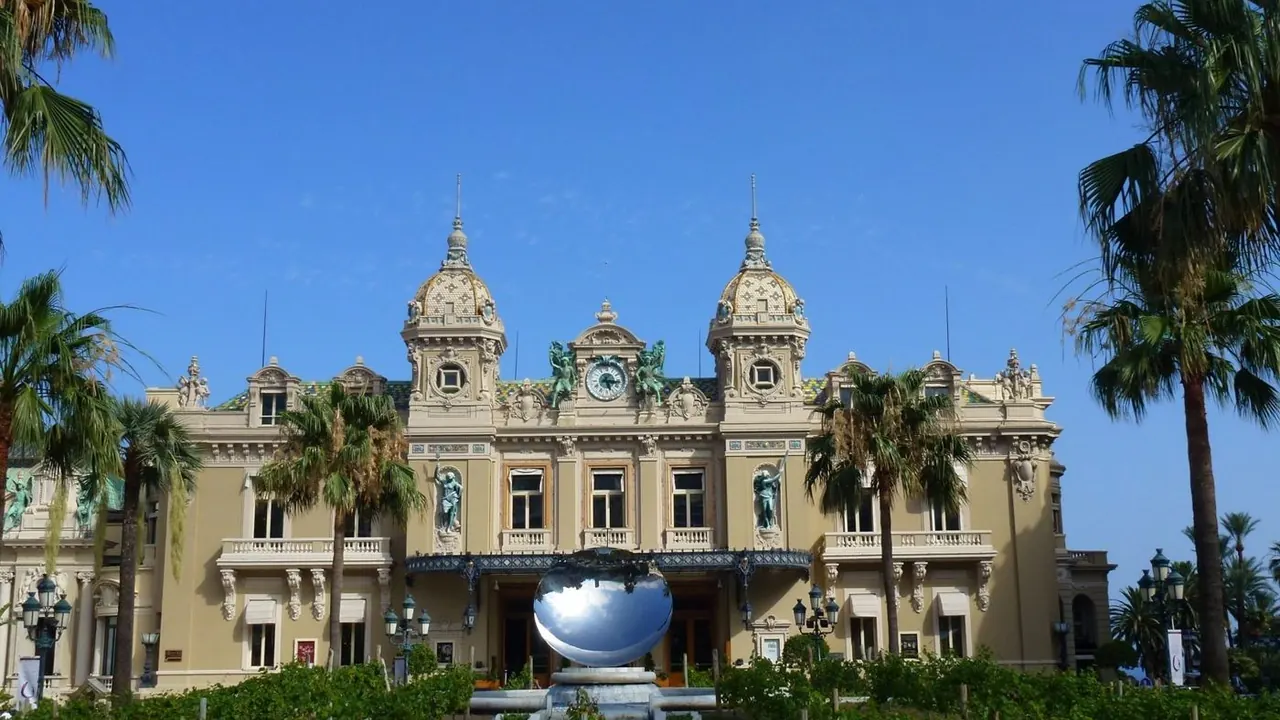
Photos: Bergamo by Steffen Schmitz, CC BY-SA 4.0, cropped; Monaco by otterboris, CC BY 3.0, cropped.
Bergamo or Monaco?
Our verdict in twelve categories, each scored against the same fixed benchmark cities, and the climate month by month, so you can choose for your trip.
Choose Bergamo for
- prices
- culture and sights
- nature and the outdoors
Bergamo suits travellers who want a real old town and a sensible base. The walled Città Alta, the Accademia Carrara and the Alpine valleys right behind the city reward slow exploring. Milan and the lakes are an easy train ride away, and hotels and trattorias cost what you would expect in northern Italy. Choose it for history, mountain food and walking, and accept quiet evenings and no sea.
Choose Monaco for
- beaches
- live music and the arts
- nightlife
Monaco is the choice when the Mediterranean and a sense of occasion matter more than the bill. You get a calm, clear sea at Larvotto, opera and ballet of international standing, dressed-up evenings around the Casino, and the whole Riviera within a short train ride. It works best for a few polished days, or as a day visit from a cheaper base along the coast.
Scoreboard
Twelve categories on one fixed scale from 0 to 100. The shaded stretch is the gap between the two.
Your match
Pick a travel style or drag the sliders, and both match scores follow your weighting.
Wins on prices and culture and sights with your weighting.
Wins on beaches and live music and the arts with your weighting.
What matters to you?
Category by category
What the scores mean for a trip.
Beaches & swimming
Monaco has the sea, and that settles it. Larvotto is a short, groomed city beach with calm, clear water, and beach clubs and rocky platforms add more places to swim. The coves of Cap d'Ail and the long beaches of Menton and Nice are minutes away by path or train.
Bergamo can offer only lake swimming. The lidos and grassy shores of Lake Iseo around Sarnico and Lovere, and the Lecco arm of Lake Como, make a pleasant hot-day outing, but they are no substitute for a seaside stay.
Food & drink
Bergamo cooks from the Alpine valleys and Monaco from the Mediterranean, and that matters more than which one eats better. Bergamo's food is hearty Lombard cooking: casoncelli with butter, sage and pancetta, polenta with braised meats and game, and valley cheeses such as Taleggio, Branzi and Strachitunt. The trattorias and pastry shops of the Città Alta are the place to taste it, while the everyday restaurants and aperitivo bars of the lower town are easier on the bill.
Monaco's eating centres on starred restaurants and grand hotel dining rooms, cooking lighter Riviera and Ligurian food with fish, olive oil and herbs. Barbagiuan and socca from the Condamine market are about the only casual eating, and dinner is a dressed-up affair.
Culture & sights
Bergamo has the richer sights. The Città Alta is a nearly complete walled hilltop town inside UNESCO-listed Venetian ramparts. Around Piazza Vecchia stand Santa Maria Maggiore and the marble front of the Cappella Colleoni, and below the hill the Accademia Carrara holds Raphael, Mantegna and Lotto.
Monaco's Rock has the Prince's Palace and its changing of the guard, the cathedral where Grace Kelly lies and the Belle Époque Oceanographic Museum, with the Casino across the harbour. It is a handsome set piece, but here you come for the setting more than for great art.
Nightlife
Monaco has more going on after dark, though of a narrow kind. Hotel bars around the Casino square and glossy clubs on the Larvotto seafront and by the port are at their liveliest in summer and on Grand Prix weekend. Outside those times the principality goes to bed early.
Bergamo's evenings are a long aperitivo, wine bars around Via XX Settembre and Borgo Santa Caterina, and summer drinks on the old walls, usually finished by midnight. The few clubs are out on the edge of town, so anyone wanting more takes the train to Milan.
Nature & outdoors
Both have fine scenery close at hand, of different kinds. Bergamo looks to the mountains. Woodland paths climb from the upper town to San Vigilio, and Val Brembana and Val Seriana lead into the Orobie Alps with rifugi, high lakes and winter skiing at Foppolo, though a car helps.
Monaco looks to the sea and the cliffs. You can climb the old mule path from Èze-sur-Mer, look out from Tête de Chien and follow the coastal paths around Cap Martin. The clear water is good for snorkelling, diving and paddleboarding, which Bergamo cannot match.
Day trips
Both make outstanding bases, each for its own region, and both work well without a car. From Bergamo, Milan's Duomo and Last Supper are under an hour away by train. Lake Como, Monte Isola on Lake Iseo and the factory village of Crespi d'Adda are close, and Verona and Cremona are within reach.
From Monaco, the coastal train reaches Villefranche and Nice in under half an hour, with Menton in the other direction. Antibes, Saint-Paul-de-Vence and Grasse make longer days out, as do Sanremo and Dolceacqua across the Italian border. Choose between the Lombard art cities and lakes and the Riviera towns.
Good for families
The two are close, with Monaco slightly easier for a short stay. Its aquarium, the gentle water at Larvotto, the palace guard and the yachts are all within a small, spotless area where public lifts do much of the climbing. Beyond those, the formal restaurants leave little else for children.
Bergamo starts well, with funicular rides and gelato on the walls, but its cobbled lanes are hard work with a buggy. Its best outings, the Leolandia theme park and the Le Cornelle wildlife park, are just outside town and easiest by car.
Getting around
Monaco is easier to cover. The whole place is about 3km end to end, free public lifts and escalators take the strain out of the hills, and a small solar ferry crosses the harbour. A car is simply unnecessary.
Bergamo is two towns joined by a funicular. Each level is easy on foot, but the climb between them is steep. Buses run to the station and the airport, and trains reach Milan and Brescia directly, but for the upper valleys and the lake shores you will want a car.
Shopping & style
Monaco offers more, but almost all of it at the top end. Fashion houses, jewellers and watchmakers cluster in the Carré d'Or around the Casino gardens, and window-shopping there is part of the evening scene. Beyond it there is little choice, and Nice is where people go for variety.
Bergamo's lower town has mid-range Italian chains along Via XX Settembre and the Sentierone, with almost no luxury. Its real strength is the delicatessens, cheese shops and wine sellers of the Città Alta, which make it a better place to buy food to take home. Milan is less than an hour away for fashion.
Affordability
Here the gap is enormous. Bergamo is comfortable rather than cheap, but lower-town hotels are fairly priced and trattorias, aperitivo bars and the funicular all cost little. That is why so many travellers make it their base for Lombardy.
In Monaco, hotels, meals and even a café coffee are priced for the very wealthy, and rates climb further on event weekends. The free lifts and the walks around the Rock and the harbour are the only real savings. Many visitors stay in Beausoleil, Menton or Nice and come in for the day.
Live music & performing arts
Monaco has the stronger stage, which is remarkable for its size. The gilded Salle Garnier inside the Casino, where Massenet and Puccini premièred works, is home to the Monte-Carlo Opera. The principality also has a philharmonic orchestra and Les Ballets de Monte-Carlo, all with international names, mostly performing from winter to spring.
Bergamo is Donizetti's birthplace, and the Teatro Donizetti stages opera and an autumn festival of his works that serious fans travel for. Bergamo Jazz fills the spring, but otherwise the calendar is provincial, and La Scala in Milan is the bigger draw.
Wellness & relaxation
For a spa day, you are choosing between mineral springs and seawater. Bergamo's springs are in the hills nearby. There is the Belle Époque thermal spa at San Pellegrino Terme up Val Brembana, and the sulphur waters of Trescore Balneario, used since Roman times. Back in town, the quiet early mornings in the Città Alta are restful in their own right.
Monaco turns to the sea instead. The large thalassotherapy centre beside the Casino has heated seawater pools and treatments, and several grand hotels have sizeable spas. A slow morning in the Japanese Garden is calming too, except during Grand Prix week.
When should you go?
Pick your month. The climate figures are measured averages, not a forecast.
Bergamo in July
Monaco in July
Daytime high, °C
Rainfall in the month, mm
Where the figures come from
Bergamo has no rain gauge within 25 km of the centre, so its rainfall comes from a gridded climate dataset read at the city rather than from a gauge further away.
Bergamo's sunshine is measured 64 km from the centre, at Lugano.
Temperature and rainfall are climate normals, averaged over the years shown. Bergamo: 1991-2020 normals, Bergamo / Orio Al Serio (3.9 km from centre). Monaco: 1991-2020 normals, Nice (19.9 km from centre).
Bergamo has proper seasons. Winters are cold for sightseeing, with highs around 7°C in January, and summers turn hot, reaching 29°C in July and August. That is warm enough for lake days but sticky for climbing the upper town at midday. The rain falls mostly in late spring and again from September to November, when it is heavy. That makes May and early June, or late September between showers, the most comfortable time for walking the streets and the hills.
Monaco is milder and sunnier all year. Even in January it reaches about 13°C, which makes winter fine for walking, and summer is reliably dry and bright. The sea is warm enough to swim from June and reaches 25°C in August. October and November bring the heaviest rain, up to 138mm a month, so for the beach, aim for June to September. Spring suits walking in both places, but Monaco's winter is far kinder than Bergamo's.
Which traveller are you?
For a beach and sun trip, Monaco is the clear choice. Bergamo can only offer lake lidos on pebble, grass or concrete. Monaco has Larvotto's sheltered, clear water, the coves of Cap d'Ail and the long beaches of Menton and Nice a short train ride away.
On a culture and arts trip, Bergamo gives you more to see. The walled Città Alta, the Cappella Colleoni and the Raphaels and Bellinis of the Accademia Carrara have more depth than Monaco's palace and museums. Monaco only comes out ahead if opera and ballet are the point.
On a trip on a tight budget, Bergamo is the only realistic option. Its lower-town hotels and trattorias are fairly priced and trains run straight to Milan. Monaco is among the most expensive places in the world to stay, eat or even drink a coffee.
Before you go
| Measure | Bergamo | Monaco |
|---|---|---|
| Official language | Italian | French |
| Currency | Euro (EUR) | Euro (EUR) |
| Sockets | CFL230 V, 50 Hz | CEF230 V, 50 Hz |
| Driving side | Right | Right |
| Time zone | UTC+1, UTC+2 in summer | UTC+1, UTC+2 in summer |
| Emergency number | 112 | 112 |
| Elevation | 249 m | 68 m |
| Main airport | Il Caravaggio International Airport (BGY)4 km from centre146 non-stop destinations | Nice-Côte d'Azur Airport (NCE)18 km from centre130 non-stop destinations |
| Public holidays this year | 13 days | 12 days |
By the numbers
| Measure | Bergamo | Monaco |
|---|---|---|
| City population | 119,534 | 38,857 |
| People per km² | 2,973 | 18,503 |
| Museums within 10 km | 21 | 14 |
| UNESCO World Heritage sites within 50 km | 6 | 2 |
| Swim season, months above 21 °C | - | 4 months |
Where else could you go?
Every comparison below shares a destination with this one, so you can follow Bergamo or Monaco somewhere new.