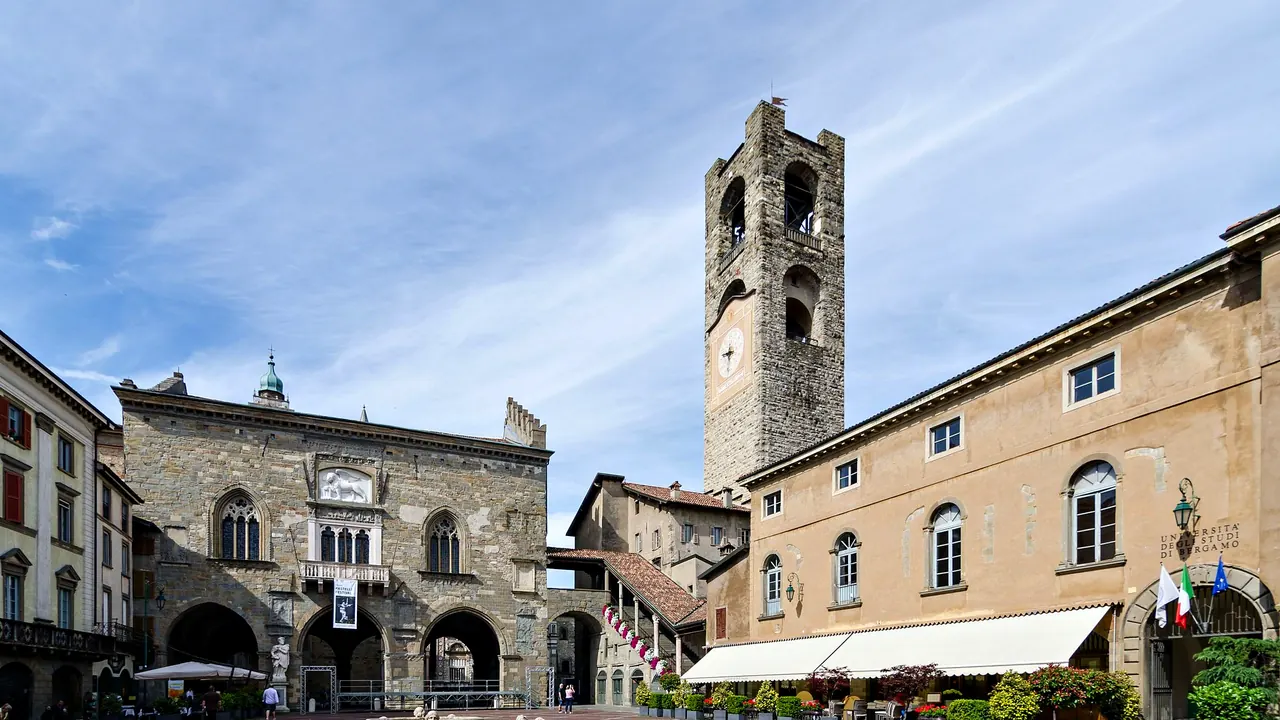
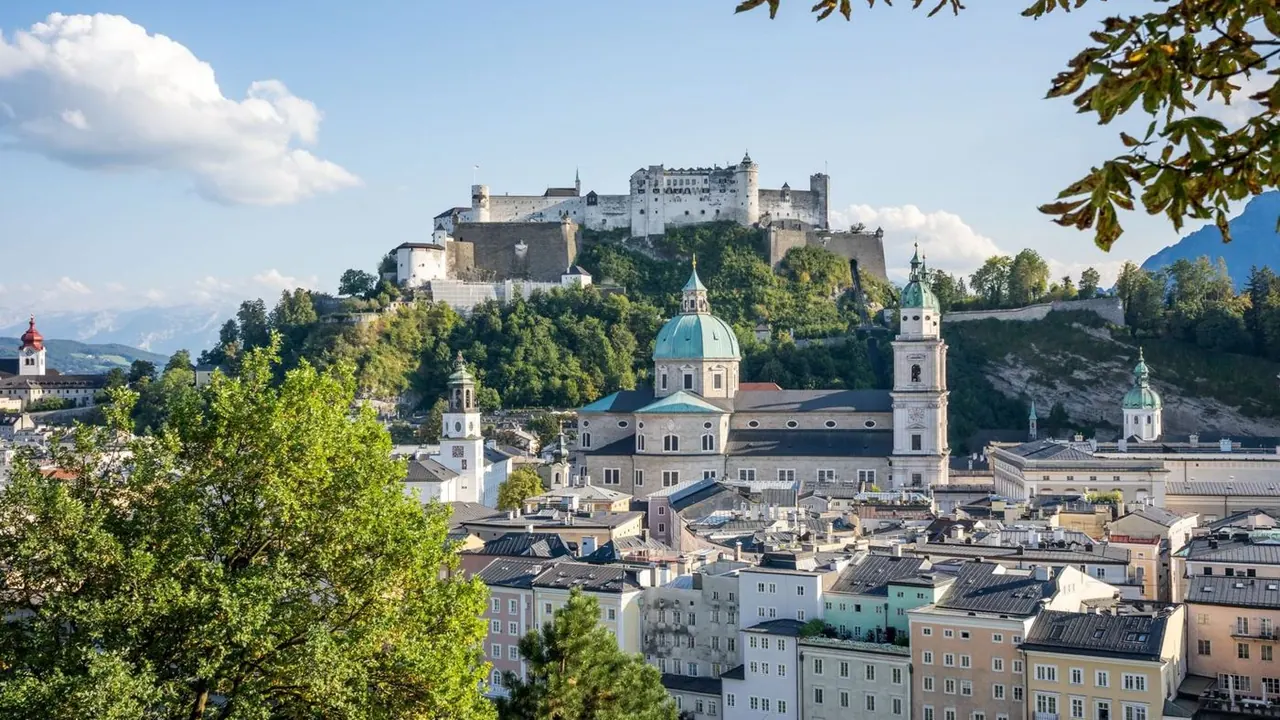
Photos: Bergamo by Steffen Schmitz, CC BY-SA 4.0, cropped; Salzburg by Leonhard Niederwimmer, Pexels License.
Bergamo or Salzburg?
Our verdict in twelve categories, each scored against the same fixed benchmark cities, and the climate month by month, so you can choose for your trip.
Choose Bergamo for
- prices
- food and drink
- nightlife
Bergamo suits the traveller who wants a well-priced base and plenty of places to go from it. The walled Città Alta and the Accademia Carrara fill a day or two. After that, trains run to Milan, Brescia and Verona, and Lake Iseo and Lake Como are close. The cooking is the better of the two, with casoncelli, polenta and valley cheeses, and evenings start with a proper Italian aperitivo.
Choose Salzburg for
- live music and the arts
- nature and the outdoors
- families
Choose Salzburg if music and mountains matter more than cost. The summer festival, Mozart Week and concerts on almost any evening make it a serious music city. The Alps start at the edge of town, with the Untersberg, the Salzkammergut lakes and Berchtesgaden all close by. It is also easier with children. Expect to pay noticeably more for rooms and meals, especially during the festival and the Advent markets.
Scoreboard
Twelve categories on one fixed scale from 0 to 100. The shaded stretch is the gap between the two.
Your match
Pick a travel style or drag the sliders, and both match scores follow your weighting.
Wins on prices and food and drink with your weighting.
Wins on live music and the arts and nature and the outdoors with your weighting.
What matters to you?
Category by category
What the scores mean for a trip.
Beaches & swimming
Neither city has a beach, and in both swimming means a lake trip on a hot day. The lakes themselves are very different. From Bergamo you go to the Italian lidos of Lake Iseo at Sarnico or Lovere, or to the Lecco arm of Lake Como, and you swim off grass, pebbles or concrete platforms.
Salzburg's lakes are in the Salzkammergut, Fuschlsee, Wolfgangsee and Mondsee, with clear green water and wooden jetties among steep hills. Salzburg also has ponds and open-air pools on the edge of town, so a quick swim does not have to take up a whole day.
Food & drink
Bergamo eats better. Its mountain cooking has a real identity: casoncelli in butter and sage, polenta with braised meats and game, and cheeses from the surrounding valleys such as Taleggio, Branzi and Strachitunt. Valcalepio wine and Franciacorta sparkling wine are both made nearby, and the cheese counters in the Città Alta are worth a slow look.
Salzburg's food is hearty Austrian fare: schnitzel, Kasnocken and the Salzburger Nockerl soufflé. Its best moments are coffee and cake in the old coffee houses, or beer from wooden barrels at the monastery brewery in Mülln. In the old town, though, many restaurants serve tourist menus at high prices, so the better cooking means heading out to inns in the suburbs and hills.
Culture & sights
The two are closely matched, but the character differs. Bergamo's Città Alta is a complete walled hilltop town inside Venetian ramparts, centred on the Cappella Colleoni and Santa Maria Maggiore. Down the hill, the Accademia Carrara is the stronger picture gallery of the two, with Raphael, Bellini and Mantegna.
Salzburg's draw is a whole Baroque prince-archbishops' city: the cathedral, the Residenz, the vast Hohensalzburg fortress and Mirabell's gardens. Mozart's two houses, the rock-cut catacombs of St Peter and Hellbrunn add more variety, so it takes a day longer to see properly.
Nightlife
Neither is a party city, but Bergamo gives a little more. The evening starts with a long Italian aperitivo, then moves on to wine bars around Via XX Settembre and Borgo Santa Caterina, and in summer people drink out on the squares and along the walls of the upper town. Milan, with its proper club scene, is under an hour away.
In Salzburg, an evening usually means a concert, dinner and a litre mug in a beer hall, and the old town is quiet by midnight. Apart from a few later student bars on Rudolfskai, there is little else, and Munich is too far for a casual night out.
Nature & outdoors
Salzburg has the better outdoors. You can walk wooded ridges without leaving the centre, on the Mönchsberg and Kapuzinerberg. A cable car takes you up the Untersberg to about 1,800m, and the Gaisberg is a bus ride away for hiking or paragliding. The Königssee and Berchtesgaden National Park are about half an hour across the border, and bigger ski areas are about an hour away.
Bergamo also has the mountains close by. The Colli park climbs from the upper town, and Val Brembana and Val Seriana lead into the Orobie Alps with their rifugi and high lakes. Most serious hiking there needs a car, though, and its ski areas are small.
Day trips
Both are good bases, but Bergamo has more within easy reach, and most of it is by train. Milan is under an hour away, and Brescia, Lecco and the Lake Como towns are about as close. Crespi d'Adda and Franciacorta are nearer still, and Cremona and Verona are each about an hour and a half.
Salzburg's best trips are lake villages and salt-mining heritage: Hallstatt, St Wolfgang, Bad Ischl, the mines at Hallein and Berchtesgaden, and the clifftop fortress at Werfen. Munich is a big-city alternative. Several of the lake villages are slow to reach by bus, so a car makes the most of a stay.
Good for families
Salzburg has more for children inside the city itself. Hellbrunn's trick fountains soak visitors who aren't expecting it, the zoo is next door, and Haus der Natur is a large hands-on museum. Add the fortress funicular and the marionette theatre, plus wooden slides and underground boat rides in the nearby salt mines, and two or three days are easily filled.
In Bergamo, the city part is shorter: funicular rides, the walls and a gelato. The bigger outings are out of town. Leolandia, a theme park built for younger children, has something Salzburg lacks entirely, and Le Cornelle wildlife park is an easy half day.
Getting around
Both are easy without a car in town, but they are laid out differently. Bergamo is built on two levels, with funiculars linking the flat lower town to the Città Alta and on to San Vigilio. The airport is a short bus ride away, and a light-rail line runs up Val Seriana.
Salzburg's sights are all within about fifteen minutes' walk of each other on largely pedestrian streets. Trolleybuses cover the rest of the city, and the flat riverside paths make cycling easy. In both cities, a car pays off once you head for the lakes and valleys.
Shopping & style
Salzburg has slightly more to buy. Its specialism is Tracht: dirndls and loden jackets, often made to measure in workshops around Getreidegasse. There are also wooden toys, Christmas decorations and the long-established Advent market on Domplatz.
Bergamo's best shopping is food: cheese shops, delicatessens and wine sellers along the main lane of the Città Alta. Down in the lower town there are mid-range chains under the arcades. Neither city has much luxury shopping, but Milan is close enough to Bergamo to make up for it.
Affordability
Bergamo is clearly the cheaper stay. Lower-town hotels are fairly priced, trattorias and aperitivo bars are reasonable, and local transport costs little. That is why many people use it as a base for touring Lombardy, though rooms inside the Città Alta cost more.
Salzburg is expensive for a small city all year. During the summer festival and the Advent markets, rooms and restaurant tables become scarce and much dearer. A city card, staying across the river, and eating in suburban inns and beer halls are the usual ways to keep costs down.
Live music & performing arts
On stage, Salzburg is in another class. The summer Festival puts leading performers in the Grosses Festspielhaus and the Felsenreitschule, which is cut into the cliff, and Jedermann is played outside the cathedral. Mozart Week and the Easter Festival add two more seasons, and the Mozarteum, the Landestheater and the Marionette Theatre keep the programme going the rest of the year.
Bergamo's highlight is opera at the Teatro Donizetti, especially the autumn festival devoted to the composer, along with the long-running Bergamo Jazz in spring. Between those, the programme is modest, though La Scala is close enough for an evening.
Wellness & relaxation
The two are evenly matched, and both have their spa towns just outside the city. From Bergamo, San Pellegrino Terme lies about forty minutes up Val Brembana, with its grand Belle Époque thermal spa, and Trescore Balneario's sulphur springs go back to Roman times.
Salzburg has the advantage of a public bath in town: the Paracelsus Bad, with saunas and a view of the Kapuzinerberg. Bad Reichenhall's brine spas are twenty minutes away, and the radon springs of the Gastein valley are further south.
When should you go?
Pick your month. The climate figures are measured averages, not a forecast.
Bergamo in July
Salzburg in July
Daytime high, °C
Rainfall in the month, mm
Where the figures come from
Bergamo has no rain gauge within 25 km of the centre, so its rainfall comes from a gridded climate dataset read at the city rather than from a gauge further away.
Bergamo's sunshine is measured 64 km from the centre, at Lugano.
Temperature and rainfall are climate normals, averaged over the years shown. Bergamo: 1991-2020 normals, Bergamo / Orio Al Serio (3.9 km from centre). Salzburg: 1991-2020 normals, Salzburg (3.4 km from centre).
Bergamo has the warmer, sunnier summer. July and August reach about 29°C, which is good lake weather but tiring on the steep lanes of the Città Alta, so May, June and September suit walking better. Rain builds through autumn, from September to November, peaking near 129mm in October. Winter is the driest season, cool but not harsh.
Salzburg is cooler all year. Summer highs sit around 25°C, comfortable for hiking and for the lakes from June to early September, but these are also its wettest months, with about 168mm in June. Winter is properly cold, near 3°C in January, with snow often reaching the town and short, grey days. April and October are the drier, milder months for walking the old town. May and September are just as mild but still fairly rainy, and for most of the year Salzburg gets less sunshine than Bergamo.
Which traveller are you?
For a culture and arts trip, Salzburg is the stronger pick. Its Baroque old town and fortress hold their own against Bergamo's upper town, and the Salzburg Festival, Mozart Week and nightly concerts give it a music scene that Bergamo's Donizetti theatre cannot match.
On a trip on a tight budget, Bergamo is clearly kinder. Lower-town hotels and trattorias are fairly priced, buses and the funicular cost little, and cheap trains make Milan and the lakes easy day trips. Salzburg is expensive, especially in festival season.
For an outdoors trip, Salzburg has the edge. Walking ridges rise inside the city, the Untersberg cable car lifts you straight onto limestone trails, and Berchtesgaden and the Salzkammergut are close, whereas Bergamo's Orobie valleys really need a car.
Before you go
| Measure | Bergamo | Salzburg |
|---|---|---|
| Official language | Italian | German, Austrian Sign Language |
| Currency | Euro (EUR) | Euro (EUR) |
| Sockets | CFL230 V, 50 Hz | CF230 V, 50 Hz |
| Driving side | Right | Right |
| Time zone | UTC+1, UTC+2 in summer | UTC+1, UTC+2 in summer |
| Emergency number | 112 | 112 |
| Elevation | 249 m | 424 m |
| Main airport | Il Caravaggio International Airport (BGY)4 km from centre146 non-stop destinations | Salzburg Airport (SZG)3 km from centre64 non-stop destinations |
| Public holidays this year | 13 days | 16 days |
By the numbers
| Measure | Bergamo | Salzburg |
|---|---|---|
| City population | 119,534 | 155,021 |
| People per km² | 2,973 | 2,360 |
| Museums within 10 km | 21 | 38 |
| UNESCO World Heritage sites within 50 km | 6 | 3 |
Where else could you go?
Every comparison below shares a destination with this one, so you can follow Bergamo or Salzburg somewhere new.