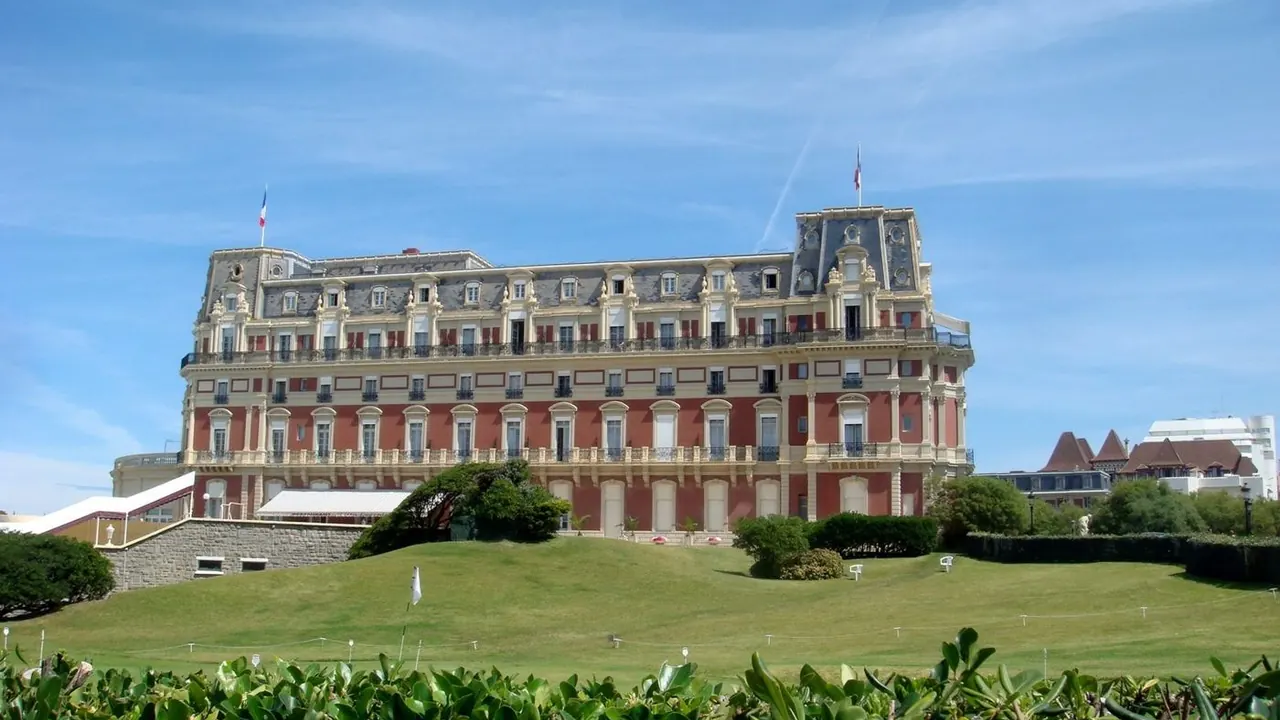
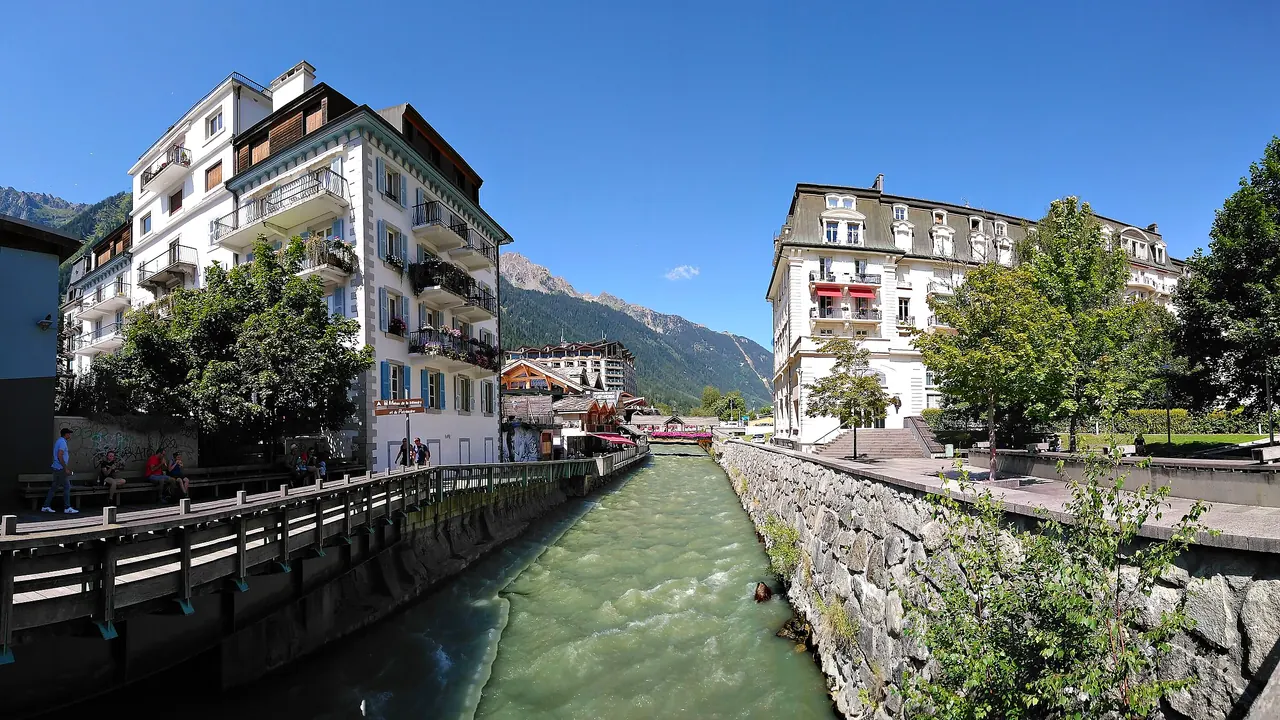
Photos: Biarritz by Lilipiapia, CC BY-SA 3.0, cropped; Chamonix by Tiia Monto, CC BY-SA 3.0, cropped.
Biarritz or Chamonix?
Our verdict in twelve categories, each scored against the same fixed benchmark cities, and the climate month by month, so you can choose for your trip.
Choose Biarritz for
- beaches
- live music and the arts
- food and drink
Biarritz is the choice for a seaside trip with good food and plenty to do beyond the sand. Its surf beaches, Basque market cooking and seawater spas fill the days, and the Spanish border puts San Sebastián, Bayonne and the villages of the Basque hills within easy reach. It suits travellers who want an ocean, long lunches and a different outing every other day, and who can live with some rain.
Choose Chamonix for
- nature and the outdoors
- getting around
- nightlife
Pick Chamonix if the mountains are the point of the vacation. Cable cars lift you from the town centre into glacier country, trails to lakes and balconies start at the edge of town, and winter brings steep skiing and the Vallée Blanche. Beyond the peaks there is less to see, eat or shop for than on the Basque coast, so it rewards people who will spend their days outside.
Scoreboard
Twelve categories on one fixed scale from 0 to 100. The shaded stretch is the gap between the two.
Your match
Pick a travel style or drag the sliders, and both match scores follow your weighting.
Wins on beaches and live music and the arts with your weighting.
Wins on nature and the outdoors and getting around with your weighting.
What matters to you?
Category by category
What the scores mean for a trip.
Beaches & swimming
The beach is why Biarritz exists, and Chamonix has nothing to match it. On the Basque coast you choose between the Grande Plage below the casino, the surfers' Côte des Basques, the sheltered Port Vieux cove and kilometres of Anglet sand, though the Atlantic is lively and swimming stays between the lifeguard flags.
In Chamonix, water is an afternoon off. Lac de Passy has a small sandy strip facing Mont Blanc, Lake Annecy is a summer outing by car, and otherwise there is the municipal pool.
Food & drink
Biarritz eats better, and the difference comes down to the sea. Its kitchen draws on two larders at once, the Bay of Biscay and the Basque hills, so a single meal can run from grilled fish or chipirons to sheep's cheese, ham and Espelette pepper. With the covered market of Les Halles at its centre, the food stays fresh and local. Neither town offers much beyond its own region, but the Basque repertoire is wider and lighter than the Alpine one, and you eat well as long as you avoid the promenade terraces.
Chamonix's table is built around cheese and appetite. Fondue, raclette and tartiflette made with Beaufort and Reblochon are perfect after a day on the glaciers but heavy going by the fourth evening, and the international places that cater to the resort crowd add choice rather than character. Often the best meals are eaten outdoors, at lunch in a refuge or as a picnic put together from the valley's cheese shops and charcuteries, and in the shoulder seasons much of the town's dining shuts down.
Culture & sights
Neither is a town for museums, but Biarritz has more to look at. Its heritage is the imperial seaside of Napoleon III and Eugénie: the former imperial villa, the Art Deco casino, headland villas and a Russian Orthodox church, plus the Rocher de la Vierge and the aquarium in the Musée de la Mer, enough for a couple of days.
Chamonix's story is mountaineering, from the first ascent of Mont Blanc to the first Winter Olympics. The Musée Alpin, the guides' quarter and the climbers' cemetery tell it well, but half a day covers them.
Nightlife
Both are small-scale, and they peak in opposite seasons. Biarritz goes out in summer, with wine and pintxos around Les Halles, sundowners above the Côte des Basques and the casino late, then turns quiet the rest of the year; San Sebastián's bar streets across the border offer a bigger night.
Chamonix is liveliest in winter, when après-ski runs into a lane of pubs in the old town and a couple of small clubs. The crowd is young, loud and largely English-speaking, and summer evenings are mostly terrace drinks after a day on the hills.
Nature & outdoors
Chamonix is in another league. The Mont Blanc massif rises almost 4km above the valley, the Aiguille du Midi lifts you to 3,842m, and from town you can reach the Mer de Glace, the Grand Balcon trails or the Tour du Mont Blanc, with mountaineering, climbing and paragliding in summer and steep skiing in winter.
Biarritz's outdoors is the ocean first. It is a classic surf town with beginner breaks and reef waves down the coast, a clifftop path towards Spain and the green Pyrenean foothills around La Rhune and Sare for gentler walking and cycling.
Day trips
Biarritz has the richer choice of days out, across two countries and two cultures. San Sebastián's old town and La Concha bay are under an hour away, Bayonne is next door, Saint-Jean-de-Luz is a short train ride, and the Basque villages, Hondarribia and even Bilbao's Guggenheim are all within reach.
Chamonix also crosses borders, through the tunnel to Courmayeur and the Roman town of Aosta, or over to Annecy, Geneva and Martigny. After those, most nearby places are other ski resorts, and mountain roads make journeys slow.
Good for families
Both work for families, in different ways. Biarritz is a seaside summer for children: surf lessons, the calm Port Vieux cove for little ones, and the aquarium's seals and sharks for a wet day, though the Atlantic waves need watching and the steep streets are hard with a pushchair.
Chamonix suits outdoor families, with nursery slopes and sledging in winter, and lake trails, the luge, the Merlet animal park and the little red train in summer. The flat town is easy on small legs, but the highest cable cars are unsuitable for young children and rainy days offer little.
Getting around
Chamonix is easier to get about. The centre is flat, the Aiguille du Midi and Montenvers stations are in town, and buses and the Mont Blanc Express run up and down the valley free with the guest card, although winter ski buses get packed and evening services thin out.
Biarritz is walkable too, but hilly, with steps and steep streets between the cliffs and the beaches. Buses and coastal trains reach Anglet, Bayonne and the Spanish border, and the airport is on the edge of town rather than a shuttle ride away, but the inland villages really need a car.
Shopping & style
Biarritz is the better place to browse. Boutiques and surf shops run between the Place Clemenceau and the market, and the local buys are Basque striped linen, handmade espadrilles, chocolate and gâteau basque, with Bayonne next door for more.
Chamonix is a one-subject town for shopping, but a strong one: climbing, ski and outdoor shops, some going back generations, where serious mountaineers buy their technical gear. Beyond that it is cheese, génépi, crystals and souvenirs.
Affordability
Neither is cheap, but Biarritz is the easier on the wallet. Eating at the market bars, staying in Anglet or Bayonne and coming outside July and August all bring costs down noticeably.
Chamonix adds mountain costs on top of resort rooms: lift passes, the big cable cars, guides and paragliding flights. Free valley transport, self-catering, picnics and trails that start without a lift help, as do the shoulder seasons, when some lifts close.
Live music & performing arts
Biarritz has the stronger stage, thanks to dance. Its national choreographic centre and ballet company perform at the Gare du Midi, and an autumn dance festival fills the town, though music beyond that is modest.
Chamonix has almost no season. A long-running summer jazz festival, with some sets played high in the mountains, and mountain film evenings are the highlights, and anything more means a trip to Geneva.
Wellness & relaxation
Biarritz is the better place to unwind. It is a historic home of French thalassotherapy, with seafront seawater spas where multi-day cures make the whole point of a stay, and outside high summer the town settles into headland walks and long lunches.
In Chamonix, relaxing follows exertion: hot outdoor pools and saunas facing the glaciers after a day's skiing, or the thermal springs of Saint-Gervais down the valley. The town itself starts early and fills with climbers, so it is rarely restful.
When should you go?
Pick your month. The climate figures are measured averages, not a forecast.
Biarritz in July
Chamonix in July
Daytime high, °C
Rainfall in the month, mm
Where the figures come from
Chamonix's temperatures are measured 35 km from the centre, at Bourg-St-Maurice.
Chamonix has no rain gauge within 25 km of the centre, so its rainfall comes from a gridded climate dataset read at the city rather than from a gauge further away.
Temperature and rainfall are climate normals, averaged over the years shown. Biarritz: 1999-2020 (sunshine 1991-2020, rainfall 1991-2020) normals, Biarritz (2.5 km from centre). Chamonix: 1999-2020 (rainfall 1991-2020) normals, Bourg-St-Maurice (34.9 km from centre).
Biarritz is at its best from June to September, when days are mild rather than hot, the sun is out most and the Atlantic warms to about 22°C by August, still fresh but fine for a swim between the flags. Rain falls in every month, but autumn turns properly wet, with November the soggiest at around 224mm. Winters are cool and grey, though never too cold for a walk along the headlands.
Chamonix swings much further through the year. July is warmer than on the coast, around 27°C on the valley floor, which makes June to September the season for hiking and climbing, while January highs of about 5°C belong to skiers. Rain and snow are spread fairly evenly, with late autumn and December the wettest, and spring and autumn are the in-between months when neither walkers nor skiers are fully served.
Which traveller are you?
On a beach and sun trip, Biarritz is the obvious pick. It has real sandy beaches running from the Grande Plage to Anglet, surf schools for every level and a sheltered cove for calm swims, while Chamonix offers only a mountain lake and a pool.
For an outdoors trip, Chamonix is one of the great places in Europe. Cable cars reach high glaciers from town, the Tour du Mont Blanc and Lac Blanc trails start nearby, and winter adds steep skiing. Biarritz has surf and gentle foothill walks, but nothing of that scale.
For a food and nightlife trip, Biarritz serves you better. Les Halles and its pintxo bars, Bayonne ham and Bay of Biscay fish beat Chamonix's cheese-heavy resort menus, and San Sebastián's bar streets are under an hour away for a bigger night.
Before you go
| Measure | Biarritz | Chamonix |
|---|---|---|
| Official language | French | French |
| Currency | Euro (EUR) | Euro (EUR) |
| Sockets | CE230 V, 50 Hz | CE230 V, 50 Hz |
| Driving side | Right | Right |
| Time zone | UTC+1, UTC+2 in summer | UTC+1, UTC+2 in summer |
| Emergency number | 112 | 112 |
| Elevation | 0 m | 995 m |
| Main airport | Biarritz Pays Basque airport (BIQ)3 km from centre25 non-stop destinations | Geneva International Airport (GVA)68 km from centre150 non-stop destinations |
| Public holidays this year | 11 days | 11 days |
By the numbers
| Measure | Biarritz | Chamonix |
|---|---|---|
| City population | 26,206 | 8,705 |
| People per km² | 2,240 | 75 |
| Museums within 10 km | 8 | 3 |
| UNESCO World Heritage sites within 50 km | 2 | 0 |
| Swim season, months above 21 °C | 2 months | - |
Where else could you go?
Every comparison below shares a destination with this one, so you can follow Biarritz or Chamonix somewhere new.
- San Sebastianvs Biarritz
- Annecyvs Chamonix
- Genevavs Chamonix
- Lausannevs Chamonix
- Turinvs Chamonix
- Bilbaovs Biarritz