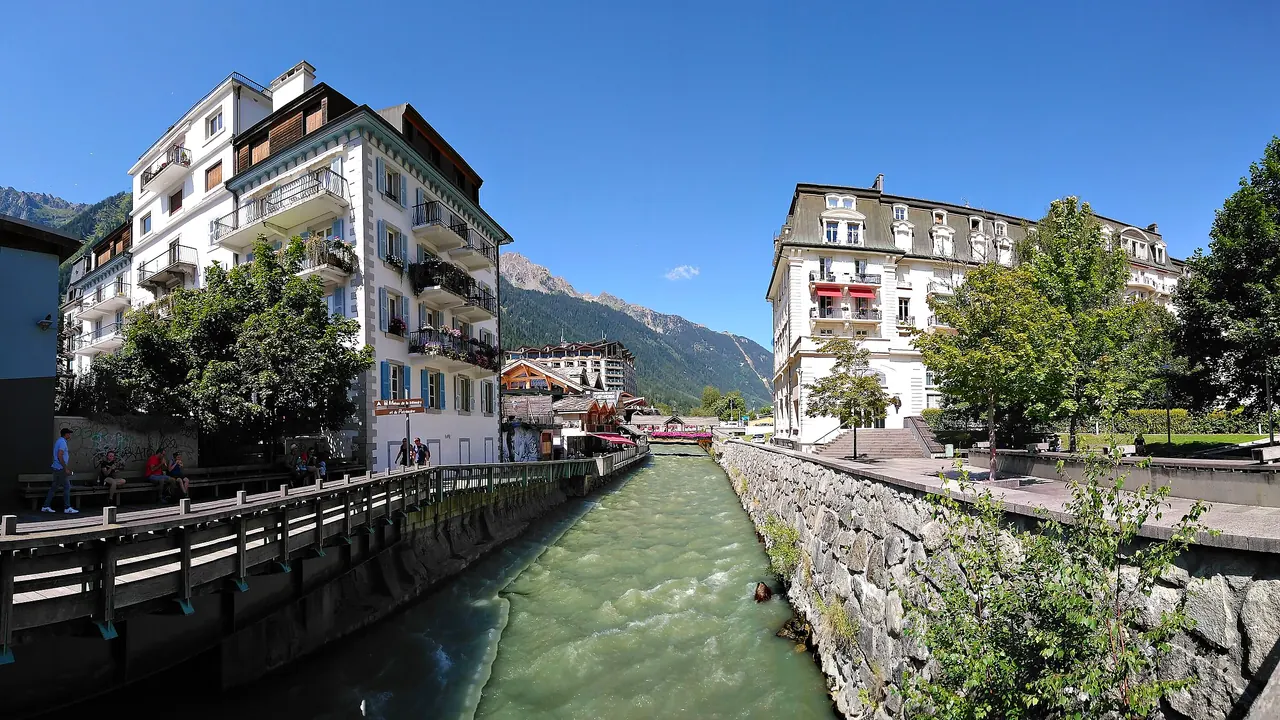
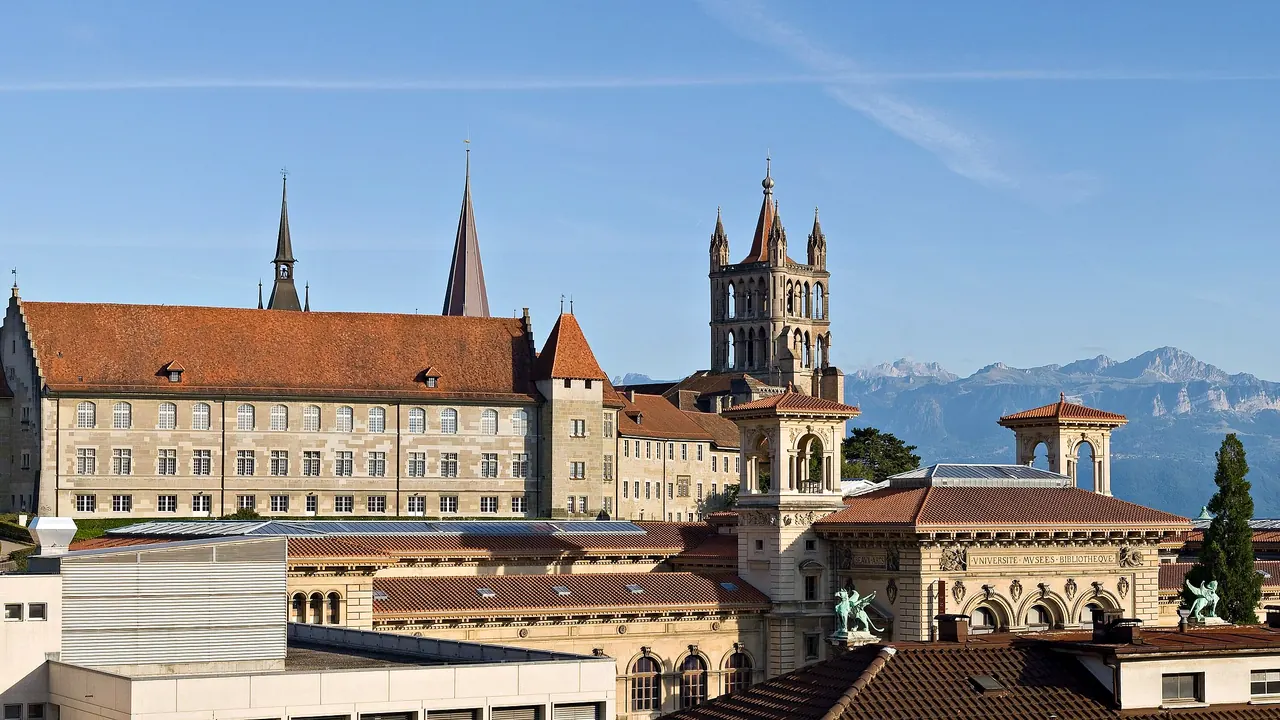
Photos: Chamonix by Tiia Monto, CC BY-SA 3.0, cropped; Lausanne by Christian Mehlführer, CC BY-SA 3.0, cropped.
Chamonix or Lausanne?
Our verdict in twelve categories, each scored against the same fixed benchmark cities, and the climate month by month, so you can choose for your trip.
Choose Chamonix for
- nature and the outdoors
- prices
- wellness
Chamonix is for travellers who come to be in the mountains and want nothing to come between them and the peaks. Cable cars run from the edge of town into glacier country, and the Mont Blanc massif shapes every day, whether that means skiing, climbing, hiking or simply looking up. Expect a resort rather than a city. The evenings, the food and the sights are built around the outdoors.
Choose Lausanne for
- live music and the arts
- culture and sights
- beaches
Lausanne suits a more varied trip, with mountain views across the water and a proper city behind them. You get a Gothic cathedral, strong museums, ballet and opera, the Lavaux vineyards on the doorstep and fast trains to half of French-speaking Switzerland. Travellers who want culture, wine and easy day trips as well as Alpine scenery will find more here, though the high peaks are an outing rather than the view from the hotel window.
Scoreboard
Twelve categories on one fixed scale from 0 to 100. The shaded stretch is the gap between the two.
Your match
Pick a travel style or drag the sliders, and both match scores follow your weighting.
Wins on nature and the outdoors and prices with your weighting.
Wins on live music and the arts and culture and sights with your weighting.
What matters to you?
Category by category
What the scores mean for a trip.
Beaches & swimming
Neither town is a place for a beach vacation, but Lausanne gives you far more chances to swim. In summer Lake Geneva is the city's pool, with lawns and piers at Vidy, the old lido at Bellerive and pebble shores towards Lutry, all within the city.
Chamonix sits too high for that. Swimming there means the municipal pool or a drive down to Lac de Passy, and Lake Annecy is a day trip of its own.
Food & drink
Chamonix serves mountain resort cooking: fondue, tartiflette and Reblochon on terraces facing the glaciers, with menus that start to look alike after a few days. It is at its best as a picnic of local cheese and charcuterie on a trail.
Lausanne has more range and a stronger link to its land. Lake perch and papet vaudois come with Chasselas from the Lavaux terraces, the Saturday market brings in produce from the countryside, and some celebrated high-end tables sit in and around the city.
Culture & sights
This is one of the widest gaps between the two. Chamonix's sights all tell the story of alpinism: the Musée Alpin, the statues of the first Mont Blanc climbers and the climbers' cemetery. They make a good half day and no more.
Lausanne has a Gothic cathedral where a night watchman still calls the hours, a steep medieval old town and a run of museums, from the Olympic Museum at Ouchy to the fine art, photography and design collections at Plateforme 10. Those take two or three days to see properly.
Nightlife
Chamonix's nights follow the seasons. In winter, après-ski starts every late afternoon at the foot of the slopes. Later it moves to a lane of bars in the old town, where guides, seasonal workers and young English-speaking visitors mix, and a couple of small clubs stay open late on busy nights. Summer evenings are mostly terrace drinks after a day on the hills, and in the shoulder seasons many places close.
Lausanne goes out a little more, and its nights run on its students. Clubs and late bars fill the converted warehouses of the Flon on Friday and Saturday, and in summer the evenings move to the lakeside at Ouchy. During the week the city is quiet.
Nature & outdoors
Chamonix puts you inside the high mountains, while Lausanne looks across the water at them. From Chamonix, cable cars climb to the Aiguille du Midi, where the Vallée Blanche glacier descent begins, and the rack railway runs to the Mer de Glace. The Tour du Mont Blanc starts from the valley floor.
Lausanne's outdoors is gentler and more varied. There are the UNESCO-listed vineyard walks of Lavaux, sailing and paddleboarding on the lake, and the forest of Sauvabelin. The Vaud Alps and the Jura are about an hour away for skiing and longer hikes.
Day trips
Chamonix's outings depend on its border position. You can drive through the tunnel to Courmayeur and Roman Aosta, take the road to Annecy or Geneva, or ride the Mont Blanc Express over to Martigny. Beyond those, most places in reach are other resorts, and mountain roads slow you down.
Lausanne is the better base. Trains go along the lake to Montreux and the Château de Chillon, and on to Bern, Fribourg, Gruyères, Neuchâtel and Murten, and boats cross to Évian. You can do almost all of it without a car.
Good for families
Lausanne has a slight edge with children, and the two towns suit different ages. Chamonix is a summer and winter playground for outdoorsy families, with nursery slopes, the luge, the Merlet animal park and the little red train. The high cable cars do not suit toddlers, and there is little to do on wet days.
Lausanne covers rainy days better, with the hands-on Olympic Museum, the aquarium-vivarium, the pedal boats at Sauvabelin and paddle steamers on the lake. The trade-off is steep streets that are hard work with a pushchair.
Getting around
Lausanne is the easier of the two to get around. Its streets climb steeply, but the m2 metro carries you up from the lakeshore to the upper town, and the main station connects to fast, punctual trains across the country.
Chamonix's centre is flat and easy to walk, and buses and the valley train are free with the guest card. In winter, though, the ski areas are spread out, the ski buses get packed and evening services thin out.
Shopping & style
Chamonix is very good at one thing: technical climbing, ski and outdoor gear from long-established specialist shops. Beyond that you will find cheese, génépi and souvenirs.
Lausanne has a broader if modest mix. Rue de Bourg has Swiss watches, jewellery and chocolatiers, and you will also find familiar fashion names around Saint-François and Lavaux wine to take home. It still lacks a real luxury district.
Affordability
Both towns are expensive, but Chamonix gives you more ways to keep costs down. Self-catering apartments, free valley transport and trails that start without a lift all help, especially outside the February and summer peaks. Lift passes and guides are where the money goes.
In Lausanne, Swiss city prices apply to hotels, meals, wine and taxis alike. Picnics, the free lakeside promenades and a glass of Chasselas in a village caveau are the main ways to save.
Live music & performing arts
Lausanne has by far the richer stage life. The Béjart Ballet and the Prix de Lausanne make it a dance city, the Théâtre de Vidy stages contemporary work that tours Europe, and there is a full opera season and a respected chamber orchestra. The Montreux Jazz Festival is a short train ride away.
Chamonix offers a summer jazz festival with some sets played up in the mountains, mountain film evenings and little else. For opera or a symphony orchestra, you have to go to Geneva.
Wellness & relaxation
The two are about level here, but the relaxation is of different kinds. In Chamonix you unwind after effort. There are hot outdoor pools and saunas facing the glaciers at the town's large spa, and Saint-Gervais has thermal springs in a wooded gorge nearby.
In Lausanne the calm is slower and spread around the city. You can walk along the lakeside promenades and through the Lavaux vines, use the spas in the grand lakeside hotels, or take the train to the warm springs at Yverdon-les-Bains or Lavey-les-Bains.
When should you go?
Pick your month. The climate figures are measured averages, not a forecast.
Chamonix in July
Lausanne in July
Daytime high, °C
Rainfall in the month, mm
Where the figures come from
Chamonix's temperatures are measured 35 km from the centre, at Bourg-St-Maurice.
Chamonix has no rain gauge within 25 km of the centre, so its rainfall comes from a gridded climate dataset read at the city rather than from a gauge further away.
Lausanne's temperatures are measured 40 km from the centre, at Payerne.
Lausanne has no rain gauge within 25 km of the centre, so its rainfall comes from a gridded climate dataset read at the city rather than from a gauge further away.
Temperature and rainfall are climate normals, averaged over the years shown. Chamonix: 1999-2020 (rainfall 1991-2020) normals, Bourg-St-Maurice (34.9 km from centre). Lausanne: 1991-2020 (sunshine 1961-1990) normals, Payerne (39.7 km from centre).
Both towns have a short warm season. July is the peak, with daytime highs around 27°C in Chamonix and 26°C in Lausanne. June to early September is the time for the high trails above Chamonix and for swimming in the lake at Lausanne. Winters are cold in both places, with highs of only a few degrees. In Chamonix that means the ski season. In Lausanne it means grey, short days, with only about 41 hours of sunshine in December.
Chamonix is the wetter town over the year. The difference is greatest from late autumn to early winter, when it gets 150mm or more a month, and no month there is truly dry, so expect cloud on the peaks in any season. In summer the two get much the same rain. Lausanne is drier overall, but summer and early autumn are its wettest months. Spring there is mild and fairly sunny, which makes it a good time to walk the old town and the vineyards before the summer heat.
Which traveller are you?
On an outdoors trip, Chamonix is the clear choice. The Aiguille du Midi, the Mer de Glace, the Tour du Mont Blanc and serious guided mountaineering all start in town, while Lausanne's best mountain terrain is a train ride away.
For a culture and arts trip, Lausanne is the obvious pick. You can spend several days on its museums and old town, then go to the ballet, opera or theatre in the evening. Chamonix's sights all tell one story, mountaineering, and are soon seen.
On a tight budget, Chamonix is the easier of two expensive places. Much of what people come for costs nothing once you are in the valley: the views, the walks and lunch outdoors. In Lausanne, the city pleasures that make the trip, its meals, wine and evenings out, all come at Swiss prices.
Before you go
| Measure | Chamonix | Lausanne |
|---|---|---|
| Official language | French | French, German, Italian, Romansh |
| Currency | Euro (EUR) | Swiss Franc (CHF) |
| Sockets | CE230 V, 50 Hz | CJ230 V, 50 Hz |
| Driving side | Right | Right |
| Time zone | UTC+1, UTC+2 in summer | UTC+1, UTC+2 in summer |
| Emergency number | 112 | 112 |
| Elevation | 995 m | 495 m |
| Main airport | Geneva International Airport (GVA)68 km from centre150 non-stop destinations | Geneva International Airport (GVA)52 km from centre150 non-stop destinations |
| Public holidays this year | 11 days | 9 days |
By the numbers
| Measure | Chamonix | Lausanne |
|---|---|---|
| City population | 8,705 | 144,873 |
| People per km² | 75 | 3,499 |
| Museums within 10 km | 3 | 31 |
| UNESCO World Heritage sites within 50 km | 0 | 3 |
Where else could you go?
Every comparison below shares a destination with this one, so you can follow Chamonix or Lausanne somewhere new.
- Genevavs Lausanne
- Annecyvs Chamonix
- Genevavs Chamonix
- Bernvs Lausanne
- Annecyvs Lausanne
- Interlakenvs Lausanne