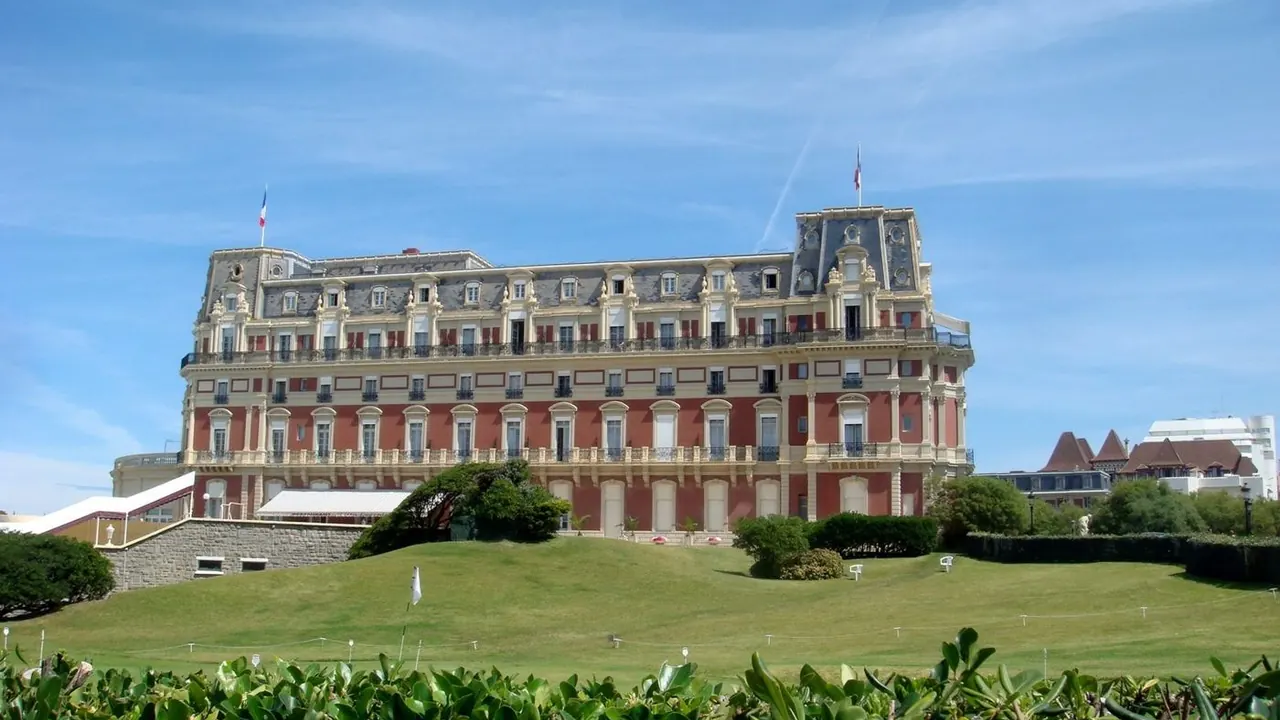
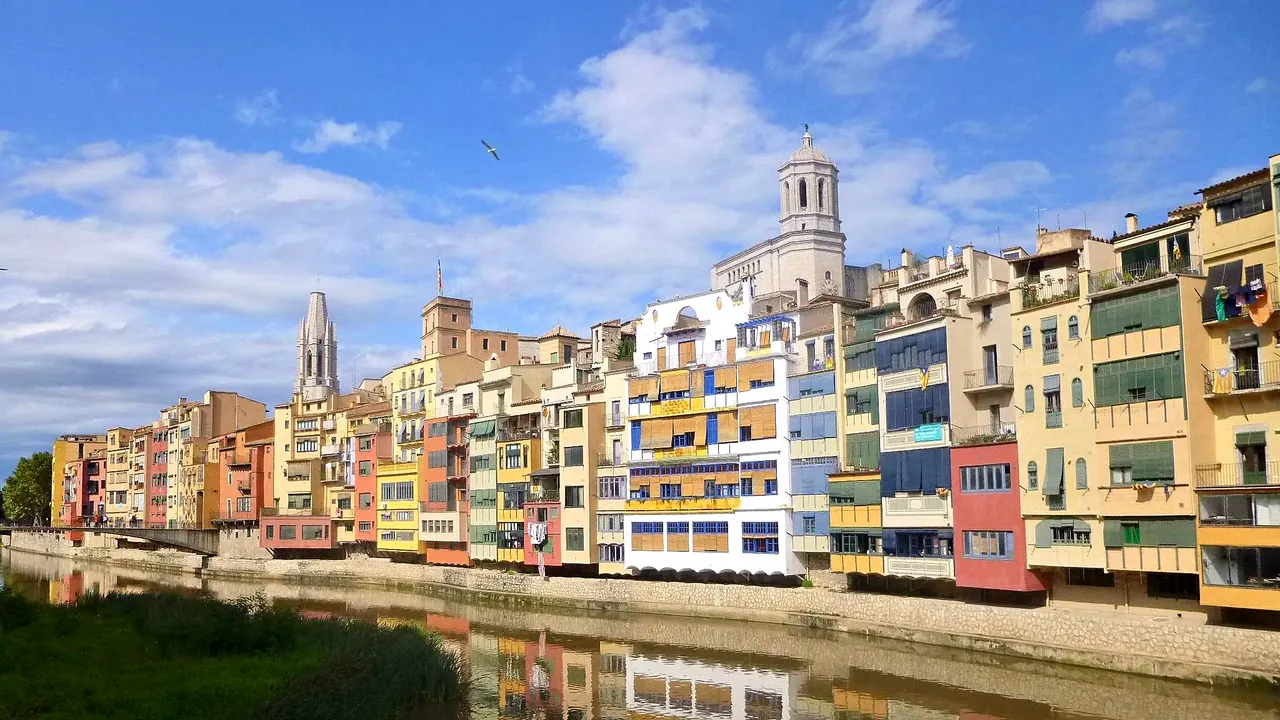
Photos: Biarritz by Lilipiapia, CC BY-SA 3.0, cropped; Girona by Zarateman, CC0.
Biarritz or Girona?
Our verdict in twelve categories, each scored against the same fixed benchmark cities, and the climate month by month, so you can choose for your trip.
Choose Biarritz for
- wellness
- families
- beaches
Biarritz is for travellers who want the ocean on the doorstep. Its beaches lie in the middle of town, surf schools line the seafront, the sheltered Port Vieux cove suits small children, and the seawater spas make a proper rest cure possible. You pay resort prices, and the quieter months suit anyone coming to unwind.
Choose Girona for
- culture and sights
- prices
- day trips
Girona suits people who would rather explore than lie on the sand. The walled Barri Vell, the cathedral and the old Jewish quarter give it real historic depth, and Barcelona, the Dalí sites and the Costa Brava coves are all within reach for days out. It is also cheaper and much sunnier, but the beach is always an excursion, never the view from your window.
Scoreboard
Twelve categories on one fixed scale from 0 to 100. The shaded stretch is the gap between the two.
Your match
Pick a travel style or drag the sliders, and both match scores follow your weighting.
Too close to call, level with your weighting
Wins on wellness and families with your weighting.
Wins on culture and sights and prices with your weighting.
What matters to you?
Category by category
What the scores mean for a trip.
Beaches & swimming
In Biarritz the beach is the town itself. The Grande Plage sits below the casino, the Côte des Basques runs under the cliffs, and Anglet's sand stretches north for kilometres. This is the open Atlantic, though, with big waves, strong currents and water that only gets properly warm in late summer.
Girona has no beach of its own. The Costa Brava starts about 40 minutes away, and its pine-backed coves around Begur and Tossa de Mar have calmer, clearer and warmer Mediterranean water. It makes a good day out, but bus timetables and summer parking limit how much of the coast you will see.
Food & drink
The two eat equally well, in two different regional styles. Biarritz is Basque and casual at heart: pintxos and local wine at the bars around Les Halles, Bayonne ham, sheep's cheese, Espelette pepper and grilled Biscay fish, with gâteau basque and the coast's chocolate to finish.
Girona cooks Catalan food, from botifarra with beans to mar i muntanya dishes, and adds an international fine-dining reputation, so a serious tasting menu is easier to find here. Empordà wine and pre-lunch vermouth stand in for cider and Txakoli. Neither offers much beyond its own regional tradition.
Culture & sights
Girona is clearly the richer place for sightseeing. The walled Barri Vell climbs from the Onyar to a cathedral with one of the widest Gothic naves anywhere, and the Call is among Europe's best-preserved Jewish quarters. Add the Romanesque cloister of Sant Pere de Galligants, the Arab Baths and a walk along the walls with views to the Pyrenees.
Biarritz's heritage is the resort that Napoleon III and Eugénie made fashionable: the imperial villa, the Art Deco casino, Belle Époque villas and the Rocher de la Vierge. It is attractive but slight, and for old towns and big museums you have to go to Bayonne or San Sebastián.
Nightlife
Neither is a party town, but Biarritz has the slightly livelier summer. Pintxo bars around Les Halles stay busy late, surfers drink on terraces above the Côte des Basques, and the casino and a few clubs run into the small hours. Girona's nights are slower: long dinners on terraces, student bars in term time and a handful of late venues at weekends.
The bigger night out is a trip in both cases, to San Sebastián's bar streets from Biarritz, or by train to Barcelona from Girona.
Nature & outdoors
Both are excellent for the outdoors, but they face different ways. Biarritz looks to the sea: it is one of Europe's original surf towns, with beginner breaks, paddleboarding and kayaking, plus the Basque Corniche path and La Rhune in the Pyrenean foothills.
Girona looks to the land and has the wider spread. Road cyclists come from around the world for Rocacorba and Els Àngels, flat greenways run to Olot and the coast, and within an hour or two lie the Garrotxa volcanoes, Cap de Creus and the high Pyrenees for hiking and skiing.
Day trips
Two countries are within reach from either town, but Girona's high-speed line gives it the edge. From Biarritz, San Sebastián's pintxo bars and La Concha bay are under an hour away, Bayonne's cathedral and riverside houses are next door, and Saint-Jean-de-Luz is a short train ride down the coast. Bilbao and the Guggenheim make a long day by car, and Espelette, Ainhoa and the other inland villages are also far easier to reach by car.
Girona puts Barcelona under 40 minutes away by fast train, with Figueres and the Dalí Theatre-Museum about half an hour north and Perpignan under an hour over the French border. Besalú's fortified bridge, the Greek and Roman ruins of Empúries and whitewashed Cadaqués fill further days. Pals, Peratallada and the Empordà wine cellars are much simpler with a car.
Good for families
Biarritz works better with children. The aquarium in the Musée de la Mer and the Cité de l'Océan save a rainy day, kids can join a surf school, and the Port Vieux cove gives little ones a calm place to swim away from the big surf.
Girona is relaxed and welcoming, and the Devesa park and the city walls entertain for a while. But it has no aquarium or attractions built for children, so families usually end up driving to the Costa Brava beaches. In both towns, steep streets make pushchairs hard work.
Getting around
The two differ most in how they connect to the wider world. Biarritz has its airport right on the edge of town, and the centre, main beaches and market are all walkable, though steep streets and steps link the cliffs to the seafront. Local buses run to Anglet and Bayonne, and coastal trains head south towards the Spanish border.
Girona's advantage is its station at the edge of the centre, with fast trains to Barcelona and Figueres. The old town, river and modern centre lie within about twenty minutes' walk of each other, though the Barri Vell is all stairs, and a bike is handy for local trips. Beyond the towns, buses are sparse in both places, so a car is the practical way to reach the villages and countryside.
Shopping & style
For an afternoon of browsing, Biarritz has the slightly wider mix. Fashion boutiques and surf shops fill the streets between the Place Clemenceau and Les Halles, and the local crafts make good presents: striped Basque linen, handmade espadrilles, and boxes from the chocolatiers and gâteau basque bakeries.
Girona's shops are fewer and more everyday: independent fashion, shoe and book shops along the Rambla, Empordà cheese, sausages and olive oil at the Mercat del Lleó, and cycling shops that can kit out a visiting rider. Neither town has department stores or a luxury street. When the local shops run out, Biarritz has only a few more streets in Bayonne, while Girona has the whole of Barcelona a short fast-train ride away.
Affordability
Girona is the noticeably cheaper choice. Weekday set lunches and ordinary taverns are good value, and walking replaces most transport costs, although old-town rooms get pricey in summer and during the cycling season.
Biarritz charges like the fashionable resort it is. Summer rooms are expensive and book early, and seafront tables come at resort rates. Market-bar pintxos, the off-season and a bed in Anglet or Bayonne bring costs down, but it rarely feels like a bargain.
Live music & performing arts
Both have modest stages with one strong speciality, and both are at their best in autumn. In Biarritz it is dance: a national choreographic centre with its own ballet company performs at the Gare du Midi, and an autumn dance festival takes over the town.
In Girona it is theatre: Temporada Alta brings international theatre and dance for a long autumn season, and the Auditori books touring orchestras and jazz. Many plays are performed in Catalan, and summer adds music festivals in castle gardens along the coast.
Wellness & relaxation
Biarritz is the clear choice for a restful break. It has been a sea-bathing cure town since the nineteenth century, and its large seafront thalassotherapy centres, with heated seawater pools, wraps and multi-day programmes, can be the whole point of a trip, especially outside the busy summer.
Girona is easy-going, with slow lunches and river walks, but has little bathing culture of its own. The Arab Baths are for looking at, not bathing in, so for a real spa day you go to the thermal hotels of Caldes de Malavella, about 20 minutes south.
When should you go?
Pick your month. The climate figures are measured averages, not a forecast.
Biarritz in July
Girona in July
Daytime high, °C
Rainfall in the month, mm
Temperature and rainfall are climate normals, averaged over the years shown. Biarritz: 1999-2020 (sunshine 1991-2020, rainfall 1991-2020) normals, Biarritz (2.5 km from centre). Girona: 1991-2020 normals, Gerona / Costa Brava (10.1 km from centre).
Biarritz is mild and green, and it rains in every month. Summer stays pleasant rather than hot, with highs around 25°C in August, and the Atlantic is warm enough to swim from July to September, peaking near 22°C. From October the rain builds, and November is the wettest month at about 224mm, so winter is for storm-watching and spa days, not the beach. Late spring and September are the best balance of warmth and space.
Girona is drier and far sunnier all year, but inland it gets hot in midsummer, with highs around 31°C in July and August, which makes the steep lanes of the old town hard going at midday. Those are still the best months for the Costa Brava, where the sea reaches about 24°C. For walking the city, cycling and hiking, April to June and September to October are the sweet spot. Its winters are also brighter and drier than Biarritz's.
Which traveller are you?
On a beach and sun trip, Biarritz wins easily. You can walk from your room to the Grande Plage or the Côte des Basques, surf lessons start on the sand, and Anglet's long beaches carry on north. From Girona the coast is always a drive or a bus ride away.
For a culture and arts trip, choose Girona. The medieval walls, the vast Gothic nave of the cathedral, the Call and the Arab Baths fill a day or two of walking, and Figueres and Barcelona are close. In Biarritz the sights are mostly resort villas and seafront landmarks.
On a trip on a tight budget, Girona goes further. Set lunches and everyday taverns cost little, and almost everything is in walking distance. Biarritz charges fashionable resort prices, especially in summer, and saving money there usually means sleeping in Anglet or Bayonne.
Before you go
| Measure | Biarritz | Girona |
|---|---|---|
| Official language | French | Spanish |
| Currency | Euro (EUR) | Euro (EUR) |
| Sockets | CE230 V, 50 Hz | CF230 V, 50 Hz |
| Driving side | Right | Right |
| Time zone | UTC+1, UTC+2 in summer | UTC+1, UTC+2 in summer |
| Emergency number | 112 | 112 |
| Elevation | 0 m | 70 m |
| Main airport | Biarritz Pays Basque airport (BIQ)3 km from centre25 non-stop destinations | Girona-Costa Brava Airport (GRO)10 km from centre18 non-stop destinations |
| Public holidays this year | 11 days | 14 days |
By the numbers
| Measure | Biarritz | Girona |
|---|---|---|
| City population | 26,206 | 108,666 |
| People per km² | 2,240 | 2,779 |
| Museums within 10 km | 8 | 9 |
| UNESCO World Heritage sites within 50 km | 2 | 0 |
| Swim season, months above 21 °C | 2 months | 3 months |
Where else could you go?
Every comparison below shares a destination with this one, so you can follow Biarritz or Girona somewhere new.
- San Sebastianvs Biarritz
- Barcelonavs Girona
- Bilbaovs Biarritz
- Carcassonnevs Girona
- Bordeauxvs Biarritz
- Montpelliervs Girona