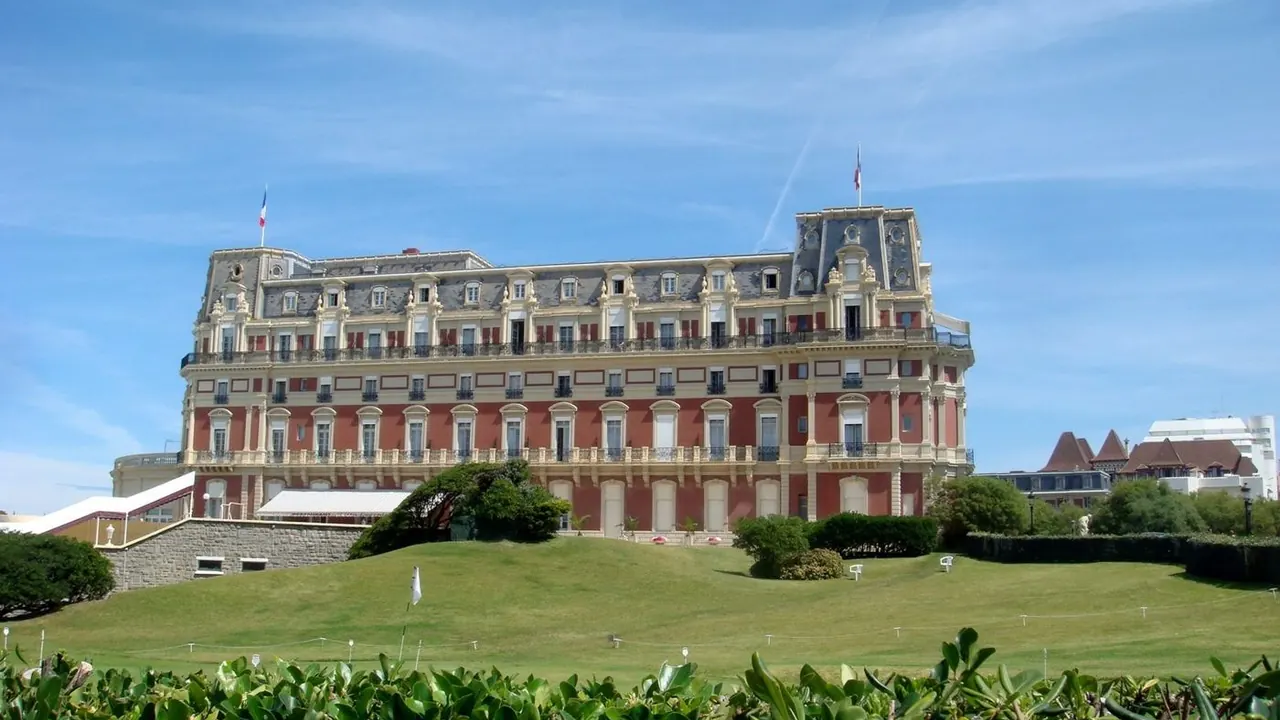
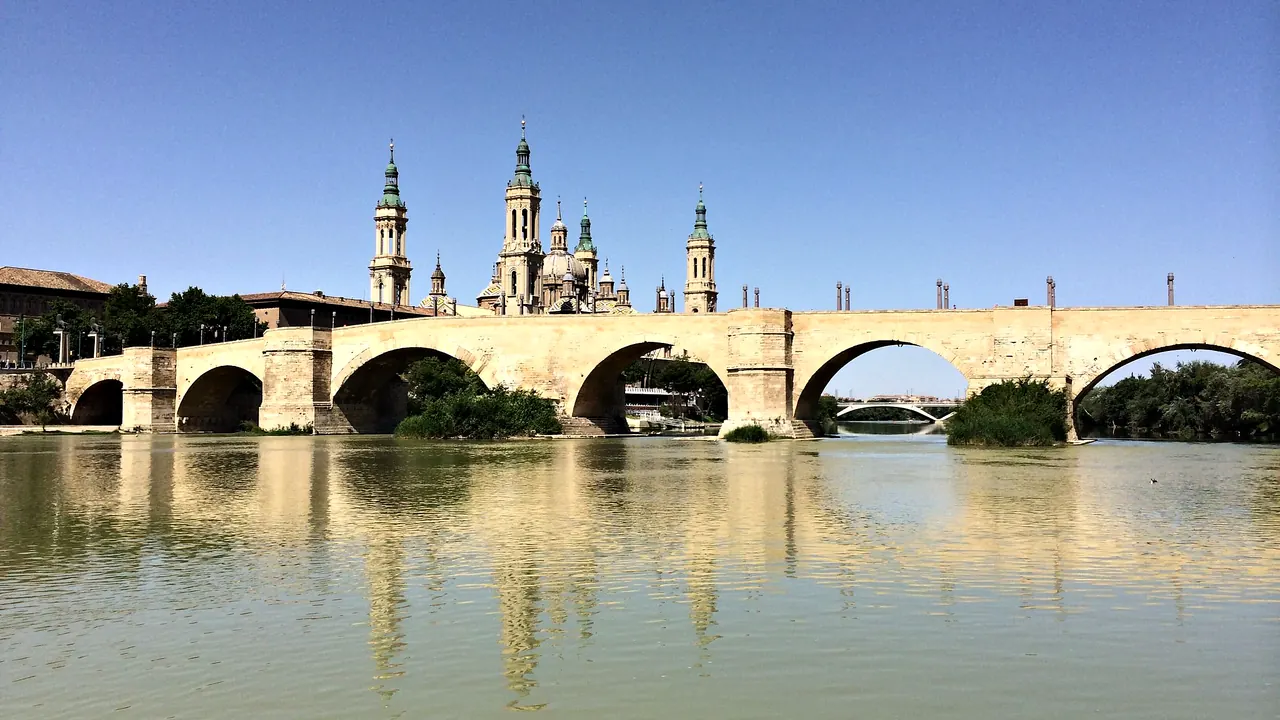
Photos: Biarritz by Lilipiapia, CC BY-SA 3.0, cropped; Zaragoza by Pablo Alejandro Araujo Granda, CC BY-SA 2.0, cropped.
Biarritz or Zaragoza?
Our verdict in twelve categories, each scored against the same fixed benchmark cities, and the climate month by month, so you can choose for your trip.
Choose Biarritz for
- beaches
- wellness
- nature and the outdoors
Biarritz suits a trip built around the Atlantic: surf lessons on the Côte des Basques, afternoons on the Grande Plage, seawater spa cures and cliff walks towards Spain, with the Pyrenean foothills close behind. It is for travellers who care more about sea air and time outdoors than sightseeing, and who can accept resort prices and a fair amount of rain.
Choose Zaragoza for
- prices
- culture and sights
- nightlife
If history, livelier evenings and a lighter bill matter more, Zaragoza is the better pick. The Roman ruins, the Aljafería palace and the Pilar basilica give it far more to see, the tapas lanes of El Tubo stay busy late, and the flat centre is easy to cover on foot. There is no sea, though, and summer on the Ebro plain is hard going.
Scoreboard
Twelve categories on one fixed scale from 0 to 100. The shaded stretch is the gap between the two.
Your match
Pick a travel style or drag the sliders, and both match scores follow your weighting.
Too close to call, 1 point apart
Wins on beaches and wellness with your weighting.
Wins on prices and culture and sights with your weighting.
What matters to you?
Category by category
What the scores mean for a trip.
Beaches & swimming
This is where the two cities differ most. Biarritz grew up as a resort around its sand: the Grande Plage below the casino, the surf beach under the cliffs at the Côte des Basques, the sheltered Port Vieux cove and the long beaches of Anglet beyond the lighthouse. The catch is the open Atlantic, with big waves, strong currents and water that stays fresh even in summer, so you swim between the lifeguard flags.
Zaragoza sits on the Ebro plain, well over 200km from the Mediterranean, and no one swims in the river. Cooling off there means a municipal open-air pool, and anyone who wants a beach would have to add a separate stay on the coast.
Food & drink
Both cities eat well, and both stick closely to their own region. Biarritz's food is Basque and comes from the sea and the mountains: Bay of Biscay fish, chipirons and piperade, sheep's cheese and Bayonne ham from Les Halles, then gâteau basque and the coast's old chocolate tradition.
Zaragoza cooks for the inland and is heartier: ternasco lamb, migas and borage with clams, washed down with cheap reds from Cariñena and Somontano. Its classic evening is a crawl through El Tubo, where each bar is known for one speciality. Neither city offers much beyond its regional cooking.
Culture & sights
Zaragoza has far more to see. Its history covers two thousand years: the Roman forum, port and baths in underground museums, the open Roman theatre, the eleventh-century Aljafería palace, La Seo with its Mudéjar wall and the Pilar basilica with ceilings painted partly by Goya.
Biarritz's heritage is the resort itself, from the imperial villa and Art Deco casino to Belle Époque villas and the Rocher de la Vierge on its footbridge. It has charm, but for serious museums and old towns you would take the day trip to Bayonne or San Sebastián.
Nightlife
Zaragoza gives the more dependable night out. After tapas in El Tubo the evening moves on to Plaza San Felipe, Plaza Santa Marta and the Casco, where students fill the streets on Thursdays and weekends. During the Fiestas del Pilar in October the city stays up until dawn for a week and a half.
Biarritz depends on the season. In summer the counters around Les Halles and the terraces above the Côte des Basques stay busy and a few clubs and the casino go on late, but out of season most evenings end after dinner.
Nature & outdoors
Biarritz is the better base for the outdoors. It is a classic surf town with beginner breaks and surf schools on the seafront, a cliff path along the Basque Corniche, and the green Pyrenean foothills about half an hour inland. There you can climb La Rhune on foot or by rack railway, or walk and cycle the hills around Sare and Ainhoa.
Around Zaragoza the land is dry steppe, often swept by the cierzo wind, and in town the outdoors means the Ebro riverside path and the big parks. The Moncayo forests, the Mallos de Riglos and the Bardenas badlands are striking, but each needs a car and a full day.
Day trips
Both are excellent bases, but for different kinds of trip. From Biarritz the days out cross a border: San Sebastián is less than an hour away, Bayonne is next door, and the Basque villages of Espelette and Ainhoa, Saint-Jean-de-Luz and walled Hondarribia are all close.
Zaragoza's great advantage is the high-speed line, which puts Madrid and Barcelona about an hour and a half away by train. Closer to home it has Aragon's castles and old towns, from Loarre and Tarazona to the ruins of Belchite. Rural outings from either city are easier with a car.
Good for families
Both work well with children, in different ways. Biarritz has surf schools for children, an aquarium with seals and sharks, and Port Vieux for the youngest swimmers. On the other hand, the main beaches need close watching and the steep streets are hard with a pushchair.
Zaragoza has no beach, but its flat centre and large pedestrian squares are easy, and it has a river aquarium, play space at the Parque del Agua, and parades of giants during the Fiestas del Pilar. In July and August, though, the heat is a real problem for small children.
Getting around
Zaragoza is easier to get around. The Pilar, the Casco and the Aljafería lie close together on flat ground, and the tram, the dense bus network and the bike-share cover the rest, so you don't need a car in town.
In Biarritz the beaches, the market and the lighthouse are all within walking distance, but the steep streets and steps between the cliffs and the seafront make for tiring walking. The airport on the edge of town and the coastal trains are useful, but most visitors hire a car for the villages and the mountains.
Shopping & style
There is little to choose between them, and neither offers much luxury. Biarritz has the shopping of a smart seaside town: boutiques and surf shops near Place Clemenceau, striped Basque linen, espadrilles and chocolate.
Zaragoza has the shopping of a working city, with the fashion chains and a department store along Paseo de la Independencia and a big mall on the southern edge. For gifts, look for candied fruit and Muel ceramics.
Affordability
Zaragoza is the far cheaper place to stay. Central hotels are good value for most of the year, tapas and wine cost little and the main basilica is free to enter. Only during the October fiestas do rooms get scarce and prices rise.
Biarritz charges what a fashionable resort charges, and in July and August rooms are expensive and get booked early. Eating at the market counters, coming outside summer or staying in Anglet or Bayonne helps, but it is still not a cheap beach vacation.
Live music & performing arts
Zaragoza has the broader programme across the season. The Auditorio brings in touring orchestras, chamber music and jazz, the nineteenth-century Teatro Principal stages plays and touring shows, and the jota, Aragon's leaping folk dance, is everywhere during the Pilar fiestas.
Biarritz is narrower but has one unusual strength: dance. It is home to a national choreographic centre and ballet company that performs at the Gare du Midi, a former railway station, and it hosts an autumn dance festival. Beyond that there is little live music and no opera.
Wellness & relaxation
Biarritz is built for unwinding. It has been a sea-bathing cure town since the nineteenth century, and its large seafront thalassotherapy centres, with heated seawater pools, algae wraps and multi-day cures, are reason enough for a whole vacation. It is calmest outside July and August.
Zaragoza has no bathing tradition of its own, apart from hotel spas and an Arab-style bathhouse or two, and the thermal springs at Alhama de Aragón are a separate excursion. Its relaxation comes from the easy pace of long lunches and evening walks along the Ebro.
When should you go?
Pick your month. The climate figures are measured averages, not a forecast.
Biarritz in July
Zaragoza in July
Daytime high, °C
Rainfall in the month, mm
Temperature and rainfall are climate normals, averaged over the years shown. Biarritz: 1999-2020 (sunshine 1991-2020, rainfall 1991-2020) normals, Biarritz (2.5 km from centre). Zaragoza: 1991-2020 normals, Zaragoza / Aeropuerto (11.2 km from centre).
The two climates are close to opposites. Biarritz has a mild summer: from June to September the days are warm without being hot, and the sea peaks at about 22°C in August, which makes this the only real beach season. Rain falls in every month. It is heaviest in late autumn, when November brings around 224mm, and winter is grey and damp, with few hours of sunshine.
Zaragoza is dry and far sunnier all year, but its summer is fierce. July reaches about 33°C, which makes midday walking through the old town tiring and sends locals to the pools. For sightseeing, April is mild at around 20°C, and May is already warm at about 25°C, still comfortable before the heat builds. Late September and October are the other good stretch. Winters are cool and often windy. Spring and autumn suit Zaragoza, while high summer suits Biarritz.
Which traveller are you?
For a beach and sun trip, Biarritz is the only real option. It has long stretches of sand from the Grande Plage up through Anglet and the calm Port Vieux cove, while Zaragoza lies far inland and has nothing better than open-air pools.
On a culture and arts trip, Zaragoza wins easily. Roman Caesaraugusta lies under its streets, the Aljafería and La Seo show its Islamic and Mudéjar past, and Goya's work is in the Pilar. Biarritz's resort heritage is covered in a couple of days.
On a tight budget, Zaragoza stretches the money much further. Central hotels are fairly priced, tapas and set lunches are generous, the local wine is cheap and the basilica is free. Biarritz charges resort prices, above all in July and August.
Before you go
| Measure | Biarritz | Zaragoza |
|---|---|---|
| Official language | French | Spanish |
| Currency | Euro (EUR) | Euro (EUR) |
| Sockets | CE230 V, 50 Hz | CF230 V, 50 Hz |
| Driving side | Right | Right |
| Time zone | UTC+1, UTC+2 in summer | UTC+1, UTC+2 in summer |
| Emergency number | 112 | 112 |
| Elevation | 0 m | 200 m |
| Main airport | Biarritz Pays Basque airport (BIQ)3 km from centre25 non-stop destinations | Zaragoza Airport (ZAZ)13 km from centre12 non-stop destinations |
| Public holidays this year | 11 days | 12 days |
By the numbers
| Measure | Biarritz | Zaragoza |
|---|---|---|
| City population | 26,206 | 693,091 |
| People per km² | 2,240 | 712 |
| Museums within 10 km | 8 | 22 |
| UNESCO World Heritage sites within 50 km | 2 | 1 |
| Swim season, months above 21 °C | 2 months | - |
Where else could you go?
Every comparison below shares a destination with this one, so you can follow Biarritz or Zaragoza somewhere new.